Equine
Destined for Greatness
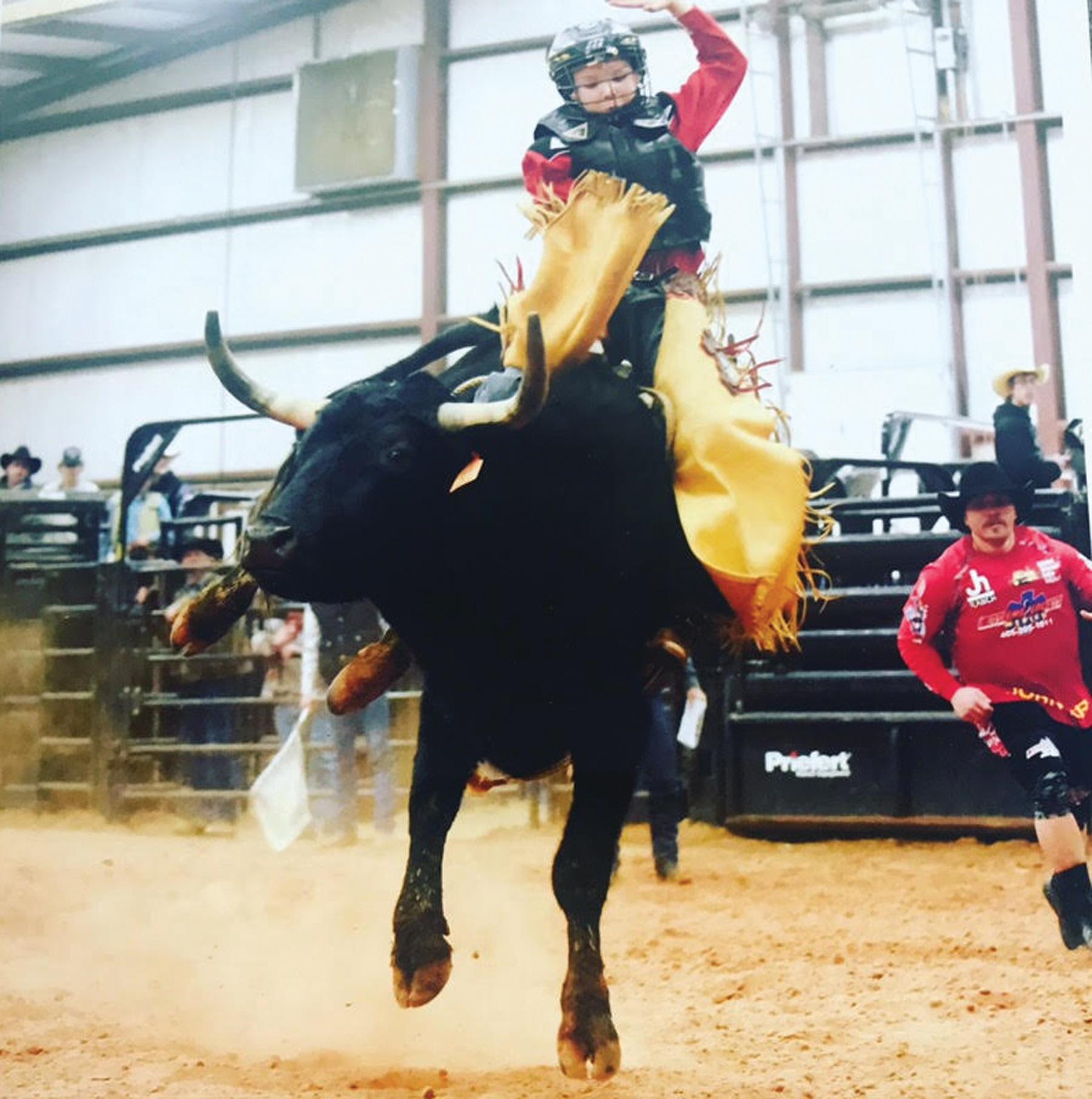
Starting with mutton busting, 12-year-old Wacey Schalla now rides junior bulls. (Photo courtesy of the Schalla family)
Wacey Schalla
By Ddee Haynes
I truly believe that we are all destined for greatness, but only the individual willing to put forth the effort and take chances will achieve that greatness. You can tell a lot by a person’s personality by the way they carry themselves. The rate of their gait, how they hold themselves, do they make direct eye contact and more.
A perfect example of a person destined for greatness is my 12-year-old friend Wacey Schalla. Watching Wacey walk into the coffee shop with his mom Nikki, he walked toward me with purpose and sense of direction way beyond his young years.
His shiny green eyes and shy smile did not mask the determination that lies within his cowboy soul.
I first met Wacey when he was around three years old. He was just starting his “mutton busting” career of riding sheep on the junior rodeo circuit. Even at the age of three, he was fearless! I never saw any hesitation or fear as his dad Luke would help him onto the sheep. Eleven years later, Wacey is now riding junior bulls with the style and efforts of champion bull riders whom you see in the professional arena.
Since beginning his rodeo career eight years ago, a few of his major accomplishments include:
Year-End Champion Cowboy in 2012, 2013, 2014, 2015, 2016 for the Midsouth Rodeo Cowboys Association
2016 MRCA All-Around-Champion
2017 Youth Bull Riding Reserve World Champion
2017 National Junior Steer Riding Reserve Champion
Wacey has also won seven saddles, numerous buckles and many other rodeo awards.
Wacey is also beginning to learn how to ride saddle bronc and bareback horses. The 12-year-old’s parents know success in the arena means he must work hard, practice on stock that will teach him to ride and to ride only “age-appropriate” animals. Oftentimes, young, inexperienced riders climbing onto animals that are too rank for their level of experience. A beginner, regardless of age, is anyone with little to no experience. Whether it be roping, barrel racing or riding rough stock, a beginner should start on an animal that fits their experience.
Homeschooling Wacey allowed more time for practice and travel to and from rodeos and bull riding events. A normal day for the young cowboy begins with two to three hours of school work. After that, he helps his dad with chores and rides horses that he and his dad train.
Wacey and his dad have a total of 15 young bulls. Several of the bulls are Wacey’s, which he purchased with his own money. The remaining bulls have been “loaned” to the Schallas by Bill Hext, a long-time stock contractor and owner of Hext Rodeo Company, and former Champion Bull Rider Cody Custer. The handshake deal is simple: Wacey and his family care for the bulls in exchange for Wacey being able to use the bulls in the practice pen. On average, Wacey spends two to three days in the practice pen riding up to four bulls per practice.
Wacey’s 15-year-old sister Madison is an up-and-coming trick rider. This fall Madison was asked to trick ride during the State Fair of Texas. Madison and another trick rider were scheduled for 92 performances. After only 19 performances completed, the other trick rider broke her leg.
Unbeknown to his sister, Wacey who often exercises Madison’s horses, was secretly practicing and had mastered the trick riding stunt known as vaulting. When the show contractor asked if Wacey could do any tricks, the secret was revealed, and the show went on!
Madison and Wacey performed the remaining 73 performances.
Wacey is ambitious and said one of his future goals is to win the All-Around at the National Finals Rodeo. To win the all-around, the contestant must compete in two or more events. Wacey’s three events will be bull riding, saddle bronc and bareback riding. With Wacey’s work ethic, his natural riding ability and most of all the support of his parents Luke and Nikki, I have no doubt Wacey will accomplish this goal plus many more.
Until next time…
This article was originally published in the April 2018 issue of Oklahoma Farm & Ranch.