Country Lifestyle
May 2017 Profile: Terry Stuart Forst
By Laci Jones
Fire engulfed thousands of acres of land across Colorado, Kansas, Texas and Oklahoma in early March. Ranchers risked everything to try to save their animals as their livelihoods went up in flames.
“It’s devastating,” Forst explained. “It’s us. I know it is hard for people who don’t make their living off the cows and grass to totally understand. For those of us who do, we are right there with them.”
The recent devastation hit home for Forst as she has spent more than 40 years in the industry, nurturing the land her ancestors bestowed to her.
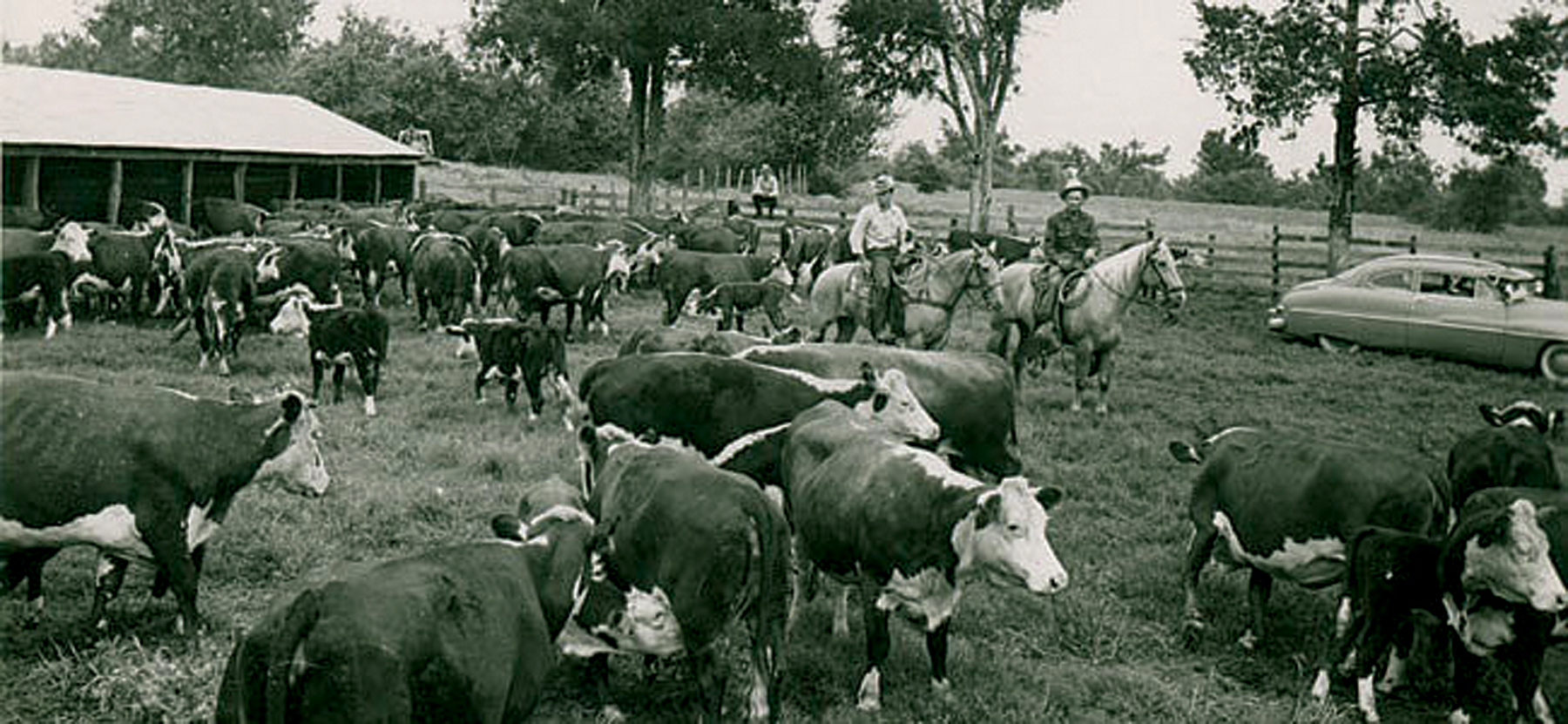
(Courtesy of Stuart Ranch)
History of Stuart Ranch
For nearly 150 years, Stuart Ranch has faced droughts, flooding, tornadoes and have persevered. The ranch was founded by Forst’s great-great grandfather, Robert Clay Freeny. In 1838, Robert Freeny traveled to Choctaw Nation, Indian Territory and married Sarah “Sallie” Ellis.
The couple, along with their 13-year-old son, Robert “Clay” Freeny, Jr., settled 14 miles west of Atoka in Boggy Depot in 1868. During that time, the family raised cotton, oats and corn.
“Cotton was huge back in that area across the Highway 70 corridor,” Forst said. “I had always been told they traded a lot of horses and mules to the U.S. Army.”
Before her death in 1868, Sarah Ellis Freeny gave birth to 12 children. That same year, Robert Freeny moved the family to Caddo before relocating north of what was once known as the Redlands in Blue County, Choctaw Nation, Indian Territory. Clay Freeny took over the operation after Robert Freeny died in 1878.
Clay Freeny, also known as Judge Freeny, continued to farm as well as raise cattle, horses and mules. He was named the County and Probate Judge of Blue County, Choctaw Nation, Indian Territory. After the death of his wife, Mary Beck in 1894, he married Josephene Baxter.
At the turn of the century, Carrie “Ida” Freeny was born to Judge Freeny and Baxter. She attended the Tuskahoma Choctaw School for Girls and later married Robert Terry Stuart, the son of a cattle rancher, in 1931.
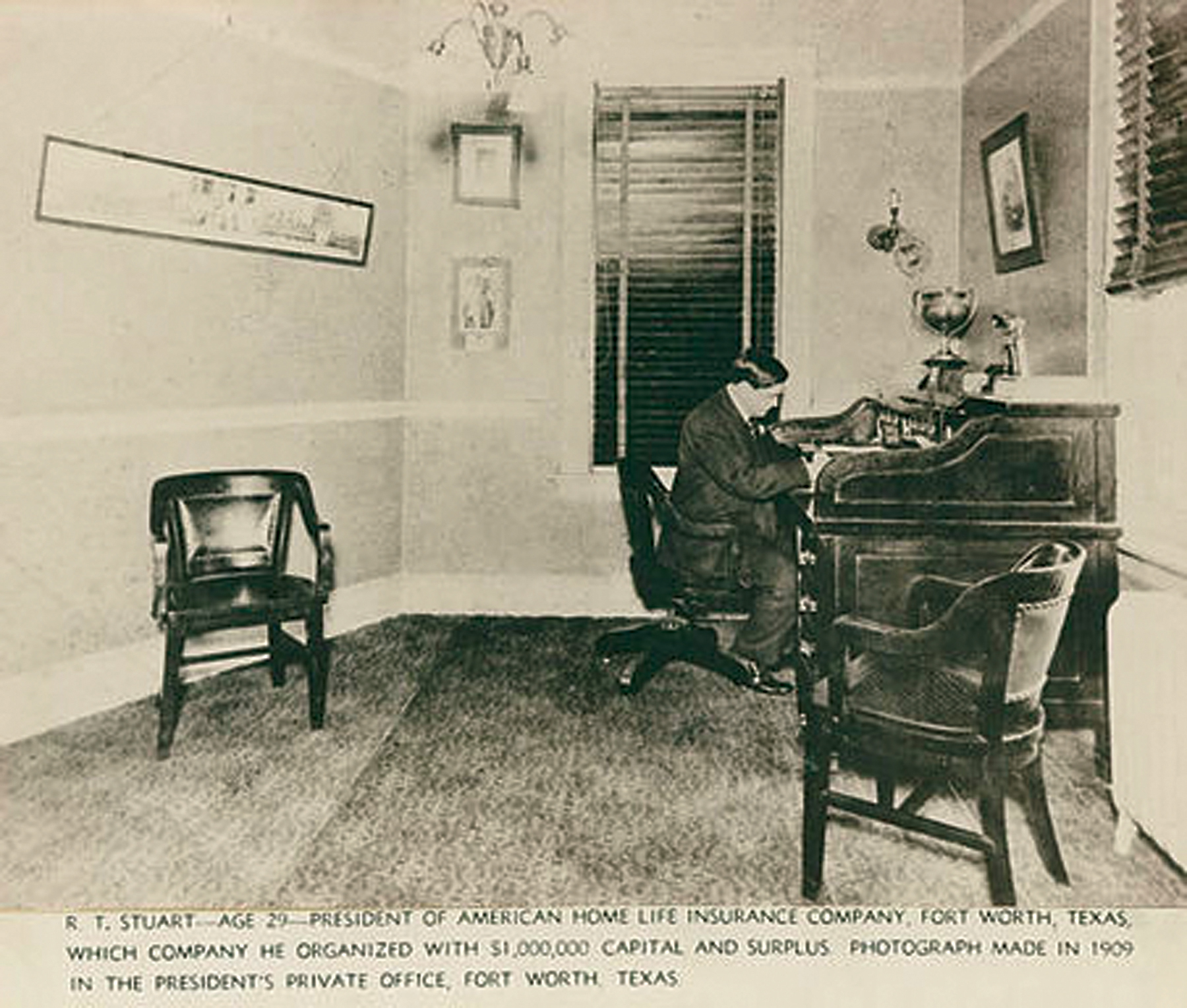
(Courtesy of Stuart Ranch)
After working with the Pacific Mutual Insurance Company and the American Home Life Insurance Company in Fort Worth, R.T. Stuart purchased the Mid-Continent Insurance Company in Muskogee, Okla., in 1916. He relocated the company to Oklahoma City, where he and Ida Freeny Stuart resided and operated the ranch.
R.T. Stuart focused on improving the cattle operation, introducing Hereford cattle to the ranch. Two years after they were married, Robert Terry “Bob” Stuart, Jr., was born. Bob Stuart later took over the operation in 1950, where he focused on improving the horse operation by purchasing the ranch’s first Quarter Horse in the ‘40s.
Bob Stuart purchased a stallion named Big Shot Dun from 3-D Stock Farm, a part of the Waggoner Ranch, in 1949. Progeny bred to Son O Leo, purchased in 1961, proved to be a successful match.
The Terry Stuart Forst Era
Forst was born in Oklahoma City in 1954. Forst inherited her father’s passion for horses, riding every chance she could get. While Bob Stuart was supportive of his daughter’s passion for showing horses, he pushed her to find her own path. Forst showed in the American Quarter Horse Association Youth classes.
“I struggled, fumbled and showed up,” Forst explained. “I think my friends thought I was great because I was the ‘class filler.’ I wasn’t ever going to beat anybody, which was fine.”
Forst continued to show horses in the AQHA shows after she turned 18, enrolling at Oklahoma State University in Stillwater, Okla., bringing horses along. Forst pursued a bachelor’s degree in animal science.
The university helped Forst develop relationships that have lasted for decades. After graduating in 1976, she returned to the ranch and helped her father with the horse program. The OSU alumna said she had the intention of returning to the ranch after graduation. Her goal was to prepare herself for her role on the ranch.
“That is all I ever wanted,” she added. “I never wanted to go anywhere else, but I wanted to do a good job for him. That was important to me.”
When asked what her father taught her, she laughed and said her dad “threw me to the wolves,” but in a good way.
“I learned a lot on my own, but I learned things because of either questions he would ask or questions I would have about the way he was doing things,” the rancher said.
After returning to the ranch, the father-daughter duo enhanced the horse program, later earning the AQHA Best of Remuda award in 1995. Due to conflicting visions for the ranch, Forst left Stuart Ranch in 1989 and worked for a real estate broker.
“I really wasn’t sure if I would go back to the ranch, but I wanted to stay in agriculture and in this business.”
With two young boys to raise, Forst was accepted in the Texas Christian University’s ranch management program. The program was a stepping stone for Forst. She had her real estate license and wanted to become a rural appraiser.
Forst was preparing to start her own business when Bob Stuart called and asked her to take a look at a piece of property. The property was one of the few continuous operations in Oklahoma, where the land is not separated by roads or fences, which peaked Bob Stuart’s interest. She visited the property and prepared a management plan. When she presented the plan to him, he asked her to execute the plan.
“We made a deal where I had to get him profitable within a certain period of time, or I was going to leave,” Forst explained. “I had a job and if I couldn’t do it, then I wasn’t the one he needed to do it.”
They purchased the 11,000 acres east of Waurika, Okla., in 1992. She hired her TCU colleague, Jay Adcock to help put the ranch together as far as cattle and fencing. While it was a monumental task, Forst followed the management plan and succeeded while she and her family were still living in Caddo, Okla., at the time.
Soon after, Forst moved the family to Waurika, Okla., and took over the operation as ranch manager. The ranch manager said when she took over, she had goals for the ranch and a deadline to reach them.
Preparing for the Worst
She continued to learn and enrolled in courses at Kansas State University, read literature and exposed herself to new ideas. To this day, the ranch manager considers herself “a sponge” when it comes to range management. Forst has worked with her crew to understand more about grazing within the last five years.
“There’s always been a limiting factor—water,” Forst explained. “There is no groundwater here, only surface water. When you are surface water dependent, it changes the dynamic of a lot of things.”
While the ranch always prepares for the worst, the drought of 2011 was monumental. From one extreme to another, she said 2014 and 2015 saw massive amounts of rain. The ranch has faced weather challenges throughout the past few years, but Forst said those are situations they must manage.
Allocating money each year toward water development is an integral part of the budget because they understand how critical it is. This year, she plans to increase distribution to become more efficient. Forst has worked with her crew in implementing these changes.
“The crew has been really receptive,” she said. “You can’t do things by yourself with people who are better than you at a lot of things and strive to be the best they can be. I’ve got a crew like that.”
Future Generations
“A family operation is one of the most difficult operations to be a part of, but it is also the most rewarding,” Forst explained. “To know you are able to carry on a legacy that started 150 years ago, and know that you have been entrusted to make sure you hold it together, I don’t take that lightly.”
While the responsibility can be daunting at times, Forst has tried to prepare the next generation to take the reins. The mother of two has turned many sections of the operation over to the next generation, her sons Robert and Clay Forst.
“I think it is more advantageous for them to make mistakes while I can help them through it,” she added. “They have done a wonderful job and have worked hard their whole lives.”
Both Robert and Clay understand learning is an ongoing process. Forst said ranching will only continue to get more difficult as society finds themselves further removed from agriculture. The rancher said a rancher needs to be resilient, dedicated and have faith to be successful.
“I think you have to have a tremendous faith in God,” the rancher stated. “You see that evident every day. We are just stewards.”
Stuart Ranch by the Numbers
Knowing if the ranch does not move forward, it will move backwards, Forst has made it her mission to evolve. Today, the ranch consists of 45,000 acres of land.
“Our pastures are in good shape,” Forst explained. “This year’s prescribed burn was the best in 30 years.”
The ranch incorporated a no-till method in their operation. Thinking long-term, Forst said she hopes to increase soil fertility and cease using fertilizer 15 years from now.
Forst’s grandfather, R.T. Stuart, started with Herefords, but today they have Hereford and Angus cattle. The black baldie is their super cow—making up about 60 percent of the herd. While the cow herd number is down to 1,600 head, they plan to build their numbers this year.
“A goal for us is to be better next year than we were this year,” she added. “We sold heifers when the market was good, so now is when we want to start building the herd more than anything.”
Selling many of their replacement heifers has helped the rancher focus on improving herd genetics by developing an efficient and productive cow. Along with their cow/calf herd, the ranch also specializes in stocker cattle. The steers do well in the feedlot, according to Forst.
Stuart Ranch has also expanded on their horse operation with approximately 150 head of horses. Each day, they train, promote and show their quarter horses. Forst said they are looking forward to the 2017 Snaffle Bit Futurity, which will take place in Ft. Worth, Texas, this October.
“Because of the proximity, people can come and look at our horses,” she added. “We wanted to be in a good position to have horses for sale.”
Forst is considering opening a small horse rehabilitation facility on the ranch in the future as well. She saw a need for the facility in the area for other horse owners to use. She hoped new additions to the ranch will enhance their horse operation.
“We have diversified and evolved from our roots and traditions,” Forst explained. “Those things are important to us and we highly value our legacy and what we have been entrusted with and hope to continue in a profitable fashion.”
This article originally appeared in the May 2017 issue of Oklahoma Farm & Ranch.