Equine
Carbohydrate Overload in Horses

The old saying that a little bit is good for you but a lot of anything will kill you. That is very much how it is with just about anything in life but especially grain or carbohydrates and the effects on the horse’s gastrointestinal tract. Grain diets are great sources of caloric dense feeds for horses but when consumed quickly in one setting is a recipe for disaster. Unfortunately this happens all too often but hopefully this article will help you know what to do if this happens to your horse.
Many times we all have heard the story of horse breaking into the feed room and helping themselves to whatever grain or feed is in there. Oftentimes it is difficult for owners to know how much grain was stored in the feed room or be able to tell which horse ate the most when multiple horses are involved. The boss horse on the farm will be the most likely suspect to have gotten the most grain. The type of grain or feed source can be a factor on how dangerous the carbohydrate overload will be and how serious to take the situation when it comes to treatment. For example sweet feed can be more dangerous vs. whole oats. What makes grain so dangerous is that it is a very caloric and carbohydrate dense energy source that can be consumed in large quantities in a very short time frame.
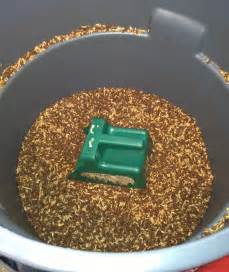
The physical fact that a large amount of grain entering the gastrointestinal tract of a horse is not as big of deal other than a really full stomach in comparison to what the bacteria do with the carbohydrates makes the situation very serious. Certain bacteria in the large colon of a horse like carbohydrates just as much as the horse does. These bacterium like it so much that they will rapidly overgrow and produce more of each other while harming other good bacteria with over production of volatile fatty acids, lactic acid which leads to pH changes and acidosis in the large colon as they feed on the carbohydrates. The acute overgrowth with a simultaneous destruction of mostly gram negative bacteria is what makes the horse really sick. The cell wall or membrane of gram negative bacteria contains a compound called LPS (lipopolysaccharide) or endotoxin and horses are much more sensitive to its detrimental effects than other species. LPS has very toxic effects on multiple organ systems including the cardiovascular and gastrointestinal system as well the feet leading to laminitis or founder.
Whenever a horse is suspected of getting into too much grain it is important to get the horse looked at by a veterinarian as quickly as possible. If the horse is seen with a few hours of ingesting the grain there is a chance to recover some of the grain from the stomach before it reaches the colon. The other benefit of early treatment is products such as activated charcoal, Biosponge and mineral oil can be administered into the stomach. These products will help bind carbohydrates, endotoxins (LPS) and other harmful byproducts produced by the bacteria feeding on the carbohydrates. Other steps to be taken is preventing laminitis or foundering. The endotoxins that are rapidly absorbed by the colon are harmful to the feet. Endotoxins set off a firestorm of inflammation and enzymatic destruction of the lamina. To slow this reaction down in the feet icing can be used. Just like in science class if you want to speed up a reaction you add heat but if you want to slow it down you cool it. Icing the feet buys times and helps reduce the damage to the feet. X-raying the feet early to monitor for rotation is important as well. As another preventative measure, sole support device can be used to help prevent rotation of the coffin bone.
Horses can also develop serious colitis (inflammation of the colon) and significant dehydration from grain overload. These horses require more intense care and hospitalization. Often these horses will require IV fluids, antibiotics, pain management and drugs to combat endotoxemia. Protein losses from the blood secondary to the colitis can lead to further dehydration and dependent edema requiring supplementation with synthetic colloids or plasma transfusions.
It is often difficult to know what amount of grain a horse ingests when it breaks into the feed room and how serious the horse’s condition will get. Most veterinarians’ error on the side of caution and treat horses aggressively in these situations to avoid a poor outcome. It is important for treatment to be initiated sooner rather than later so don’t hesitate to call a veterinarian to see what the best course of action is whenever faced with a grain overloaded horse.
By Savannah Magoteaux, Editor
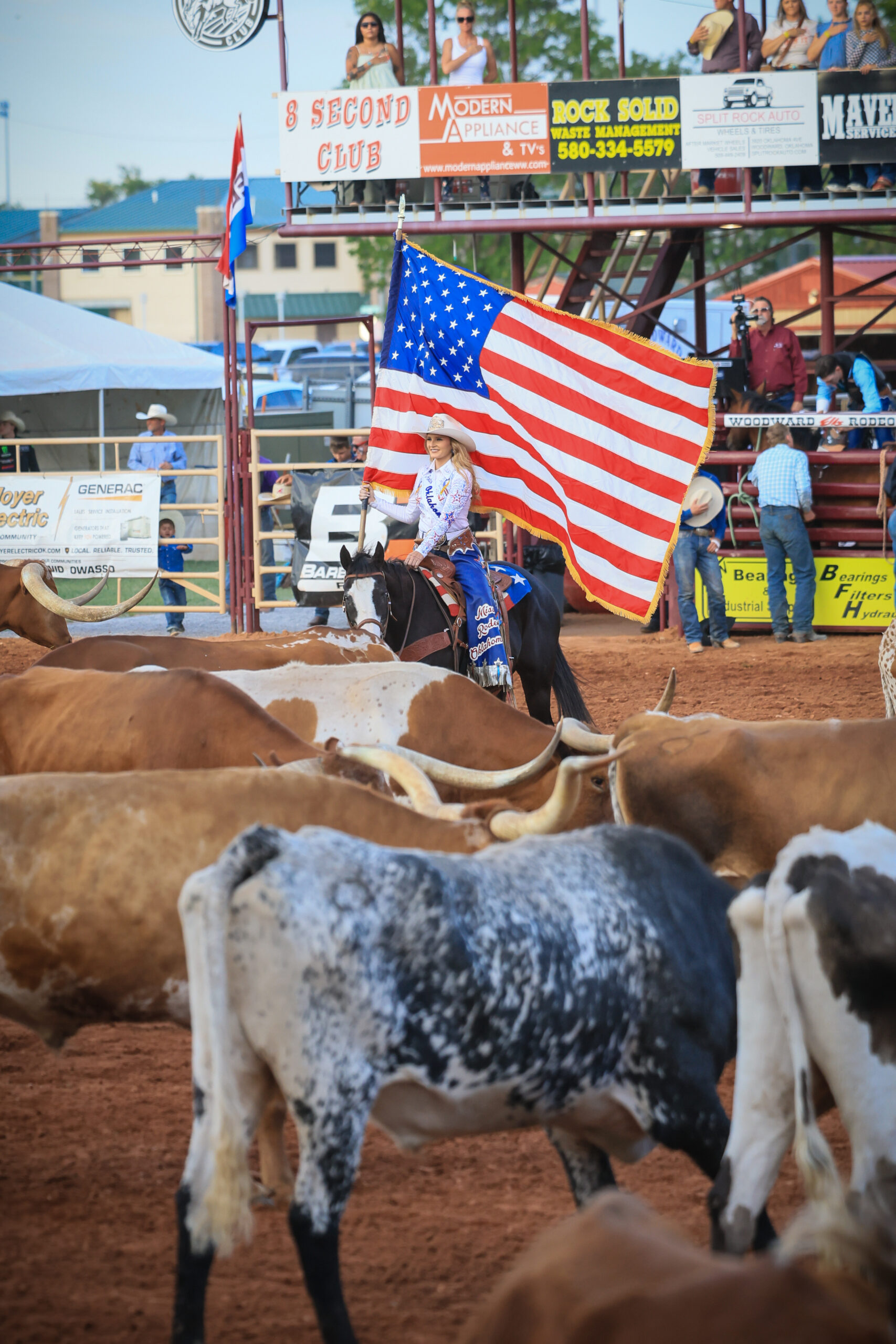
Before Landry Layton became Miss Rodeo Oklahoma, she learned to speak for agriculture in an FFA jacket and carry its values from the back of a horse. One taught her how to advocate for the ranching life she was raised in, and the other gave her a way to share it with rodeo fans, schoolchildren and strangers across the country. Now, those two parts of her life come together in her year as Miss Rodeo Oklahoma 2026 and in the platform she chose to guide it: “Leave a Legacy.”
For Layton, those words are not just a slogan that looks good on a sash card. They are tied to her family, her cattle, her hometown and the people who came before her. The 22-year-old from Welch, Oklahoma, was raised in a family where ranching was part of everyday life, and the work began long before she had cattle of her own.
“I grew up on a fifth-generation cattle ranch in northeast Oklahoma,” Layton said. “It was my dad and my grandpa. I’ve been around cattle as long as I can remember. They have Charolais and Angus and some cross cattle.”
That family operation gave Layton her first lessons in responsibility, but in seventh grade, she decided to build something of her own. In 2016, she bought 14 head of registered Red Angus cattle and began showing through FFA and at county fairs. What began as a small project grew into a herd that is now close to 50 head.
“I started showing them through FFA and at our county fairs, and it kind of just spiraled from there,” she said.
She had success in the show ring, including winning the Bred and Owned Red Angus Heifer Show at the Tulsa State Fair and earning reserve honors at the Oklahoma Youth Expo. Those wins meant more because they were cattle she had raised herself.
“That was something I had raised and bred and taken care of as long as it was on the ground,” Layton said.
Red Angus were not the expected choice in her area, which was part of the reason she chose them. There were not many being shown at her county fair, and Layton liked the idea of doing something different. The breed also offered the kind of traits she believed could work well for both show projects and future production.
“They were super pretty, and there weren’t a whole lot of them in the area,” she said. “I knew they had that Angus side for meat production, but I also knew they would have really good growth genetics. I really liked the red color, and I knew they would be a good set of cattle.”
After high school, Layton stepped away from showing, but she did not step away from the cattle business. Today, her herd is geared more toward local ranchers than the show ring. She keeps bull calves through weaning and yearling age, grows them out, and sells to buyers looking for bulls to use in their own herds.
“It’s really kind of local buyers,” she said. “If they’re looking for something to put on their herd, or if they’re looking for something they know is going to do well and perform well, that’s more what I do now.”
Cattle came through her dad’s side of the family. Rodeo came through her mom’s side. Her grandfather helped bring rodeo into the family, and the next generation followed in different ways.
“My grandfather was a PRCA steer wrestler, and he had his Gold Card through the PRCA, so that was a big accomplishment of his,” Layton said. “He was really the first one that got into rodeo. My mom barrel raced, and my siblings and I all did rodeo in junior high and early high school.”
Layton ran barrels, poles and tied goats, but when she was old enough to join FFA, agriculture quickly became her focus. She joined the first chance she could in eighth grade and stayed involved through her senior year. She showed pigs and cattle, competed in livestock judging, public speaking and agricultural communications, and in 2023, she received the American FFA Degree.
That honor was a milestone not only for Layton, but for her chapter.
“I was the very first female from my FFA chapter to ever get her American Degree,” Layton said. “I was also the first student to get it since, I want to say, 1975. It had been quite a while, so that was a really big deal in my chapter and in my hometown.”
The accomplishment has already had an impact close to home. Layton said her cousin is set to receive the degree, too, making the achievement feel even more meaningful.
“It’s kind of full circle,” Layton said. “Not that I was the first one to do it, but it kind of started that trend of other kids in the chapter seeing that it can be done. That was really great.”
Looking back, Layton sees FFA as one of the strongest foundations for the role she has now. The contests, interviews and public speaking all helped prepare her to represent agriculture and rodeo in a larger way.
“FFA was such a great stepping stone,” she said. “Combining that with being a rodeo queen has really helped me a lot since high school. I think back a
Rodeo queening, however, was not something Layton had planned from childhood. In fact, she laughs about how it began. A local pageant in Vinita for the Will Rogers Memorial Rodeo caught her attention for one very practical reason.
“I had never really even considered being a rodeo queen,” she said. “I didn’t have a single clue about anything on the rodeo queen side of things. They had a local pageant in Vinita, and I entered it simply because they were giving away a new saddle. I was like, ‘This is a really nice saddle. I can use this a lot.’”
What started with a saddle quickly became something more. Layton realized rodeo queening gave her a way to combine agriculture, public speaking and the Western lifestyle she had always known.
“I didn’t realize that I could combine agriculture and everything I had always grown up with and take it onto a stage of a sort,” she said. “I could really show everyone what agriculture meant to me, how it shaped me, and promote what I’ve always loved and what I’ve always done.”
From there, she entered more local pageants. She held the title of Miss Interstate Fair and Rodeo in Coffeyville, Kansas, then went on to be named Miss American Cowboys Rodeo Association in 2024. She later competed for Miss Rodeo Oklahoma and walked away with the 2026 title.
The Miss Rodeo Oklahoma pageant was a week-long competition, and it was more intense than a casual observer might realize. Contestants did not have their phones or outside contact, which meant Layton could not check in with family or ask how something looked from the outside. She and the other contestant for Miss Rodeo Oklahoma were roommates throughout the week, and rather than letting the pressure take over, they enjoyed the experience.
“We watched the Hallmark Channel every morning while we were getting ready,” Layton said. “We’d turn on Golden Girls. By the end of the week, I think we were both more so thinking about how much fun we had during it. We got to go to the rodeo every night. It was just great.”
When coronation came, neither of them knew what to expect.
“We were both like, whoever wins, we’re obviously going to be happy for the other one, and we know either one of us would do a great job,” Layton said. “It was such a fun week, and I think that’s what it’s all about. You go there to have fun, and you go there to promote what you know and what you do.”
Since being crowned Miss Rodeo Oklahoma, Layton’s year has been busy, but it has also taken her into places and conversations she may not have experienced otherwise. She has traveled to Colorado, South Dakota, Florida, Wyoming and beyond, representing Oklahoma and the sport of rodeo.
“The crown really takes you places you never would have thought you could go,” she said.
One of those moments came over the Fourth of July in Cody, Wyoming. Layton was struck not only by the crowd, but by the number of people visiting from outside the country who wanted to experience American rodeo and Western tradition for themselves.
“There were so many people there from out of the country, and that really surprised me,” she said. “So many people cared enough about American rodeo and how we do things here, and they wanted to experience it for themselves over the Fourth of July.”
As she rode down the streets of Cody in the parade, with thousands of people lining Main Street, she was reminded why the work matters.
“You see people that maybe don’t have a clue about it, but they’re interested in learning about it,” Layton said. “That’s really what we do as rodeo queens, promoting and sharing it with people. I get to share it with people who didn’t grow up the way I grew up, but now I still get to include them in on it and showcase where I grew up and how I grew up.”
That ability to connect with people is part of what makes the Miss Rodeo Oklahoma title meaningful to Layton. She knows the crown may open doors, but what happens after that depends on the person wearing it. For Layton, the goal is not simply to appear at rodeos and take pictures. It is to help people understand the values, history and work behind the Western way of life.
Her platform, “Leave a Legacy,” grew from that same idea. The phrase was a natural fit with her initials, LL, but it also connected to the land and family history that shaped her.
“I really liked ‘leave’ and ‘legacy’ because it matched my initials,” she said. “But obviously I’m from a very rural part of Oklahoma, and you get to meet so many people out here who have done things a certain way for a certain period of time.”Layton’s family ranch sits on land with deep history. She said the original place traces back to her grandfather’s great- great-grandmother and an original Cherokee land allotment. That history matters to her because it gives her a personal connection to the idea of carrying traditions forward.
“There’s a whole lot of history here, and I really love learning about it,” Layton said. “That’s kind of where that came from. I want everyone to remember where they came from. That’s what I want to promote, the rural values and Western traditions, and not only the way I grew up, but how you can make a difference in your own community.”
For Layton, leaving a legacy does not mean holding tightly to the past without room for growth. It means understanding the work, sacrifices and values that built rural communities, then finding ways to carry them forward. As she travels, she has seen how traditions vary from state to state, but she has also seen how much they have in common.
“There’s so much history in not only rural Oklahoma, but everywhere,” she said. “I think it’s really great to share those traditions and what you grew up with. As Miss Rodeo Oklahoma, it helps to be a relatable person if you have personal stories to share. It’s easier to understand it on the level of just having a conversation.”
This year has also marked amajor personal milestone for Layton. In May, she graduated from Oklahoma State University with a degree in Animal Science Pre-Veterinary Medicine. During her time at OSU, she was also part of the Spirit Rider team for two years, helping with Bullet, the American Quarter Horse mascot.
Being on the field on game day gave Layton another kind of ambassador experience, one that mixed horsemanship, school pride and a loud stadium full of people.
“I got to experience game day from down on the field with Bullet, and it was a very cool experience,” she said.
She was impressed by how well Bullet handled the atmosphere.
“You never know how anything is going to take that environment,” Layton said. “There are so many people there, and it’s so loud, and there’s so much going on. You’re like, how can anything handle this? And he stood in the corner and napped. It was really funny to see how much he truly loves it and likes being there.”
After her year as Miss Rodeo Oklahoma, Layton hopes to continue on to Miss Rodeo America. The pageant is held the first week of December in Las Vegas in conjunction with the National Finals Rodeo. Like the state pageant, contestants spend the week without phones or outside contact, moving through interviews, horsemanship, speeches and knowledge-based portions of the competition.
“It’s the same setup,” Layton said. “You have chaperones that take you everywhere you need to go all week. You don’t have your phones. You don’t have contact with the outside world. It’s just you and the other state queens and the judges.”
The preparation is demanding. Contestants ride draw horses they have never seen before, with no warm-up before completing their patterns. They complete personality and horsemanship interviews, take a written test over the PRCA rule book and study current events. Layton has been preparing by riding horses from other families, studying the rule book and media guide, and practicing extemporaneous speaking.
“Current events, the PRCA rule book and the media guide have become my best friends,” she said. “There is so much to keep up with, but it’s really making sure you are that well- rounded person Miss Rodeo America has to be.”
Her animal science degree helps, especially with the horsemanship interview, but Layton knows the competition requires more than book knowledge. It requires confidence, adaptability and the ability to communicate under pressure. To practice extemporaneous speaking, she finds random inspirational topics, gives herself 10 minutes to prepare, then delivers a speech.
“It’s a lot of studying and a lot of practicing,” she said. “It’s kind of how I did the same thing for Oklahoma, just on a much higher level.”
If she is chosen as Miss Rodeo America, Layton would love the opportunity to continue traveling and promoting rodeo, agriculture and the Western lifestyle for another year. After that, her goal is to return to Oklahoma State and apply to veterinary school. Eventually, she hopes to practice large animal medicine in the kind of rural community that raised her.
“In Oklahoma, and really all over, there’s such a shortage of large animal vets,” Layton said. “We see a lot of small animals, but the large animal side of everything is kind of dying down. Where I’m from, it’s such a rural area that I would love to go to school and then bring that back and have my own practice where I grew up.”
That goal fits the rest of Layton’s story. The cattle, FFA, rodeo, OSU and Miss Rodeo Oklahoma title are not separate pieces as much as they are different ways she has learned to serve the same world. She wants to give back to the people who taught her, represent the communities that shaped her and make sure the next generation sees that their own background can take them farther than they may realize.
“I would love to come back to my hometown and really help out there,” she said.
For now, Layton is traveling the state and the country with a crown on her hat, a lifetime of rural Oklahoma behind her and a platform that asks people to think about what they are leaving for those who come next. She knows legacy can be found
in a family ranch, a cattle herd started by a seventh grader, an FFA chapter inspired to reach higher, a rodeo queen stopping to answer questions from a child, or a future veterinarian choosing to come home.
It is not one big moment. It is a lifetime of small ones, handled with care.
And for Landry Layton, leaving a legacy starts by remembering exactly where she came from.
By Ann Asher
Good horse care usually starts with the basics: clean water, quality forage, a balanced ration and common sense. Still, there are times when water alone may not be enough to help a horse recover from hard work, hauling or heavy sweating. That is where electrolytes can be useful.
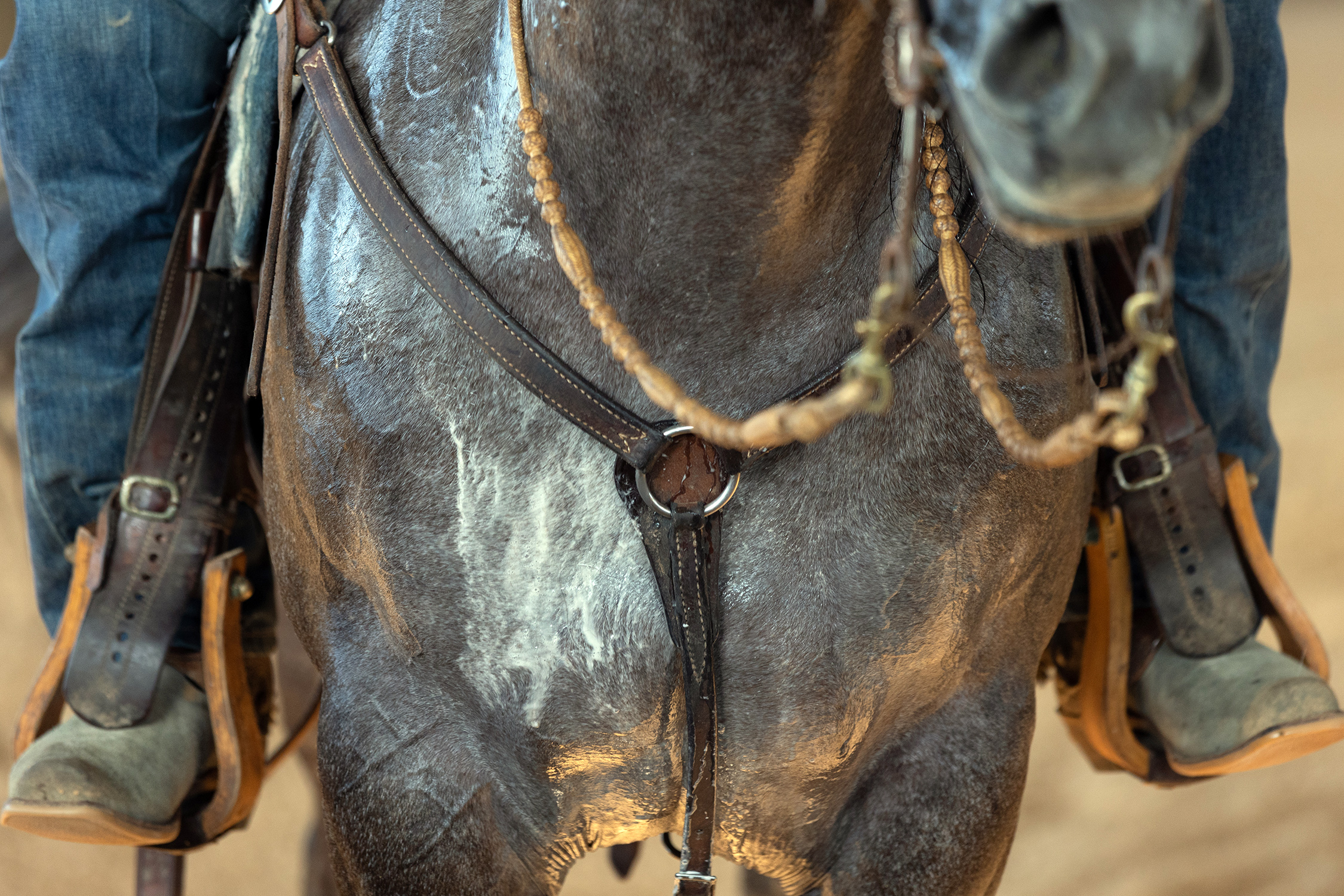
Electrolytes are minerals that help the body manage fluid balance, muscle function and nerve function. In horses, the main electrolytes of concern include sodium, chloride, potassium, calcium and magnesium. When a horse sweats, he does not just lose water. He also loses these important minerals, especially sodium and chloride. That is one reason a horse can appear tired, dull or slow to recover after a long ride, a hard workout or a hot day in the trailer.
For most horses in light work, electrolytes do not need to be complicated. A horse on a good forage-based diet will usually get many of the minerals he needs from hay, pasture and feed. The one thing that is commonly short is salt. Because of that, horses should have access to salt daily, either through a plain white salt block, loose salt or salt added to the feed. Some horses do not consume enough from a block, so loose salt can be a better option for horses that need encouragement.
Electrolyte supplements are different from plain salt because they usually contain a blend of minerals designed to replace what is lost in sweat. They can be helpful for horses in regular training, horses that travel, horses competing in hot weather, horses that sweat heavily or horses that are expected to work hard for a long period of time. They may also be useful
when a horse has had an unusual amount of fluid loss, though illness, diarrhea, colic signs or a horse that is not drinking should always involve a veterinarian.
The best way to use electrolytes is to plan ahead and use them according to the label. They can be given in feed, mixed into water or administered as a paste. For many horse owners, adding them to a small amount of feed is the easiest and most reliable method, because the horse is less likely to reject his water. If electrolytes are added to a water bucket, a second bucket of plain water should always be available. A horse should never be put in a situation where the only water offered tastes salty or unfamiliar.
That point is important. Electrolytes are meant to support hydration, not replace water. They work best when the horse has free access to fresh, clean water before and after they are given. Giving electrolytes to a horse that cannot or will not drink can make a bad situation worse. If a horse is dehydrated, depressed, showing signs of colic, refusing water or not recovering normally after exercise, that is a veterinary issue, not a supplement issue.
There can also be such a thing as too much. More electrolytes do not automatically mean better care. Overuse may cause a horse to refuse feed or water, and too much salt without adequate water can irritate the digestive tract and contribute to dehydration concerns. Owners should avoid stacking several electrolyte products at once, especially if the horse is already receiving a fortified feed, mineral supplement or additional salt. It is also worth reading labels carefully. A good electrolyte product should be built around sodium, chloride and other major sweat minerals, not mostly sugar or filler.
Timing matters, too. Electrolytes are most useful when matched to actual need. A horse standing in the pasture with minimal sweating may only need salt and water. A horse hauled several hours, ridden hard, worked in humid weather or sweating through a saddle pad may benefit from an electrolyte product before, during or after the event, depending on the situation and the product directions. For competition horses, it is wise to test any electrolyte routine at home first. Show day is not the time to find out a horse dislikes a certain powder or will refuse treated water.
Owners should also remember that electrolytes are only one part of heat and hydration management. Shade, ventilation, fitness level, rest breaks, cooling with water, and avoiding the hardest work during the worst heat all matter. An out- of-shape horse asked to do too much can get into trouble even if he has been given electrolytes.
Likewise, a fit horse still needs time to cool down and rehydrate after heavy work.
Used correctly, electrolytes are a practical tool. They can help replace minerals lost in sweat and encourage normal recovery when a horse has been working, hauling or sweating hard. Used carelessly, they can create problems, especially if they are given without enough water or used as a substitute for veterinary care.
The safest approach is simple: provide salt every day, keep clean water available at all times, reserve electrolyte supplements for horses that truly need them, and follow the product label. When in doubt, especially with a horse that is not drinking or does not seem right, call the veterinarian. Electrolytes can be helpful, but they work best as part of good horsemanship, not as a shortcut around it.
By OKFR Staff
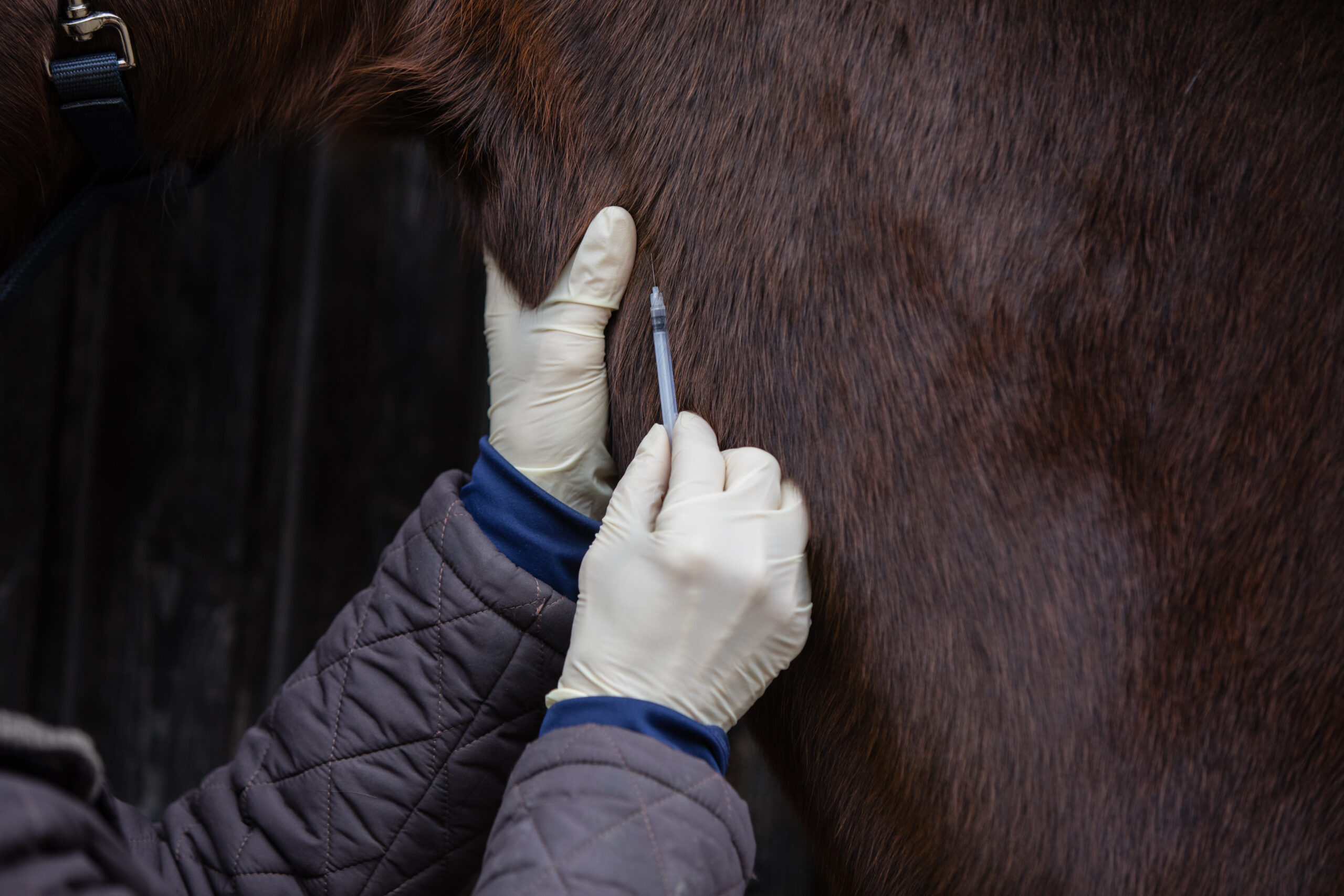
Vaccinations may not prevent every case of illness, but they remain one of the most effective tools horse owners have for reducing the risk of serious and sometimes fatal disease. The right vaccination program depends on the horse, where it lives, how often it travels and the animals it may encounter.
The American Association of Equine Practitioners divides vaccines into two categories: core and risk-based. Core vaccines are recommended for all horses because the diseases pose a significant health risk, may have public health implications or are spread by sources that owners cannot completely control.
The core vaccines for horses are tetanus, Eastern and Western equine encephalomyelitis, West Nile virus and rabies.
Tetanus is caused by bacteria commonly found in soil and manure. The organism can enter through puncture wounds, cuts, surgical sites and other damaged tissue. Even a wound that appears minor can create an opportunity for infection.
Previously vaccinated adult horses generally receive a tetanus booster annually. An additional booster may be recommended following a penetrating injury or before surgery if more than six months have passed since the horse’s last dose.
Eastern and Western equine encephalomyelitis and West Nile virus are spread primarily through mosquitoes. These diseases can affect the nervous system and may cause weakness, loss of coordination, behavioral changes, difficulty standing or death.
Vaccination is generally scheduled before mosquito season begins. In regions with long mosquito seasons, a veterinarian may recommend boosters more frequently than once a year.
Rabies is uncommon in horses, but it is fatal and can be transmitted to people. Horses may be exposed through contact with infected wildlife, including bats, skunks, raccoons and foxes. Because horses frequently interact with owners, veterinarians, farriers and other handlers, annual rabies vaccination protects more than the individual animal.
Risk-based vaccines are recommended according to a horse’s individual circumstances. These may include vaccines for equine influenza, equine herpesvirus, strangles, leptospirosis, botulism and other diseases. A horse that remains on one farm with a closed herd may have different needs than a show horse that travels regularly, shares barns with unfamiliar horses and encounters animals from several states.
Influenza and equine herpesvirus vaccines are commonly considered for horses that travel or are frequently exposed to new horses. Equine influenza spreads quickly through respiratory droplets and contaminated equipment. Horses at increased risk may need boosters every six months, and some competitions or facilities require proof of recent vaccination.
Timing also matters. Vaccines do not provide immediate protection, and an unvaccinated horse may require an initial series of two or more doses. The AAEP recommends completing the primary series and needed boosters at least 14 days before likely exposure. Waiting until the day before a show or hauling trip does not give the immune system enough time to respond.
Mild soreness, swelling or a temporary fever can occur after vaccination. Serious reactions are rare, but owners should contact their veterinarian if a horse develops significant swelling, breathing difficulty, hives, weakness or other concerning signs.
There is no single vaccination schedule that fits every horse. Age, pregnancy, health, travel, local disease activity and previous vaccination history all affect the plan.
A veterinarian can also make sure vaccines have been properly stored, administered and recorded.
Vaccination works best alongside good management. Clean equipment, limited contact with unfamiliar horses, isolation of new arrivals and prompt attention to illness remain important.
Together, vaccination and basic biosecurity provide horses with a stronger line of defense against preventable disease.



-
 Country Lifestyle2 years ago
July 2017 Profile: J.W. Hart
-
 Farm & Ranch2 years ago
From Plow to Plentiful: The Most Important Inventions in Agricultural History
-
 Attractions9 years ago
48 Hours in Atoka Remembered
-
 Equine9 years ago
Umbilical Hernia
-
 Country Lifestyle5 years ago
The Two Sides of Colten Jesse
-
 Outdoors9 years ago
Grazing Oklahoma: Honey Locust
-
 Farm & Ranch8 years ago
Hackberry (Celtis spp.)
-
 Equine6 years ago
On the Road with Emily Miller-Beisel