
Country Lifestyle
Mulhall-Orlando FFA Hosts Chapter Awards Banquet


On Saturday May 7th, members, families, and friends gathered together at the annual banquet of the Mulhall-Orlando FFA Chapter. Members were able to show off their impressive projects and countless accomplishments from the past year.
Numerous members of the Mulhall-Orlando FFA chapter were rewarded for their hard work this year. Chapter Star awards are given to outstanding chapter members who are active and have strong Supervised Agricultural Experiences. Star in Agribusiness was awarded to KayLea Taylor, Star in Agriscience was awarded to Hannah Schmidt, Star in Placement was awarded to Callen Oldenburg, Star Farmer was awarded to Casyn Larman, Star Greenhand was awarded to Kaylee Blagden, and Star in Discovery was awarded to Jace Taylor. Hanna Schmidt and Lora Golay were recognized as National Agriscience Finalists. Casyn Larman was recognized for gaining the number one spot in the State Reporter’s Book Contest. Members who had Proficiencies for their SAE projects were awarded. The Honorary Chapter Degree is awarded to those in the community who portray outstanding service to the agricultural education of students. This year Mr. Roland Taylor and Mrs. Kristen Brown accepted this award as they are leaders of the community who are always willing to give a helping hand. Many other awards were given as well.
After seniors Baylee Brown and KayLea Taylor made their retiring addresses as President and Vice President, the 2022-2023 Mulhall-Orlando officer team was announced. This team includes Callen Oldenburg as President, Casyn Larman as Vice President, Hannah Schmidt as Secretary, Lora Golay as Reporter, Willie Schoonover as Treasurer, and Kaylee Blagden as Sentinel.
“Mighty but small” were words used by member Lora Golay to describe the local chapter. This is believed to be true by many as another school year comes to an end. Although it may be a small chapter, Mulhall-Orlando FFA has been very active and successful not only in the past year, but in the past few years. Members are excited as they look to another year of learning, opportunities, accomplishments, and so much more.
Congratulations to all of the award winners for their achievements and thank you to those who joined us as we recapped the past year.
By NTFR Staff
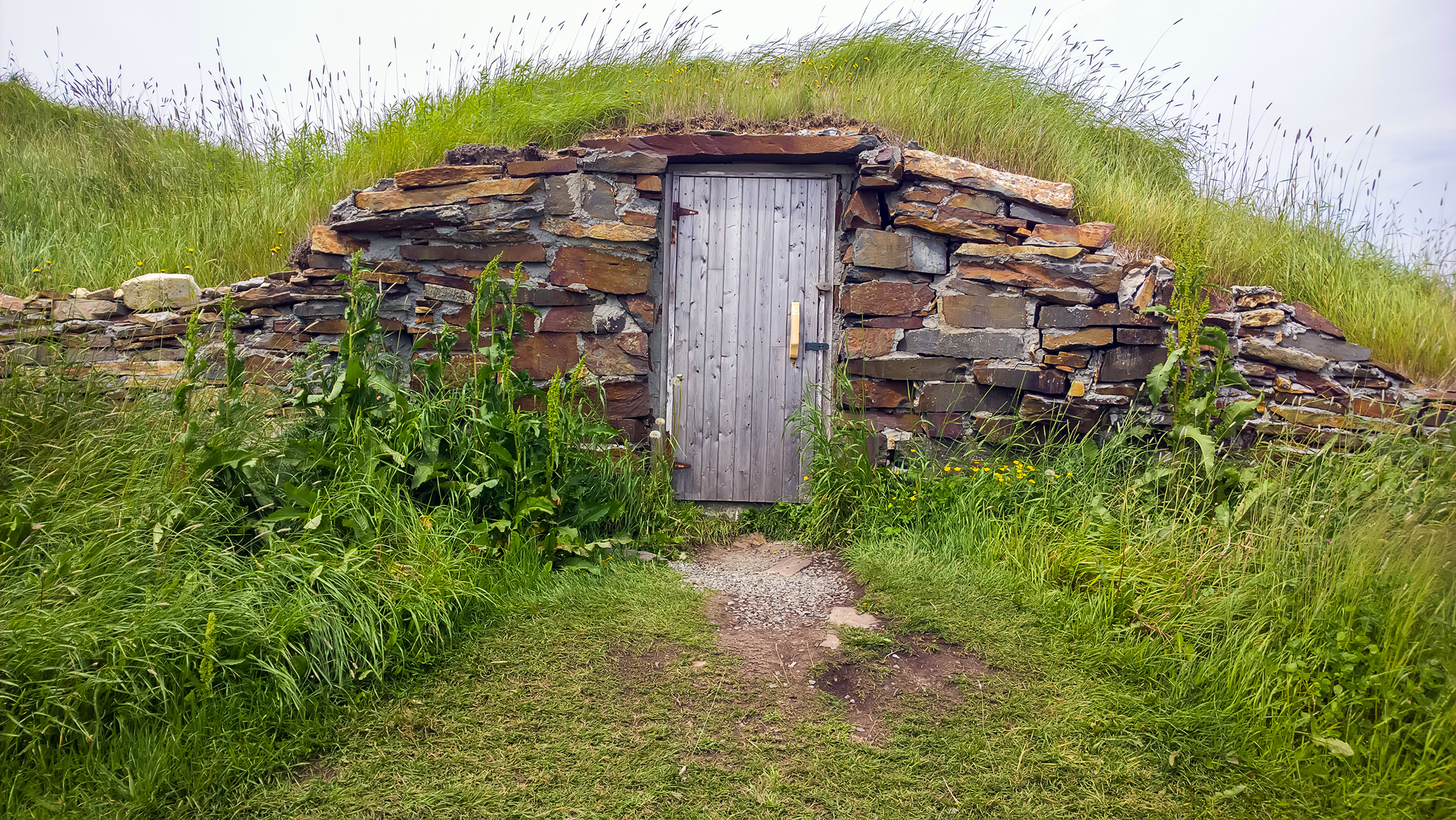
On older farmsteads, a low door in a bank or a small mound near the house can be the last clue that a family once stored much of its food underground. Before electric refrigeration, the root cellar was one of the most dependable ways to keep a harvest usable through winter.
The idea was simple. Soil changes temperature much more slowly than air. A room built partly or completely below ground stayed cooler through summer and was protected from the deepest winter cold. Families could keep root vegetables, apples, canned goods and other foods there under conditions that were hard to maintain inside a heated house.
Root cellars took many forms. Some were dug into hillsides. Others were pits lined with stone, brick or timber and covered with earth. One farm might have a cellar beneath the house, while another family built a separate structure near the garden. In tornado country, the same underground space could double as a storm shelter.
Cold, damp and ventilated
Good storage took more than cold. Humidity and ventilation mattered. Many root crops keep best in cold, moist conditions. Modern Extension guidance still lists roughly 32 to 40 degrees Fahrenheit with high relative humidity as good storage conditions for many vegetables. Moving air helps carry off the heat and gases stored produce gives off, because harvested vegetables stay biologically active after they are picked.
Different foods wanted different conditions. Onions and garlic prefer drier storage. Potatoes, carrots and many other root crops tolerate or prefer more moisture. Apples release ethylene and strong odors, so families often kept them apart from other produce when they could.
The best cellars used outside air strategically. Low intake vents and higher exhaust vents encouraged natural circulation, bringing in cold night air in the fall and releasing warmer air. In very cold climates, families had to manage the vents so produce didn’t freeze. The cellar needed attention, just less energy than mechanical refrigeration.
Rodents were constant competition. Doors had to fit well, vents needed screening, and bins had to be built so the family could find and remove spoiled produce. One rotten apple really could cause trouble nearby, because decay organisms and ethylene can speed up losses.
A cellar also forced families to check their food regularly. Potatoes sprouted, apples bruised and canned jars could fail. Good storage meant sorting produce and using it before spoilage spread. Nobody could forget food in the cellar until spring.
That routine explains why root cellars often sat close to the kitchen or garden rather than at the far edge of a property. Convenience mattered when somebody made the trip every day for potatoes, carrots, apples or canned goods. Food storage was part of the farmstead’s design, and an old root cellar shows how closely the farm household once followed the harvest calendar.
What changed
So what happened to the root cellar? Rural electrification and household refrigeration changed the equation. By the mid-20th century, refrigerators and freezers gave families more precise, convenient food storage inside the house. Grocery stores, better roads and year-round distribution reduced the need to keep an entire winter’s supply of produce at home.
Electricity didn’t erase the old storage methods overnight. Rural electrification spread gradually, and many households used root cellars alongside iceboxes, pressure canners and eventually refrigerators. As freezers got larger and grocery access improved, carrying food in and out of an underground room made less sense.
Many cellars became storm shelters or storage rooms, and others were simply abandoned. Today, interest in gardening, homesteading and low-energy food storage has brought the idea back in a small way. A modern root cellar can still work, but it needs the same things the old ones did: drainage, ventilation, rodent control and temperature management.
In North Texas, heat adds a challenge for anyone trying to revive the idea. A cellar must be deep and well insulated enough to keep from becoming a warm underground closet. Drainage matters just as much during heavy rain. The historic design principles still apply, but modern builders need to account for local soil, groundwater and building codes.
By Beth Watkins
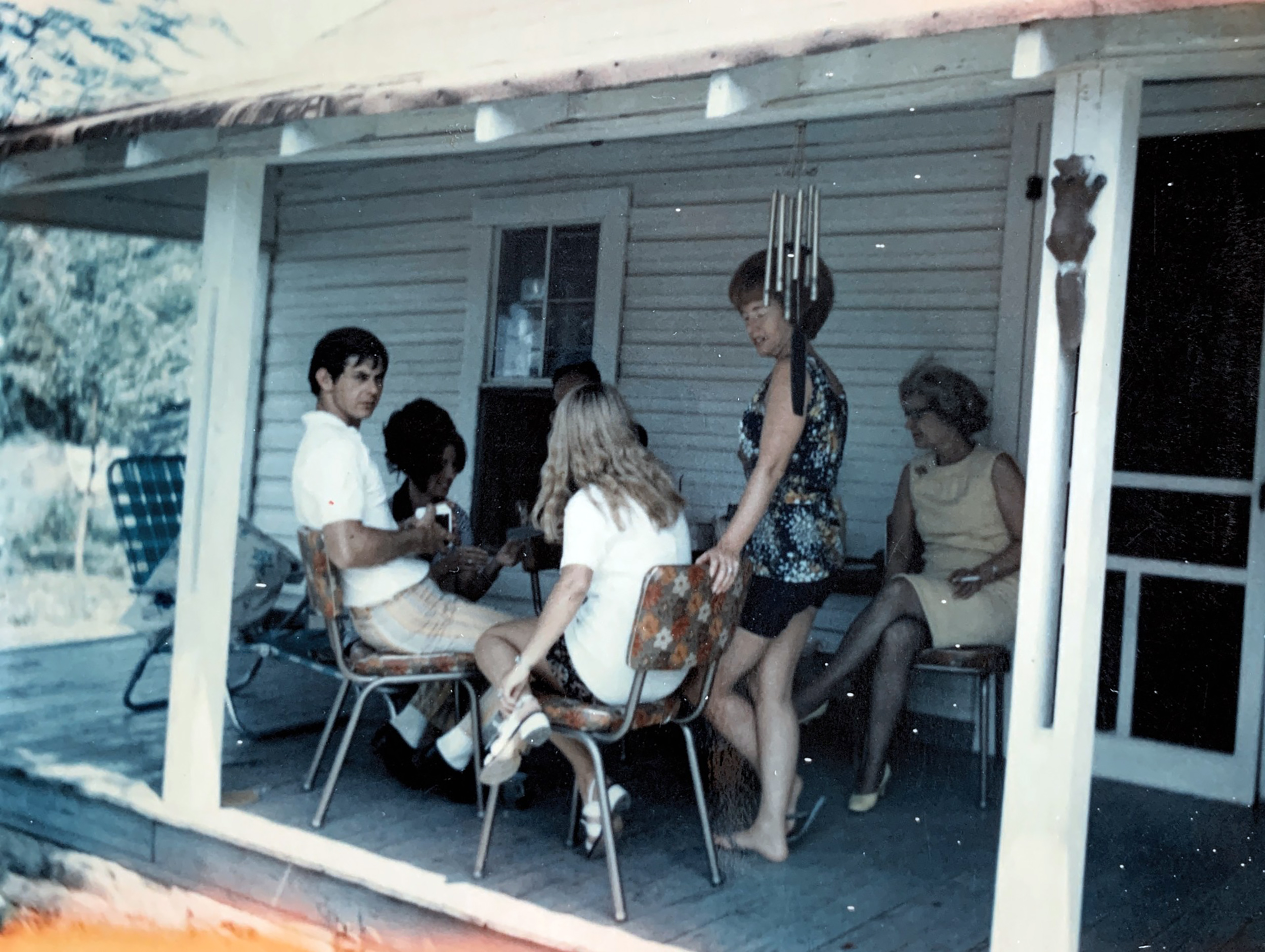
I miss the days of living in a little one-stoplight town. Everybody knew everybody. If you rode your bike somewhere you weren’t supposed to be, by the time you got home your momma had already gotten a phone call. And if you sneezed on the east side of town, Miss Martha on the west side was already adding your sinuses to the church prayer list.
Every town had a few little old ladies who somehow knew everybody’s business and didn’t mind discussing someone else’s dirty laundry. Today, I guess they call it “spilling the tea.” The difference is, back then they whispered about it over coffee. Today folks post it before breakfast.
Social media wears me smooth out.
But it’s like watching a train wreck. You just can’t look away.
My sister, Glenna, lives a couple of hours from me. Most mornings, before noon, one of us sends the other a screenshot of the most jaw-dropping post we’ve found on our local community page.
One day someone posted, “Can somebody bring my mom and me a Pepsi? She gets paid tomorrow and will pay you back.”
I answered with nothing but a laughing emoji.
Then I sent her one from my town.
“Can somebody bring me a garden hose? My little girl wants to play in her kiddie pool, but I don’t have a hose to fill it.”
I texted my sister, “Do they own a bucket? A water pitcher? Maybe rinse out a trash can and carry water!”
Now before anybody gets their feathers ruffled, my sister and I have a pact. We never comment. We just send our replies to each other. My husband says we’d be labeled as “mean girls.”
We prefer to think of it as community service… spreading common sense from one end of Oklahoma to the other.
Now don’t misunderstand me. If your house burned down, your husband lost his job, or life knocked the wind out of you, neighbors ought to show up before you even have to ask. That’s what communities are for.
But somewhere along the way we stopped asking ourselves, “How can I figure this out?” and started asking, “Who can fix this for me?”
It wasn’t because life was easier. It was because people expected more from themselves and less from everyone else.
I miss that.
Sometimes I wonder how we’d survive if we had to live the way our grandparents did. Can you imagine how many folks would be in real trouble if they had to haul a bucket of water from the creek just to have water in the house?
I also miss when every thought didn’t need an audience.
Back in my hometown there was a widow whose heart was bigger than her house. She loved to cook, and she loved having company. Instead of sitting on her front porch wishing someone would stop by, she’d cook a big meal and call the fire department or the police department and invite them over for supper.
She didn’t wait for community. She created it.
That little lady never threw herself a pity party. She never posted about being lonely or wondered why nobody came to visit.
She simply moved first… and they came.
She chose to be the blessing instead of waiting on one.
Remember when folks knew your business because they lived life alongside you? Today everyone knows your business because you posted it, with filters, hashtags and a play-by-play.
Now don’t get me wrong. I use social media too. It’s how I keep up with family and friends who live far away. I love watching babies grow up, seeing vacation pictures, celebrating anniversaries and rejoicing over answered prayers.
And yes… I use it for entertainment.
Y’all letting AI give you a makeover and posting it like it’s an actual picture… come on now. Every once in a while it’s fun to pretend your Fairy Godmother showed up with a pumpkin, a couple of mice and a little bibbidi-bobbidi-boo. But every day?
Cinderella… it’s after midnight. You’ve lost your shoe.
I miss when people were a little more humble. If they received a blessing, they thanked God for it. They let their character do the talking instead of their Facebook page.
Somewhere along the way we’ve traded humility for visibility.
In our little one-stoplight town, we didn’t need an app to find our friends. We knew exactly where they’d be. We’d spend Friday nights dragging Main, making lap after lap from one end of town to the other. If you didn’t have enough gas money, you’d park at the tag office or the school parking lot and sit on the hood of your car.
We were connected long before Wi-Fi.
The funny thing is, we have more ways to communicate than any generation before us, yet somehow we’ve never been lonelier. We can video call someone on the other side of the world, but many of us don’t know the name of the person who lives across the street.
We’ve traded front porches for Facebook, driveways for direct messages, and waving across the fence for clicking a thumbs-up emoji.
Maybe the answer isn’t another app, another platform or another community page. Maybe it’s remembering how we were raised.
Figure a few things out for yourself.
Keep a few things to yourself.
Help your neighbor before they ask.
Wave at people you disagree with.
Sit on a front porch every once in a while.
And every now and then… tuck your crazy in.
By Lacey Vilhauer
Ingredients
- 1 pound (16 ounces) ziti noodles
- 2 tablespoons olive oil
- 4 garlic cloves, pressed
- 1 medium yellow onion, diced
- 1 pound ground beef
- 1 pound mild Italian sausage
- 5 cups marinara sauce
- 1 teaspoon Italian seasoning
- 1 teaspoon kosher salt
- ½ teaspoon crushed red pepper flakes
- 2 cups shredded mozzarella cheese, divided
- 1 cup whole milk ricotta cheese
- ½ cup grated Parmesan cheese, divided
- 3 tablespoons chopped fresh parsley, divided
- ¼ teaspoon black pepper
- 2 large eggs
Instructions
Cook ziti according to package directions. Drain and set aside.
While the pasta cooks, heat olive oil in a large skillet over medium-high heat. Sauté garlic and onion for 2 minutes. Add beef and sausage and cook until browned. Drain off excess fat and return the meat to the skillet.
Add marinara sauce to the skillet. Use your favorite pasta sauce or make your own! Stir in Italian seasoning, salt and red pepper flakes. Simmer on low heat until the pasta is done. Stir half of the meat sauce into the cooked noodles and reserve the rest for layering.
In a small mixing bowl, combine 1 cup of the mozzarella, the ricotta, ¼ cup of the Parmesan, 2 tablespoons of the parsley, the black pepper and the eggs. Mix until combined.
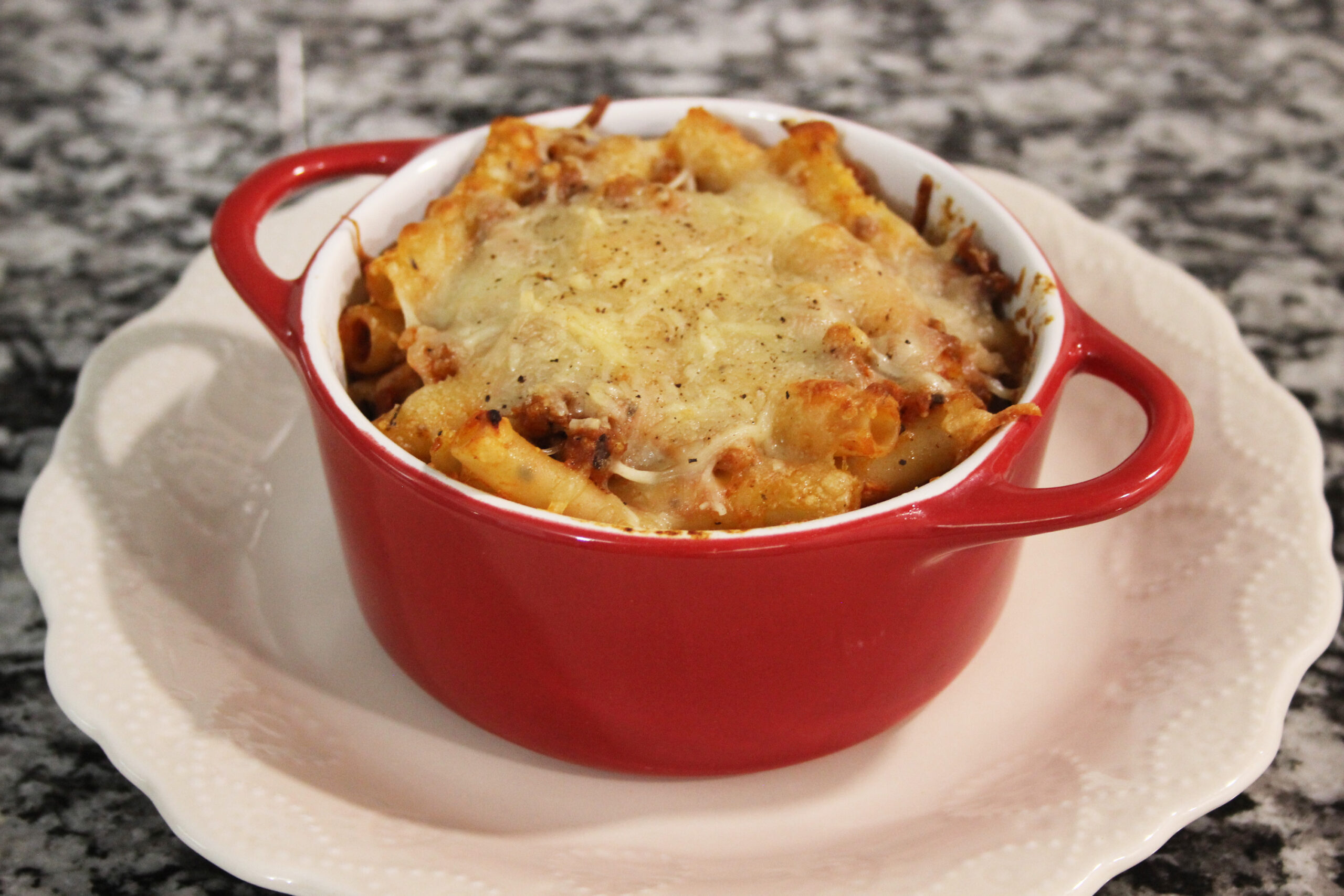
Assemble the ziti in a 13×9 baking dish or in ramekins for individual servings. Spread half of the sauced noodles in the bottom. Dollop half of the cheese mixture over the top and spread it evenly, then add ½ cup of mozzarella and half of the reserved meat sauce.
Repeat with the remaining noodles, cheese mixture and meat sauce. Top with the remaining ½ cup of mozzarella and the remaining ¼ cup of Parmesan.
Bake uncovered at 375 degrees for 20 to 25 minutes, until bubbly and the cheese is melted. Remove from the oven and top with the remaining 1 tablespoon of parsley. Serve hot and enjoy!





-
 Country Lifestyle2 years ago
July 2017 Profile: J.W. Hart
-
 Farm & Ranch2 years ago
From Plow to Plentiful: The Most Important Inventions in Agricultural History
-
 Attractions9 years ago
48 Hours in Atoka Remembered
-
 Outdoors9 years ago
Grazing Oklahoma: Honey Locust
-
 Equine9 years ago
Umbilical Hernia
-
 Country Lifestyle5 years ago
The Two Sides of Colten Jesse
-
 Farm & Ranch8 years ago
Hackberry (Celtis spp.)
-
 Attractions3 months ago
Oklahoma Ghost Towns – Navajoe