
Farm & Ranch
Blue-Green Algae

By Barry Whitworth, DVM
Recently, I accompanied a County Extension Ag Educator on a farm visit about concerns of blue-green algae toxicity. A few days later, another County Extension Educator emailed me about a cattle producer with the same concerns. With hot, dry weather across parts of Oklahoma, livestock producers should be watching their ponds closely for blue-green algae.
Blue-green algae is not an algae at all. It is a bacterium, called a cyanobacterium. The most common species in the Midwest are Microcystis, Oscillatoria and Anabaena. The bacterium lives in most bodies of water, but it becomes a problem during periods of rapid growth fueled by high nitrogen and phosphorus levels and warm, sunny weather. Most cyanobacteria problems occur in summer and fall, but high toxin release can happen any time of year. Oklahoma has recorded cases as early as March.
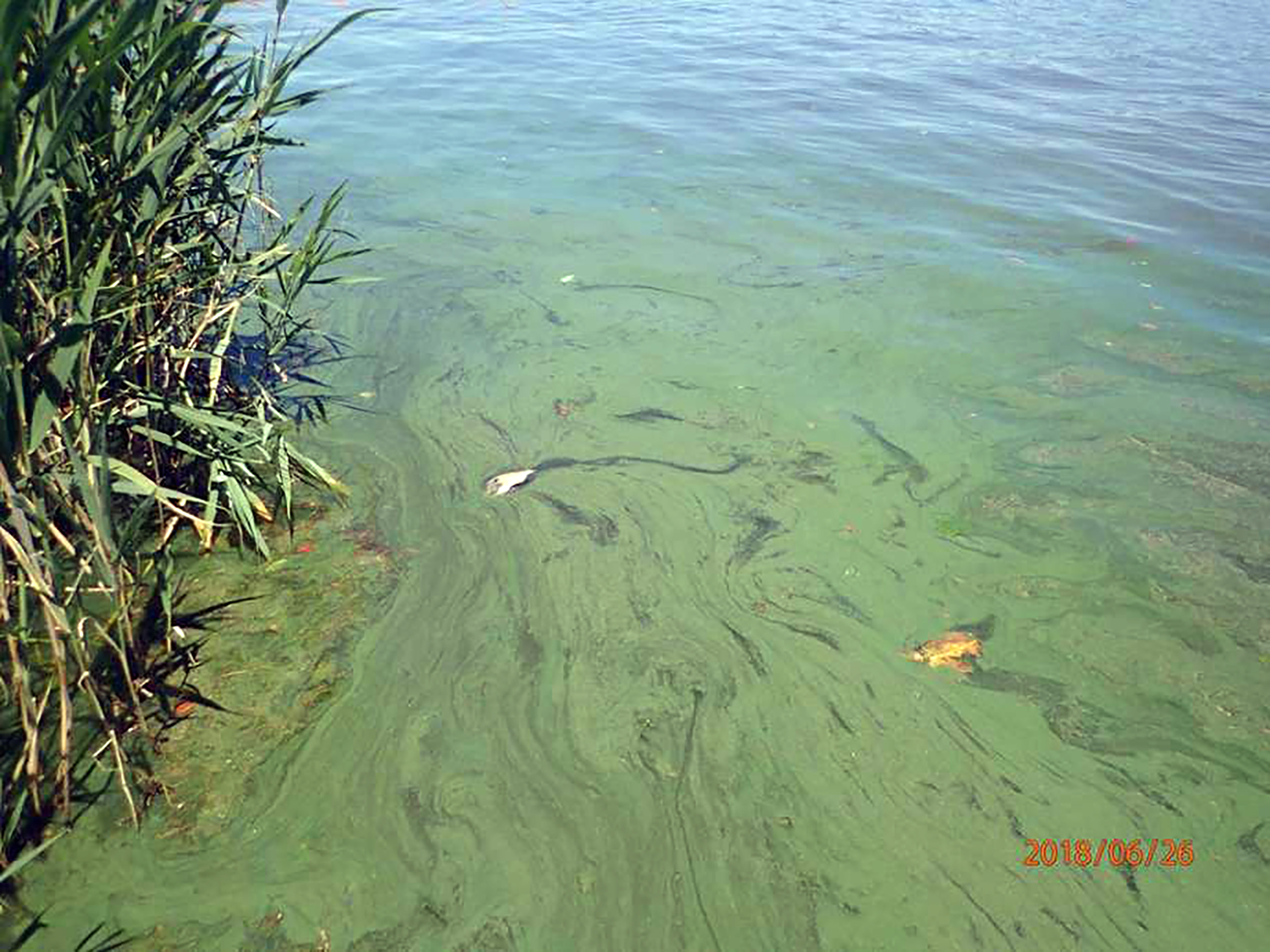
When the bacteria overgrow, they die and float to the top, forming a scum on the water. The scum usually looks blue-green, but its color can vary. Wind can push the scum around the pond and concentrate toxic levels of dead bacteria in certain areas. Rain or wind can break up the scum and lower the risk, but not always.
All livestock, pets, wild animals and humans are susceptible to blue-green algae toxicity. The amount of water needed to cause toxicity depends on the species of animal, the concentration of toxins in the water and how much water the animal drinks. One quart of highly concentrated water can kill a cow.
Most producers don’t recognize a blue-green algae problem until they find dead livestock in or near a pond. Most cattle that drink contaminated water die, though producers occasionally find sick cattle. Clinical signs depend on which toxin the animal ingested. Blue-green algae produce two types: neurotoxins, which affect the nervous system, and hepatotoxins, which affect the liver. Cattle affected by a neurotoxin show muscle tremors, reluctance to move and breathing problems early on, followed by convulsions and death. Cattle that drink water containing liver toxins develop weakness, pale mucous membranes, gastroenteritis, nervous signs and death. Animals that survive lose weight and become poor doers. Survivors may also develop photosensitization, which makes light-colored skin prone to sunburn.
Veterinarians typically base a diagnosis on exposure to blue-green algae along with clinical signs or sudden death. If you suspect blue-green algae killed your cattle, collect a water sample right away from where the algae is heaviest. Wind can disperse the toxin, so speed matters. Then call a veterinarian to perform a necropsy, which will rule out other causes of death. The veterinarian will likely take tissue samples for testing and may examine rumen contents for blue-green algae.
The water sample will need to go to a laboratory for analysis. For guidance on necropsy or water sampling, contact the Oklahoma Animal Disease Diagnostic Laboratory at (405) 744-6623 or visit https://oaddl.okstate.edu/.
There is no known antidote, and treatment rarely works. Producers need to focus instead on the conditions that favor blue-green algae. Algae bloom in sunny, warm weather, and the worst blooms occur in ponds that catch runoff high in nutrients. Inspect ponds any time these conditions are present, and be ready to provide another water source in a crisis.
Blue-green algae toxicity is not a new problem for Oklahoma livestock. When the weather favors algae growth, watch your ponds for blue-green scum on the water, and act quickly if you find it. Oklahoma State University Extension offers an excellent fact sheet on blue-green algae and how to manage it at https://extension.okstate.edu/fact-sheets/toxic-blue-green-algal-blooms. If you have questions about blue-green algae, contact your local veterinarian or your Oklahoma State University County Extension Agriculture Educator.
References
Meehan, M. A., Galbreath, J., & Mostrom, M. (2026). Cyanobacteria (blue-green algae) poisoning [Fact sheet]. North Dakota State University Extension.
Morgan, S. E. (2011). Water quality for cattle. Veterinary Clinics of North America: Food Animal Practice, 27(2), 285.
Newcomer, B. W. (2022). Toxicologic insults to the bovine liver. Veterinary Clinics of North America: Food Animal Practice, 38(3), 421–432.
Osweiler, G. D., Carson, T. L., Buck, W. B., & Van Gelder, G. A. (1985). Toxic blue-green algae. In Clinical and Diagnostic Veterinary Toxicology (3rd ed., pp. 451–452). Kendall/Hunt.
By Tony Dean, tonydean.tx1@gmail.com
Buffalograss is one of the historically important grasses of the plains. It is adapted to a wide area of the central U.S., from Texas to Montana, and it was an important source of grazing for the vast herds of bison that roamed the plains. It is still an important forage resource for cattle and other grazing animals today.
Buffalograss is a low-growing, warm-season perennial. It is adapted to clay and loamy soils and grows best in the 15- to 30-inch rainfall belt. In Texas, you rarely see it in far East Texas or on deep sandy soils. During the growing season it has a soft grayish-green color, then turns straw-colored when dormant.
It can grow across large areas in a virtually solid stand or blend with other grasses if conditions allow. In Texas, its companions normally include blue grama, hairy grama, Texas grama and possibly sideoats grama.
Buffalograss doesn’t produce much volume, growing no more than 5 to 8 inches tall, but cattle strongly prefer it. Crude protein during the summer months runs 10 to 12 percent, and it cures well during the winter dormant season. Cattle will choose it in most pastures but usually don’t overgraze it heavily because of its short growth form. It keeps its vigor if grazed no shorter than 2 to 3 inches.
Male and female plants
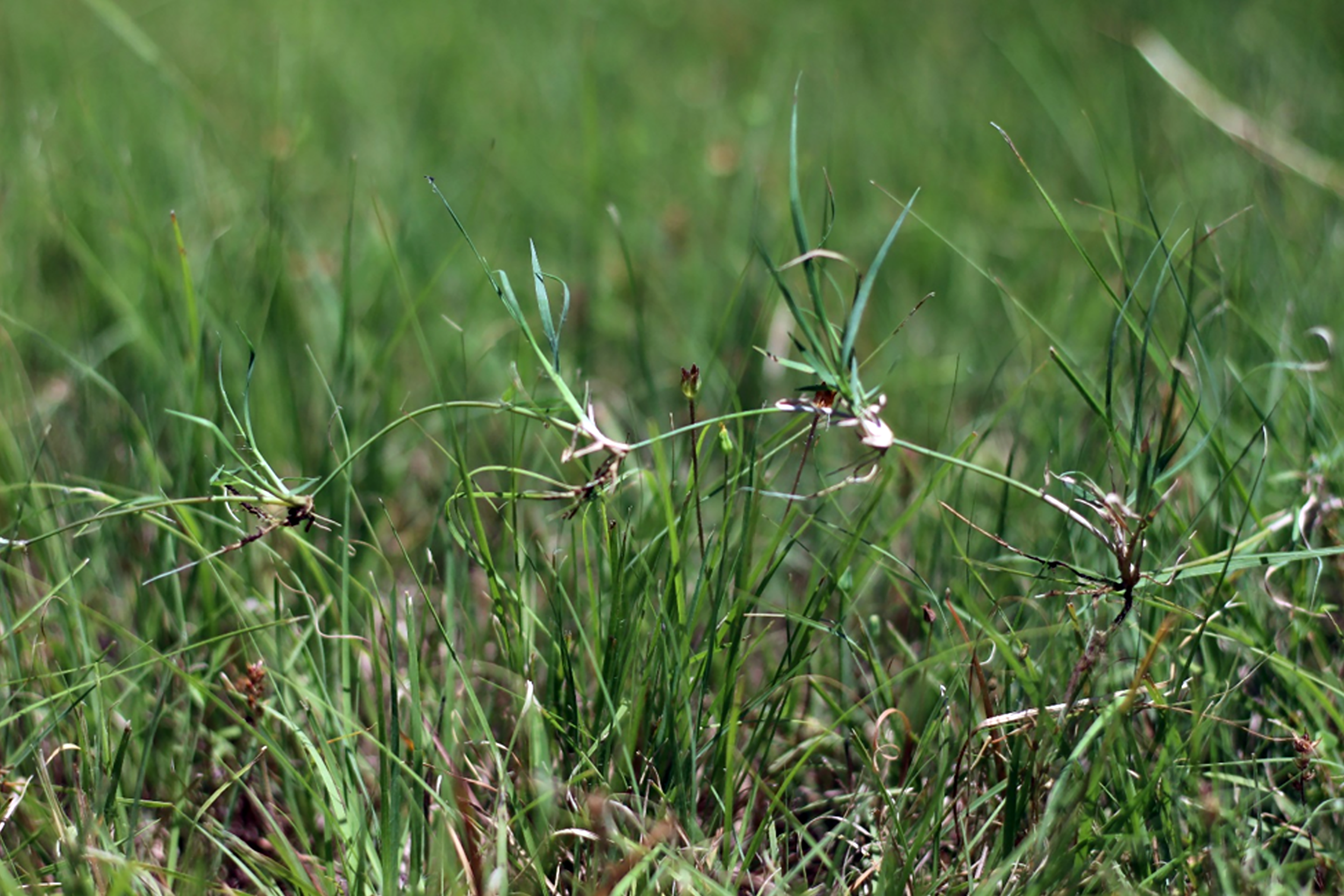
Buffalograss is one of the few native grasses that produces male and female plants separately. The small seed heads, or flags, mark the male plants. Buffalograss sometimes forms small colonies a few square feet in size dominated by either male or female plants. The female plants produce the seed, a hard bur that sits low among the leaves near the ground.
Buffalograss reproduces by seed and by runners called stolons. Stolons grow along the soil surface and can root down at the nodes. A good way to identify buffalograss is the many stolons growing from both male and female plants. Stolons from male plants are male, and stolons from female plants are female.
Those stolons give buffalograss added erosion control. It is considered a sod-forming grass.
Telling it apart
People sometimes confuse buffalograss with curly mesquite, another low-growing grass. Before flowering, you can tell them apart by pulling up a stolon and running the stretch between the nodes across your lips. If it feels rough like sandpaper, it is curly mesquite. If it is smooth, it is buffalograss.
In the yard
Besides its value as forage, buffalograss is often used in lawns designed to tolerate drought. With irrigation and fertilizer, it doesn’t get much taller, but it forms a denser sod and turns darker green. During drought, it fades to a lighter straw color but can survive long dry periods if it has a healthy root system. It isn’t particularly shade tolerant and doesn’t do well in high-traffic areas.
Seed is available for planting, and treated seed usually germinates more readily than untreated seed. Soil temperatures in May normally favor germination, but the seed won’t germinate until it has adequate moisture.
By NTFR Staff
Farm country has never been short on rules that begin with “My granddad always said.” Some grew out of years of careful observation. Others survived because they were memorable, even if they were never accurate. Fall is a good time to sort a few of them out.
Take the old advice to feed livestock before bad weather. It makes real sense, especially when cold, wind and moisture raise an animal’s energy needs. For cattle and horses, good-quality forage also creates heat through digestion. The useful part of the saying is that animals heading into cold stress need water, forage, shelter and enough energy available before conditions get bad. A full belly won’t protect them from a storm by itself.
Then there is the belief that animals can predict the weather. Cattle lying down don’t reliably forecast rain. Horses running the pasture aren’t a dependable sign that a front is coming. Animals do respond to changes in temperature, wind, insects and barometric pressure, and experienced stockmen often notice behavior before they notice the weather. That still falls short of a proven forecast.
Persimmon seeds are another favorite. Split the seed and, according to folklore, a spoon-shaped kernel means heavy snow, a knife means cutting cold and a fork predicts a mild winter. It’s a fun tradition, but the shape inside a persimmon seed is the developing plant embryo. It can’t model a season’s weather.
The same goes for woolly worms. People have long used the width of the brown band on woolly bear caterpillars to predict how hard the winter will be. Entomologists haven’t found evidence that the color pattern can forecast months of weather. The band can vary with the insect’s age, species and growing conditions.
Some sayings are based on real natural signals but are too broad to use literally. “When the leaves turn early, winter will be hard” confuses plant stress with forecasting. Early color can come from drought, disease, heat or local conditions. Likewise, unusually thick coats on horses or cattle may reflect genetics, day length, age and health rather than an animal preparing for a particular winter.
Bird and insect behavior inspires plenty of predictions, too. Large flocks, low-flying birds or busy squirrels may coincide with changing weather because animals respond to current conditions. That doesn’t mean wildlife can predict a whole winter months ahead. Pay attention to what animals are doing now, but don’t build a seasonal forecast from it.
The same caution applies to other signs. A red sunrise may point to moisture under some conditions, but it isn’t a guarantee. A big acorn crop doesn’t prove a hard winter is coming. Livestock lying down doesn’t mean rain is on the way. Trouble starts when observation turns into certainty.
The sayings that hold up
Other old advice has held up much better. “Don’t turn hungry cattle onto lush pasture” is still sound management. Hungry animals eat fast and are more likely to overeat unfamiliar or risky forage. Gradual transitions are still recommended when cattle move to high-quality forage, grain or pastures where bloat or plant toxicity is a concern.
“Make hay while the sun shines” also deserves its reputation. Hay quality depends heavily on curing conditions. Rain after cutting can leach nutrients, shatter leaves and raise the chance of mold when hay is baled too wet. Modern equipment makes hay faster, but you still need a good weather window.
One of the most useful pieces of old farm wisdom is simply to watch what is normal. A cow that hangs back, a horse that leaves feed, a water trough that empties faster than usual or a patch of pasture cattle suddenly avoid can all be early clues. Producers who work with the same animals and ground every day build a baseline no phone app can replace.
Another old rule worth keeping: fix small problems before weather makes them big. A loose gate hinge in September becomes a gate on the ground during a north wind. A slow water leak becomes an ice problem. A thin cow that looks acceptable in warm weather may lose condition fast once her maintenance requirements rise. That is the advantage of doing work while conditions are still forgiving.
The strongest farm sayings tend to be the least magical. “Never let the water tank go dry.” “Buy the best hay you can afford, then waste as little as possible.” “A good fence is cheaper than a bad neighbor.” They survive because they point toward management, not prophecy.
Some old advice also survives because it was built for a world with less margin for error. If the well failed, no delivery truck was coming with water. If hay spoiled, you couldn’t always replace winter feed with a phone call. Preparing early was risk management, and that part still translates. Technology gives producers better forecasts, better diagnostics and faster communication, but none of it fixes a broken water line during an ice storm.
There is value in keeping the folklore anyway. Weather signs and sayings are part of rural culture, and they often start conversations about how people watched the seasons before radar apps and seven-day forecasts. The trick is knowing which sayings belong in the toolbox and which belong around the coffee pot.
The persimmon seed can stay, as long as nobody mistakes it for the National Weather Service. The old rule most worth keeping may be the simplest: pay attention early enough that you still have choices.

By Barry Whitworth, DVM
Scrapie is a chronic, progressive disease of the central nervous system that affects sheep and goats. The U.S. Department of Agriculture (USDA) has worked for decades to eliminate scrapie from small ruminant operations. The United States was positioned to meet the World Organization for Animal Health’s seven-year benchmark for self-declared scrapie freedom in January 2028. Unfortunately, the Animal and Plant Health Inspection Service (APHIS) confirmed classical scrapie in a sheep slaughtered at a facility in Oregon. With this detection, national scrapie-free status for the U.S. may be pushed back to sometime in 2033.
Scrapie is the oldest of the neurodegenerative diseases known as transmissible spongiform encephalopathies (TSEs). Other TSEs include bovine spongiform encephalopathy, known as mad cow disease; chronic wasting disease, found in deer; and Creutzfeldt-Jakob disease, found in humans. TSEs are protein-misfolding diseases that damage the brain, and they are always fatal.
Researchers don’t fully understand what causes scrapie, but evidence points to an infectious protein called a prion. These infectious prions damage the normal prion proteins found in the brain. The misfolded proteins lead to brain damage and the clinical signs of the disease. Prions resist destruction, so once they are in the environment, they are difficult to remove.
Scrapie appears to spread mainly by the oral route. Lambs and kids typically ingest prions when they contact placentas and birthing fluids from infected ewes and does. Older animals can be exposed the same way. Colostrum and milk are also sources of prions, and urine, feces, saliva and nasal secretions may contain them as well. Once ingested, prions cross into the lymphoid system, where they incubate for a long time, usually two to five years, before entering the nervous system.
Genetics plays a part in scrapie infections. Some breeds are more susceptible because of their genetic makeup. Genetic testing can help producers select breeding stock with resistant genes.
The clinical signs most associated with scrapie are intense itching (pruritus), incoordination (ataxia) and wasting. Early on, producers may notice slight behavior changes in infected sheep and goats. Animals may have a staring or fixed gaze, fail to respond to herding or act aggressively toward objects. As the disease progresses, signs include weight loss despite a normal appetite, incoordination, head tremors and intense itching. In the final stages, sheep go down and may show blindness, seizures and an inability to swallow. Once the first clinical signs appear, death usually follows in one to six months.
The gold standard for diagnosing scrapie after death is immunohistochemistry testing of brain tissue, along with microscopic examination of the brain for the lesions characteristic of TSEs. Veterinarians can also diagnose live animals by testing lymphoid tissue from the third eyelid and rectal mucosa scrapings.
No treatment exists for scrapie, so prevention is key. Biosecurity is a good starting point. Maintain a closed flock, and buy replacement animals only from certified scrapie-free flocks. Limit visitors’ contact with your animals. Keep lambing and kidding areas clean, and dispose of manure and bedding contaminated with birthing fluids and placentas properly. Use genetically resistant animals for breeding to produce genetically resistant offspring.
A novel, or atypical, form of scrapie also exists. Sometimes called the Nor98 variant, it was first found in Norway and has been diagnosed in the U.S. as well. It usually turns up in a single old animal in a flock or herd, and its brain lesions differ from those of classical scrapie. Experts currently believe natural transmission of atypical scrapie is unlikely.
Small ruminant producers can help the USDA’s eradication effort by contacting the agency when an adult sheep or goat shows clinical signs of scrapie or when an adult animal dies or is euthanized. Contact Oklahoma State Veterinarian Dr. Rod Hall at 405-522-6141 or USDA Veterinary Services at 405-254-1797. Collection and testing of samples for scrapie are free.
Another important step in eliminating scrapie, and other diseases, is identifying animals with official USDA ID. The USDA National Scrapie Eradication Program requires most sheep to be identified to their flock of birth when they leave their home premises for sale, show or events, or when they commingle with other sheep.
Unfortunately, the Oregon sheep diagnosed with scrapie had no tag, which will hamper USDA traceback efforts. You can find more information on official ID at https://www.aphis.usda.gov/nvap/reference-guide/animal-identification/sheep-goat.
The U.S. needs to eliminate scrapie. Once it does, the country will gain additional export markets for sheep and goat products. Oklahoma State University Cooperative Extension Service has an informative fact sheet on scrapie. Ask your local county Extension office for fact sheet VTMD-9135, or view it online at https://extension.okstate.edu/fact-sheets/scrapie.html. Sheep and goat producers may also want to visit the USDA National Scrapie Eradication Program website at https://www.aphis.usda.gov/livestock-poultry-disease/sheep-goat/scrapie.
References
Cassmann, E. D., & Greenlee, J. J. (2020). Pathogenesis, detection, and control of scrapie in sheep. American Journal of Veterinary Research, 81(7), 600–614. https://doi.org/10.2460/ajvr.81.7.600





-
 Country Lifestyle2 years ago
July 2017 Profile: J.W. Hart
-
 Farm & Ranch2 years ago
From Plow to Plentiful: The Most Important Inventions in Agricultural History
-
 Attractions9 years ago
48 Hours in Atoka Remembered
-
 Outdoors9 years ago
Grazing Oklahoma: Honey Locust
-
 Equine9 years ago
Umbilical Hernia
-
 Country Lifestyle5 years ago
The Two Sides of Colten Jesse
-
 Farm & Ranch8 years ago
Hackberry (Celtis spp.)
-
 Attractions4 months ago
Oklahoma Ghost Towns – Navajoe