
Equine
The Pull of the Barn

When I was younger, I saw plenty of old Westerns. They were fun to watch, but one part always stressed me out. Inevitably, a cowboy would get shot or thrown from his horse, and while the cameras stayed on the fallen rider, I worried about the horse. Would it wander around lost on the prairie, never finding its way back? The truth is, most horses know exactly where home is. Turn one loose, and it will drift toward the barn. Ride one out, and the trip away from home feels steady, but the return picks up pace the moment the barn roof comes into sight. We even have a name for it: barn sour.
Horses are prey animals, and survival has always depended on familiar ground. For a domestic horse, the barn means food, water, and the company of the herd. Ethologists (scientists who study animal behavior) point out that horses are quick to learn patterns. When hay and grain appear in the same place every day, that spot becomes magnetic. Over time, repetition lays down mental trails as clearly as cattle wear down physical ones in a pasture. What appears to be stubbornness is actually instinct. The barn equals safety, and safety equals survival. Riders from cavalry days to modern ranches have written about horses quickening their pace on the way home. And though the land changes, that pull never does.
People are not so different. We all have barns in our lives — comfort zones we gravitate toward, routines that steady us. They serve a purpose. Like a horse standing at the gate, we lean on safe ground when life feels uncertain. But the pull can also hold us back. A horse that refuses to leave the yard never discovers what lies beyond the fence, and the same is true for us.
That balance shows up in history too. Old cattle trails once served their purpose, guiding herds north and helping to build economies. But when railroads and fences changed the landscape, those well-worn tracks became ruts. Progress required new paths. Our own habits work the same way. Some keep us grounded. Others only circle us back to where we started.
When I see my horses drifting toward the barn, I think less about impatience and more about instinct. They are drawn to the familiar, and so am I. The barn matters. It is the anchor point, the place of rest. But the pasture matters too, because growth is waiting outside the gate.
Those old Westerns had it right in at least one way. The cowboy’s horse was never going to wander off aimlessly. It would head back to camp, back to the barn. That simple truth still plays out in every pasture and arena today. Horses know where home is. The question is whether we will let the pull of our own barns keep us tied too tightly, or whether we will use them as a base to step farther into the wide-open ground ahead.
By NTFR Staff
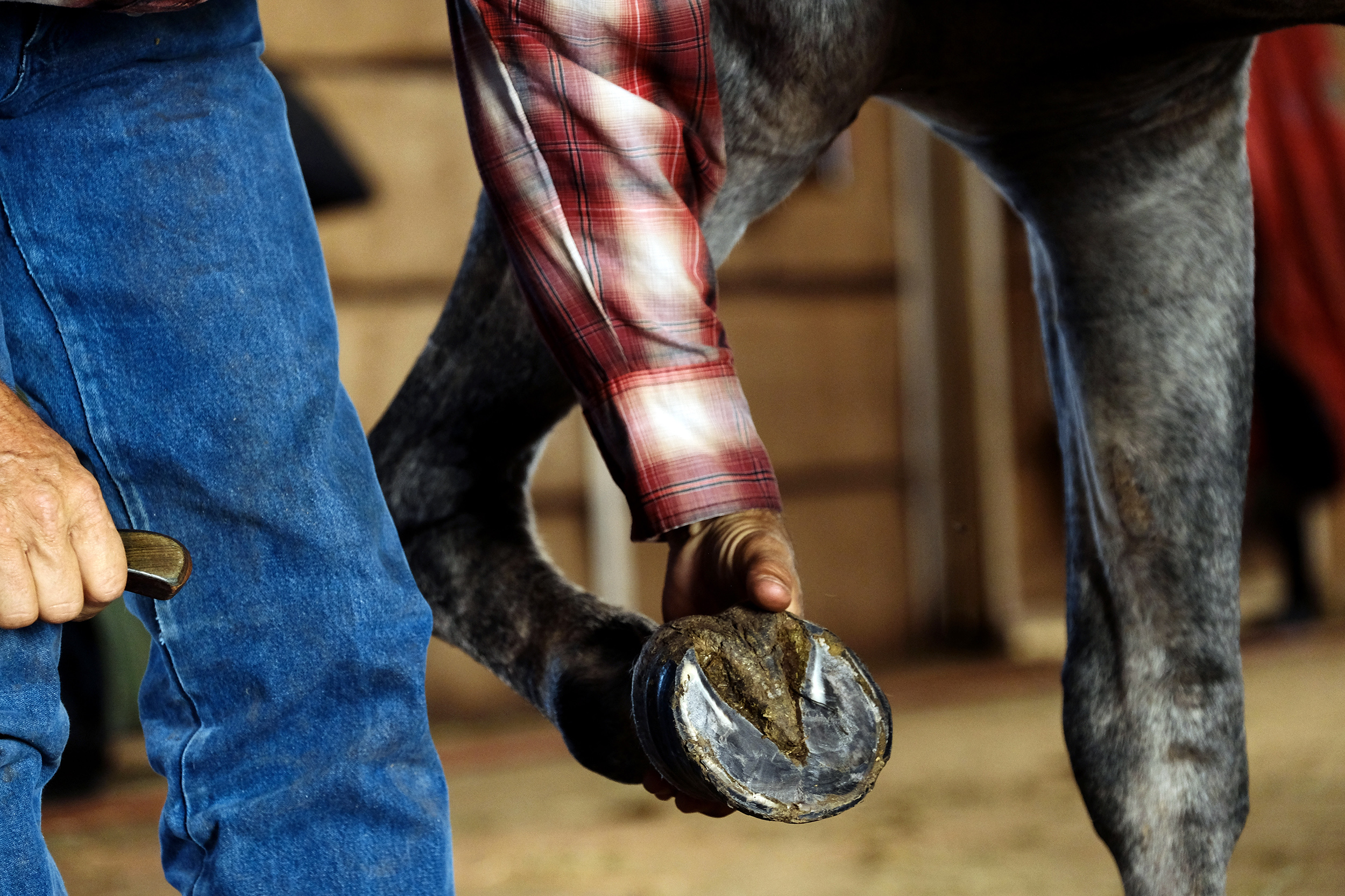
Pulling a horse’s shoes for winter is one of those traditions that can be an excellent idea for one horse and a poor one for the horse in the next stall.
The case for going barefoot is simple. A horse with a lighter winter workload may not need the hoof protection it needed through show or riding season. Bare feet can also grip better than ordinary steel shoes on some slick surfaces, and shoes can pack with snow and ice in colder climates.
North Texas winters bring different conditions than northern states. Snow packing isn’t usually the main problem. Hard, frozen ground, rock, mud and quick swings between wet and dry may matter more. A thin-soled horse that is comfortable in shoes can get sore when the shoes come off and the ground turns hard. A horse that keeps working on abrasive footing may still need protection.
Start the decision with workload and hoof quality. Horses with good hoof walls, adequate sole depth and modest winter work often transition well. Others rely on shoes for therapeutic support, correction, protection or traction, and their shoes shouldn’t come off just because it’s December.
Some owners hope pulling shoes will automatically improve hoof quality. The outcome depends on why the horse was shod in the first place. A horse with healthy feet that wore shoes mainly for competition may do well barefoot. A horse shod because of thin soles, conformation problems or chronic lameness may lose an important part of its support system.
The footing matters more than the season. A dry North Texas pasture can turn rock hard after a freeze, then become deep mud after rain. Repeated moisture changes can soften hoof walls and contribute to lost shoes, while frozen, uneven ground can bruise a sensitive sole.
Timing matters, too. Pulling shoes and aggressively trimming the foot at the same visit can leave some horses tender. Your farrier can plan a more conservative transition and watch how the horse wears the foot over the next cycle. A successful barefoot winter depends on transition time. Hoof structures don’t strengthen overnight, and a horse that has spent years in shoes may need a lighter workload on hard or rocky ground for a while. Hoof boots can bridge that gap, protecting a horse that is comfortable barefoot in turnout but sensitive on gravel, without committing to full-time shoes.
If the shoes stay on, talk through traction with your farrier instead of improvising. Devices that increase grip can also increase torque on joints and soft tissues, so more traction isn’t automatically safer. Your farrier should match the shoeing package to the horse, the surface and the amount of work.
Going barefoot doesn’t mean taking the winter off from hoof care. Hooves keep growing, even if growth slows with the season and management. Keep the farrier schedule going through winter even when the horse isn’t being ridden. Regular trimming helps prevent long toes, flares, cracks and uneven wear.
Make the decision before the weather turns, not after the horse is sore. A fall appointment gives you and your farrier time to discuss footing, planned riding and any therapeutic needs.
For many horses, a winter without shoes works well. For others, keeping shoes on is the sounder choice. The best answer depends less on the calendar than on the horse’s feet, footing and job.
By OKFR Staff
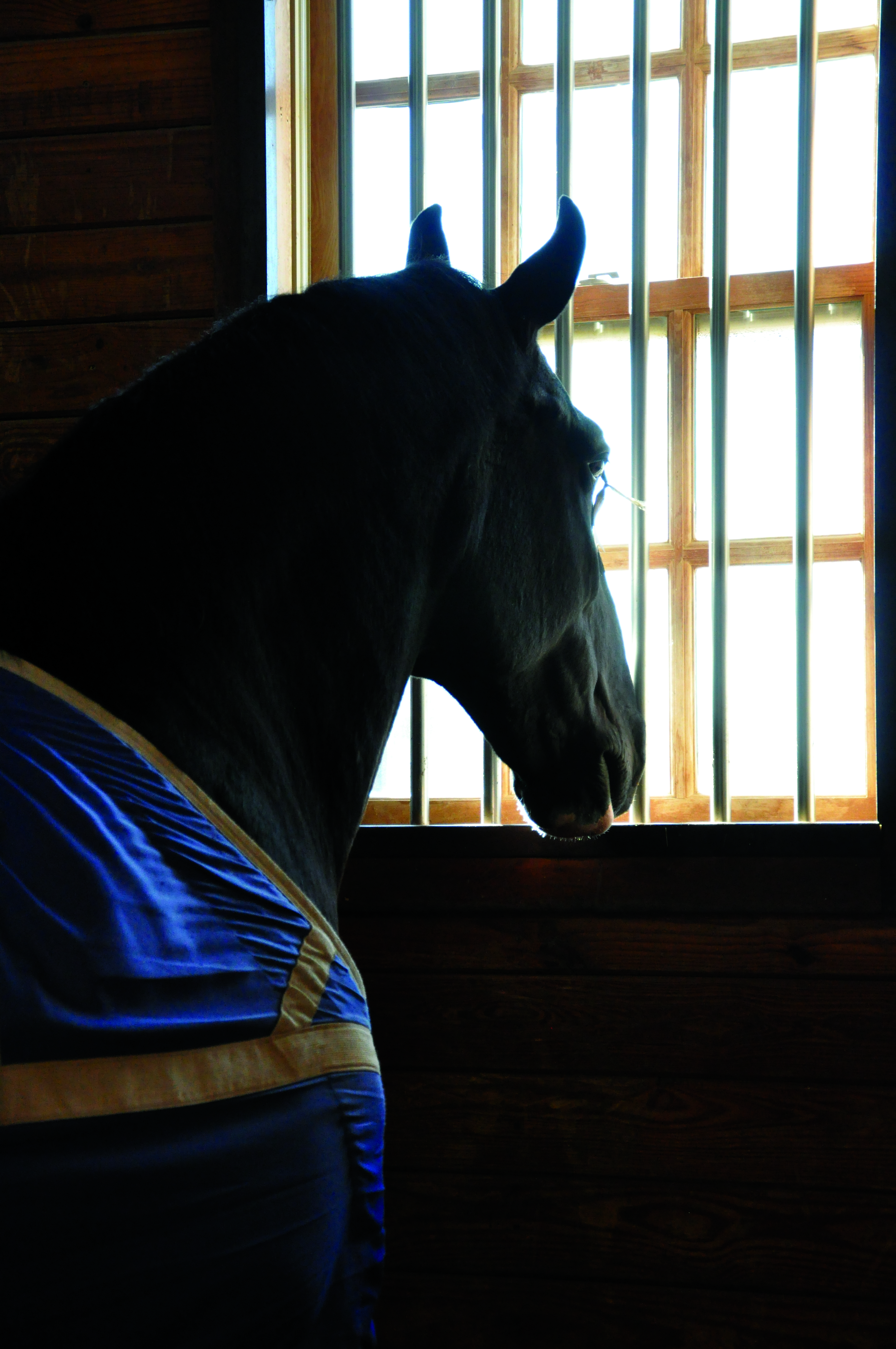
The first cold morning of fall can send a horse owner reaching for a blanket long before the horse needs one. You feel a 45-degree morning and think winter. A healthy horse with a good hair coat may feel something much closer to ordinary weather.
A horse’s winter coat is built to trap air. When the hairs stand up, a response called piloerection, that trapped air insulates the horse. A good layer of body fat helps, too. A flat sheet on an unclipped horse can press the coat down without adding much insulation, which is one reason to base blanketing decisions on the horse and the weather rather than a single temperature.
Rain and wind change things. A dry winter coat handles cold surprisingly well, but once the hair is soaked or plastered with mud, it loses much of its insulating ability. A clipped horse has lost the protection nature gave it. Older horses, thin horses, very young horses and animals recently moved from a warmer climate may need help sooner than a healthy, acclimated adult.
Penn State Extension recommends considering a blanket when a horse has no shelter and temperatures or wind chills fall below about 5 degrees Fahrenheit, when the horse may get wet in cold conditions, when it is body-clipped, or when age, health or low body condition limits its ability to stay warm.
Oklahoma owners may rarely see that first threshold, but cold rain and wind are common enough to matter.
Blankets also create work. They need to fit properly and stay dry, and they should come off regularly so you can check the horse for weight loss, skin problems, rubs and a twisted blanket. On warmer afternoons, a horse can sweat under a blanket that was comfortable overnight.
Instead of asking what temperature calls for a blanket, ask what this horse needs in these conditions. A clipped show horse in a north wind and cold rain may need a blanket, while an unclipped, well-conditioned pasture horse with a shed is perfectly comfortable beside him.
Feed is part of cold-weather protection, too. Fermentation of fiber in the hindgut produces heat, which is one reason adequate forage matters during cold spells. A horse standing at a round bale with shelter and water may regulate its temperature better than one wearing an expensive blanket but short on forage.
Watch the horse, not just the forecast. Shivering, a tucked posture, ears and legs that stay cold, weight loss or reluctance to move can signal a horse is struggling. At the other extreme, sweat under a blanket means the horse is too warm. Slide a hand under the blanket at the shoulder and chest rather than judging by how cold your own hands feel.
If you blanket, have a plan for changing weather. Oklahoma can go from a freezing morning to a sunny 60-degree afternoon, and a blanket chosen at dawn may be far too much by lunch. For that reason, a horse that lives outside without constant supervision can sometimes be easier to manage with its natural coat, as long as it is healthy, acclimated and has shelter from wet wind.
A good shelter doesn’t have to be heated. A three-sided shed or natural windbreak can cut exposure dramatically if the horse can use it to get out of the prevailing wind and driving rain. Bedding in a dry shelter also lets a horse lie down without losing heat to wet ground.
Never let a blanket hide a nutrition problem. Thick fabric makes it easy to miss ribs becoming more prominent. Run your hands over the neck, ribs and topline every few days through winter. A horse can lose a surprising amount of weight before it shows under hair and a blanket.
By Savannah Magoteaux
If you’ve ridden long enough, you’ve had a horse notice something that seemed invisible to you, then apparently fail to see the object sitting right in front of him. It makes more sense once you stop assuming a horse sees the world the way you do.
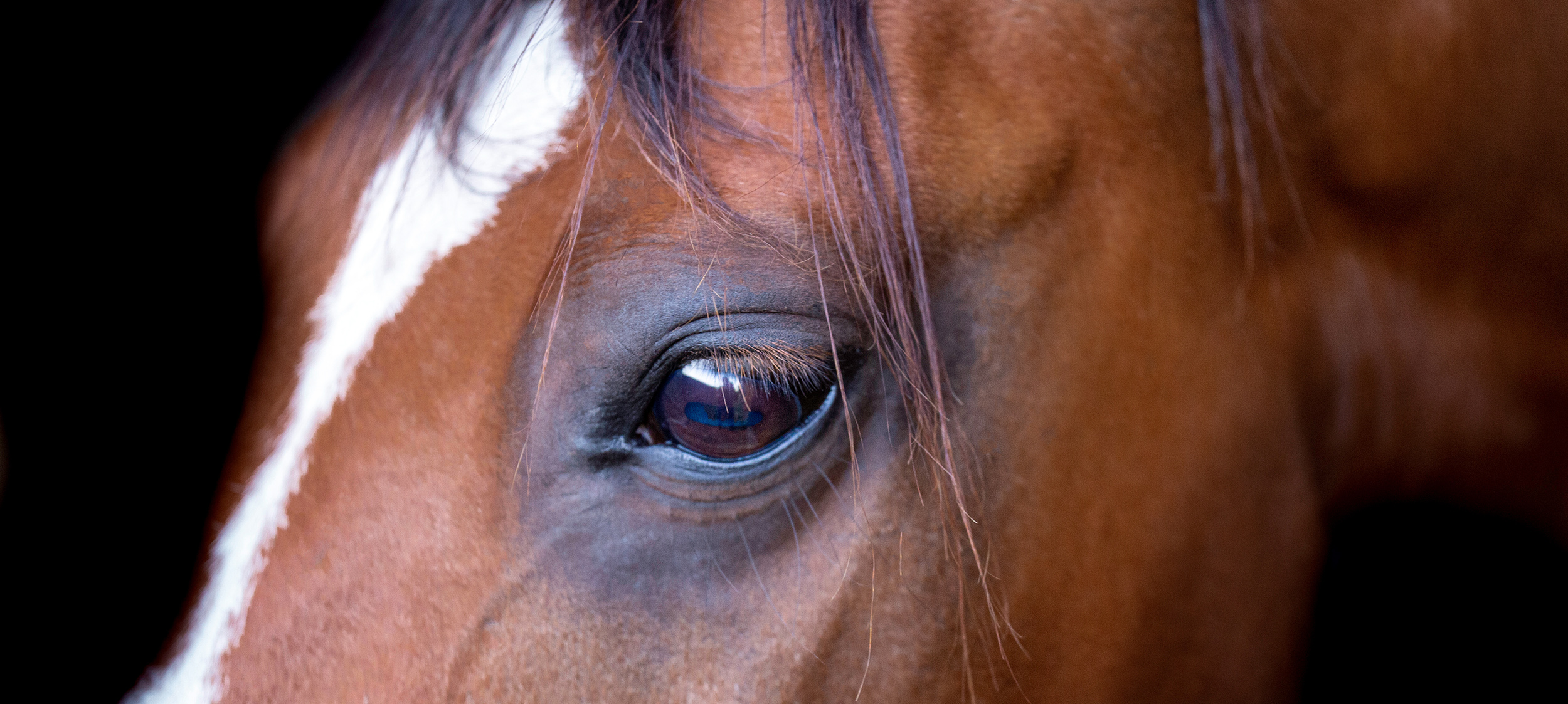
The first difference shows in the shape of the head. A horse’s eyes sit on the sides, giving it an enormous field of view. That suits a prey species that survived by spotting movement before a predator got close. Horses can see much of the area around their bodies without moving their heads very far.
The tradeoff is that much of that view isn’t binocular. Most of what a horse sees is monocular, meaning one eye views an object on its own. Where the two eyes’ fields overlap, the horse gets binocular vision and better depth perception. A horse may turn or raise its head to bring something into that zone and study it more closely.
Horses have blind spots, too. One is directly behind them. Another small one sits right in front of the face. That is one reason a horse may need to move its head to inspect an object close to its nose, and a good reason to speak when approaching from behind instead of appearing suddenly inside a blind spot.
Color and contrast
Horses see color differently as well. People with typical color vision have three types of cone cells. Horses have two. Researchers describe equine vision as dichromatic. Horses can tell colors apart, but not across the same range we do. Their color world is often compared loosely with human red-green color deficiency. Blues and yellows generally stand out better, while reds, oranges and some greens can be hard to pick out from the background when their brightness is similar.
That has practical consequences. Research on racing obstacles found that traditional orange markings didn’t give horses the contrast they gave human eyes. Bright blue, white and fluorescent yellow stood out more against many backgrounds and changed how horses approached jumps.
Contrast often matters more than the color name printed on a product. A bright red cone may pop against green grass to us but offer a horse less useful contrast. White, blue or yellow objects can be easier for horses to see in some settings. You don’t need to repaint the barn, but it’s worth considering when you design obstacles, fencing markers or trailer interiors.
Light and detail
Horses are well equipped for low light. Their eyes contain a high proportion of rods, the photoreceptors used in dim light, and a reflective layer called the tapetum lucidum helps them make better use of the light available. Horses can function in much darker conditions than people can. Their eyes don’t adjust instantly, though. Moving from a bright outdoor area into a dark trailer or barn can take time.
Be patient with light transitions. A horse led from bright sun into a dark trailer may hesitate because its eyes need time to adapt. The same can happen at an indoor arena doorway or a shadowed creek crossing. If you treat every pause as a refusal, you can turn a vision problem into a training fight.
Visual sharpness is another difference. A horse’s panoramic view excels at catching motion, but fine detail isn’t its strength. That flapping feed sack at the far end of the arena may register immediately as movement without being clearly identified as a harmless feed sack.
That helps explain some everyday training problems. A banner approached from the left isn’t necessarily the same visual experience as one approached from the right. An object can also look different against a new background or in different light. Giving a horse a moment to look lets it gather better information.
Head position matters more than many riders realize. Horses have a horizontal visual streak in the retina that helps them scan the horizon. Raising or lowering the head changes which part of the visual field the horse is using. A horse approaching an unfamiliar ditch may raise its head to take in the scene, then lower it to judge the footing close to its body. Restricting the head at the wrong moment can make the job harder.
Depth perception is strongest in the binocular area, but horses can move at speed through complex terrain. What they lack is the broad binocular field humans take for granted. When a horse turns its head to look at a jump standard or a cow, it may be bringing the object into a more useful viewing zone, not losing focus.
Using what you know
Eyesight isn’t behind every spook. Horses learn, remember, anticipate and react for many reasons. Understanding their vision does help explain why “he has seen that a hundred times” doesn’t always settle the matter.
Eyesight also changes with age and disease. Cataracts, uveitis and other eye problems can change behavior gradually. New spooking, head tilting, hesitation in dim light, tearing or a cloudy eye deserve veterinary attention. Knowing what normal equine vision looks like makes abnormal vision easier to notice.
You can use this knowledge on the ground, too. Approach a horse where it can see you, speak before stepping directly behind it, and let it investigate new objects from a comfortable distance. At the trailer, improve the lighting inside instead of assuming the horse is refusing to step into a black hole. In the arena, remember that shadows can change contrast and make a familiar object look different.
None of these adjustments replace training. They make training fairer by accounting for how the horse actually sees the environment you’re asking it to work in. A horse sees a wide world built for detecting motion, working in dim light and keeping track of everything around him. It is a very good system for a horse, and a very different one from ours.


-
 Country Lifestyle2 years ago
July 2017 Profile: J.W. Hart
-
 Farm & Ranch2 years ago
From Plow to Plentiful: The Most Important Inventions in Agricultural History
-
 Attractions9 years ago
48 Hours in Atoka Remembered
-
 Outdoors9 years ago
Grazing Oklahoma: Honey Locust
-
 Equine9 years ago
Umbilical Hernia
-
 Country Lifestyle5 years ago
The Two Sides of Colten Jesse
-
 Farm & Ranch8 years ago
Hackberry (Celtis spp.)
-
 Attractions4 months ago
Oklahoma Ghost Towns – Navajoe