
Equine
Joint & Physis Infections in Foals

By Lauren Lamb, DVM
During foaling season, owners may notice that a foal is lame and suspect that the foal just got stepped on by the mare. While this could be the cause of the lameness, a more likely cause of this lameness is a septic physis or septic arthritis.
Septic arthritis means the foal has an infected joint. A septic physis means the foal has an infection in the growth plate. Both septic arthritis and a septic physis are life threatening conditions that need to have aggressive medical attention as soon as possible.
Foals have an increased risk of developing a septic joint or physis if they do not receive an adequate amount of colostrum from the mare. This colostrum needs to be in the foal’s gastrointestinal tract within 36 hours of being born. “Failure of passive transfer” is the phrase given to foals that do not receive enough colostrum.
Two common reasons a foal will not receive an adequate amount of colostrum — the foal not being able to stand and nurse the mare properly within the first 36 hours of being born is the most common cause of failure of passive transfer and due to a mare leaking a significant amount of colostrum prior to the foal being born. The colostrum contains anti-bodies that are vital for protecting the foal from infections caused by environmental bacteria.
Foals that are diagnosed with failure of passive transfer should receive one liter of plasma intra-venous. The plasma will have the anti-bodies that the foal will need to fight off any potential infections. Some veterinarians will also administer antibiotics to a foal with failure of passive transfer in additional to the liter of plasma. The antibiotics are used as another line of defense to prevent a foal from getting a septic joint or physis.
Foals have a unique blood flow at the physis and the joint, which is not seen in adult horses. The blood flow within the vessels in these locations will slow down. This slower moving blood will allow bacteria within the blood to attach to the vessel wall.
Once the bacteria attaches to the vessel wall, a bacterial infection can develop. The type of bacteria commonly isolated from septic joint and physis in foals are bacteria commonly seen in the foal’s environment. This is due the foal ingesting the bacteria as it explores the environment, or the bacteria can enter the body via the umbilicus.
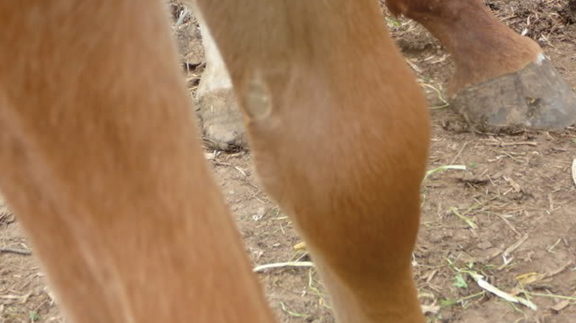
Diagnosis of septic arthritis or physis is usually pretty straight forward. The foal will be lame (moderate to non-weight bearing) on the leg with the infection. Heat and swelling around the joint or physis that is infected frequently occurs. It will be very painful for the foal during palpation of the infected joint or physis. An infected joint will have an increased amount of fluid within it. The knee, fetlock, stifle and hock are the most commonly affected joints.
If a septic joint is suspected, a sample of fluid should be collected from the joint. This fluid should be cultured to identify the type of bacteria causing the infection. The fluid should also be analyzed to identify how many and what type of cells are present in the fluid.
Normal joint fluid will have less than 250 cells/mm3 and less than 10 percent of these cells should be neutrophils. A septic joint will have several 1000 cells/mm3 and 70 percent or more of these cells will be neutrophils. The neutrophils are the primary cells in the body that combat bacterial infections. If a bacterial infection is present, a larger number of these cells will be located in the joint fluid.
Radiographs of an infected joint should be taken to make sure that the infection in the joint has not spread to the bone. An ultrasound of the joint can be used to identify fibrin within the joint. The fibrin is produced secondary to the infection. The fibrin can act as a shelter for the bacteria to hide from the foal’s immune system and the antibiotics administered to fight the infection. If a large amount of fibrin is seen within the joint, the foal may need to have an arthroscopic surgery to remove the fibrin and improve the prognosis for a successful outcome.
Definitive diagnosis of a septic physis is confirmed with radiographs. Radiographs of a septic physis will have bone lysis (dark bone on radiographs) in the area where the infection is located. An ultrasound of the infected physis may show fluid in or around the physis.
Treatment of a septic joint involves a combination of local therapy and systemic therapy. Until the culture results are received, the foal will be started on broad spectrum systemic antibiotics.
Local therapy can be done either with injections of antibiotics into the joint or regional limb perfusions. Septic joints are usually flushed with several liters of sterile fluids to help remove bacteria and inflammatory mediators from the joint.
An arthroscopic surgery may need to be performed to flush the joint, remove any fibrin within the joint and debride any infected bone. Anti-inflammatory medication is used to help control the foal pain.
Pick up the May issue to learn more!
By Summer McMillen
As the land starts to thaw and cowboys and cowkids everywhere are gearing up for spring there is one specimen in particular that is dreading the coming season. And that is ponies. Or more specifically, kid horses.
Let’s look at life from the kid horses point of view for a second.they have the winter off. They’ve gotten to enjoy some much needed R&R in the back pasture. Their hair has gotten long and so have their hooves. They’ve spent the winter feasting on native grasses, alfalfa, and the occasional bucket of grain when it’s was especially cold.
They’ve gotten to wonder aimlessly while the real work horses were still being caught for essential tasks. The most work these kid horses have had to endure the last few months were being tied to the arena fence to get the cockleburs brushed out of their tail.
Yes, life has been calm for these kid horses. But, there is a season for everything and the season for being used and abused is fast approaching.
My own children all share a little pony they affectionately call “Rubble.” He is a certified welsh pony that is as tall as he is wide and is as passive as he is…not. They spend summers riding him bareback. And when they aren’t riding him bareback they are riding him fully saddled. Tiny little bit in his mouth being yanked in every which direction.
The little fellow takes everything in stride. But I can feel him starting to resent me from the back pasture already. Every time I carry him some feed he gives me a look that just screams “please keep all three of your children away from me forever please.” I laugh at him and tell him he doesn’t mean it and then he runs away as fast as he can. It’s a special bond.
Kid horses are funny like that. We entrust them with the lives of those most special to us. We saddle them up and throw the little cowkids on them and assign them small tasks like moving 200 pairs to a new pasture or, holding the herd while dad doctors wheat cattle. More often than not, the young partners get their job done. Sometimes in unlikely ways.
Last summer my daughter hopped up on Rubble bareback and was going to trot down the road and get our mail. A simple and harmless task I thought. I was proud of her for taking the initiative. I was also proud of her when I looked out the window, saw the little pony start crow hopping with excitement and the unassuming 8-year-old being catapulted in the ditch. Instead of crying she climbed back on. Tenacity, I thought. That’s what kid horses are good at teaching.
A few months later I was watering all our geldings. The three kids whom I raised, better known as the three amigos, were all harassing the little pony. My youngest son decided it was his turn. He climbed up on Rubbles back as proud as a peacock. But, he couldn’t help himself. He wanted to look that pony in the eye. So he starts leaning. Farther and farther until he leaned all the way to the ground. Lost a boot in the process. Instead of rushing to his side I waited for the tears. He was only two years old at the time after all. Instead his face was filled with glee. Joy, I thought. That’s what kid horses are good at teaching.
My middle boy is afraid of heights. So mounting a horse has been tough for him. When we introduced Rubble, I wasn’t sure he could even manage his height. After a little encouragement he donned his chaps, boots, and hat with a turkey feather in it and mounted the little horse. In a matter of five minutes the little cowboy had rubble trotting around the arena with his hand in the air and his spurs in his neck. (Gently of course.) Confidence builder, I thought. That’s what kid horses are good at teaching.
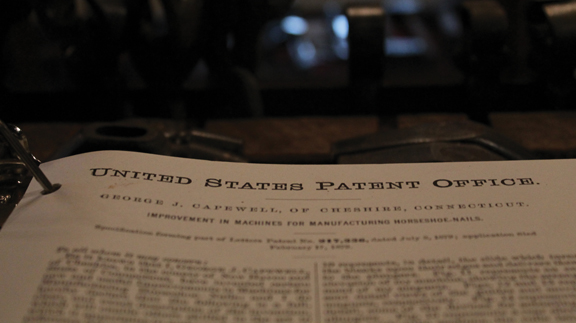
While, most of the time kid horses are a nuisance. Eating all our alfalfa and requiring special horse shoes to function properly.. they are more often than not a priceless gift. Teaching the ones we love most how to have tenacity, joy, and confidence.
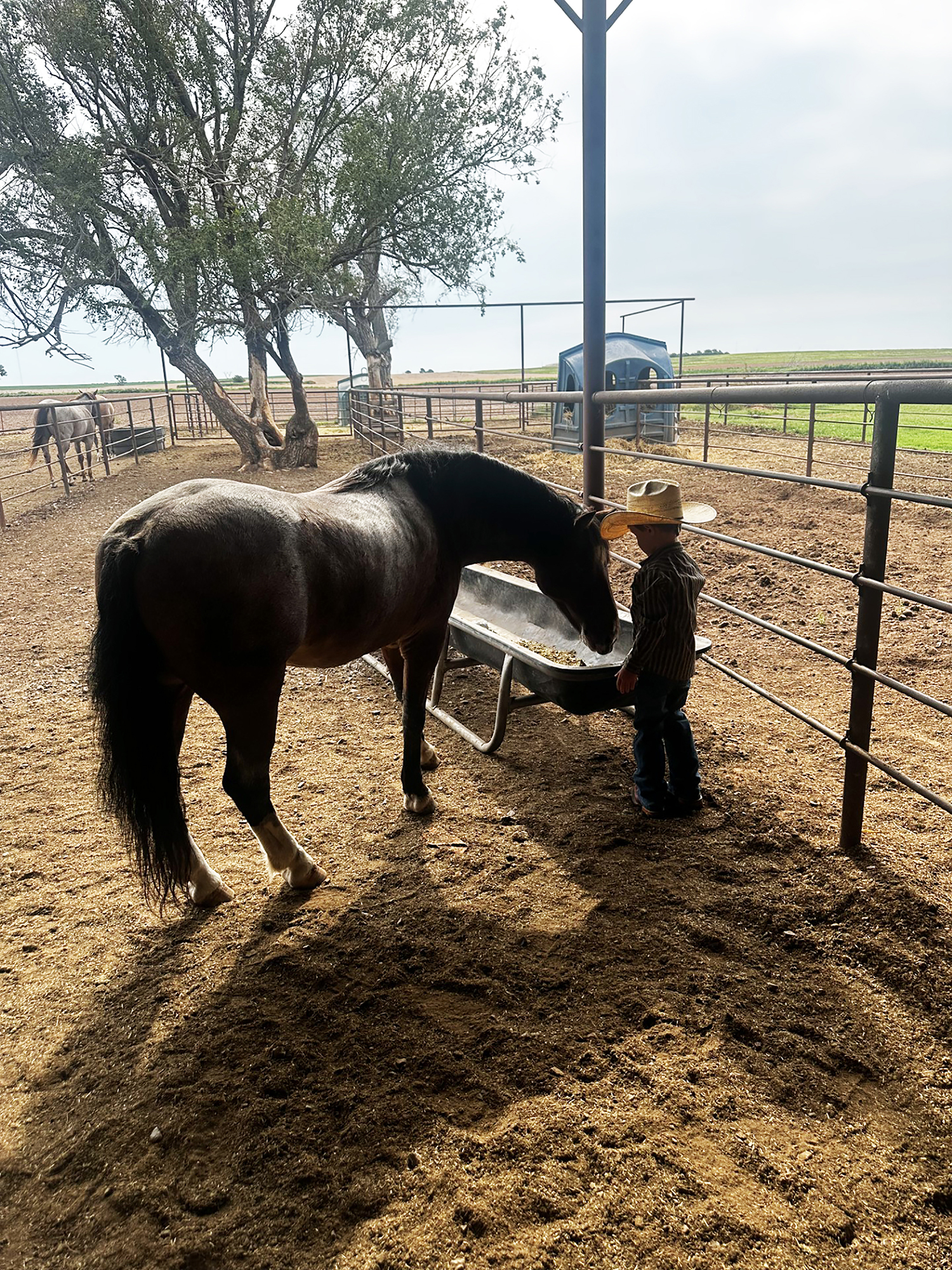
While the ponies in our life may love their time off in the winter you can’t convince me that they don’t love their jobs in the spring. Even if it’s just a little bit. When that little cowboy shoves a bucket of grain in their face after a job well done together, the ponies head sits a little higher and so does that little cowboys hat.

By Garrett Metcalf, DVM
A foot abscess is a common occurrence in horses throughout the year, with wet weather often contributing to an increase in cases. These abscesses can cause significant pain, lameness, swelling, and overall misery, making it important to address them quickly and manage pain to keep the horse comfortable. There are various methods used to treat foot abscesses, and this article will outline techniques to evaluate and treat them as efficiently as possible.
A foot abscess is a localized or sometimes diffuse infection trapped between the sensitive and non-sensitive laminae within the hoof capsule. Abscesses may develop spontaneously due to everyday stress and environmental factors that allow bacteria to penetrate down to the sensitive tissues. Other causes include penetrating injuries to the sole from nails, sharp rocks, or even thorns. Poor hoof care and misdriven shoeing nails can also lead to abscess formation. Common sites include the white line, where the sole and hoof wall meet, and the bars of the heels.
The level of lameness caused by a foot abscess can vary, but it often results in visible discomfort at the walk and can even cause non-weight-bearing lameness. Swelling that begins at the foot and moves up the leg may occur, particularly if the abscess migrates and ruptures at the coronary band. These cases are often referred to as “gravel” abscesses, which are simply abscesses that find the path of least resistance and exit at the coronary band, creating a draining tract. In some cases, especially involving a hind foot, the horse’s movement may appear so abnormal that it mimics neurological issues, confusing owners and veterinarians.
Diagnosing a foot abscess begins with a lameness exam. Most affected horses will be visibly lame at the walk, though in some cases a trot may be necessary to detect the issue. Regional nerve blocks can help confirm that the pain is originating from the foot and not another part of the limb. Horses with abscesses often show an increased digital pulse and, occasionally, noticeable heat in the foot. The bounding pulse is due to inflammation and is most easily felt just above the hoof near the ankle. If the horse is shod, removing the shoe is often necessary for a thorough exam. Hoof testers are useful in identifying the most painful area, and horses with abscesses are typically reactive to pressure. Cleaning out the foot with a hoof knife is important for exposing any defects or tracts in the sole or frog. Often, a dark spot or line will lead to the source of the abscess.
There are multiple ways to treat an abscess, and opinions vary widely, but my preferred approach is to open the abscess as soon as possible. This provides nearly immediate relief for the horse and allows the infection to begin resolving. A sharp hoof knife or loop knife is a reliable tool to open the abscess and create drainage through the bottom of the foot. Allowing the abscess to drain from the sole reduces the risk of a gravel abscess and makes it easier to treat the area with topical poultices. After opening, it’s important to bandage the foot both to draw out remaining infection and to keep the area clean.
A large baby diaper makes a simple, effective bandage. It’s absorbent and fits the hoof well. Secure it with layers of Vetrap, duct tape, and Elastikon, or place the hoof in a medicine boot to keep it protected. Poultice choice is often based on personal experience and availability, but the goal is the same — to draw out infection and prevent contamination. Products like Magna Paste, an Epsom salt-based poultice, are effective, as is a homemade mix of sugar and Betadine. There are many other options, but whatever product is chosen should be safe and offer antimicrobial properties.
In some cases, an abscess may be difficult to locate or open. Soaking the foot in warm Epsom salt water can help soften the hoof and encourage the abscess to rupture or become easier to identify. Pain management is also helpful while waiting for the abscess to surface. If the abscess continues to recur or proves difficult to treat, radiographs can help evaluate the hoof’s internal structures. While most abscesses don’t show up on X-rays — since the fluid is the same density as the hoof — they may be visible if gas is present within the abscess. Radiographs are especially important in cases of puncture wounds, to ensure deeper structures like the coffin joint or navicular bursa aren’t involved. In cases of penetration, it’s best to leave the foreign object in place until X-rays are taken, which helps determine the extent of the injury and what structures may have been affected.
While preventing all foot abscesses isn’t always possible, good hoof care goes a long way. Regular trimming on a consistent schedule helps maintain healthy laminae and prevents stretching of the white line, which can allow bacteria to enter. Careful shoeing practices, including proper nail placement, can further reduce the risk of abscess development.
Foot abscesses are painful, frustrating, and often sudden — but with proper diagnosis, drainage, and aftercare, horses typically recover well and quickly return to soundness.
When I was younger, I saw plenty of old Westerns. They were fun to watch, but one part always stressed me out. Inevitably, a cowboy would get shot or thrown from his horse, and while the cameras stayed on the fallen rider, I worried about the horse. Would it wander around lost on the prairie, never finding its way back? The truth is, most horses know exactly where home is. Turn one loose, and it will drift toward the barn. Ride one out, and the trip away from home feels steady, but the return picks up pace the moment the barn roof comes into sight. We even have a name for it: barn sour.
Horses are prey animals, and survival has always depended on familiar ground. For a domestic horse, the barn means food, water, and the company of the herd. Ethologists (scientists who study animal behavior) point out that horses are quick to learn patterns. When hay and grain appear in the same place every day, that spot becomes magnetic. Over time, repetition lays down mental trails as clearly as cattle wear down physical ones in a pasture. What appears to be stubbornness is actually instinct. The barn equals safety, and safety equals survival. Riders from cavalry days to modern ranches have written about horses quickening their pace on the way home. And though the land changes, that pull never does.
People are not so different. We all have barns in our lives — comfort zones we gravitate toward, routines that steady us. They serve a purpose. Like a horse standing at the gate, we lean on safe ground when life feels uncertain. But the pull can also hold us back. A horse that refuses to leave the yard never discovers what lies beyond the fence, and the same is true for us.
That balance shows up in history too. Old cattle trails once served their purpose, guiding herds north and helping to build economies. But when railroads and fences changed the landscape, those well-worn tracks became ruts. Progress required new paths. Our own habits work the same way. Some keep us grounded. Others only circle us back to where we started.
When I see my horses drifting toward the barn, I think less about impatience and more about instinct. They are drawn to the familiar, and so am I. The barn matters. It is the anchor point, the place of rest. But the pasture matters too, because growth is waiting outside the gate.
Those old Westerns had it right in at least one way. The cowboy’s horse was never going to wander off aimlessly. It would head back to camp, back to the barn. That simple truth still plays out in every pasture and arena today. Horses know where home is. The question is whether we will let the pull of our own barns keep us tied too tightly, or whether we will use them as a base to step farther into the wide-open ground ahead.




-
 Country Lifestyle2 years ago
July 2017 Profile: J.W. Hart
-
 Attractions9 years ago
48 Hours in Atoka Remembered
-
 Equine9 years ago
Umbilical Hernia
-
 Outdoors8 years ago
Grazing Oklahoma: Honey Locust
-
 Country Lifestyle4 years ago
The Two Sides of Colten Jesse
-
 Farm & Ranch7 years ago
Hackberry (Celtis spp.)
-
 Farm & Ranch1 year ago
From Plow to Plentiful: The Most Important Inventions in Agricultural History
-
 Country Lifestyle10 years ago
The House a Treasure Built