
Country Lifestyle
December 2017 Profile: John Jennings

By Laci Jones
Raised under the city lights of California, John Jennings is not your typical Californian. Born in El Centro, Calif., Jennings considered himself a “redneck,” spending many days hunting and fishing on the many California golf courses in Palm Springs, Calif.
“I would get kicked out of golf courses,” he said followed by a chuckle. “The security guards would run us off, and we would go to a different one.”
He was always “tinkering” with knives, guns and other items. Jennings recalled using circular saws as a child, saying it was “second nature.” At 17 years old, he dropped out of high school and began working full-time. Like his father, Jennings worked in construction.
“I was making $500 per week 30 years ago, which was pretty good money,” Jennings explained. “I moved out to my own apartment and just started doing my thing. Looking back, I wish I had gone to school because my son’s going to Oklahoma Baptist University, and he’s got so many opportunities.”
Jennings “bounced around” from job to job, never working at the same place for more than 18 months. His career took a backseat when he was diagnosed with Idiopathic thrombocytopenic purpura in his mid-20s. ITP is an auto-immune disease where the immune system sees blood platelets as foreign object.
“We were fixing to deer hunt out in the desert,” Jennings began. “I had these big ole bruises, and I didn’t think much of it.”
Jennings chalked the bruises up to clumsiness, but his wife suggested he visit the doctor to be sure. After his results came in, his doctor told him he needed to stay home, but Jennings was in denial.
“I felt 100 percent perfect. There’s nothing wrong with me,” he said. “I said, ‘No, I’m going deer hunting.’” They said, “Well, go ahead, but even a jar against a seatbelt could kill you.”
Jennings underwent many surgeries and chemotherapy treatments as well as took a daily concoction of pills to cure ITP. One chemotherapy treatment increased his appetite, causing his weight to rise to 250 pounds.
“I did this for like three years, and it finally just went away,” Jennings added. “By the grace of God, it went away.”
The southern California native said the experience changed his outlook on life. Ten years ago, Jennings and his family moved to Shawnee, Okla. He said the expense, traffic, regulations and the mounting doctor bills as well as his parents’ influenced his decision to relocate to the Sooner state.
“My parents wanted out of California 30 years ago, so they headed east on I-40 to look around,” he explained. “They originally were going to look in Arkansas, but they got stuck in a hail storm in Shawnee and stayed the night.”
Jennings said he lived in Shawnee, Okla., when he was eight years old, but moved back to California following the oil crash in the ‘80s. His parents later retired in Oklahoma.
“When I was kind of fed up with California too, my mom called and said, “There’s this really cute little house right across the street,” Jennings recalled. “It was a dump. My wife cried when she first saw it.”
Moving to Pottawatomie County allowed the California native to meet Bill Madole, a local bit and spur maker and neighbor of the Jennings family. Madole owned the land adjacent to Jennings, which overlooked the North Canadian River.
“[Madole] owns three corners of this river,” Jennings explained. “Once I found that out, I thought, “Man, I would like to hunt that.”
Jennings worked out a trade with the landowner for hunting privileges. The construction worker completed projects like fixing Madole’s roof or installing a new door. Jennings began watching Madole work and thought it would be “cool to try.”
Jennings was quickly discouraged once the talented blacksmith told him how much the equipment cost. After, he didn’t give spur making as a side-business another thought. Then things changed. Four years ago Madole was preparing to leave for the National Finals Rodeo where he had a booth.
“I said, ‘I’ll help you get ready for the NFR, and you show me how to make spurs,’” Jennings recalled. “He was sitting there, engraving while we were talking, and he said, ‘okay.’”
The apprentice was tasked with filing spur rowels, which he described as “monotonous” tasks. He continued to learn from the expert, copying his style of spur making.
“We do what is called ‘Texas-style spurs,’” Jennings explained. “The Texas-style is a bit more utilitarian than the Mexican or California-style spurs.”
The Mexican and California-style spurs are more ornate with more silverwork, and they have a larger rowel than the Texas-style, he added. The Texas-style is more subdued. Jennings said he did not experiment with other styles, contributing most of his influence from his teacher.
“I rely heavily on his style because, to me, that’s how it gets passed down,” he stated. “There’s a guy named Kevin Burns whose spurs are pretty expensive. He learned from a guy named Jerry Cates. If you look at a Burns spur, it looks a whole lot like Cates.”
Jennings said the same could be said of Billy Klapper, who learned from the “Godfather” of Texas-style spurs, Adolph Bayers.
“I remember I sold a couple pair to a guy in Stillwater, Okla., who was a trader,” he recalled. “He was carrying a pair of mine around a big spur show in Abilene, Texas. Another spur maker said, ‘Oh, you’ve got a pair of Madole spurs,’ and he said, ‘No, this is Jennings’ spurs, but he learned from Madole.’ This is how distinctive my buddy’s style is.”
He said the distinction of the spurs could be seen in the details. Many spur makers do not engrave in the steel, but Jennings and Madole make individual cuts in the steel to create a distinct design. Also, the area between the band and the shank is squared off, which requires more effort.
While he is inspired by Madole’s work, Jennings also has more resources available than his mentor had.
“I look all the time on the Internet, seeing what’s out there and getting ideas,” Jennings explained. “If [Madole] wanted to see spurs, he had to drive to Amarillo, Texas, to a show. I think it’s just easier for people to get started across the board nowadays.”
Jennings said he never thought he would pick up the art of spur making because his background did not include horsemanship. The spur maker sent a pair he was proud of to a friend, who took them to a horseman. The horseman complimented the spurs, and Jennings’ friend mentioned he does not ride horses. The horseman said, “Well, that’s kind of a fraud.”
“My take on it is the guy who builds NASCAR cars probably can’t drive them or a pilot does not work on the airplane that you’re flying across the country,” the spur maker explained. “A good horseman does not equate to being able to do silverwork and vice versa.”
Jennings said his first pair of spurs were “good” for a first pair, but overall, they are “okay.”
The spur maker has improved since then, stating a good set of spurs takes time and attention to detail. Lately, Jennings has been inspired by old-fashioned designs including the 100-year-old design, gal-leg spurs.
“The gal-leg spurs are a really old-fashioned patterned, but every guy has to draw his own,” he explained. “Every guy’s gal-leg spurs are a little bit different.”
On average, Jennings spends 20 to 100 hours on a pair of spurs. The process begins with design. His background in sculpting ceramics helped him become the spur maker he is today.
Jennings traces his new designs on paper, then copper before cutting it out. The design is traced on the steel, which is then cut with a bandsaw. Once the bands are cut, the spurs are placed in the forge until the metal is red-hot. They are then formed into the shape of a spur. Then the shank is welded to the band and filed to smooth out any indentions.
The design for the silver is planned, then cut with a small saw and soldered on the spur. Once the spur maker cleans the spur, it is ready for engraving.
“It’s like another well-known spur maker said, ‘You want to have a really nice, delicious cake,’” Jennings explained. “The metaphor is about having a real quality spur before you ever put silver or engraving on. The decoration is just that, the icing on the cake.”
Jennings said what differentiates his and Madole’s spurs from other spur makers is their spurs are sterling silver mounted while others use nickel silver. For a swan-design spur, Jennings uses 925 silver or pure silver, which is considered more malleable than other metals.
In the past four years, the spur maker has completed more than 50 projects ranging from buckles to spurs. While buckles take less time, his spurs earn Jennings more money. His spurs cost anywhere from $650 to $2,500. Jennings has also competed in spur shows, stating winning is what drives him forward.
“When I’m sitting here, thinking filing on all of these spurs sucks, I think about how I want to win,” the spur maker commented. “That’s why I do it. That’s what keeps me going.”
Jennings earned the first place prize at the Cowboy True Art Show in Wichita Falls, Texas, and plans to compete again next year.
The spur maker attributed his patience to listening to old outlaw country including Waylon Jennings and George Jones while working on projects. He is currently working on spurs featuring a horse head, which he has invested 20 hours in thus far.
Jennings still works in construction full-time. However, he said rainy days and other construction delays allow him ample time to devote to his craft.
Jennings still lives in Shawnee, Okla., with his wife, Candace, who also helps contribute to his side-business. Together, they have four children ranging from ages six to 26—Char, John, Kate and Ella.
When asked what advice he would give to a new spur maker, he referred back to the advice given by his mentor.
“[Madole] told me a while back, ‘Slow down, do a nice job, which we both know that you can do,’” he recalled. “Don’t be in such a hurry.”
To order, call 405-249-6920 or email jenningsbitsandspurs@gmail.com.
This article originally appeared in the December 2017 issue of Oklahoma Farm & Ranch.
By Ada William
A few weeks ago in church, our preacher shared a line that has stayed with me ever since.
“If you’re wondering what door to walk through, pray in the hallway.”
He was quoting someone else, and I did not catch the original source. I did, however, catch the message.
Most of us have stood in that hallway at one time or another. We know something is changing, but we do not know what comes next. There may be several doors in front of us, and none of them are clearly marked. We ask God to show us which one to open, but the answer does not always come as quickly as we would like.
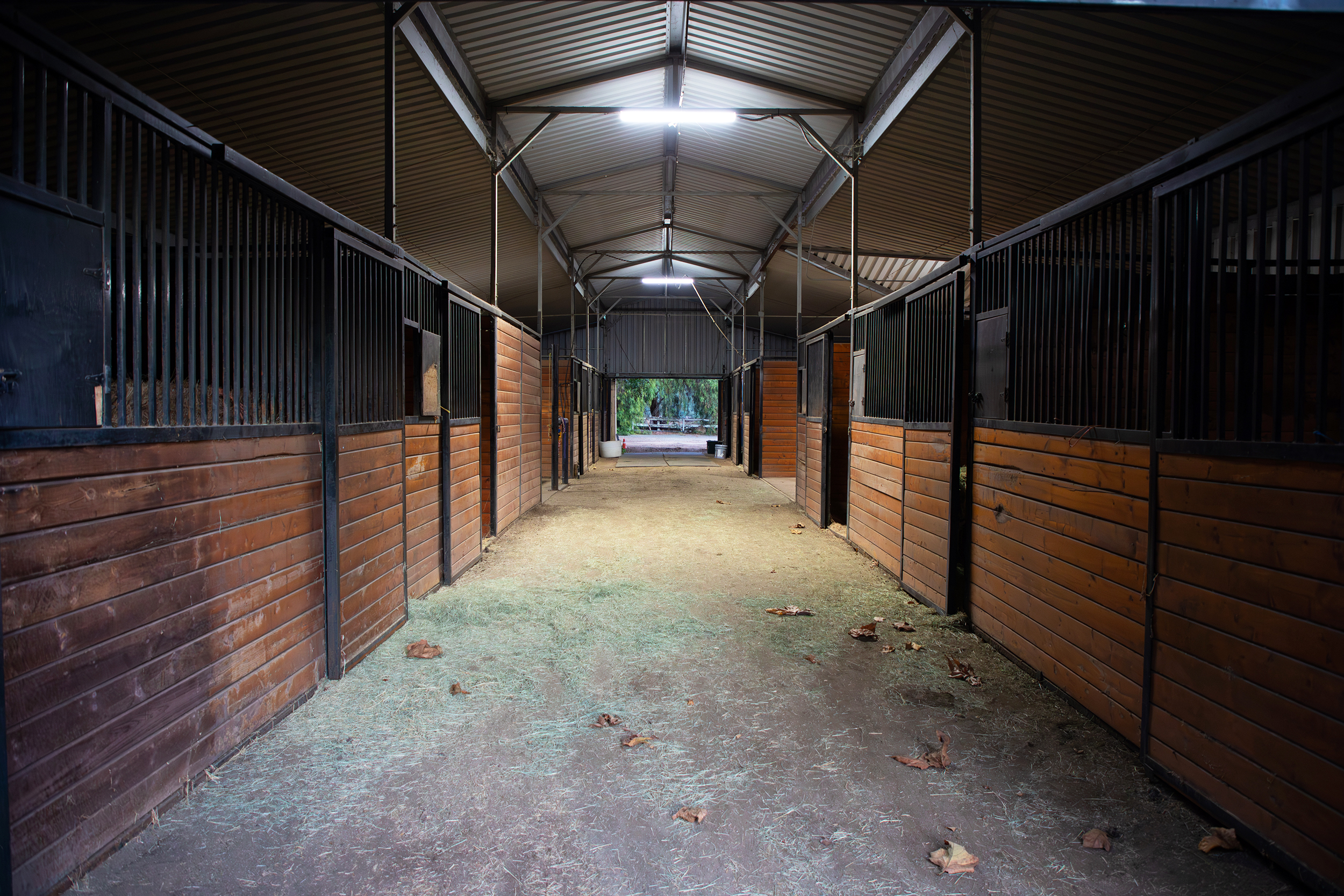
Waiting is hard. People who live and work in rural communities understand waiting better than most. Farming, ranching and caring for animals require patience. You can prepare the ground, plant the seed and pray for rain, but you cannot force a crop to grow overnight. You can breed the best mare to the best stallion, provide good feed and proper care, and still wait nearly a year to see the foal. You can put up hay, repair fences and prepare barns, but you cannot control what kind of winter is coming.
Rural life involves a great deal of faith. You do your part, and then you wait.
Of course, waiting does not mean doing nothing. A farmer does not plant a field and ignore it until harvest. There are weeds to control, equipment to maintain and weather forecasts to watch. A rancher waiting for a calf crop still checks cattle, watches the condition of the cows and makes sure the calving pasture is ready.
The waiting season has work of its own.
I think the same is true when we wait on God to show us what comes next. Praying in the hallway means more than standing still and staring at the doors. It means using that time to draw closer to God, listen carefully and prepare ourselves for whatever He may ask us to do.
Sometimes I want an immediate answer. I want God to make the right door obvious, open it wide and hang a large sign above it that says, “This way.”
That is not usually how it works.
Sometimes the hallway lasts longer than we expected. A job opportunity does not come through. A relationship changes. A plan we felt certain about falls apart. A prayer seems to go unanswered.
It can be tempting to grab the nearest doorknob because we are tired of waiting.
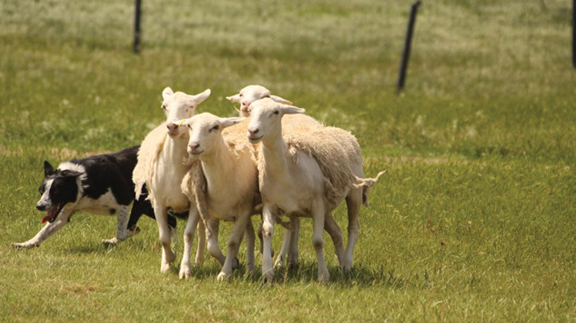
Anyone who has worked cattle knows that pushing too hard at the wrong time usually creates more trouble. Cattle move better when the handler pays attention to pressure, timing and position. There are moments to step forward and moments to back away. Trying to force movement before the path is clear can scatter the whole herd.
I have had times in my own life when I tried to force a door open because I was convinced it was the one I needed. Other times, I hesitated to step through a door because it was not the one I had pictured.
Looking back, I can see that some closed doors were protection. Some delays were preparation. Some unanswered prayers were answered differently than I expected.
Waiting doesn’t get easier, but the hallway is not wasted space.
The hallway may be where God changes our plans. It may be where He strengthens our faith, corrects our attitude or teaches us to depend on Him instead of our own understanding. It may be where we finally become quiet enough to hear what He has been saying all along.
Rural life teaches us that there is a season for everything. There is a time to plant and a time to harvest, a time to mend fence and a time to move cattle. There is a time to work, a time to wait and a time to trust that God is still handling what we cannot see.
When the right door opens, we may understand why the others stayed closed. We may also never fully understand, at least not in this life. Either way, we can trust the One who sees beyond the hallway.
When I find myself unsure of what comes next, I hope I remember the words I heard that Sunday morning. I may not know which door to walk through or when it will open, but I know what I can do while I wait.
I can pray in the hallway.
By Lacey Vilhauer
Ingredients
Graham Cracker Crust
- 1 cup pulverized graham crackers (about 6 graham crackers, blended or food processed)
- 1/3 cup butter, melted
- 1/4 cup brown sugar
Brownies
- 12 Tbsp butter
- 1 cup brown sugar, lightly packed
- 3/4 cup white sugar
- 4 eggs
- 1 1/2 tsp vanilla
- 1/4 cup flour
- 1 cup cocoa powder
- 1 cup milk chocolate chips
Toppings
- 4 Hershey’s bars
- 1 (10-ounce) bag mini marshmallows
Instructions
Preheat oven to 350 degrees Fahrenheit. Grease an 8×8 baking pan.
Graham Cracker Crust: Pulverize graham crackers and stir in melted butter. Stir in brown sugar. Press into the bottom of the baking pan and set aside.
Brownies: In a heavy saucepan, melt butter and stir in white and brown sugars. Stir over medium heat for 1 to 2 minutes, until sugar starts to dissolve. Remove from heat and add vanilla. Add eggs one at a time, whisking each into the sugar and butter mixture. Add flour and cocoa powder and stir together. Fold in chocolate chips. Pour brownie mixture over the graham cracker crust. Bake for 40 minutes.
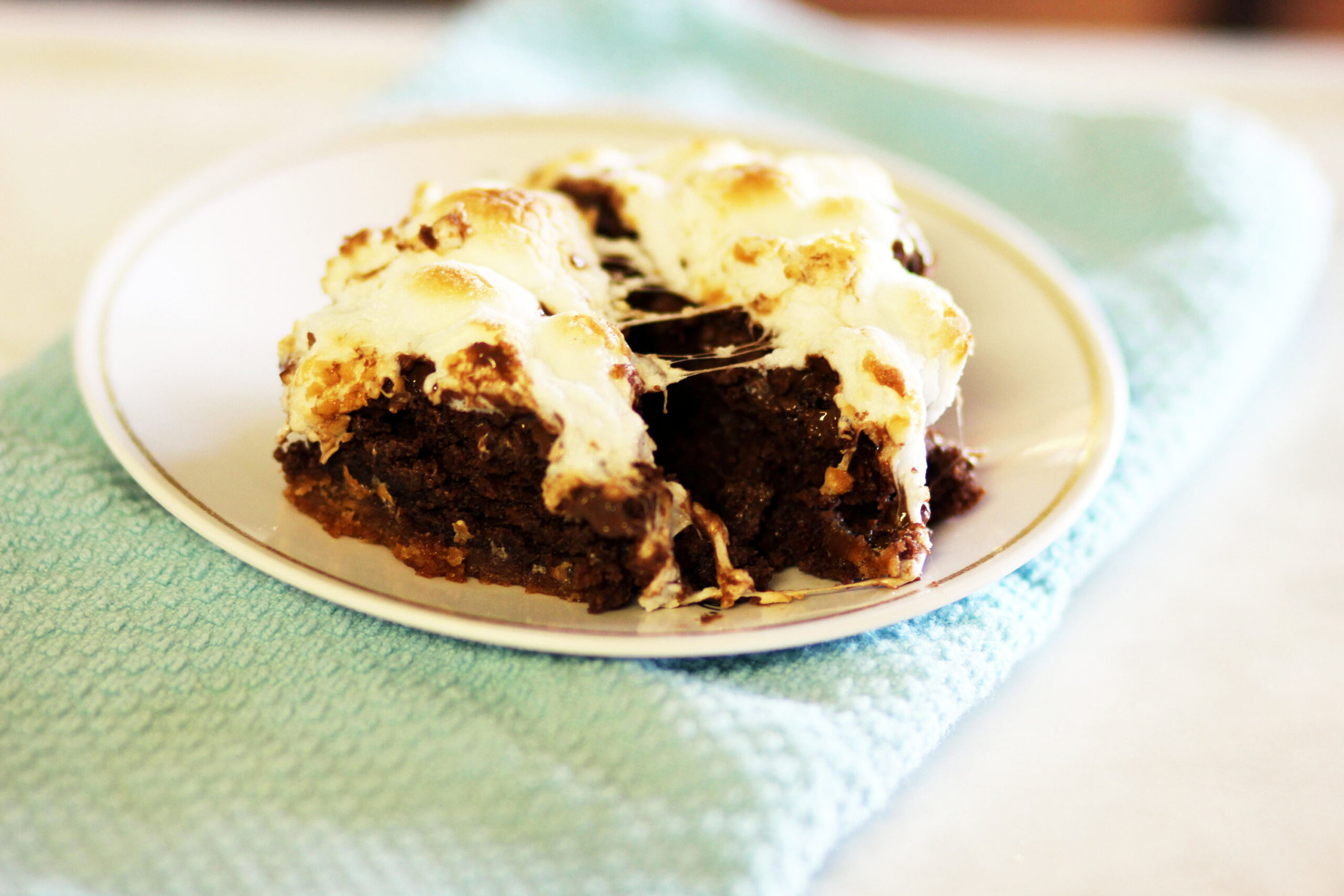
Remove from oven and turn oven to broil. Immediately lay chocolate bars over the top and cover them with mini marshmallows (or cut-up large marshmallows). Broil for one to two minutes, watching closely so they don’t burn, and remove once brown. Let cool.
By Beth Watkins
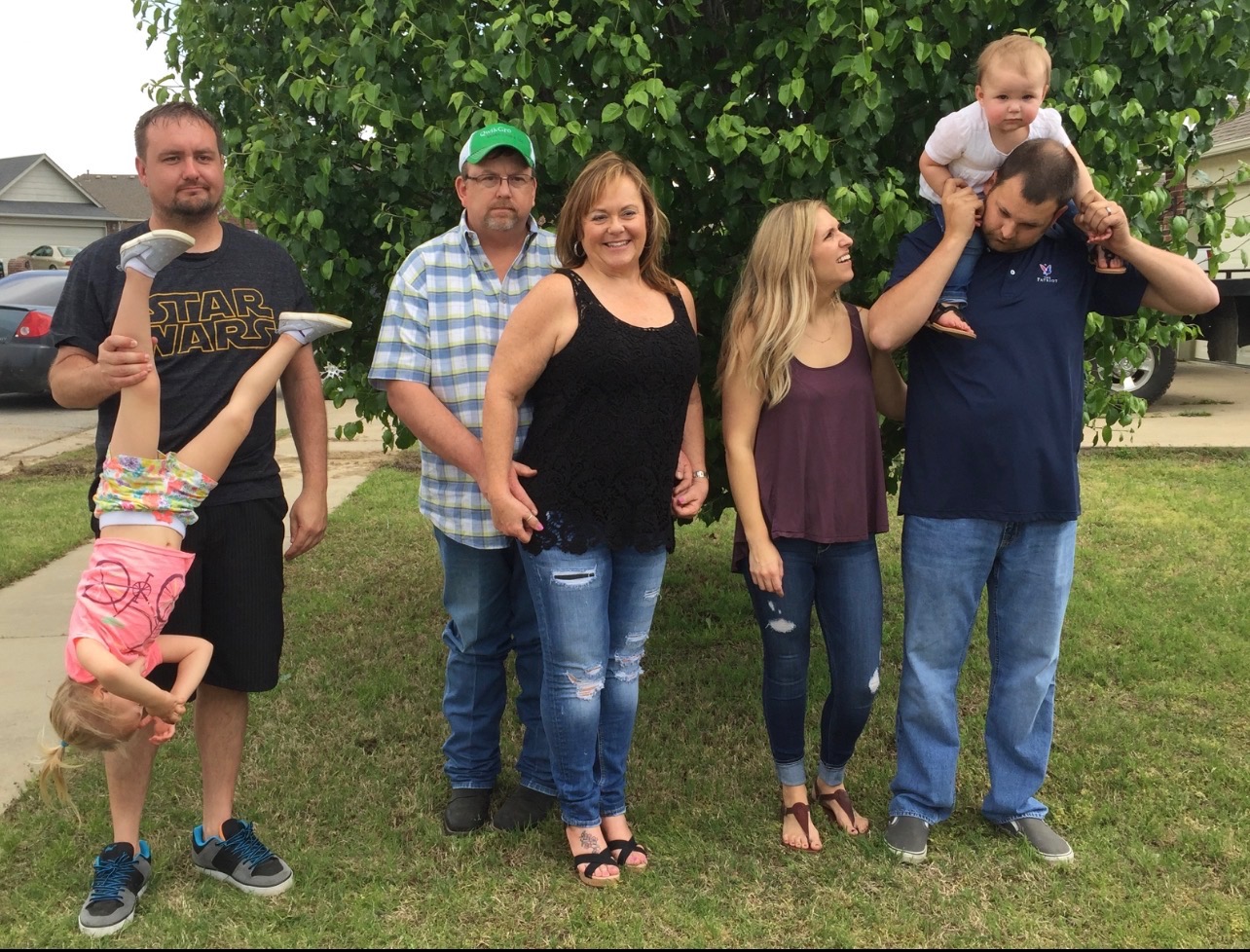
It’s that time of year again. The school supply aisles look like a cross between Black Friday and a cage fight. Parents are hunting for the exact blue folder required by Mrs. Johnson’s third-grade class while children toss random items into the cart like contestants on a game show.
Some moms are weeping because their baby is starting kindergarten.
Other moms are squealing tires out of the school parking lot on the first day, headed to the nearest coffee shop and whispering, “Thank You, Jesus,” as they turn the radio up.
And truth be told, I’ve been both.
My children have reminded me that school mornings irritated them. Their clothes were laid out the night before, either by them or by me. They weren’t fond of the routine: get up, get dressed, make the bed, brush your teeth, come in for breakfast, grab the pre-packed backpack and lunch box, and head out the door.
Once they left, I got myself ready for the day. My week of chores ran on the same schedule: laundry, shopping, Bible study, housecleaning, hobby time and lunches with friends.
When they got home on the bus, the routine started again: wash your hands, have a snack, go play, eat dinner, do homework, take a bath and go to bed. On days with dance lessons, ball practice or church, those took the place of playtime.
Now, before I get myself in trouble, I realize motherhood looks different today than it did when I was raising my kids. Many families need two incomes. Life is expensive. Groceries cost about what a used pickup used to cost.
I understand there are moms out there juggling careers, carpools, ball games, dance lessons, church activities, homework, and trying to figure out what on earth they’re making for supper.
Y’all are carrying a load. But I do wonder sometimes if we’ve climbed aboard a merry-go-round that nobody knows how to stop.
Time flies faster than any of us can comprehend. We usually get eighteen years with our children. That’s 936 weeks. By the time they turn nine, half of those weeks are already gone. By age 13, only about 260 weeks remain before adulthood. Suddenly, 18 years doesn’t seem nearly as long.
Somewhere along the way, we started believing that a good life requires more stuff, more activities, more travel, more commitments, more everything.
The trouble is that “more” usually costs us the one thing we can never get back: time.
Back when my kids were little, most moms stayed home.
I realize now what a gift that was. I certainly wasn’t Mother of the Year, but I was there.
I was there for the skinned knees, the science projects started at 9 p.m., the teenage heartbreaks and the endless interruptions that always seemed to happen when I was trying to cook dinner.
Was every moment magical? Absolutely not. Some days I would’ve gladly traded a child or two for a nap.
But those years passed quicker than a summer thunderstorm.
Today, it’s the norm for both parents to work, and many families feel pressure to keep chasing bigger houses, newer cars, more vacations, more lessons and more sports.
Maybe all those things are wonderful.
But every now and then, I want to grab the emergency brake on life and ask a few questions. What if we don’t need all of it? What if the greatest gift we could give our children is our presence? What if supper around the table, playing in the backyard or a Saturday with nowhere to be is enough?
The world is moving faster than a cat with its tail on fire. It tells us we need more, do more, buy more, become more.
Maybe the secret is learning that less can bring us more peace, more laughter and more memories together.
One day those little backpacks will be packed for the last time. The school pickup and drop-off line will be a memory, and the house will get quiet, far quieter than you ever imagined.
When that day comes, I don’t think you’ll wish you’d spent more time on the merry-go-round.
I think you’ll wish you’d spent more time watching fireflies, eating supper together and enjoying the people God entrusted to you.
As for me, I wish I could go back in time and do another round with my babies. I think I would let things go a little more. Maybe I’d let the laundry pile a little higher and the dust settle a little thicker so I could soak up more of our time together.
Don’t get me wrong. I enjoy the people my babies have grown into. I love that they have given us grandbabies, little versions of the babies I once rocked.
But in this season, my house is too quiet, and nobody needs me.
I know some single parents have no choice but to work. I know many families these days are doing everything they can to stay afloat. I don’t want to make anyone feel guilty. I want to remind those of us blessed with children that the ordinary moments are often the ones we’ll miss the most.
If you’re fortunate enough to have children, make time to savor every season of their lives and be present for it.
One day the backpacks will be put away for good, the house will grow quiet, and you’ll discover what every parent eventually does: time was the greatest gift you ever had.





-
 Country Lifestyle2 years ago
July 2017 Profile: J.W. Hart
-
 Farm & Ranch2 years ago
From Plow to Plentiful: The Most Important Inventions in Agricultural History
-
 Attractions9 years ago
48 Hours in Atoka Remembered
-
 Equine9 years ago
Umbilical Hernia
-
 Country Lifestyle5 years ago
The Two Sides of Colten Jesse
-
 Outdoors9 years ago
Grazing Oklahoma: Honey Locust
-
 Farm & Ranch8 years ago
Hackberry (Celtis spp.)
-
 Equine6 years ago
On the Road with Emily Miller-Beisel