
Country Lifestyle
Growing Something Better

By Beth Watkins
There’s something about springtime that makes folks want to open windows, clean out closets, and maybe even peek out the front door to see if the neighbors are still alive and ready for a cookout. After a long winter of confusing, seesawing temperatures—where you needed shorts one day and a parka the next—March just rolls in with her own mysterious mood swings. Will she bring warm breezes and wild daffodils, or will she slap us with a late snowstorm and the flu for good measure?
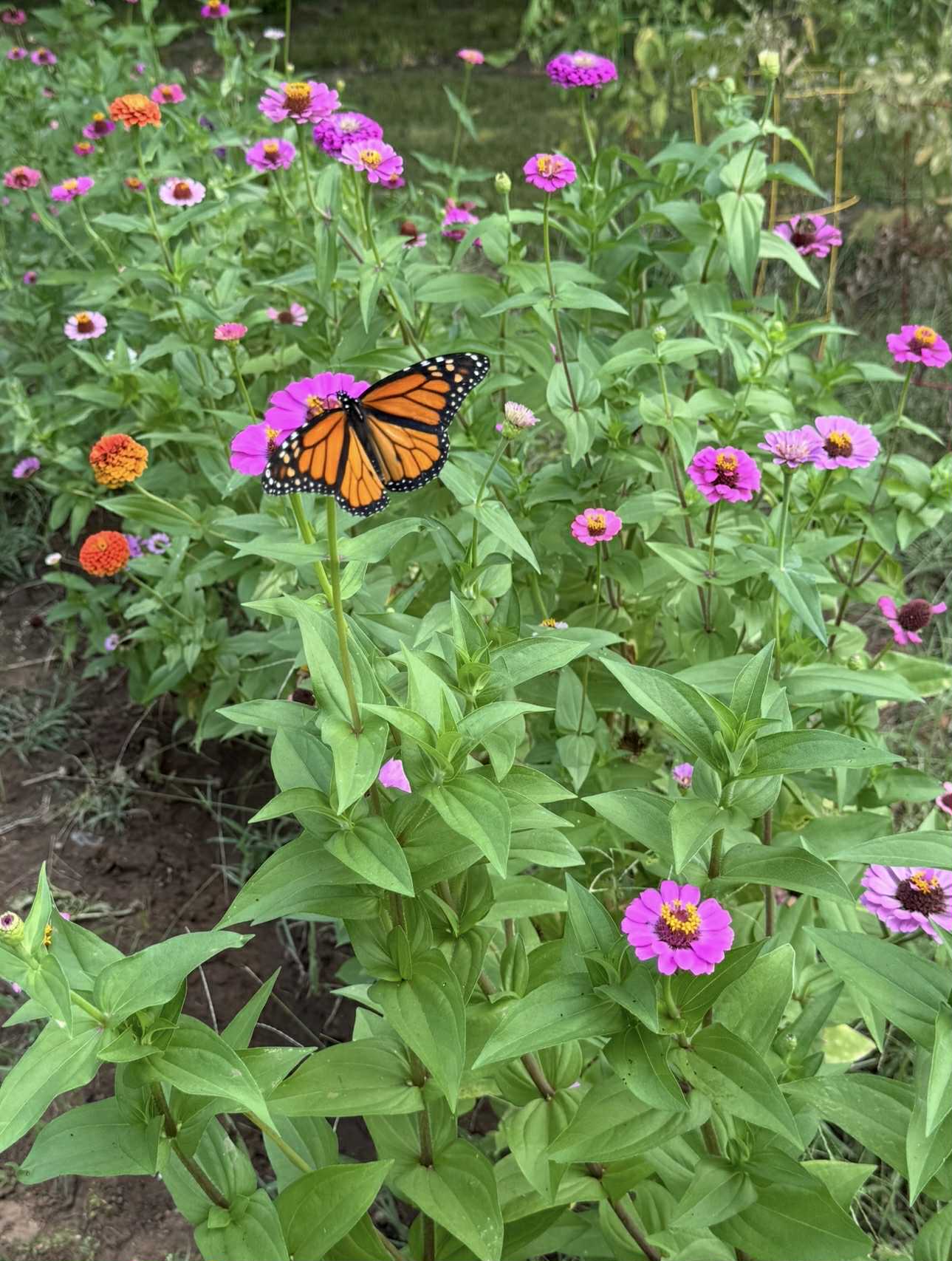
March is the season of new growth. The earth starts greening up, baby calves find their legs, and every hardware store in the county sells out of tomato plants. Folks start making ambitious garden plans, fueled by equal parts hope, memory loss about last year’s weeds, and the siren song of heirloom seed catalogs. You find yourself petting baby chicks at Atwoods, thinking, “How hard can it be?” while conveniently forgetting you once killed a cactus.
But maybe this year, along with our gardens and yards, it’s time we put a little effort into growing something else: personal responsibility. And maybe even—brace yourself—neighborly love.
Now, I’m not talking about the kind of neighborly love where you let someone move in with their three untrained dogs, six boxes of drama, and a Wi-Fi password they never stop using. I mean the kind where we treat folks with basic kindness and decency, without expecting them to carry our groceries, fix our fences, or raise our children.
Somewhere along the way, it seems like society forgot that love and enabling are two different things. The Bible says to love your neighbor as yourself. It does not say to take your neighbor on as a dependent. Yet more and more, we’re seeing an attitude of entitlement blooming like crabgrass in what used to be tight-knit, self-reliant communities.
There was a time when being called “self-sufficient” was a compliment. It meant you could patch a roof with tar and a prayer, make a pot of beans stretch a week, and wrangle your own problems without immediately calling the government, your mama, or Channel 5 News. You didn’t expect handouts—you offered a hand up when someone else truly needed it. But lately, some folks have gotten real comfortable hollering “help me!” before they’ve even tried standing up on their own two feet.
Case in point: a woman on social media said she needed her oil changed and a chicken coop built. She had the supplies but no funds to pay for help. Fair enough—times are tough. But the very next day, she posted photos of her estate sale haul, bragging about how she “only” spent $400. Not even a month later, she’s showing off her custom steel gate entryway. Clearly it’s not a money shortage—it’s a priority misplacement.
That kind of thinking doesn’t just stunt personal growth—it chokes the roots of the community. I know people need help, and we are called to love our neighbors, but let’s get real, folks. Last year’s gold medal for gall goes to the woman hosting her child’s backyard birthday party who posted: “Can anyone bring enough food for about twenty people? The child loves spaghetti with all the trimmings, and a cake. Please deliver it hot, at party time.” You think I’m kidding? I’m not. I’m still in shock.
We weren’t meant to live like hermits, but we weren’t meant to sponge off the folks who are doing the work either. There’s a balance somewhere between “do-it-all-yourself survivalist” and “the world owes me a living.” And that sweet spot is where real growth happens.
Spring is a perfect reminder of that. You can’t just toss seeds in the dirt and expect a harvest. You have to work the soil, pull the weeds, and show up every day—even when it’s hot, dry, or swarming with grasshoppers. Same goes for character. You’ve got to tend it. Cultivate it. And not just when people are watching.
If you want a better world, you’ve got to start in your own backyard. Literally and figuratively. Pick up the trash that blew into your fence line, and since it came from your poly cart, go grab your soda can out of your neighbor’s yard too. Wave at your neighbor, even if he insists on mowing in Crocs and tube socks and blowing his grass trimmings into the street. A little physical kindness can go a long way.
I grew up being taught that if someone was struggling, lost a loved one, or just got over an illness, you found a way to help—even if it was just sending over a casserole. Honestly, our first instinct should be to offer help, not because we want a parade in our honor, but because it’s the right thing to do. If you’re swamped with work or kids or life, send a food gift card. If you’re short on funds, offer to mow a lawn, babysit for an hour, or just check in.
We should teach our kids and grandkids that it’s natural to struggle. That hard work isn’t punishment—it’s how things get built. It’s how we move forward. Asking for help in a crisis is fine, but leaning on others indefinitely is no way to grow tall and strong. A goal shouldn’t be “how do I get the best handouts” but rather, “how do I build a life I’m proud of?”
We all need each other, but we also need to pull our own weight. Otherwise, this whole wagon’s going to tip. There are programs out there to help folks get back on their feet, but they aren’t just hangouts—they’re meant to be springboards. To break the cycle. To build something better.
So maybe this spring, as the world begins to thaw and bloom again, take a quiet moment to reflect on the life you’re growing—both inside and out. Ask yourself what kind of neighbor you are. Are you showing love, or just expecting it? Are you helping things bloom, or draining the rain barrel?
There’s still a lot of good in this world. I see it every day—in farmers helping neighbors fix fence after a storm, in church ladies who deliver meals without a fuss, in kids learning to shake hands and look folks in the eye. But good doesn’t grow on its own. It takes effort. It takes intention. And sometimes it takes a little tough love with a smile.
So here’s to spring: the season of new beginnings, fresh starts, and maybe, just maybe, a collective shift back to kindness, accountability, and old-fashioned neighborly grace.
Let’s roll up our sleeves, open the windows, clean out the cobwebs. Let’s go through our closets and our abundance, and donate to local places that help people get back on their feet—places that believe in a hand up, not just a handout. That’s how we grow something better.
By Lacey Vilhauer
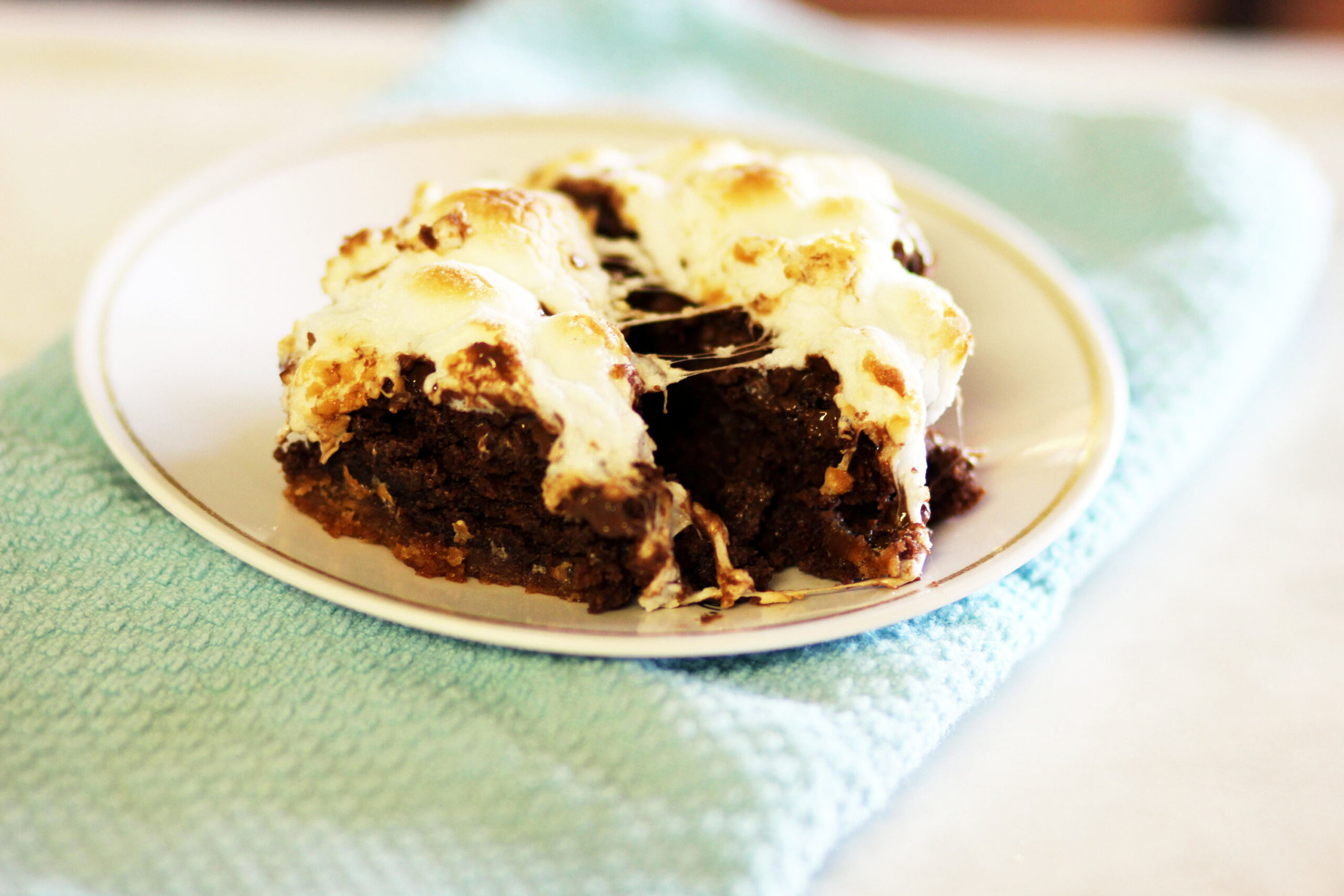
Ingredients: Graham Cracker Crust • 1 cup pulverized graham crackers (about 6 graham crackers, blended or food processed) • 1/3 cup butter (melted) • 1/4 cup brown sugar Brownies • 12 Tbs butter • 1 cup brown sugar (lightly packed) • 3/4 cup white sugar • 4 eggs • 1 1/2 tsp vanilla • 1/4 cup flour • 1 cup cocoa powder • 1 cup milk chocolate chips Toppings • 4 Hershey’s Bars • 10-ounce bag of mini-marshmallows
Instructions: • Preheat oven to 350 degrees Fahrenheit • Grease an 8×8 baking pan • Graham Cracker Crust • Pulverize graham crackers and stir in melted butter. Stir in brown sugar. Press into bottom of baking sheet and set aside.
Brownies In a heavy sauce pan melt butter and stir in white and brown sugars, stir over medium heat for about 1-2 minutes until sugar starts to dissolve. Remove from heat, add vanilla. Add eggs in one at a time and whisk them into the sugar butter mixture. Add flour and cocoa powder and stir together. Fold in chocolate chips. Pour brownie mixture over the top of graham cracker crust. Bake for 40 minutes. Remove from oven and turn oven to broil. Immediately put chocolate bars over the top and top them with mini-marshmallows (or cut up large marshmallows). Broil for one to two minutes (keep an eye on them so they don’t burn), remove once brown. Let cool.
By Beth Watkins
It’s that time of year again. The school supply aisles look like a cross between Black Friday and a cage fight. Parents are searching for the exact type
of blue folder required by Mrs. Johnson’s third-grade class while children toss random items into the cart like contestants on a game show.
Some moms are weeping because their baby is starting kindergarten.
Other moms are squealing tires out of the school parking
lot, headed to the nearest coffee shop on the first day, whispering, “Thank You, Jesus,” as they turn the radio up.
And truth be told, I’ve been
both.
My children have reminded me that school mornings irritated them. Their clothes were laid out the night before, either by them or by me. They weren’t fond of the routine: get up, get dressed, make the bed, brush your teeth, come in for breakfast, grab the pre-packed backpack and lunch box, and head out the door.
Once they left, I got myself ready for the day. My week of chores was always on the same schedule: laundry, shopping, Bible study, housecleaning, hobby time, and lunches with friends.
When they got home on the bus, the routine started again: • Wash your hands,
• Have a snack, • Go play, • Eat dinner, • Do homework, • Take baths, and go to bed. Unless there were dance lessons, ball practice, or church. Then those took the place of playtime.
Now, before I get myself in trouble, let me say this: I realize
motherhood looks different today than it did when I was raising my kids. Many families need two incomes. Life is expensive. Groceries cost about what a used pickup used to cost.
I understand there are moms out there juggling careers, carpools, ball games, dance lessons, church activities, homework, and trying to figure out what on earth they’re making for supper.
Y’all are carrying a load. But I do wonder sometimes if we’ve climbed aboard a merry-go- round that nobody knows how to stop.
It’s really hard to comprehend how fast time flies. We usually get eighteen years with our children. That’s 936 weeks. By the time they turn nine, half of those weeks are already gone. By the time they’re 13, there are only about 260 weeks left before adulthood. Suddenly, 18 years doesn’t seem nearly as long.
Somewhere along the way, we started believing that a good life requires more stuff, more activities, more travel, more commit
ments, more everything.
The problem is that “more” usually costs us the one thing we can never get back.
Time. Back when my kids were little, it wasn’t uncommon for most moms to be stay-at-home moms.
I realize what a gift that was. Not because I was Mother of the Year—I certainly wasn’t—but because I was there.
I was there for the skinned knees, the science projects started at 9 p.m., the teenage heartbreaks, and the endless interruptions that somehow always happened when I was trying to cook dinner.
Was every moment magical? Absolutely not. Some days I would’ve gladly traded a child or two for a nap.
But those years passed quicker than a summer thunderstorm.
Today, it’s the norm for both
parents to work. Many families feel pressure to keep running. Bigger houses. Newer cars. More vacations. More lessons. More sports. More commitments.
And maybe all those things are wonderful.
But every now and then, I want to grab the emergency brake on life and ask:
• What if we don’t need all of it?
• What if the greatest gift we could give our children isn’t another activity, another gadget, or another destination?
• What if it’s simply our presence?
• What if supper around the table is enough?
• What if playing in the backyard is enough?
• What if a Saturday with nowhere to be is enough?
The world is moving faster than a cat with its tail on fire. It
tells us we need more, do more, buy more, become more.
Maybe the secret is learning that less can sometimes be more.
More peace. More laughter. More connection. More memories. One day those little backpacks will be packed for the last time. The school pickup and drop-off line will be a memory. The house will get quiet.
Far quieter than you ever imagined.
And when that day comes, I don’t think you’ll wish you’d spent more time on the merry- go-round.
I think you’ll wish you’d spent more time watching fireflies, eating supper together, and simply enjoying the people God entrusted to you.
As for me, I wish I could go
back in time and do another round with my babies. I think I would let things go a little more. Maybe I’d let the laundry pile a little higher and the dust settle a little thicker so I could soak up more of our time together.
Don’t get me wrong. I enjoy the people my babies have grown into. I love that they have given us grandbabies—little versions of the babies I once rocked.
But in this season, my house is too quiet, and nobody needs me.
I know there are circumstances where single parents don’t have a choice but to work. I know these days many families are doing everything they can just to stay afloat. My heart isn’t to make anyone feel guilty. It’s simply to remind those of us who are blessed to have children that the ordinary moments are often the ones we’ll miss the most.
If you’re fortunate enough to have children, make time to savor every season of their lives and be fully present.
One day the backpacks will be
put away for good, the house will grow quiet, and you’ll discover what every parent eventually does—that time was the greatest gift you ever had.
At a funeral I went to recently, the preacher said something that has stayed with me. He reminded us that, for the man we were honoring, God went from being Savior to Lord.
That phrase captures a turning point in faith. When we first come to know Christ, it’s with gratitude for His saving grace. It’s personal, almost inward-looking: Jesus rescued me. He forgave me. He gave me new life. In that moment, He is our Savior.
But faith is not meant to remain only in the relief of salvation. Over time, we are called to move from simply being saved to truly being led. To call Jesus Lord is to hand Him the reins, to let Him set the course. It means the decisions we make, the way we spend our time, and even the way we handle hardship reflect His authority instead of our own desires.
That shift isn’t dramatic or loud — it’s usually lived out in the everyday. It’s choosing honesty when cutting corners would be easier. It’s setting aside pride to serve others. It’s holding firm in values even when the world says compromise. It’s forgiving, even when it costs something.
And for people who work the land or care for animals, this truth feels especially close. We know what it means to trust something bigger than ourselves — the rain, the soil, the cattle in our care. A rancher can do everything right, but at the end of the day, much is still beyond his control. Faith works the same way. We can’t stop at receiving salvation like a safety net. We have to surrender daily, trusting God to lead, provide, and direct, even when we don’t know what’s ahead.
Scripture asks it plainly: “Why do you call me, ‘Lord, Lord,’ and do not do what I say?” (Luke 6:46). The challenge is clear — it isn’t enough to know God as Savior. We are called to live with Him as Lord.
Salvation is the beginning, but lordship is the journey. And just like tending a crop or training a good rope horse, it’s a steady, daily process. Rescue is where faith starts. Surrender is where it grows strong.





-
 Country Lifestyle2 years ago
July 2017 Profile: J.W. Hart
-
 Farm & Ranch2 years ago
From Plow to Plentiful: The Most Important Inventions in Agricultural History
-
 Attractions9 years ago
48 Hours in Atoka Remembered
-
 Equine9 years ago
Umbilical Hernia
-
 Country Lifestyle5 years ago
The Two Sides of Colten Jesse
-
 Outdoors9 years ago
Grazing Oklahoma: Honey Locust
-
 Farm & Ranch8 years ago
Hackberry (Celtis spp.)
-
 Equine6 years ago
On the Road with Emily Miller-Beisel