Equine
Miss Rodeo Oklahoma Pageant Crowns 2022 Royalty


The Miss Rodeo Oklahoma Scholarship Pageant was held in conjunction with the Woodward Elks Rodeo in Woodward, Okla. Crowned as the new Miss Rodeo Oklahoma is Anna Woolsey, 21 of Skiatook. The new Miss Rodeo Oklahoma Teen is Myranda Kistler, 15, of Claremore. The new Miss Rodeo Oklahoma Princess is Dalli Moore, 12, of Nowata. Four Miss Rodeo Oklahoma Sweethearts were also crowned, Oaklee Edmisten of Nowata, Makena Rose Hale of Claremore, Kailynn Henderson of Vinita and Charlie Jones of Wellston.
With reigns that officially begin January 1, 2022, these titleholders will promote the state of Oklahoma and the sport of rodeo. They will use the remainder of 2021 to pursue sponsors and prepare for extensive travel, public appearances and community service.
Woolsey is expected to represent Oklahoma at the 2023 Miss Rodeo America Pageant, held during the Wrangler National Finals Rodeo in December in Las Vegas, Nev. Woolsey wins a $2,500 scholarship from the Oklahoma Rodeo Pageants Council. She completed her associate degree in business at Northeastern Oklahoma A&M College and is a student at Oklahoma State University majoring in interior design. Woolsey was Miss Rodeo Oklahoma Teen 2017. She grew up showing reining horses and has won multiple year-end, world and reserve national championships in the American Quarter Horse Association, American Buckskin Registry Association and the Intercollegiate Horse Show Association.
In addition to her equestrian pursuits, Woolsey actively fosters dogs. At the state pageant, Woolsey competed as Miss Broken Arrow Rooster Days Rodeo. She won the major categories of horsemanship, appearance, personality and speech. She received a $300 Annie Oakley scholarship and the Betty Baker Memorial Award given to the contestant, in any age division, with the highest overall interview score. She also received a new scholarship for winning horsemanship, a $500 award given in memory of artist Jack J. Wells. First runner-up Charity Pulliam of Marland, second runner-up Lesley Henderson of Vinita, and third runner-up Ann Grue of Bluejacket took home awards plus $1,000, $500 and $250 scholarships, respectively.
Kistler has grown up in Rogers County and enjoys horseback riding, barrel racing, learning to breakaway rope and spending time with friends. A sophomore at Verdigris High, she is an honors student on the volleyball team and will be on the speech and debate team. She is a member of the Nowata and Will Rogers Roundup Clubs. In the Miss Rodeo Oklahoma Pageant, she represented her title as American Cowboys Rodeo Association Junior Miss and won the major category of personality.
Moore attends Oologah-Talala Public Schools where she is active in basketball and choir and prides herself on achieving good grades. She was born into the western way of life and lives on the family ranch raising beef cattle. She competes in youth rodeo barrel racing, pole bending, goat tying and breakaway roping. Her family loves to travel and rodeo. At the state pageant, she represented her title of Oologah Mustang Round Up Club Princess and won the major categories of speech, personality and horsemanship.
The Miss Rodeo Oklahoma Scholarship Pageant welcomed 16 contestants and nearly another dozen visiting rodeo royalty from across the United States. The Woodward Elks Rodeo and Woodward Convention & Visitors Bureau, both Platinum sponsors, have hosted the pageant since 2017. Contestants, their families and fans make an economic impact on the community through the four days of competition where contestants are evaluated in the major categories of knowledge/presentation, personality, horsemanship and appearance.
In addition to participating in several judged activities such as interviews, modeling, speech and horsemanship, they appeared nightly at the Woodward Elks Rodeo.
For complete pageant results and more details about the Miss Rodeo Oklahoma Pageant conducted by the Oklahoma Rodeo Pageants Council, visit www.missrodeooklahoma.com. Information about the community and the Woodward Elks Rodeo is available at www.woodwardelksrodeo.com and www.visitwoodward.com.
By OKFR Staff
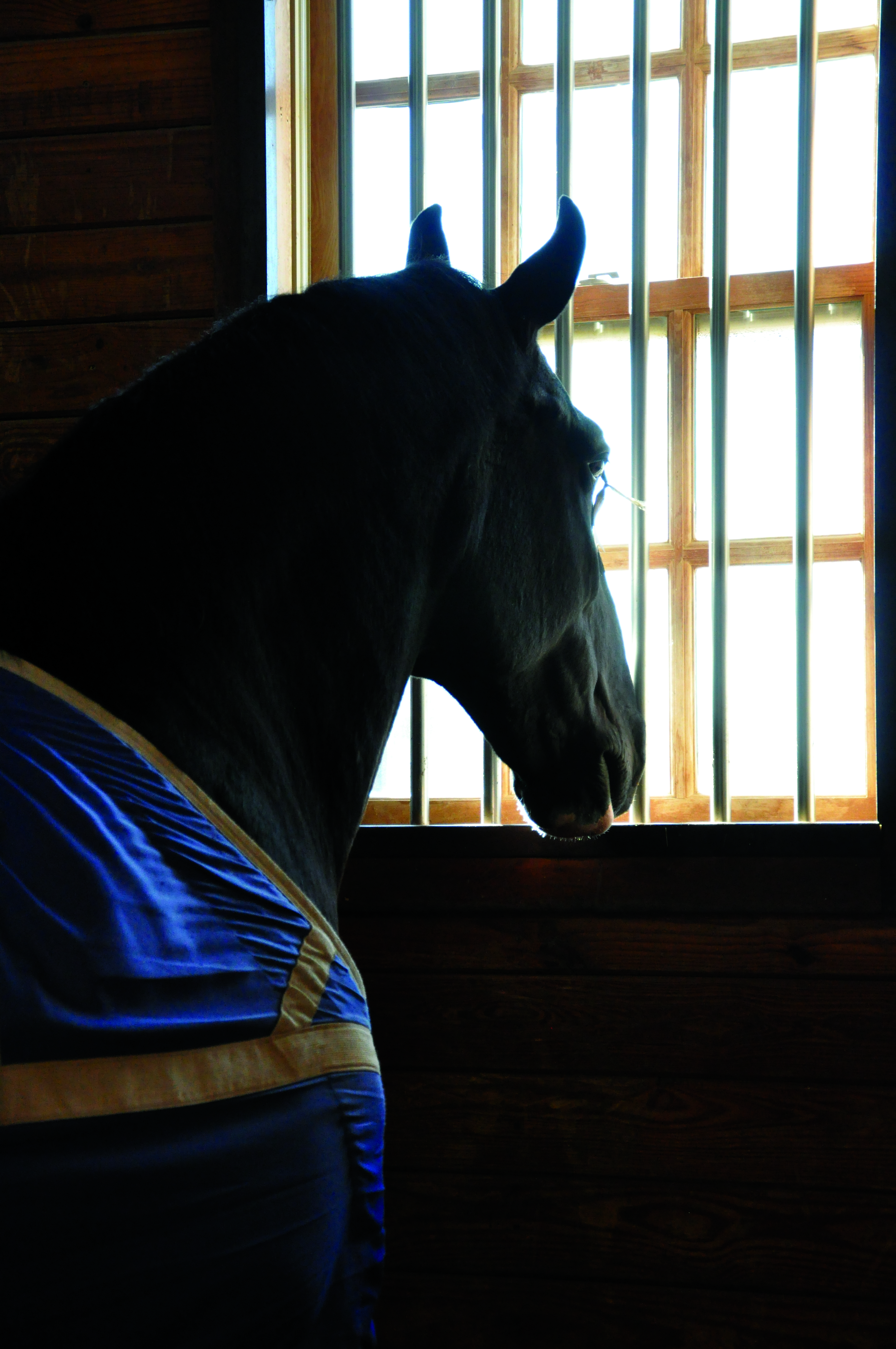
The first cold morning of fall can send a horse owner reaching for a blanket long before the horse needs one. You feel a 45-degree morning and think winter. A healthy horse with a good hair coat may feel something much closer to ordinary weather.
A horse’s winter coat is built to trap air. When the hairs stand up, a response called piloerection, that trapped air insulates the horse. A good layer of body fat helps, too. A flat sheet on an unclipped horse can press the coat down without adding much insulation, which is one reason to base blanketing decisions on the horse and the weather rather than a single temperature.
Rain and wind change things. A dry winter coat handles cold surprisingly well, but once the hair is soaked or plastered with mud, it loses much of its insulating ability. A clipped horse has lost the protection nature gave it. Older horses, thin horses, very young horses and animals recently moved from a warmer climate may need help sooner than a healthy, acclimated adult.
Penn State Extension recommends considering a blanket when a horse has no shelter and temperatures or wind chills fall below about 5 degrees Fahrenheit, when the horse may get wet in cold conditions, when it is body-clipped, or when age, health or low body condition limits its ability to stay warm.
Oklahoma owners may rarely see that first threshold, but cold rain and wind are common enough to matter.
Blankets also create work. They need to fit properly and stay dry, and they should come off regularly so you can check the horse for weight loss, skin problems, rubs and a twisted blanket. On warmer afternoons, a horse can sweat under a blanket that was comfortable overnight.
Instead of asking what temperature calls for a blanket, ask what this horse needs in these conditions. A clipped show horse in a north wind and cold rain may need a blanket, while an unclipped, well-conditioned pasture horse with a shed is perfectly comfortable beside him.
Feed is part of cold-weather protection, too. Fermentation of fiber in the hindgut produces heat, which is one reason adequate forage matters during cold spells. A horse standing at a round bale with shelter and water may regulate its temperature better than one wearing an expensive blanket but short on forage.
Watch the horse, not just the forecast. Shivering, a tucked posture, ears and legs that stay cold, weight loss or reluctance to move can signal a horse is struggling. At the other extreme, sweat under a blanket means the horse is too warm. Slide a hand under the blanket at the shoulder and chest rather than judging by how cold your own hands feel.
If you blanket, have a plan for changing weather. Oklahoma can go from a freezing morning to a sunny 60-degree afternoon, and a blanket chosen at dawn may be far too much by lunch. For that reason, a horse that lives outside without constant supervision can sometimes be easier to manage with its natural coat, as long as it is healthy, acclimated and has shelter from wet wind.
A good shelter doesn’t have to be heated. A three-sided shed or natural windbreak can cut exposure dramatically if the horse can use it to get out of the prevailing wind and driving rain. Bedding in a dry shelter also lets a horse lie down without losing heat to wet ground.
Never let a blanket hide a nutrition problem. Thick fabric makes it easy to miss ribs becoming more prominent. Run your hands over the neck, ribs and topline every few days through winter. A horse can lose a surprising amount of weight before it shows under hair and a blanket.
By Savannah Magoteaux
If you’ve ridden long enough, you’ve had a horse notice something that seemed invisible to you, then apparently fail to see the object sitting right in front of him. It makes more sense once you stop assuming a horse sees the world the way you do.
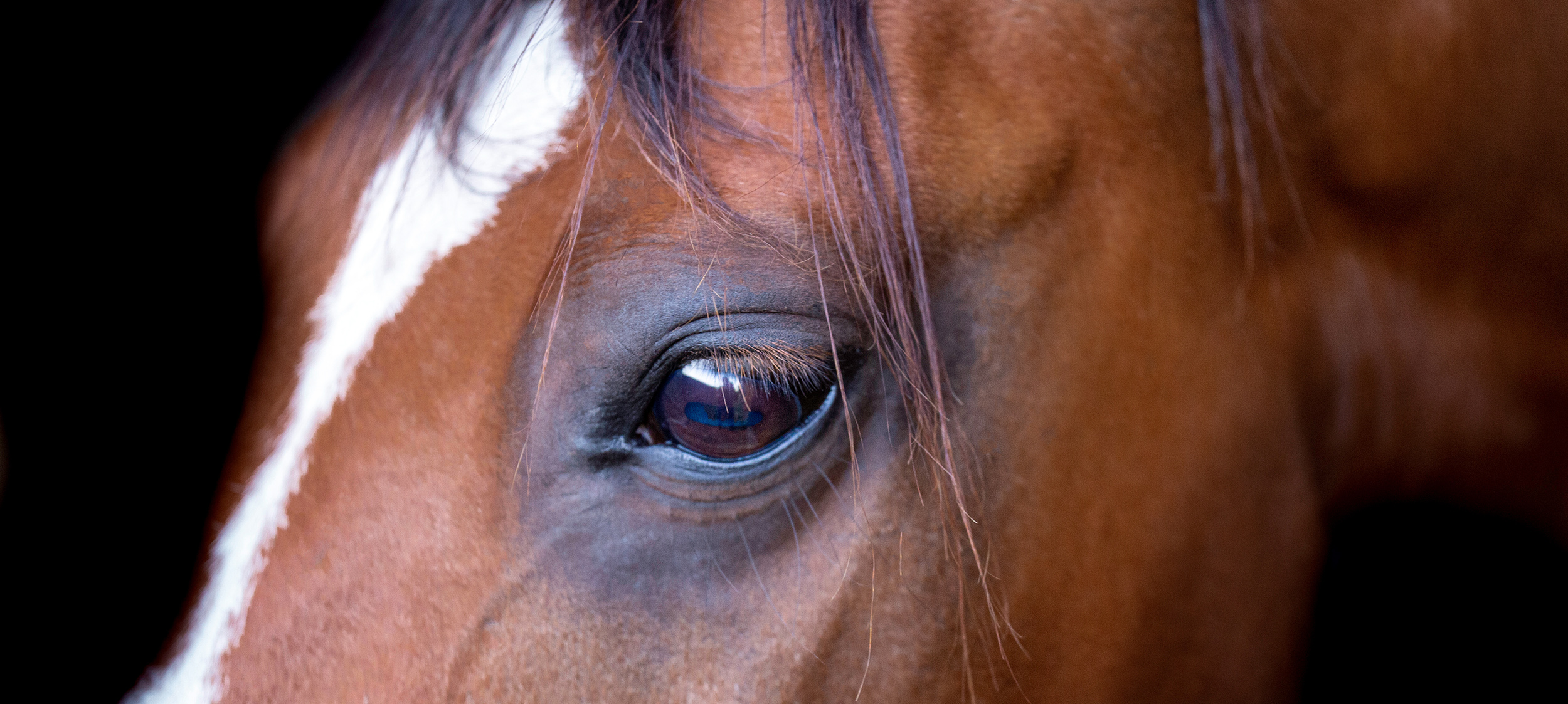
The first difference shows in the shape of the head. A horse’s eyes sit on the sides, giving it an enormous field of view. That suits a prey species that survived by spotting movement before a predator got close. Horses can see much of the area around their bodies without moving their heads very far.
The tradeoff is that much of that view isn’t binocular. Most of what a horse sees is monocular, meaning one eye views an object on its own. Where the two eyes’ fields overlap, the horse gets binocular vision and better depth perception. A horse may turn or raise its head to bring something into that zone and study it more closely.
Horses have blind spots, too. One is directly behind them. Another small one sits right in front of the face. That is one reason a horse may need to move its head to inspect an object close to its nose, and a good reason to speak when approaching from behind instead of appearing suddenly inside a blind spot.
Color and contrast
Horses see color differently as well. People with typical color vision have three types of cone cells. Horses have two. Researchers describe equine vision as dichromatic. Horses can tell colors apart, but not across the same range we do. Their color world is often compared loosely with human red-green color deficiency. Blues and yellows generally stand out better, while reds, oranges and some greens can be hard to pick out from the background when their brightness is similar.
That has practical consequences. Research on racing obstacles found that traditional orange markings didn’t give horses the contrast they gave human eyes. Bright blue, white and fluorescent yellow stood out more against many backgrounds and changed how horses approached jumps.
Contrast often matters more than the color name printed on a product. A bright red cone may pop against green grass to us but offer a horse less useful contrast. White, blue or yellow objects can be easier for horses to see in some settings. You don’t need to repaint the barn, but it’s worth considering when you design obstacles, fencing markers or trailer interiors.
Light and detail
Horses are well equipped for low light. Their eyes contain a high proportion of rods, the photoreceptors used in dim light, and a reflective layer called the tapetum lucidum helps them make better use of the light available. Horses can function in much darker conditions than people can. Their eyes don’t adjust instantly, though. Moving from a bright outdoor area into a dark trailer or barn can take time.
Be patient with light transitions. A horse led from bright sun into a dark trailer may hesitate because its eyes need time to adapt. The same can happen at an indoor arena doorway or a shadowed creek crossing. If you treat every pause as a refusal, you can turn a vision problem into a training fight.
Visual sharpness is another difference. A horse’s panoramic view excels at catching motion, but fine detail isn’t its strength. That flapping feed sack at the far end of the arena may register immediately as movement without being clearly identified as a harmless feed sack.
That helps explain some everyday training problems. A banner approached from the left isn’t necessarily the same visual experience as one approached from the right. An object can also look different against a new background or in different light. Giving a horse a moment to look lets it gather better information.
Head position matters more than many riders realize. Horses have a horizontal visual streak in the retina that helps them scan the horizon. Raising or lowering the head changes which part of the visual field the horse is using. A horse approaching an unfamiliar ditch may raise its head to take in the scene, then lower it to judge the footing close to its body. Restricting the head at the wrong moment can make the job harder.
Depth perception is strongest in the binocular area, but horses can move at speed through complex terrain. What they lack is the broad binocular field humans take for granted. When a horse turns its head to look at a jump standard or a cow, it may be bringing the object into a more useful viewing zone, not losing focus.
Using what you know
Eyesight isn’t behind every spook. Horses learn, remember, anticipate and react for many reasons. Understanding their vision does help explain why “he has seen that a hundred times” doesn’t always settle the matter.
Eyesight also changes with age and disease. Cataracts, uveitis and other eye problems can change behavior gradually. New spooking, head tilting, hesitation in dim light, tearing or a cloudy eye deserve veterinary attention. Knowing what normal equine vision looks like makes abnormal vision easier to notice.
You can use this knowledge on the ground, too. Approach a horse where it can see you, speak before stepping directly behind it, and let it investigate new objects from a comfortable distance. At the trailer, improve the lighting inside instead of assuming the horse is refusing to step into a black hole. In the arena, remember that shadows can change contrast and make a familiar object look different.
None of these adjustments replace training. They make training fairer by accounting for how the horse actually sees the environment you’re asking it to work in. A horse sees a wide world built for detecting motion, working in dim light and keeping track of everything around him. It is a very good system for a horse, and a very different one from ours.
By Savannah Magoteaux, Editor
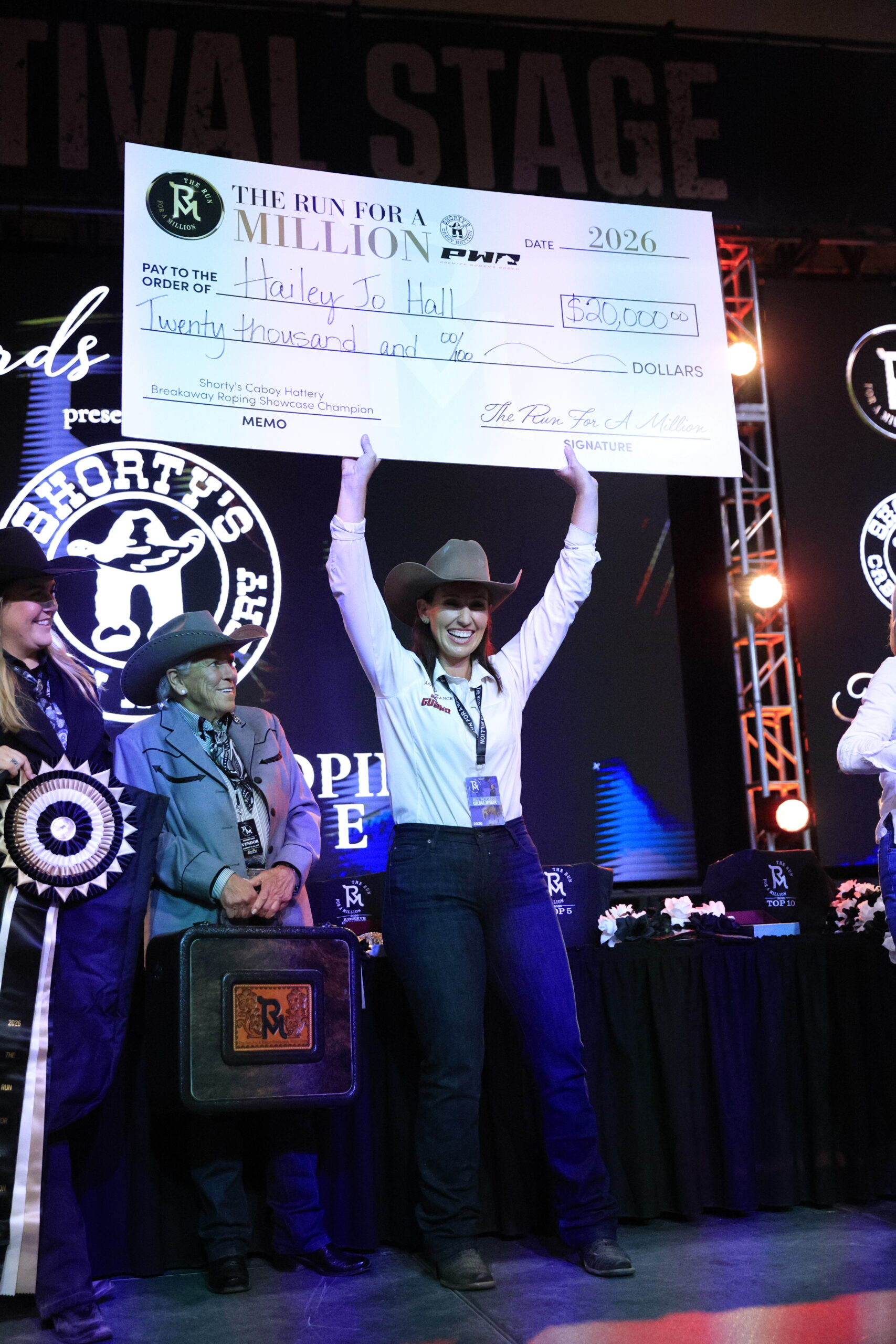
Hailey Jo Hall moved to Texas because she wanted to rope where the competition was toughest. Five years later, after plenty of hard lessons, long hours and a season spent sharpening the details, that decision helped carry her all the way to Las Vegas, where she became the first Breakaway Roping Showcase champion at The Run For A Million. Now splitting her time between Texas and Oklahoma to stay close to family, Hall is balancing a career in agricultural insurance, a growing breakaway career and a horse that has been part of her family from the beginning.
Hall moved to Texas in 2021 to find out how she stacked up against the best breakaway ropers in the country. For a while, the answer stung. The Northwest, where she came from, had plenty of good ropers and horses, but she learned quickly that the sheer depth of the competition in Texas could be overwhelming, and she had nowhere to hide any holes in her game.
Five years later, the Washington native rode into South Point Arena at The Run For A Million in Las Vegas and left as the event’s first Breakaway Roping Showcase champion.
Getting there took a family steeped in rodeo, two-hour drives for roping lessons, a career change, a horse few people would have picked and a 2025 season that sent her home with a long list of things to fix.
Rodeo roots
Hall grew up in Enumclaw, Washington, outside Seattle, while her father’s family was based in central Oregon. The Halls spent the school year in Washington and summers in Oregon, and rodeo often set the schedule. Her father, John Hall, won circuit championships and qualified several times for the Dodge National Circuit Finals, now known as the NFR Open.
“When my dad was rodeoing, we did spend some time in the South in Atoka, Oklahoma,” Hall said. “We would kind of split our time up during the year. It all worked around the school year, but we traveled quite a bit in the summer. We’d all take off, load up with him and hit the road and go to all the rodeos.”
The family’s rodeo roots go back more than one generation. On the side of her mother, Jamie Hall, relatives were involved with the King Rodeo Company in Kansas in the early 1900s. According to Hall, they raised bucking stock and helped produce rodeos, including early editions of the professional rodeo in Garden City, Kansas.
Jamie later barrel raced and roped, and Hall calls her mother a knowledgeable horsewoman and a big part of her own success.
On her father’s side, Hall’s grandmother rodeoed in the Northwest decades before women had many of today’s opportunities. She served on the Sisters Rodeo court in Oregon and, according to family history, worked around the bullfighting barrel in the 1950s and 1960s before becoming a rodeo queen.
“She always wanted to be a cowgirl,” Hall said. “I think that’s where I got that from.”
Growing up in rodeo country didn’t guarantee Hall a practice pen full of ropers down the road. In western Washington, she had to go looking for them.
“When I wanted to learn to rope, my dad would have to drive me two hours after school to go get roping lessons and practice,” she said. “It’s just not as common up there as it is around Stephenville.”
Hall rodeoed in high school in Washington, then attended Blue Mountain Community College in Pendleton, Oregon. She graduated in 2013 with an associate degree in general studies and dental training and spent nearly a decade working in dentistry.
Iron sharpens iron
In June 2021, Hall joined the long line of contestants who have hauled into Erath County with a horse trailer and a plan.
“Like everybody else, I had the rodeo dream,” she said. “When you want to be the best, you go where the best are, so I moved down there and spent a lot of time getting my butt kicked.”
She laughs about it now, but the adjustment was real.
“Everybody at home, they roped great,” Hall said. “There are just so many people down here that it’s a knife fight, and iron sharpens iron. I came down to Stephenville, and I’m so glad I did. It’s helped me immensely and put me on a path I never thought I would be on.”
Stephenville changed her career, too. Soon after she arrived, Hall arranged to feed-lease a set of roping calves from a man who owned an insurance agency. She kept the calves fed and healthy, and in return she had cattle to practice on. Nearly a year later, he called with another offer.
“He just called me kind of out of the blue one day and asked if I wanted to go to work with him,” Hall said. “I jumped at the opportunity, and I’ve been doing that ever since. I have not looked back once.”
Today Hall works with 4TAg Insurance. She writes equine policies; pasture, rangeland and forage coverage; crop insurance; home and auto; equipment; and commercial agricultural coverage. The job took her out of dentistry and into an industry full of the same people she sees at rodeos and ropings.
“I feel like I’m pretty personable, so I have an easy time visiting with people,” she said. “My granddad actually owned an insurance agency in Oregon for many years, which now I look back and think I should have picked his brain more. But it goes so well with what I do. Every day I get up and rope. I’m either going to a rodeo or going to a ranch to do insurance. My professional breakaway career and my professional career in insurance tie in very well together.”
Expensive lessons
Hall joined the Women’s Professional Rodeo Association around 2016 or 2017, when breakaway roping began gaining ground in the Northwest. She also helped push to bring breakaway roping to the grass at the Pendleton Round-Up, producing an event with the goal of one day seeing women rope in the famous Pendleton arena.
For most of those years, though, Hall competed mainly at circuit and amateur rodeos. That changed in 2025.
“That was really the first year I ever went out rodeoing very hard during the summer,” she said. “I learned a lot of expensive lessons.”
She came home in August knowing where she stood.
“I came back with my tail between my legs a little bit after getting my butt handed to me,” she said. “I was like, ‘All right, I’ve got a list of things I need to fix,’ from horsemanship to equipment to really the mental game of roping.”
Instead of hauling harder in 2026, Hall used the year differently. She still competed, but she put more time into improving at home, getting another horse going and entering Premier Women’s Rodeo events closer to home.
“I really just kind of fine-tuned things where I feel like now I’m at a level I can compete to the best of my capabilities,” she said.
The road to Las Vegas
That shift pointed her toward Las Vegas. Hall had followed the PWR before, but she started paying closer attention after she saw the money paid at the PWR Finals.
“I got online, checked it out and learned the nomination system,” she said. “To be honest, the nominating thing confused me at first.”
A conversation with PWR executive Sami Jo Smith cleared it up. Hall could nominate many of the events she already planned to attend, earn PWR points and work toward the PWR Finals and The Run For A Million without rebuilding her schedule.
“When I looked at it, it was almost like, ‘I can’t believe I haven’t been nominating,’” Hall said. “I’m already spending the fuel to go to these places. I’m already entered at them. For a little more, I can nominate it, get the points and open the opportunities like Vegas and The Run For A Million.”
Hall estimates she spent about $1,000 in nomination fees on her way to qualifying for Las Vegas.
“I’ll spend that at a good roping any given weekend,” she said. “And I netted $19,000. That’s a pretty good return on investment, in my opinion.”
The money mattered less to Hall than the setting. Her qualification put her inside South Point Arena during one of the biggest weeks in western performance sports. The Run For A Million draws top competitors in reining, cutting, reined cow horse and other disciplines, and Hall had watched most of them only online.
“That was the coolest thing I’ve ever been a part of,” she said. “I’d never been to anything really in the reining, cutting or working cow horse industry. I watch it online and stuff, but to be there, and I had guys like Kole Price telling me good job and shaking my hand, and I’m walking the same barn as Golden Coins. That was so cool.”
The welcome from those competitors stood out just as much.
“They were all so welcoming,” she said. “They were out in the warm-up arena the night we were up, telling us good luck.”
Hall arrived happy to be included and left with the title.
“I was just happy being there,” she said. “But to go out there and be the first-ever breakaway champion at The Run For A Million, that’s pretty cool.”
A horse few would have picked
Hall is quick to share the credit.
Her family bred and raised Dats A Hickory Dude, the 8-year-old gelding she rode in Las Vegas. They owned his dam, still own his sire and handled much of his development. Steven and Katy Duby started him as a 2-year-old before Hall brought him home and began roping calves on him.
He doesn’t look the part.
“He does not really fit the cow horse, calf horse kind of horse you think of when you see rope horses,” Hall said. “He’s pretty tall. He’s about 16 hands, 16.1. He’s got long legs and a long neck. He’s just a little bit unorthodox for his discipline, but he does the job.”
The long legs help.
“He’s fast,” she said. “I hardly ever get outrun.”
He also made Hall adjust. He stands taller than the horses she had preferred, and his style didn’t feel natural to her at first. Some days she wondered whether they were the right match. Her mother never did.
“My mom just kept telling me, ‘I think you should just keep working on him. I think he’s going to be special,’” Hall said. “As it turns out, he is. She was right.”
Her parents also put in plenty of nights no crowd saw.
“My parents have spent many nights out at the arena opening the chutes for me to train this horse,” she said. “I’m just so thankful I get to ride him, and I can count on him at places like that to pull through for me and always do his job.”
At 8, the gelding should have years of work left.
“He’s been with me his whole life,” Hall said. “He’s part of the family. He’s earned his place. It’s nice to have him on the team and know that he’s old faithful and I can count on him no matter what.”
Two states, one goal
Hall plans to rodeo harder in 2027 and keep nominating PWR events. She wants another shot at The Run For A Million and a trip to the PWR Finals, and she has a bigger goal in front of her.
“My goal is to make the National Finals Breakaway Roping,” she said. “I feel like I’ve put in the work, and I have the horsepower and the support behind me, from my family to my employers. God’s put this on my heart to do it, and I won’t stop until I do.”
She will chase those goals from two states. Shortly before The Run For A Million, Hall moved to Stillwater, Oklahoma, to be closer to her parents and her younger sister, who will soon make her an aunt. Her insurance business remains in Stephenville, so she expects to spend plenty of time on both sides of the Red River.
“I’ve been in Stephenville for five or six years,” she said. “I live up here and get my mail up here, but my business and everything is based out of Stephenville, so I’m kind of split. I’m down there quite a bit regardless.”
Living in two places is nothing new for Hall. She grew up learning that when the opportunity was somewhere else, you loaded the trailer and went.
She has already made sure her nephew will have the proper wardrobe. After learning her sister was expecting a boy, Hall bought a tiny Run For A Million onesie in Las Vegas.
“I said, ‘You better be wearing this home from the hospital,’” she said with a laugh.
Nobody knows yet whether he’ll pick up a rope. In this family, he won’t have to look far for someone to teach him.
Hall knows other young women are watching, too. Some grow up surrounded by ropers. Others are like she was, climbing into a truck after school for a two-hour drive to practice.
“I feel like there are a lot of other girls out there that are like me, that have really big dreams,” she said. “You might not always see a way that you’re going to accomplish them, but just never give up and trust the path God’s put you on. I would have never guessed five years ago that I’d be where I’m at now. I just thank God for the opportunities and the people He’s put in my path, and the ability He’s given me to never quit.”
Five years ago, Hall moved to Stephenville to find out whether she could compete with the best. Plenty of people there made her prove it. In Las Vegas, she did.



-
 Country Lifestyle2 years ago
July 2017 Profile: J.W. Hart
-
 Farm & Ranch2 years ago
From Plow to Plentiful: The Most Important Inventions in Agricultural History
-
 Attractions9 years ago
48 Hours in Atoka Remembered
-
 Outdoors9 years ago
Grazing Oklahoma: Honey Locust
-
 Equine9 years ago
Umbilical Hernia
-
 Country Lifestyle5 years ago
The Two Sides of Colten Jesse
-
 Farm & Ranch8 years ago
Hackberry (Celtis spp.)
-
 Attractions4 months ago
Oklahoma Ghost Towns – Navajoe