Equine
A Practical Part of Horse Health

By OKFR Staff
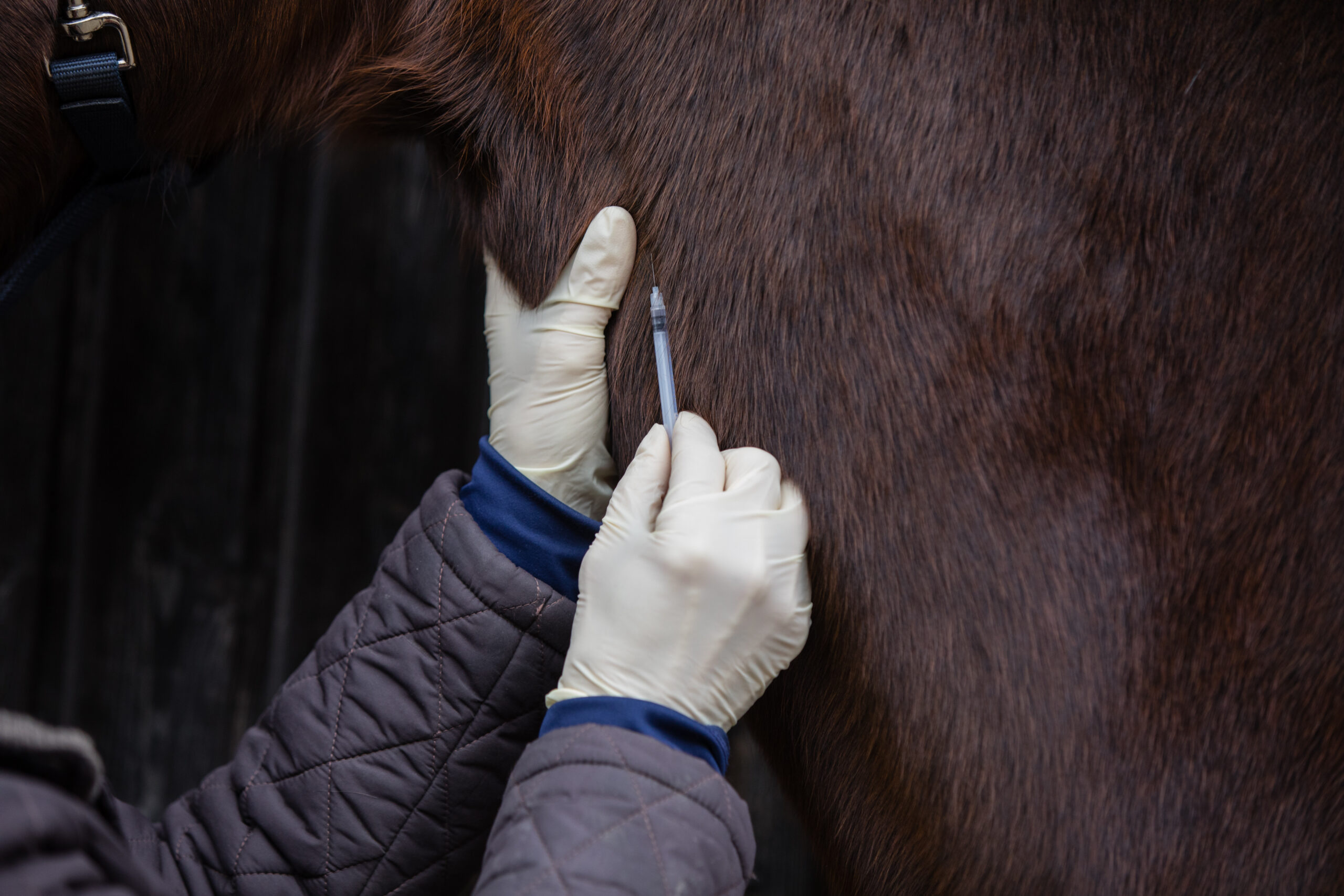
Vaccinations may not prevent every illness, but they remain one of the most effective tools horse owners have for reducing the risk of serious and sometimes fatal disease. The right vaccination program depends on the horse, where it lives, how often it travels and the animals it may encounter.
The American Association of Equine Practitioners (AAEP) divides vaccines into two categories: core and risk-based. The AAEP recommends core vaccines for all horses because these diseases pose a significant health risk, may affect public health or spread through sources owners cannot fully control.
The core vaccines for horses are tetanus, Eastern and Western equine encephalomyelitis, West Nile virus and rabies.
Tetanus bacteria live in soil and manure. The organism can enter through puncture wounds, cuts, surgical sites and other damaged tissue, so even a minor-looking wound can lead to infection.
Previously vaccinated adult horses generally receive a tetanus booster once a year. Your veterinarian may recommend an additional booster after a penetrating injury or before surgery if more than six months have passed since the horse’s last dose.
Mosquitoes spread Eastern and Western equine encephalomyelitis and West Nile virus. These diseases attack the nervous system and may cause weakness, loss of coordination, behavior changes, difficulty standing or death.
Horses generally receive these vaccines before mosquito season begins. In regions with long mosquito seasons, a veterinarian may recommend boosters more than once a year.
Rabies is uncommon in horses, but it is fatal and can pass to people. Horses may be exposed through contact with infected wildlife, including bats, skunks, raccoons and foxes. Because horses spend so much time with owners, veterinarians, farriers and other handlers, annual rabies vaccination protects more than the individual animal.
Risk-based vaccines depend on a horse’s individual circumstances. These may include vaccines for equine influenza, equine herpesvirus, strangles, leptospirosis, botulism and other diseases. A horse that stays on one farm with a closed herd may need different protection than a show horse that travels regularly, shares barns with unfamiliar horses and meets animals from several states.
Owners commonly consider influenza and equine herpesvirus vaccines for horses that travel or meet new horses often. Equine influenza spreads quickly through respiratory droplets and contaminated equipment. Horses at higher risk may need boosters every six months, and some competitions and facilities require proof of recent vaccination.
Timing matters. Vaccines do not provide immediate protection, and an unvaccinated horse may need an initial series of two or more doses. The AAEP recommends completing the primary series and any needed boosters at least 14 days before likely exposure. Vaccinating the day before a show or hauling trip does not give the immune system enough time to respond.
Mild soreness, swelling or a temporary fever can occur after vaccination. Serious reactions are rare, but call your veterinarian if a horse develops significant swelling, breathing difficulty, hives, weakness or other concerning signs.
No single vaccination schedule fits every horse. Age, pregnancy, health, travel, local disease activity and vaccination history all affect the plan. Your veterinarian can build a schedule around those factors and make sure vaccines are properly stored, given and recorded.
Vaccination works best alongside good management. Clean equipment, limited contact with unfamiliar horses, isolation of new arrivals and prompt attention to illness all still matter. Together, vaccination and basic biosecurity give horses a stronger defense against preventable disease.
By Savannah Magoteaux, Editor
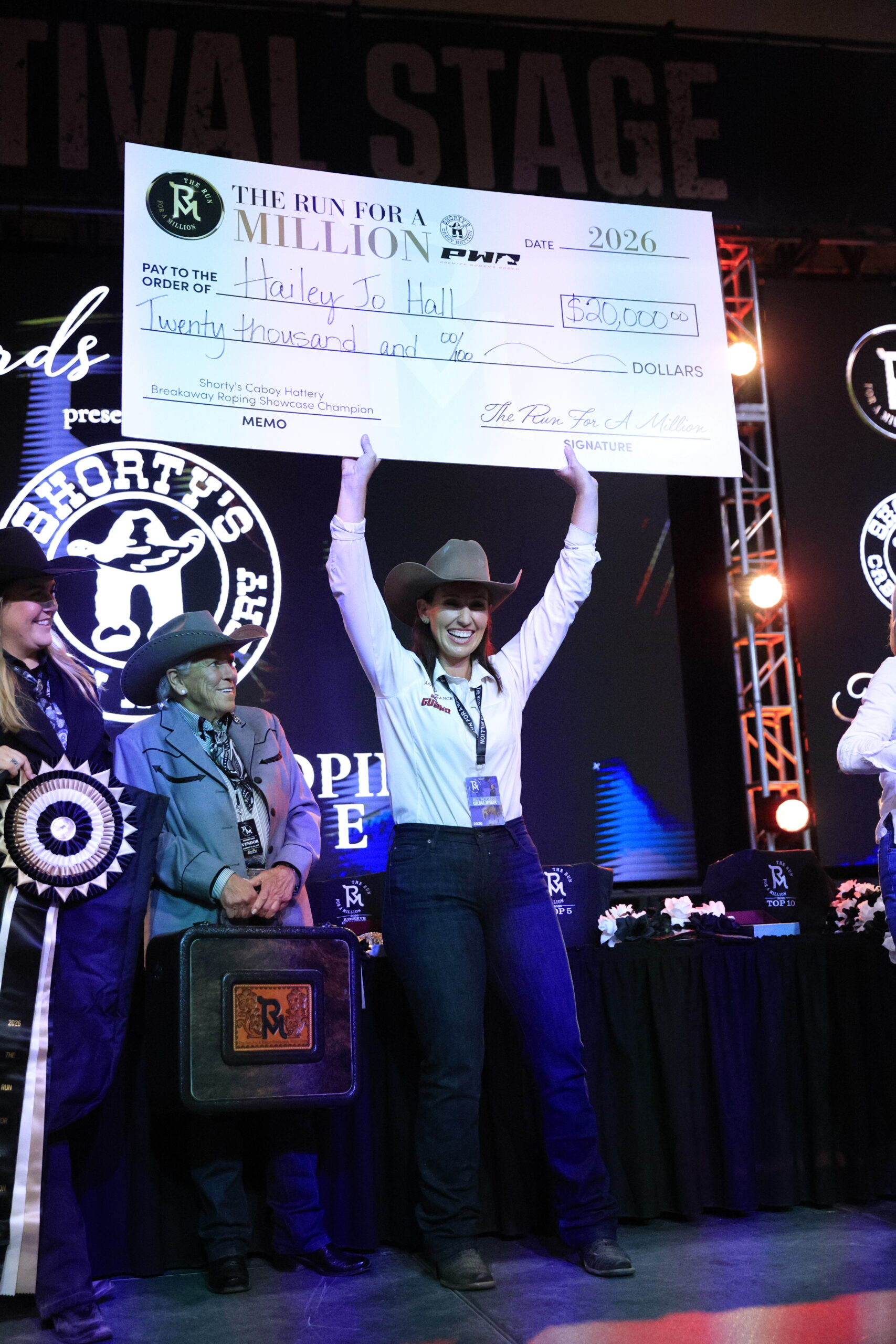
Hailey Jo Hall moved to Texas because she wanted to rope where the competition was toughest. Five years later, after plenty of hard lessons, long hours and a season spent sharpening the details, that decision helped carry her all the way to Las Vegas, where she became the first Breakaway Roping Showcase champion at The Run For A Million. Now splitting her time between Texas and Oklahoma to stay close to family, Hall is balancing a career in agricultural insurance, a growing breakaway career and a horse that has been part of her family from the beginning.
Hall moved to Texas in 2021 to find out how she stacked up against the best breakaway ropers in the country. For a while, the answer stung. The Northwest, where she came from, had plenty of good ropers and horses, but she learned quickly that the sheer depth of the competition in Texas could be overwhelming, and she had nowhere to hide any holes in her game.
Five years later, the Washington native rode into South Point Arena at The Run For A Million in Las Vegas and left as the event’s first Breakaway Roping Showcase champion.
Getting there took a family steeped in rodeo, two-hour drives for roping lessons, a career change, a horse few people would have picked and a 2025 season that sent her home with a long list of things to fix.
Rodeo roots
Hall grew up in Enumclaw, Washington, outside Seattle, while her father’s family was based in central Oregon. The Halls spent the school year in Washington and summers in Oregon, and rodeo often set the schedule. Her father, John Hall, won circuit championships and qualified several times for the Dodge National Circuit Finals, now known as the NFR Open.
“When my dad was rodeoing, we did spend some time in the South in Atoka, Oklahoma,” Hall said. “We would kind of split our time up during the year. It all worked around the school year, but we traveled quite a bit in the summer. We’d all take off, load up with him and hit the road and go to all the rodeos.”
The family’s rodeo roots go back more than one generation. On the side of her mother, Jamie Hall, relatives were involved with the King Rodeo Company in Kansas in the early 1900s. According to Hall, they raised bucking stock and helped produce rodeos, including early editions of the professional rodeo in Garden City, Kansas.
Jamie later barrel raced and roped, and Hall calls her mother a knowledgeable horsewoman and a big part of her own success.
On her father’s side, Hall’s grandmother rodeoed in the Northwest decades before women had many of today’s opportunities. She served on the Sisters Rodeo court in Oregon and, according to family history, worked around the bullfighting barrel in the 1950s and 1960s before becoming a rodeo queen.
“She always wanted to be a cowgirl,” Hall said. “I think that’s where I got that from.”
Growing up in rodeo country didn’t guarantee Hall a practice pen full of ropers down the road. In western Washington, she had to go looking for them.
“When I wanted to learn to rope, my dad would have to drive me two hours after school to go get roping lessons and practice,” she said. “It’s just not as common up there as it is around Stephenville.”
Hall rodeoed in high school in Washington, then attended Blue Mountain Community College in Pendleton, Oregon. She graduated in 2013 with an associate degree in general studies and dental training and spent nearly a decade working in dentistry.
Iron sharpens iron
In June 2021, Hall joined the long line of contestants who have hauled into Erath County with a horse trailer and a plan.
“Like everybody else, I had the rodeo dream,” she said. “When you want to be the best, you go where the best are, so I moved down there and spent a lot of time getting my butt kicked.”
She laughs about it now, but the adjustment was real.
“Everybody at home, they roped great,” Hall said. “There are just so many people down here that it’s a knife fight, and iron sharpens iron. I came down to Stephenville, and I’m so glad I did. It’s helped me immensely and put me on a path I never thought I would be on.”
Stephenville changed her career, too. Soon after she arrived, Hall arranged to feed-lease a set of roping calves from a man who owned an insurance agency. She kept the calves fed and healthy, and in return she had cattle to practice on. Nearly a year later, he called with another offer.
“He just called me kind of out of the blue one day and asked if I wanted to go to work with him,” Hall said. “I jumped at the opportunity, and I’ve been doing that ever since. I have not looked back once.”
Today Hall works with 4TAg Insurance. She writes equine policies; pasture, rangeland and forage coverage; crop insurance; home and auto; equipment; and commercial agricultural coverage. The job took her out of dentistry and into an industry full of the same people she sees at rodeos and ropings.
“I feel like I’m pretty personable, so I have an easy time visiting with people,” she said. “My granddad actually owned an insurance agency in Oregon for many years, which now I look back and think I should have picked his brain more. But it goes so well with what I do. Every day I get up and rope. I’m either going to a rodeo or going to a ranch to do insurance. My professional breakaway career and my professional career in insurance tie in very well together.”
Expensive lessons
Hall joined the Women’s Professional Rodeo Association around 2016 or 2017, when breakaway roping began gaining ground in the Northwest. She also helped push to bring breakaway roping to the grass at the Pendleton Round-Up, producing an event with the goal of one day seeing women rope in the famous Pendleton arena.
For most of those years, though, Hall competed mainly at circuit and amateur rodeos. That changed in 2025.
“That was really the first year I ever went out rodeoing very hard during the summer,” she said. “I learned a lot of expensive lessons.”
She came home in August knowing where she stood.
“I came back with my tail between my legs a little bit after getting my butt handed to me,” she said. “I was like, ‘All right, I’ve got a list of things I need to fix,’ from horsemanship to equipment to really the mental game of roping.”
Instead of hauling harder in 2026, Hall used the year differently. She still competed, but she put more time into improving at home, getting another horse going and entering Premier Women’s Rodeo events closer to home.
“I really just kind of fine-tuned things where I feel like now I’m at a level I can compete to the best of my capabilities,” she said.
The road to Las Vegas
That shift pointed her toward Las Vegas. Hall had followed the PWR before, but she started paying closer attention after she saw the money paid at the PWR Finals.
“I got online, checked it out and learned the nomination system,” she said. “To be honest, the nominating thing confused me at first.”
A conversation with PWR executive Sami Jo Smith cleared it up. Hall could nominate many of the events she already planned to attend, earn PWR points and work toward the PWR Finals and The Run For A Million without rebuilding her schedule.
“When I looked at it, it was almost like, ‘I can’t believe I haven’t been nominating,’” Hall said. “I’m already spending the fuel to go to these places. I’m already entered at them. For a little more, I can nominate it, get the points and open the opportunities like Vegas and The Run For A Million.”
Hall estimates she spent about $1,000 in nomination fees on her way to qualifying for Las Vegas.
“I’ll spend that at a good roping any given weekend,” she said. “And I netted $19,000. That’s a pretty good return on investment, in my opinion.”
The money mattered less to Hall than the setting. Her qualification put her inside South Point Arena during one of the biggest weeks in western performance sports. The Run For A Million draws top competitors in reining, cutting, reined cow horse and other disciplines, and Hall had watched most of them only online.
“That was the coolest thing I’ve ever been a part of,” she said. “I’d never been to anything really in the reining, cutting or working cow horse industry. I watch it online and stuff, but to be there, and I had guys like Kole Price telling me good job and shaking my hand, and I’m walking the same barn as Golden Coins. That was so cool.”
The welcome from those competitors stood out just as much.
“They were all so welcoming,” she said. “They were out in the warm-up arena the night we were up, telling us good luck.”
Hall arrived happy to be included and left with the title.
“I was just happy being there,” she said. “But to go out there and be the first-ever breakaway champion at The Run For A Million, that’s pretty cool.”
A horse few would have picked
Hall is quick to share the credit.
Her family bred and raised Dats A Hickory Dude, the 8-year-old gelding she rode in Las Vegas. They owned his dam, still own his sire and handled much of his development. Steven and Katy Duby started him as a 2-year-old before Hall brought him home and began roping calves on him.
He doesn’t look the part.
“He does not really fit the cow horse, calf horse kind of horse you think of when you see rope horses,” Hall said. “He’s pretty tall. He’s about 16 hands, 16.1. He’s got long legs and a long neck. He’s just a little bit unorthodox for his discipline, but he does the job.”
The long legs help.
“He’s fast,” she said. “I hardly ever get outrun.”
He also made Hall adjust. He stands taller than the horses she had preferred, and his style didn’t feel natural to her at first. Some days she wondered whether they were the right match. Her mother never did.
“My mom just kept telling me, ‘I think you should just keep working on him. I think he’s going to be special,’” Hall said. “As it turns out, he is. She was right.”
Her parents also put in plenty of nights no crowd saw.
“My parents have spent many nights out at the arena opening the chutes for me to train this horse,” she said. “I’m just so thankful I get to ride him, and I can count on him at places like that to pull through for me and always do his job.”
At 8, the gelding should have years of work left.
“He’s been with me his whole life,” Hall said. “He’s part of the family. He’s earned his place. It’s nice to have him on the team and know that he’s old faithful and I can count on him no matter what.”
Two states, one goal
Hall plans to rodeo harder in 2027 and keep nominating PWR events. She wants another shot at The Run For A Million and a trip to the PWR Finals, and she has a bigger goal in front of her.
“My goal is to make the National Finals Breakaway Roping,” she said. “I feel like I’ve put in the work, and I have the horsepower and the support behind me, from my family to my employers. God’s put this on my heart to do it, and I won’t stop until I do.”
She will chase those goals from two states. Shortly before The Run For A Million, Hall moved to Stillwater, Oklahoma, to be closer to her parents and her younger sister, who will soon make her an aunt. Her insurance business remains in Stephenville, so she expects to spend plenty of time on both sides of the Red River.
“I’ve been in Stephenville for five or six years,” she said. “I live up here and get my mail up here, but my business and everything is based out of Stephenville, so I’m kind of split. I’m down there quite a bit regardless.”
Living in two places is nothing new for Hall. She grew up learning that when the opportunity was somewhere else, you loaded the trailer and went.
She has already made sure her nephew will have the proper wardrobe. After learning her sister was expecting a boy, Hall bought a tiny Run For A Million onesie in Las Vegas.
“I said, ‘You better be wearing this home from the hospital,’” she said with a laugh.
Nobody knows yet whether he’ll pick up a rope. In this family, he won’t have to look far for someone to teach him.
Hall knows other young women are watching, too. Some grow up surrounded by ropers. Others are like she was, climbing into a truck after school for a two-hour drive to practice.
“I feel like there are a lot of other girls out there that are like me, that have really big dreams,” she said. “You might not always see a way that you’re going to accomplish them, but just never give up and trust the path God’s put you on. I would have never guessed five years ago that I’d be where I’m at now. I just thank God for the opportunities and the people He’s put in my path, and the ability He’s given me to never quit.”
Five years ago, Hall moved to Stephenville to find out whether she could compete with the best. Plenty of people there made her prove it. In Las Vegas, she did.
By Ann Asher
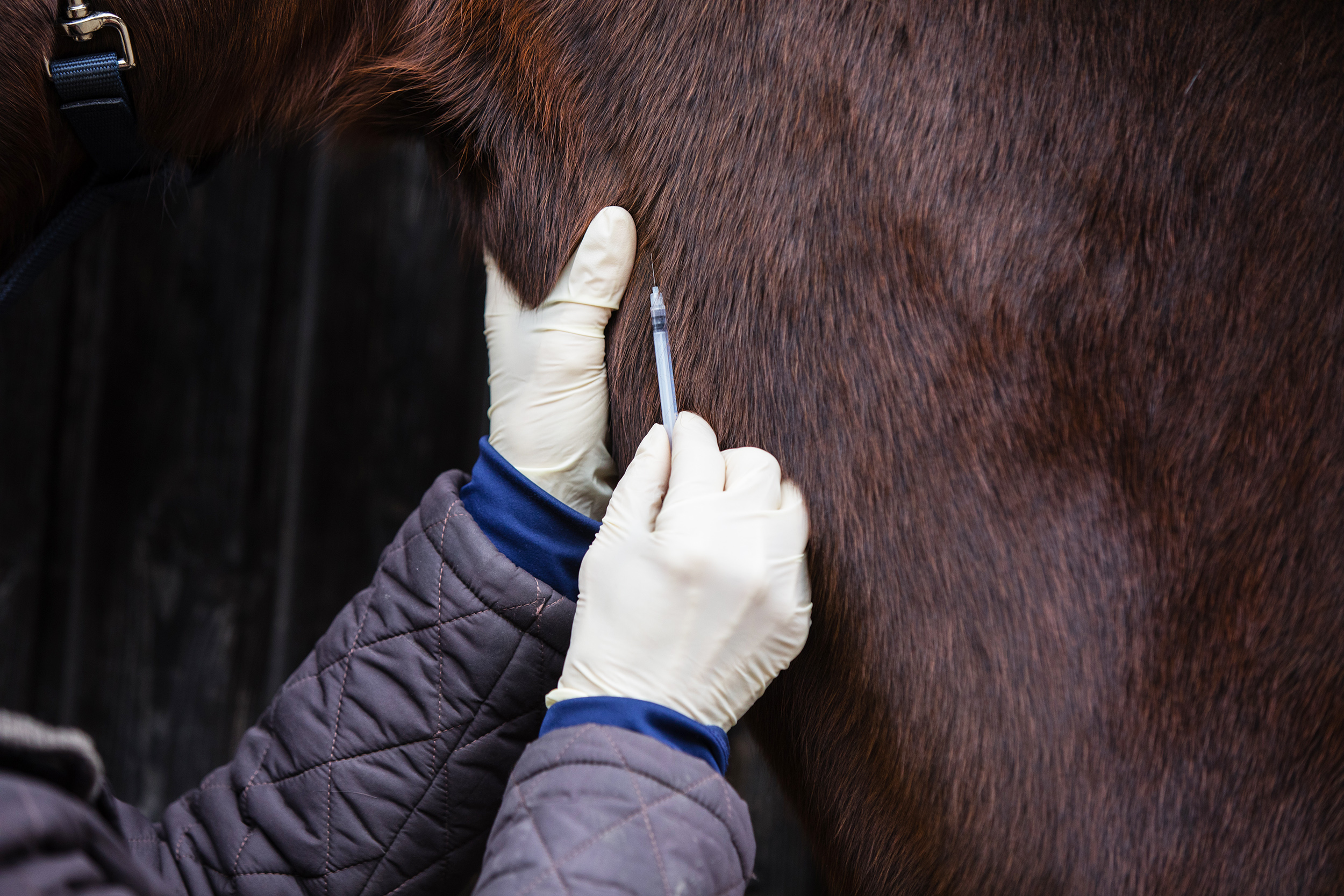
For many horse owners, a Coggins test is part of the routine. If you’re headed to a horse show, rodeo, sale, boarding facility or across state lines, you have likely been asked for a current negative Coggins. The veterinarian draws a tube of blood, fills out the paperwork and, assuming the result comes back negative, the form goes in the file with the rest of the horse’s records.
But what are we testing for?
A Coggins test is a blood test for equine infectious anemia, commonly shortened to EIA. It is not a general test for anemia, and it won’t tell you whether a horse’s red blood cell count is low. The test looks for antibodies the horse’s immune system has produced against equine infectious anemia virus.
EIA is a viral, bloodborne disease that affects horses, ponies, donkeys, mules and other equids. The virus belongs to the lentivirus group, a family of viruses known for persistent infections. Once a horse contracts EIA, it stays infected for life. No approved vaccine prevents the disease, and no treatment eliminates the virus from an infected horse.
That lifelong carrier status is why the Coggins test matters so much.
Some horses with EIA become seriously sick. Clinical signs can include recurring fever, weakness, weight loss, swelling, depression and anemia. In severe cases, the disease can kill. Many infected horses, however, show few signs or none. A horse can look healthy, perform normally and still carry the virus, putting other horses at risk.
EIA spreads through infected blood. Horse flies and deer flies are important natural carriers. A fly can feed on an infected horse, get interrupted and move to another horse while blood remains on its mouthparts. Contaminated needles, syringes, surgical or dental equipment and anything else that moves blood from one horse to another can also spread the virus.
That’s why controlling EIA takes more than keeping flies away. Use a new sterile needle and syringe for every horse, and clean and disinfect any equipment that could become contaminated with blood.
The name “Coggins test” refers to the agar gel immunodiffusion, or AGID, test developed to detect antibodies to EIA. The test identifies antibodies against an antigen associated with the virus. Today, laboratories may also use approved ELISA tests, which return results faster. Because ELISA tests occasionally produce false positives, labs confirm positive screening results with the AGID, or traditional Coggins, test.
Keep in mind that the test looks for the horse’s immune response to infection rather than the virus itself, so timing can matter. A horse infected very recently may not yet have enough antibodies to test positive. Most infected horses eventually develop detectable antibodies, but there can be a window after exposure when the test comes back negative.
For the average horse owner, the larger purpose of routine testing is surveillance. Testing helps find infected horses before they unknowingly expose other animals.
In Oklahoma, horses attending equine exhibitions such as fairs, shows, rodeos and racetracks must have a negative EIA test from within the previous 12 months. Oklahoma also requires testing when horses mingle in common settings such as boarding and training facilities, as well as before most changes of ownership. Horses entering Oklahoma generally must have a negative EIA test from within the previous 12 months as well.
Those requirements can feel like one more piece of paperwork, especially for owners who travel often and have healthy horses that test negative year after year. But the system works because testing is routine.
There is no vaccine to fall back on if EIA starts spreading through a group of horses, and no cure for the infected horse. A confirmed positive animal remains a carrier for life and must be managed under strict regulatory requirements, generally through euthanasia or permanent isolation from other equids.
So when your veterinarian pulls that tube of blood for another Coggins test, the goal is bigger than getting the paper you need at the gate of the next event. We are looking for evidence of a lifelong, contagious disease that can hide in a healthy-looking horse. Finding those horses before the virus spreads makes that routine blood test one of the simplest and most important tools we have for protecting the horse population.
By OKFR Staff
By the time September rolls around in Oklahoma, most of us are more than ready for rain. After weeks or months of dry weather, brown pastures and hard ground, a good soaking rain can seem like the answer to a lot of problems.
For our horses’ feet, the end of a drought can bring a new set of challenges.
During long dry spells, hooves lose moisture and can turn hard and brittle. Dry weather is one of the factors associated with hoof cracks, particularly when combined with long trimming intervals or hoof imbalance. Horses traveling over hard, dry ground also take more concussion, and horses with thin soles or tender feet can grow sore as the ground hardens.
That makes regular farrier care especially important during a drought. You may be tempted to stretch the time between appointments because the feet don’t seem to be growing as fast, but keeping the hoof trimmed and balanced reduces stress on the hoof wall and the structures that support it.
Watch for small cracks and chips before they become big ones. Minor chipping around the bottom of an unshod hoof is fairly routine. A crack that keeps moving upward, gets deeper or causes lameness deserves a closer look from your farrier or veterinarian.
Then comes the rain.
After a long dry spell, hoof moisture can change quickly when horses start standing in wet grass, mud or saturated ground. Going from dry to wet and back again can contribute to brittle hoof walls and cracking.
Wet conditions bring other concerns. Long exposure to moisture can soften the hoof, particularly the sole and frog. Mud and dirty footing favor problems such as thrush and give bacteria more chances to enter through small cracks or separations in the hoof. Hoof abscesses also commonly follow swings between very dry and very wet conditions.
The best defense isn’t complicated. Pick up your horse’s feet regularly and pay attention to what you see and smell. Clean out packed dirt, manure and mud, and watch for cracks, tenderness, a foul odor around the frog or changes in the white line. Give horses a place where they can get out of the mud and stand on clean, dry footing.
Talk with your farrier before trying to change hoof moisture with frequent soaking or a lineup of topical products. More moisture isn’t automatically better. The goal is a healthy, balanced hoof that can adapt to its environment.
Finally, don’t ignore sudden lameness after the weather changes. A hoof abscess can make a horse dramatically lame, sometimes overnight. Many abscesses heal well with proper treatment, but sudden or severe lameness warrants a call to your veterinarian.
We can’t control when Oklahoma’s next rain arrives. Staying consistent with hoof care before, during and after that change gives our horses the best chance of handling it soundly and comfortably.



-
 Country Lifestyle2 years ago
July 2017 Profile: J.W. Hart
-
 Farm & Ranch2 years ago
From Plow to Plentiful: The Most Important Inventions in Agricultural History
-
 Attractions9 years ago
48 Hours in Atoka Remembered
-
 Outdoors9 years ago
Grazing Oklahoma: Honey Locust
-
 Equine9 years ago
Umbilical Hernia
-
 Country Lifestyle5 years ago
The Two Sides of Colten Jesse
-
 Farm & Ranch8 years ago
Hackberry (Celtis spp.)
-
 Attractions3 months ago
Oklahoma Ghost Towns – Navajoe