
Outdoors
Diversified – Dennis Cattle Company


With a history that dates back more than 130 years, Dennis Cattle Company is one of the oldest family-owned ranches in Oklahoma. Over the years, the now sixth-generation ranch has become extremely diverse, not only raising prime cattle and exceptional horses, but also featuring aerial spraying of pastures and farmland as well as hunting adventures.
Dennis Cattle Company traces its roots back to 1889, when Oscar Seay, a prominent pioneer rancher helped settle the land and established his family ranch in the southern Oklahoma town of Oscar.
Oscar’s grandson Wilmer was one of five children, and while his grandfather’s land was divided between him and his siblings, he eventually managed to buy out two other siblings. In 1938, he purchased an additional 4,000 acres in Ringgold, Texas.
Wilmer and his wife, Leary, had only one child, a daughter named Sue, who married Skeeter Dennis in 1950. Skeeter was known for a long-time involvement in the cutting horse industry and was a lifetime member of both the National Cutting Horse Association and the American Quarter Horse Association. He was presented with the AQHA Ranching Heritage Breeders Award for 50 years in 2007 and the AQHA Legendary Breeders Award in 2011.
Sue and Skeeter built a herd of Hereford cattle, and continued to breed top Quarter Horses. Dennis Cattle Company is a member of the AQHA Ranching Heritage Breeders Association, the NCHA, the American Hereford Association, Oklahoma Cattleman’s Association and the Texas Cattle Raisers Association. The ranch has been a member of the Oklahoma & Texas Cattle Raisers Association for more than 100 years, in in 2009 received the Excellence of Grazing Award from Jefferson County Conservation District.
Skeeter passed away in 2013, while Sue still lives on the ranch with her herd of beautiful longhorn cattle. Day-to-day ranching operations have been passed along to Sue’s daughter, LaDonna Dennis Davis, and grandsons Zachary Smith and Tyler Phillips. Ladonna mainly oversees the horse operation, while Zachary and Tyler handle the other ranch.
“The thing that I have tried to instill in Zachary, my grandkids, and my nephews – like my parents and grandparents did with me – is to be honest, care about others, and take care of the land. The philosophy of the ranch has always been to maintain a good breeding program in both the horses and cattle, and I hope we all keep that going,” LaDonna said. “We want to honor the legacy of all the years and hard work our ancestors put into it.”
While Hereford cattle have always been the focus of the bovine operations at Dennis Cattle Company, over the years the breeding has evolved. “In reality we’re about 50/50 now with Herefords and black baldies. We have so many because about 15 or 20 years ago we started using Angus bulls for our heifers. Through the years we wound up keeping a lot of them, and we ended up with a lot of black cattle,” Zachary explained.
Regardless, the ranch still raises a large number of registered Herefords. “We don’t sell as many because we have been keeping most of the bulls for our own seedstock. We bought some new heifers to get some fresh bloodlines in there. We just wanted to change the bloodline a little bit.”
About 15 years ago, Zachary’s longtime friend Jim Reid began coming to the ranch to hunt hogs, deer, and turkey. It was at that time that the two men began to throw around the idea of doing day hunts instead of leasing out the land for hunting. “At that time, I was busy and didn’t have the time to deal with it, so we decided that he would handle the hunters once they arrived,” Smith said.
The hunting division began as mostly hog hunts, although they did a few deer hunts as well. “We’re semi-guided – we’re not one to one. We transport the hunters to and from their spots. It has just kind of grown. Honestly, we do more hog hunts than anything, but we stay busy,” he said. “Oklahoma’s deer and rifle seasons are very short, so that sometimes imposes a problem.”
Reid stays busy with the hunts, and most are booked up to a year ahead of time. In fact, Zachary doesn’t even bother with advertising them anymore. “We’re just that busy. I can’t fit anyone in anymore,” he explained.
While the hog hunts provide an additional source of income, it also helps efforts to cut down the growing wild hog population. “They’re a huge problem here. They can destroy a field. There is no telling how many hundreds we’ve killed, and it doesn’t seem to make a dent. I did an experiment one time and hunted one side of the ranch from the air and left the other side alone to see if it made a dent. I couldn’t tell a difference,” he said.
Zachary has always enjoyed flying. He even had a powered parachute, but because of the wind in the area, he rarely got to fly it. He had been flying with a relative hunting hogs and coyotes when he decided to put together a business plan. “I saved some money, got a loan, and bought a helicopter,” he said. “I mainly did it for the aerial spraying. I needed to get control over some of these pastures. The weeds, brush, and mesquite were my main objective.”
He began spraying not only his pastures, but also for close neighbors. It didn’t take long, though, and the aerial spraying business took off, too. “It’s blown up. As far as spraying we’ll go all the way up to Minnesota or out to Iowa. We work for another company out of Louisiana called Chem Air, and are subcontracted through them,” he said.
Read more about the Dennis Cattle Company in the November issue of OKFR.
By Norman Winter | Horticulturist, Author, Speaker
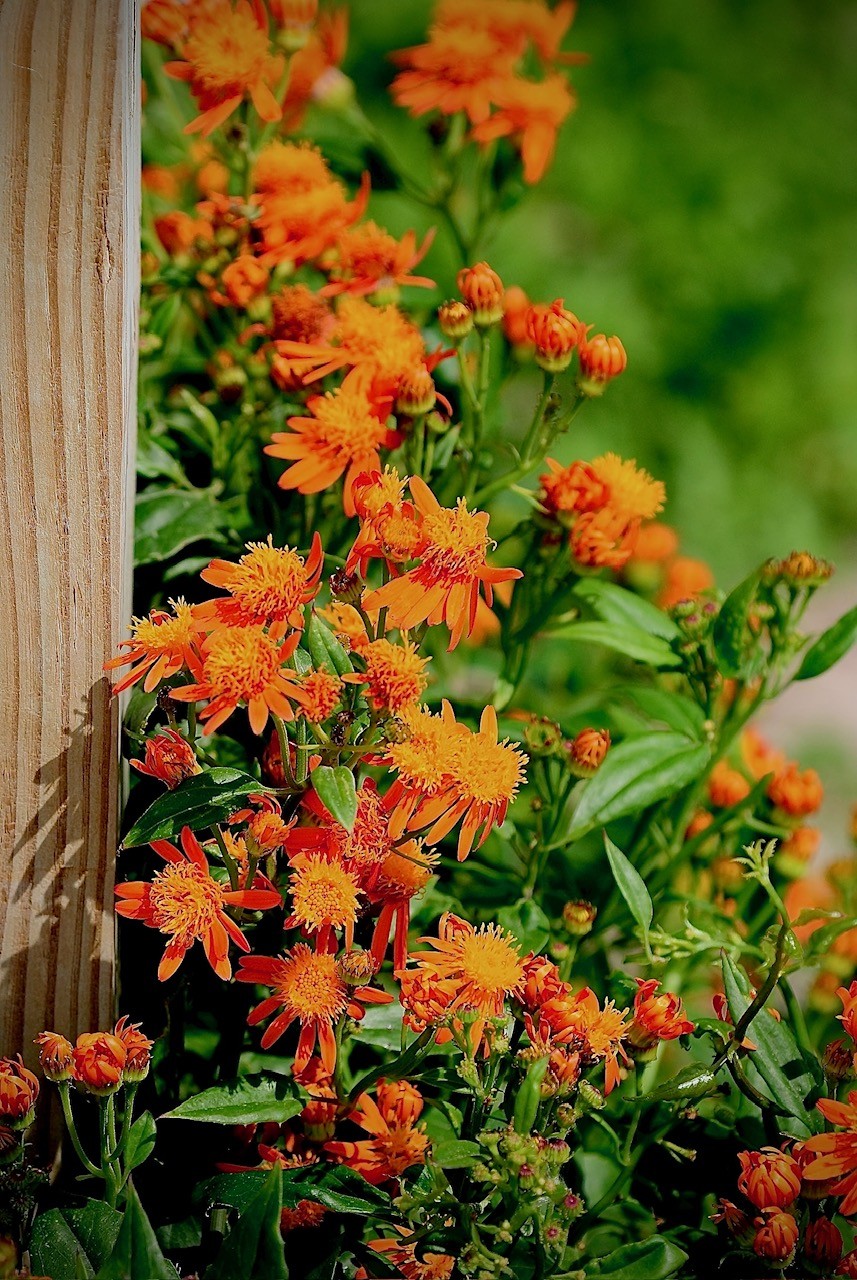
If you’ve read this column the past few years, you know I put great importance on choosing plants for pollinators around the farm or ranch, home or office. When those plants pack untold beauty, even better. This column aims to put one plant on your must-have list for 2027: the Mexican flame vine.
Names like Mexican Flame and Orange Glow tell you right away that this flower is bold and riveting in color. Add a vine that draws hummingbirds and butterflies and blazes fiery orange, and you have an award-winning plant.
To be honest, I think everyone should grow it for its botanical name alone, Pseudogynoxys chenopodioides. Imagine the look on your neighbors’ faces when they ask, “What’s that gorgeous vine you are growing?” and you tell them.
The Mexican flame vine is a woody tropical vine. Most references say it is cold-hardy in zones 9 and higher, but I have seen many return just fine in zone 8. It is worth every penny even as an annual. As the name suggests, the vine is native to Mexico, and it isn’t picky about soil. I’ve grown it in acid soil fit for azaleas and in soils more reminiscent of the desert. It belongs to the aster, or daisy, family, and you’ll quickly notice the resemblance.
I realize we are at the beginning of fall, but if you start sourcing now or talking to your favorite garden center, you’ll be ready for spring. When you get yours, dig a hole about twice as wide as the root ball and plant at the same depth it was growing in the container. Set the vine next to a structure for support, like a trellis, arbor or pergola. You may have the perfect fence post that could use a Mexican flame vine.
It is a compact vine that reaches only about 10 feet tall, and it tolerates drought once established. You’ll need to do a little training to get it climbing. You’ll also like that pests rarely bother it.
The vine reblooms reliably, and if you need to cut it back a little, it will quickly send out new growth and another round of blooms. That blazing orange screams to be planted with complementary blue flowers. My first choice would be blue salvias like Unplugged So Blue or Rockin’ Playin’ the Blues. If you’re bold and want a native, consider the late-summer-blooming hardy ageratum, known botanically as Conoclinium coelestinum.
Once yours is growing, you’ll notice all sorts of butterflies feasting on the rich nectar. Red admirals, fritillaries, monarchs and yellow sulphurs of all sorts will visit regularly.
Vines give the landscape a vertical dimension, much like hanging a mirror or picture on a wall indoors. The Mexican flame vine will be one of the most dazzling additions to your garden. Start sourcing yours now so you’re ready for spring.
Follow me on Facebook @NormanWinterTheGardenGuy for more photos and garden inspiration.
By Savannah Magoteaux
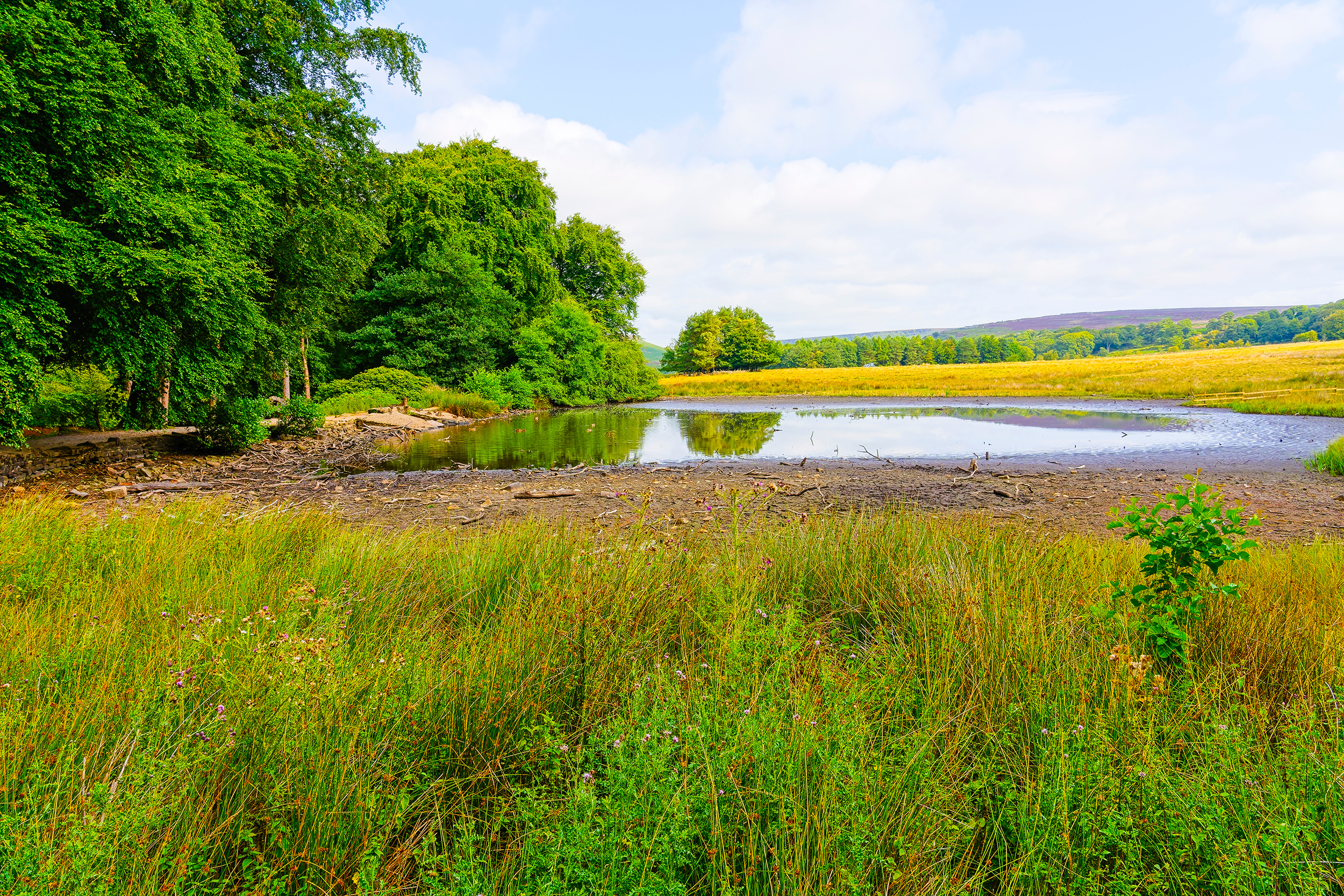
Right now, our ponds are looking a little tired.
Water levels may be down after weeks of heat and limited rain. Vegetation can be thick around the edges, the water may be warm and murky, and the bass that seemed willing to bite in spring can feel impossible to find.
But don’t give up on the pond just yet.
Late summer can be a hard time for fish. Warm water holds less dissolved oxygen than cool water, and oxygen levels matter even more in ponds with heavy plant or algae growth. In Oklahoma, oxygen depletion is one of the leading causes of pond fish kills.
Those conditions also change where fish spend their time. During the hottest part of the day, bass may slow down and move to more comfortable spots, including deeper water, shade, aquatic vegetation or structure. That makes early morning and evening good times to fish during the last hot weeks of summer.
Pay attention to cover, too. Submerged vegetation, brush, logs and other structure give bluegill and other small fish places to find food and protection, and bass are often nearby. Oklahoma State University Extension notes that some aquatic vegetation benefits a fishing pond, with about 20 percent plant coverage considered ideal.
Then September begins to bring a change.
Cooler nights gradually lower water temperatures, and fish that have been sluggish through the hottest part of summer often become more active. Bass start feeding more aggressively as conditions improve, and baitfish movement can make shallow areas productive again.
That doesn’t mean every cool morning will fill a stringer. Farm ponds are small ecosystems, and each one responds differently depending on depth, water clarity, vegetation, fish populations and rainfall.
Watch the pond itself during this transition. Fall can bring pond turnover, when the layers of water that formed during warm weather mix. If the deeper water holds little oxygen, that mixing can temporarily lower oxygen throughout the pond. Fish gulping at the surface, especially early in the morning, can signal an oxygen problem.
For most anglers, though, September has less to do with worrying over every change in the water and more to do with recognizing that the pond is entering a new season.
Fish earlier and later in the day while temperatures stay high. Work around vegetation and structure. As cooler weather settles in, try shallower water again and watch for signs of baitfish.
That farm pond that seemed nearly lifeless on an August afternoon may have plenty going on beneath the surface. Sometimes all it takes is a cooler morning, a little patience and one more cast.
By OKFR Staff
Drought is easy to see in a pasture. Grass turns brown, ponds shrink, creeks stop running and crops struggle. It’s harder to see what those same conditions are doing to wildlife.
For deer, turkey, quail and countless smaller species, drought changes much more than how much water is available. It changes where food grows, how much cover the land offers and, in some cases, how successfully animals reproduce.
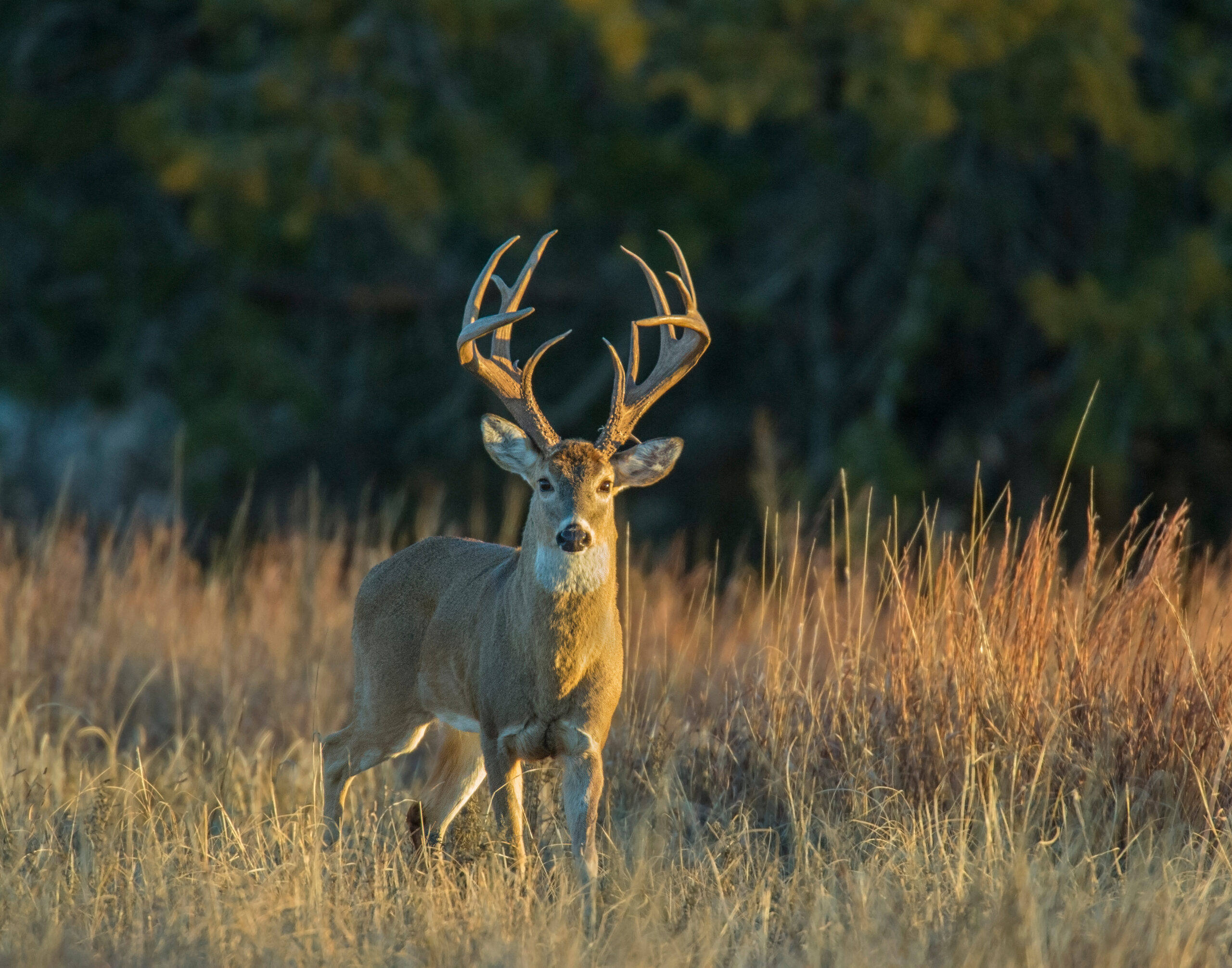
White-tailed deer are a good example. Deer can go surprisingly long stretches without drinking from a pond or creek if they have succulent plants that supply moisture. During drought, those plants become scarcer and lower in quality. Deer may start eating plants they would normally pass over, and dry years can affect body condition and antler growth. Research in Oklahoma has also shown that fawn production tends to rise and fall with rainfall, so prolonged drought matters when you look at the health of a deer herd over time.
Turkeys face many of the same challenges. Adult birds can get much of the moisture they need from fruits and succulent plants, but drought cuts into those foods. It also affects insects, which young poults depend on. Good brood habitat includes broadleaf plants and plenty of insects, and when dry weather reduces both, young birds have less to eat at a critical stage of life.
Quail may surprise people. Northern bobwhites don’t necessarily need to visit standing water every day. They can get moisture from green vegetation, insects, fruit and even dew. Drought still makes their lives harder by reducing those foods and changing the plant structure they depend on for nesting, feeding and escape cover.
That is why putting out more water isn’t always the whole answer. Oklahoma State University research found that supplemental water can concentrate quail around water sources but hasn’t been shown to increase quail numbers, even in drought years. The bigger issue is habitat. Wildlife need food, cover and space along with access to moisture.
For landowners, some of the best drought help may already be growing on the property.
Avoiding overgrazing leaves more grass and broadleaf plants for wildlife. Leaving brushy areas, native vegetation and field edges undisturbed can provide valuable cover when the surrounding landscape is dry and sparse. Trees and shrubs along creeks and drainages give animals shade, cover and travel corridors.
Water sources still matter, particularly where drought has dried up ponds and streams. If wildlife can reach livestock tanks, ponds or other artificial water sources, make sure animals can get in and out safely. Steep-sided tanks can trap birds and small mammals, so add escape ramps or other exits.
Landowners may also be tempted to start supplemental feeding right away. Feeders and food plots can attract wildlife, but they don’t replace healthy habitat. Food plots may struggle in the same drought that is hurting native vegetation, and concentrating animals around feeders can raise other concerns, including disease transmission and heavy pressure on nearby plants.
Drought also changes wildlife behavior. As resources run short, animals may travel farther or gather around the few places left with food, water and cover. That can make wildlife look more abundant in some spots even while the overall population is under stress.
The effects don’t always end with the first good rain, either. Vegetation takes time to recover, ponds may need repeated rains to refill, and a hard spring or summer’s reproductive losses can’t be reversed overnight.
Oklahoma wildlife are used to changing weather. Dry years are part of the landscape, just like wet years, and most native species have ways of adapting. The longer and more severe a drought becomes, though, the harder those adaptations have to work.
If you want to help wildlife through a dry spell, focus less on replacing everything nature isn’t providing and more on protecting what remains. Conserving cover, avoiding unnecessary disturbance, managing grazing carefully and keeping water sources safe can give wildlife a better chance until the rain returns.





-
 Country Lifestyle2 years ago
July 2017 Profile: J.W. Hart
-

 Farm & Ranch2 years ago
From Plow to Plentiful: The Most Important Inventions in Agricultural History
-
 Attractions9 years ago
48 Hours in Atoka Remembered
-
 Outdoors9 years ago
Grazing Oklahoma: Honey Locust
-
 Equine9 years ago
Umbilical Hernia
-
 Country Lifestyle5 years ago
The Two Sides of Colten Jesse
-
 Farm & Ranch8 years ago
Hackberry (Celtis spp.)
-
 Attractions3 months ago
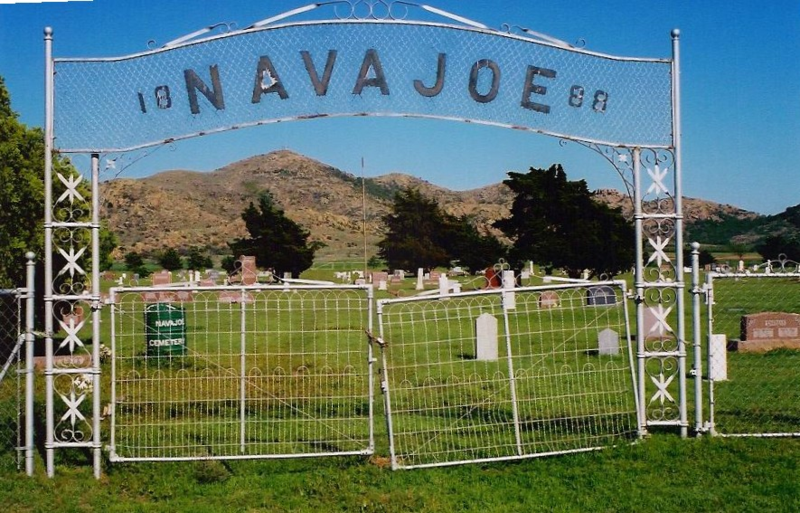
Oklahoma Ghost Towns – Navajoe