
Country Lifestyle
Sam Noble Scholarship applications now available


NEWS RELEASE
Issued – November 12, 2015
ARDMORE, Okla. — College is expensive.
The math is simple. Four years of college costs about $75,772 for tuition, fees, and room and board. (This doesn’t include personal expenses like shampoo, gas or fun.) The Noble Foundation wants to help.
Entering its 18th year of assisting students, the Noble Foundation’s Sam Noble Scholarships are available to eligible southern Oklahoma students in all stages of higher education – from incoming freshmen to those seeking graduate degrees.
The Sam Noble Scholarship Program supports students from southern Oklahoma as they strive toward achieving associate degrees from technical institutes or agriculture-related bachelor’s or graduate degrees. Sam Noble Scholars pursuing a future in agriculture may study subjects ranging from communications and economics to agribusiness and biosystems agricultural engineering. For scholars focused on technology certifications or degrees, available fields extend across the spectrum of vocations, including computer information systems, photography, high-voltage electricity and more.
Since 1999, more than 188 Oklahoma students studying agriculture and technology have been awarded scholarships in excess of $2.4 million.
“The Sam Noble Scholarships play a pivotal role in providing opportunities for students in southern Oklahoma,” said Mary Kate Wilson, director of philanthropy, engagement and project management at the Noble Foundation. “We encourage all eligible students to take advantage of this opportunity and apply as soon as possible.”
Scholarships for students seeking undergraduate degrees in agriculture-related fields provide $2,500 of support per semester for up to nine semesters, while scholarships for graduate students offer $3,125 per semester for up to five semesters. Applicants must pursue their education at a university awarding baccalaureate or higher degrees through a division or college of agriculture, such as Oklahoma State University, Oklahoma Panhandle State University, Texas Tech University (Lubbock campus) or Texas A&M University (College Station campus).
Scholarships for those seeking degrees or certifications from technical institutes are for $3,750 per year for up to two years. The applicant must pursue this degree or certification at Oklahoma State University’s Oklahoma City or Okmulgee campus.
To be eligible to receive a scholarship, a student must plan to attend or be attending a qualifying university or technology training institution during the 2016-2017 academic year. The student must also be a resident of one of the following southern Oklahoma counties: Atoka, Bryan, Carter, Choctaw, Coal, Garvin, Jefferson, Johnston, Love, Marshall, McCurtain, Murray, Pontotoc, Pushmataha or Stephens.
Requests for applications for the Sam Noble Scholarships in agriculture and technology may be submitted online at www.noble.org/sam-noble-scholarship. Questions regarding the scholarship can be directed by email to scholarships@noble.org. Completed scholarship applications must be received on or before Feb. 15, 2016.
The scholarship program is named in honor of the late Sam Noble, who created the program through a gift to the Noble Foundation. Sam Noble was a longtime member of the Noble Foundation Board of Trustees and a son of Lloyd Noble, who founded the organization in 1945.
“Sam Noble believed a quality education was one of the keys to leading a successful life,” said Bill Buckner, president and CEO of the Noble Foundation. “He once said, ‘An excellent education is something that no one can ever take away from you; you can use it for the rest of your life.'”
###
For media inquiries concerning the Noble Foundation, please contact:
J. Adam Calaway
Director of Communications
580.224.6209
580.224.6208 fax
jacalaway@noble.org
The Samuel Roberts Noble Foundation, Inc. (www.noble.org), headquartered in Ardmore, Okla., is a nonprofit organization conducting agricultural, forage improvement and plant biology research; assisting farmers and ranchers through educational and consultative agricultural programs; and providing grants to nonprofit charitable, educational and health organizations.
At a funeral I went to recently, the preacher said something that has stayed with me. He reminded us that, for the man we were honoring, God went from being Savior to Lord.
That phrase captures a turning point in faith. When we first come to know Christ, it’s with gratitude for His saving grace. It’s personal, almost inward-looking: Jesus rescued me. He forgave me. He gave me new life. In that moment, He is our Savior.
But faith is not meant to remain only in the relief of salvation. Over time, we are called to move from simply being saved to truly being led. To call Jesus Lord is to hand Him the reins, to let Him set the course. It means the decisions we make, the way we spend our time, and even the way we handle hardship reflect His authority instead of our own desires.
That shift isn’t dramatic or loud — it’s usually lived out in the everyday. It’s choosing honesty when cutting corners would be easier. It’s setting aside pride to serve others. It’s holding firm in values even when the world says compromise. It’s forgiving, even when it costs something.
And for people who work the land or care for animals, this truth feels especially close. We know what it means to trust something bigger than ourselves — the rain, the soil, the cattle in our care. A rancher can do everything right, but at the end of the day, much is still beyond his control. Faith works the same way. We can’t stop at receiving salvation like a safety net. We have to surrender daily, trusting God to lead, provide, and direct, even when we don’t know what’s ahead.
Scripture asks it plainly: “Why do you call me, ‘Lord, Lord,’ and do not do what I say?” (Luke 6:46). The challenge is clear — it isn’t enough to know God as Savior. We are called to live with Him as Lord.
Salvation is the beginning, but lordship is the journey. And just like tending a crop or training a good rope horse, it’s a steady, daily process. Rescue is where faith starts. Surrender is where it grows strong.
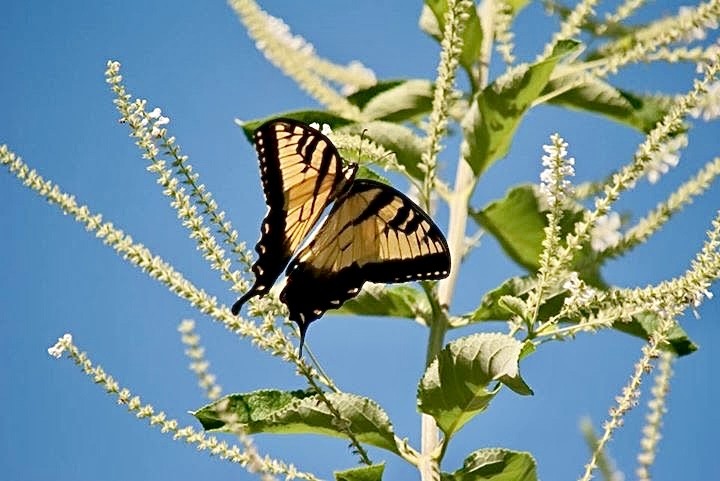
When most people think about wildlife on a ranch, they probably picture deer slipping through the trees, turkeys moving across a pasture or quail flushing from cover. Those species matter, and many landowners manage with them in mind. But some of the most important wildlife on a farm or ranch is much smaller. Bees, butterflies, moths, beetles, flies, wasps, hummingbirds and even bats all play a part in keeping native plants and food systems working.
Pollinators move pollen from one flower to another, which allows many plants to produce seed, fruit and the next generation of growth. That matters in gardens and orchards, but it also matters in pastures, prairies and native rangeland. According to the article provided, the United States Department of Agriculture reports that 75 percent of the world’s flowering plants and about 35 percent of the world’s food crops depend on animal pollinators to reproduce.
For Oklahoma ranchers, pollinators are more than something nice to see on a warm afternoon. They are tied to plant diversity, soil cover, wildlife habitat and the overall health of the land.
A pasture with flowers, seed-producing plants and a mix of grasses and forbs usually supports more life than a pasture with only one or two plant types. That does not mean every acre has to look wild or unmanaged. It means diversity has value. A ranch that supports many kinds of plants can also support many kinds of insects. Those insects feed birds, turkey poults, quail chicks, bats and other wildlife. Some predatory insects also help keep pest insects in check.
Pollinators are a sign that something is working. If butterflies, bees and other beneficial insects are present, the land is likely offering food, cover and seasonal blooms. If they are absent, it may be worth asking why. There may not be enough flowering plants. Grazing pressure may be too heavy at the wrong time. Herbicide use may be reducing the plants pollinators need. The issue may be drought, timing or a lack of plant variety.
The monarch butterfly is one of the best-known examples. Monarchs need milkweed because it is the only food source for their caterpillars. Adult monarchs also need nectar plants, especially during migration. Oklahoma sits in an important part of that migration route. In spring, monarchs moving north need milkweed for reproduction. In fall, monarchs moving south need blooming plants for energy before continuing toward Mexico.
That fall food source can be easy to overlook. A pasture may have plenty of grass and still offer little for a migrating butterfly if there are no flowers in bloom. Late-season plants such as Maximilian sunflower, blazing star, goldenrod, asters and cowpen daisy can make a difference. In the Noble Research Institute article, Will Moseley said their monarch monitoring showed a simple result: butterflies were found where flowering plants were present, and they were not found where flowers were absent.
That is a useful lesson for any landowner. Pollinator habitat does not have to be complicated. It starts with plants.
For ranchers, the goal is not to turn working land into a flower bed. The goal is to manage in a way that leaves room for useful plants to grow, bloom and set seed. Grazing management can help. If the same pasture is grazed hard at the same time every year, the same plants may get set back again and again. Changing grazing timing, leaving rest periods and avoiding overuse can give more plants a chance to bloom. Rotational grazing, when planned well, can benefit both livestock and pollinators.
Prescribed fire can also be useful when used carefully and legally. Fire timing matters. Burning every acre the same way at the same time can favor some plants and reduce others. Varying burn timing across years and pastures can create a more mixed plant community. That variety can help pollinators, ground-nesting birds and grazing animals.
Herbicide use is another consideration. There are times when herbicides are needed, especially for invasive or problem plants. But broad use can also remove the forbs that bees and butterflies depend on. Spot spraying, proper timing and targeted control can help landowners manage weeds while keeping beneficial plants in the pasture. Every place is different, so the best plan depends on the ranch’s goals, plant community and problem species.
Pollinators also need nesting sites. Not all bees live in hives. In fact, many native bees nest in the ground, hollow stems or cavities in wood. Leaving some undisturbed areas, standing stems, brushy edges or bare patches of well-drained soil can support native bees. A perfectly clean landscape is often less useful to wildlife than one with some structure and variety.
Water can help as well. Shallow water sources, damp soil or safe access around ponds and tanks can be useful, especially during dry weather. The key is to avoid drowning hazards. Small stones, floating wood or shallow edges can give insects a place to land.
For landowners interested in beekeeping, honey bees can become another small enterprise. A few hives may provide honey for family, gifts or local sales. Local honey often has a strong market, and bees can fit well on small acreages or larger ranches. Still, honey bees are livestock and need management. New beekeepers should start small, learn from an experienced mentor and understand seasonal care before investing heavily. The Noble article shared advice from Josh and Brook Gaskamp, who recommended getting a mentor, starting small and experimenting until finding what works.
Beekeeping is not the only way to support pollinators, though. A person can help pollinators without owning a single hive. Planting native flowers, protecting milkweed, reducing unnecessary pesticide use and allowing some areas to bloom can all help. Even fence rows, field corners, creek banks and lightly used areas can become valuable habitat when managed with pollinators in mind.
Pollinators also add enjoyment to the land. There is something rewarding about seeing monarchs on fall flowers, bumble bees working a patch of blooms or hummingbirds visiting trumpet-shaped flowers near the house. Those moments remind landowners that a ranch is more than livestock, fences and forage. It is a living system.
For many producers, the practical reason to care about pollinators is simple. What helps pollinators often helps the whole ranch. More plant diversity can mean better soil cover, more wildlife habitat, more insects for birds, more seasonal forage options and a landscape that can better handle stress. Pollinators are part of that bigger picture.
A ranch does not have to be managed only for bees or butterflies to benefit them. In many cases, good land stewardship already points in the right direction. Avoid overgrazing. Encourage plant diversity. Leave some blooms. Be careful with chemicals. Think about timing. Watch what shows up.
The smallest wildlife on the ranch can tell a big story about the health of the land. When the flowers are blooming and the pollinators are working, it is a good sign the pasture is doing more than growing grass. It is supporting life from the ground up.
Total Time: 1 hour and 40 minutes
Servings: 10
2 medium apples (any type), peeled, cored & diced
1/3 cup brown sugar
1 tsp cinnamon
1/2 cup unsalted butter, softened
2/3 cup granulated sugar
2 large eggs
1 1/2 tsp vanilla extract
1 1/2 cups all-purpose flour
1 3/4 tsp baking powder
1/2 cup milk
For the Glaze:
- 1/2 cup (60g) powdered sugar
1–2 tbsp milk
1/4 tsp vanilla extract
Instructions:
Preheat oven to 350°F. Grease and line a 9×5-inch loaf pan with parchment paper.
Peel and chop apples and place in a bowl with brown sugar and cinnamon. Toss and set aside.
In a large mixing bowl, cream together butter and granulated sugar until light and fluffy. Beat in eggs one at a time, then add vanilla. In a separate bowl, whisk together flour and baking powder. Gradually add dry ingredients to the butter mixture, alternating with milk, mixing until just combined.
Next, pour half of the batter into the loaf pan, top with half of the apple mixture, then repeat with remaining batter and apples. Lightly swirl with a knife for a marbled effect.
Bake for 50–55 minutes, or until a toothpick inserted in the center comes out clean.
Cool in pan for 10 minutes, then transfer to a wire rack to cool completely.
In a small bowl, whisk together powdered sugar, milk, and vanilla until smooth. Drizzle over cooled bread.
Slice and enjoy warm or at room temperature.




-
 Country Lifestyle2 years ago
July 2017 Profile: J.W. Hart
-
 Attractions9 years ago
48 Hours in Atoka Remembered
-
 Farm & Ranch2 years ago
From Plow to Plentiful: The Most Important Inventions in Agricultural History
-
 Equine9 years ago
Umbilical Hernia
-
 Country Lifestyle5 years ago
The Two Sides of Colten Jesse
-
 Outdoors8 years ago
Grazing Oklahoma: Honey Locust
-
 Farm & Ranch8 years ago
Hackberry (Celtis spp.)
-
 Equine6 years ago
On the Road with Emily Miller-Beisel