
Equine
Equine Metabolic Syndrome (EMS) – The Easy Keeper Disease

By Garrett Metcalf
It is that time of year when cases in veterinary practices that are diagnosed with EMS or Equine Metabolic Syndrome spike. The reason cases of EMS spike are because the fast growth that pastures experience in the spring. Before EMS was well understood or discovered, many of these horses were diagnosed with grass founder, but through research the process of the disease is now better understood. The disease is caused by obese overfed horses and breeds of horses that have “hardy genes.” These are breeds that generally need less caloric intake to meet their daily energy needs. Although some breeds are at higher risk such as ponies, just about any breed can develop EMS.
Risk Factors for EMS
The key risk factor for development of EMS is weight gain, breed, high caloric intake and very little or inconsistent exercise. Horses that gain weight easily on pasture turn out or are getting too many calories from grains plus hay can be put at risk of EMS. Increasing levels of obesity in horses causes insulin resistance just like in humans, but fortunately for the horse, they have a very robust pancreas that is able to keep up with the extra demand for insulin to provide adequate amounts of glucose to tissue and organ systems despite the insulin resistance. This overproduction of insulin in order to keep up with the resistance causes a very key clinical sign of laminitis, which can be the most debilitating and difficult consequence of EMS. Over 90% of horses will present for laminitis as the first clinical sign of EMS. Unfortunately, the clinical signs for laminitis can go undetected for many months or even years in some cases until the progression of the laminitis reaches a very severe tipping point. It is not uncommon that horses with this disease go undetected for variable periods of time and have x-rays to prove it. Many times, horses will have rotation of the coffin bone in the hoof capsule upwards of 10 degrees before the horse is lame enough to alert their owners that there is a serious problem. It doesn’t seem possible that a horse can get that bad overnight, but rather in many cases they have mini laminitic episodes that are almost silent to many owners that lead to this much damage to their feet over time.
Identifying Horses at Risk
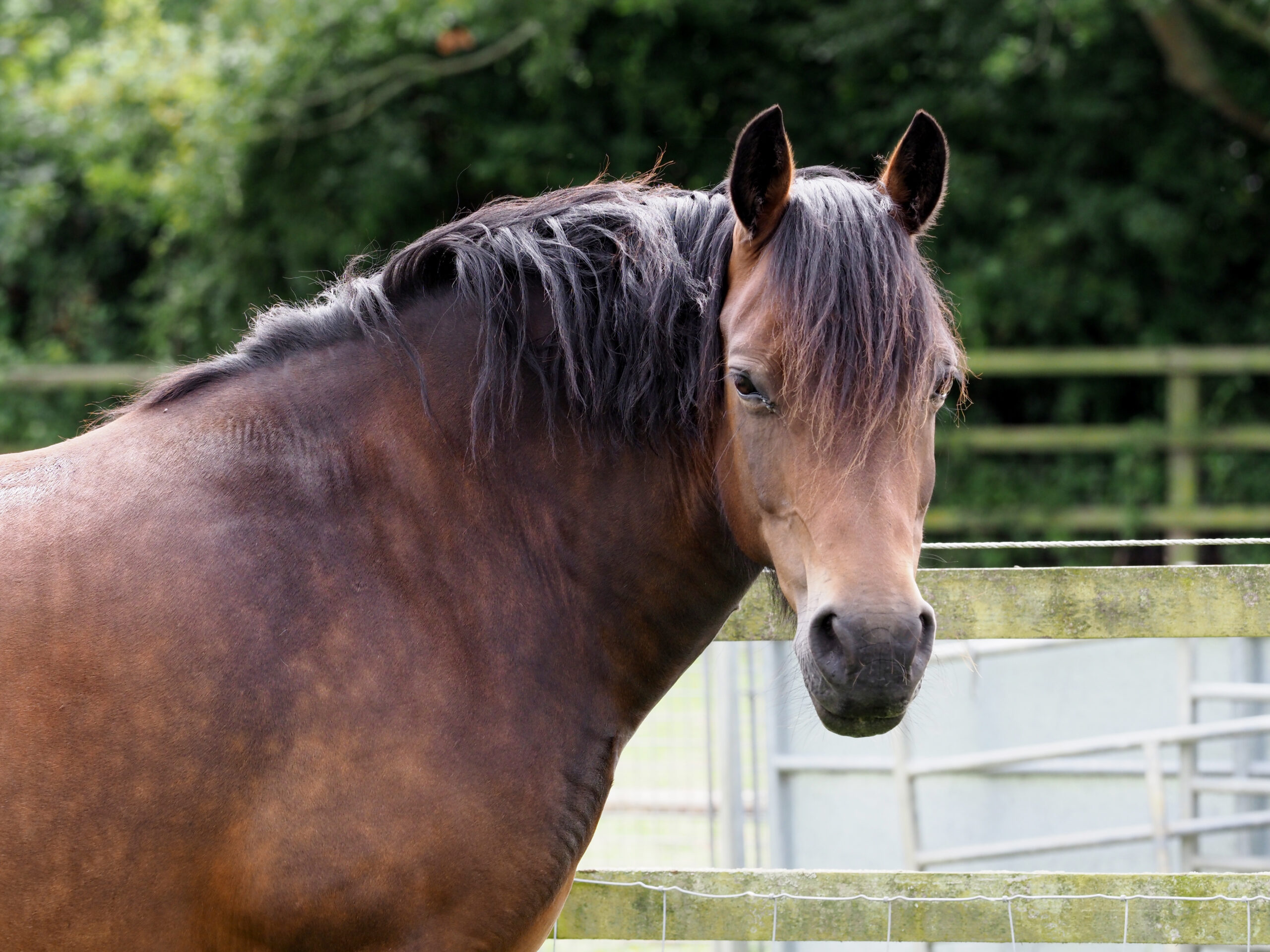
A common feature that puts horses at risk that owners can detect and address themselves before a laminitic crisis occurs is adipose deposited in certain areas of the horse’s body called regional adiposity. Regional adiposity describes fat or adipose tissue that is deposited in different regions of horses that owners should watch for if their horse is gaining weight. These common areas are the neck, commonly referred to as cresty necks, around the tail head, and sheaths of geldings or stallions. If these areas are noticed to be enlarging, especially in the spring when there is an abundance of fresh grass to graze on plus weight gain, then steps need to be taken to prevent the development of EMS.
Managing an Easy Keeper
It is very common to hear owners and veterinarians refer to heavy horses as easy keepers, but there can be some serious consequences of ignoring or brushing it off as just an easy keeper horse. Simple steps can be taken to reverse or reduce the risk of horses developing EMS by decreasing daily caloric intake. First, it is recommended to remove all grain from a horse’s diet including treats. Drastically reducing turn out time to graze especially fast growing lush grass is absolutely necessary in horses at risk of grass founder caused by EMS. There is some conflicting evidence as to when is the best time of day to allow a horse to graze that is sensitive to high sugars in lush growing grass. Some research has found that sugar levels peek later in the afternoon because of an abundance of sunshine and fully ramped up photosynthesis process that occurs in the grass. It is suggested then if grazing is allowed or deemed safe, that morning grazing is a safer time, but sometimes letting an at-risk horse graze is not worth the consequences. Other methods of allowing safe grazing are to mow the grass very short to minimize the volume of grass intake in a given period of time. If mowing is not an option, specially designed grazing muzzles allow pasture turn out but restrict the amount of grass taken in through the muzzle. Do not worry, as many horses are very quick to figure out how to get grass through the small hole in the muzzle and also allow the intake of water. It is recommended to have a leather poll strap on their halters to prevent injury when turned out while wearing a halter. Dry lot management is sometimes the only option, especially in horses that already have EMS. Keeping a horse on dry lot with no access to fresh grass and feeding more mature hay is sometimes needed to manage more severe cases. There are no current medications to help reduced the effects of insulin resistance due to obesity in horses, but some medications can be used to help with weight loss such as Thryo-L (levothyroxine) combined with consistent exercise.
Laminitis
Laminitis is the most debilitating and painful outcome of EMS, not to mention life threating. It is also the most expensive and difficult aspect of managing a horse with EMS. In order to properly manage laminitis caused by EMS, the horse needs to be examined by a veterinarian, radiographs need to be taken of the feet to assess the severity of the laminitis and an experienced farrier needs to be heavily involved with the management of the feet. If the disease is caught early, proper trimming may be all that is needed plus the other management aspects employed, of course, but in many cases corrective therapeutic shoeing is required. Pain management is another key aspect of addressing laminitis. NSAIDs or non-steroidal anti-inflammatory drugs, opioids, aspirin and an anticonvulsant drug called Gabapentin can help block or reduce pain of laminitis that horses experience. Some of these drugs do carry a risk of serious side effects so careful monitoring and proper dosages need to be on the order of a veterinarian to minimize the risk of side effects.
It cannot be repeated enough that the best cure for disease is through prevention. Taking early appropriate steps to keep horses from developing EMS is by far the best way to prevent the disease from occurring. If there is concern your horse is at risk of EMS, please talk to your veterinarian to determine if management and diet changes need to be made to prevent the development of this disease.
By Janis Blackwell
As the season arrives to gear up for participation in your equine event of choice, one thing remains a constant for all horse owners. That constant is our responsibility to insure the safety of our horses by being diligent to maintain the integrity of the trailers in which we haul them. There are a number of things that can be dangerous both inside and outside of your trailer. Whether you traveled all winter long or whether your trailer sat unused or was used very little through the cold weather months, at least once a year your trailer is due a thorough going over. So here we go with a checklist that will help you insure a happy and safe trip for you and your equine partner.
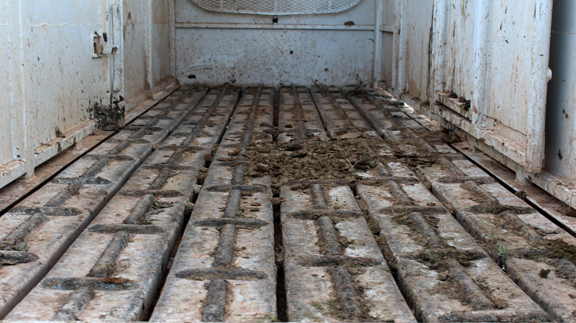
- A sound floor is absolutely imperative. Whether your floor is aluminum, steel or wood, it should be cleaned regularly after use to preserve it. Urine and manure will erode and weaken all types of floors. Even rubber mats will not prevent erosion of your floor. (Maintenance tip: remove mats and wash aluminum floors often to prevent erosion.)
- Especially check wooden floors for rotten boards. Immediately replace questionable flooring before hauling. (Maintenance tip: For wood, remove mats and wash out manure and debris. Coat wooden floor in a cheap motor oil. Allow to sit in hot summer weather until the oil soaks in. Be careful—floor will be slippery until oil cures into the wood. This treatment yearly will preserve a wooden floor for much longer than normal as it repels urine and protects the wood).
- Keep the interior and exterior washed to enable you to check for rusted out places, leaks, etc.
- Have a professional check your brakes at least once yearly to be sure they are operating properly.
- Be sure tires are inflated to the proper air pressure, and check the inside of each tire for hidden unusual wear that could cause a blowout. Replace worn tires before leaving home.
- Wheel bearings must be checked and packed at least once a year. This should be done even if the trailer has been rarely used since the last time the wheel bearings were packed. In fact, trailer maintenance professionals say that sitting stationary and unused is even worse for the bearings. Improper care and maintenance of wheel bearings can cause a wheel to seize up and actually twist off while in use. Use a horse trailer professional for this maintenance task.
- Axles should be checked for bowing. A bent or bowed axle can cause excessive tire wear and damage wheel bearings.
- There should be no more than two inches in height difference from the front of the trailer to the back. More difference than that causes the bulk of weight of the trailer and its contents to ride mostly on the rear axle causing it to bow and wear on both tires and wheel bearings.
- Another critical part of the trailer to keep an eye on are the butt chain or bar and the back door. The butt chain or bar should be firmly attached to the wall and its keeper and should always be latched. The door should have a strong secure latch with a pin to insure it stays latched while in motion.
- Finally, but certainly not of least importance is a thorough check of the trailer hitch including ball and coupling. Keep the ball well greased. Periodically, check to see that the ball is still securely tightened and the latch on the coupling is working properly.
These few critical safety check points can save you money, stress and the wellbeing of your horse. Until next time, happy trails and safe traveling.
This article was originally published in the April 2016 issue of Oklahoma Farm & Ranch.
By Dr. Devan England DVM
Does your horse have gastric ulcers? Gastric or stomach ulcers are frequently blamed for a variety of things including poor performance, acting ‘cinchy’, weight loss, not eating, poor coat condition, diarrhea and colic. However, gastric ulcers are not always the culprit and the only way to know for sure if your horse has gastric ulcers is to look at the stomach on camera, using an endoscope. Poor appetite and poor body condition are the mostly widely observed clinical signs with gastric ulcers, however, these are non-specific. If you think your horse might have gastric ulcers, the best place to start is to talk to your veterinarian and consider scheduling a gastroscopy. Gastroscopy requires the horse be held off feed for at least 16-18 hours and held off water for at least 6-8 hours. Fasting off feed and water is necessary to allow the veterinarian to see the whole stomach. If restricting feed or water is difficult in your management situation, many veterinarians will allow you to hospitalize your horse the night before gastroscopy for proper fasting.
Gastric ulcers are split into two types, classified by the location of the ulcer in the stomach. Squamous ulcers are ulcers that occur in the squamous or skin like portion of the stomach. This is the top part of the horse’s stomach, is closest to the esophagus, and has squamous tissue to protect this portion of the stomach from stomach acids. The other ulcer type are glandular ulcers. Glandular ulcers occur in the bottom portion of the stomach, which is closest to the small intestine. This portion of the stomach has glandular mucosa with cells responsible for producing stomach acids for digestion as well as cells that produce mucus and buffers to protect the lining from stomach acid. Gastroscopy is important not only for diagnosing whether ulcers are present but also determining the severity and the type of ulcer, because these two ulcer types require different treatments.
Squamous gastric ulcers are common in racehorses both in and out of training, with higher prevalence in racehorses under training. Prevalence in Thoroughbred racehorses in training has been reported to be up to 100% (Sykes 2015). Squamous ulcers are also prevalent in Western pleasure horses, Thoroughbred stallions on breeding farms, and Italian donkeys (Sykes 2015). Glandular gastric ulcer prevalence has not been as well described as squamous ulcers. Glandular ulcers are reported to be most common in Thoroughbred and Standardbred racehorses, Canadian showjumpers and polo ponies, and American Quarter Horses (Sykes 2015).
Risk factors for ulcers vary by ulcer type. Anti-inflammatories (Bute, Banamine) can increase the risk of glandular ulcers in some horses by affecting normal defense mechanisms but are not a high risk in most horses. Horses that display stereotypic behaviors, such as cribbing, have an increased risk of squamous ulcers. Grain fed before hay in non-exercising horses, feeding larger amounts of grain, and increased time between meals increases the risk of squamous ulcers. Increased time with high intensity exercise and housing in single pens is associated with increased risk of glandular ulcers. A straw only diet, lack of water access and lack of direct contact with other horses increases the general risk of gastric ulcers.
If your horse is diagnosed with ulcers, the mainstay of treatment is a buffered formulation of omeprazole (Gastrogard, Ulcergard). Over the counter Omeprazole and compounded Omeprazole are not effective because without buffering, the acidic stomach quickly breaks down the drug before absorption. Most horses with squamous ulcers will have healing of these ulcers after a 4-week course of Gastrogard or Ulcergard at treatment dose (whole tube for the average horse). Some horses may be healed by 3 weeks of treatment, but all horses should undergo a recheck gastroscopy before stopping treatment. Horses diagnosed with glandular ulcers need combination therapy with Gastrogard/Ulcergard and Sucralfate for 4 weeks. About 2/3 of horses with glandular ulcers will heal in this time, but some horses may require longer treatment times so a recheck is always recommended before discontinuing treatment.
Horses at higher risk of gastric ulcers may benefit from preventative (low) doses of Ulcergard (1/4 tube in average sized horse) given for a few days before and during high stress situations like long distance travel and competitions. Sea buckthorn berry supplement may be protective against formation of glandular ulcers. Dietary management to decrease the risk of ulcers includes providing more frequent small hay meals if pasture access is not available, limiting high sugar grains as much as possible and adding vegetable oil to the feed.
Sykes BW, Hewetson M, Hepburn RJ, Luthersson N, Tamzali Y. European college of equine internal medicine consensus statement – equine gastric ulcer syndrome in adult horses. J Vet Internal Med 2015; 29:1288-1299.
By the time the June issue reaches readers, the regular breeding season is winding down for many horse owners. Some mares are already confirmed in foal, some breeding decisions have been pushed aside for another year and some owners are already thinking ahead to next season. For those with an older mare they hope to breed, that early planning can make a real difference.
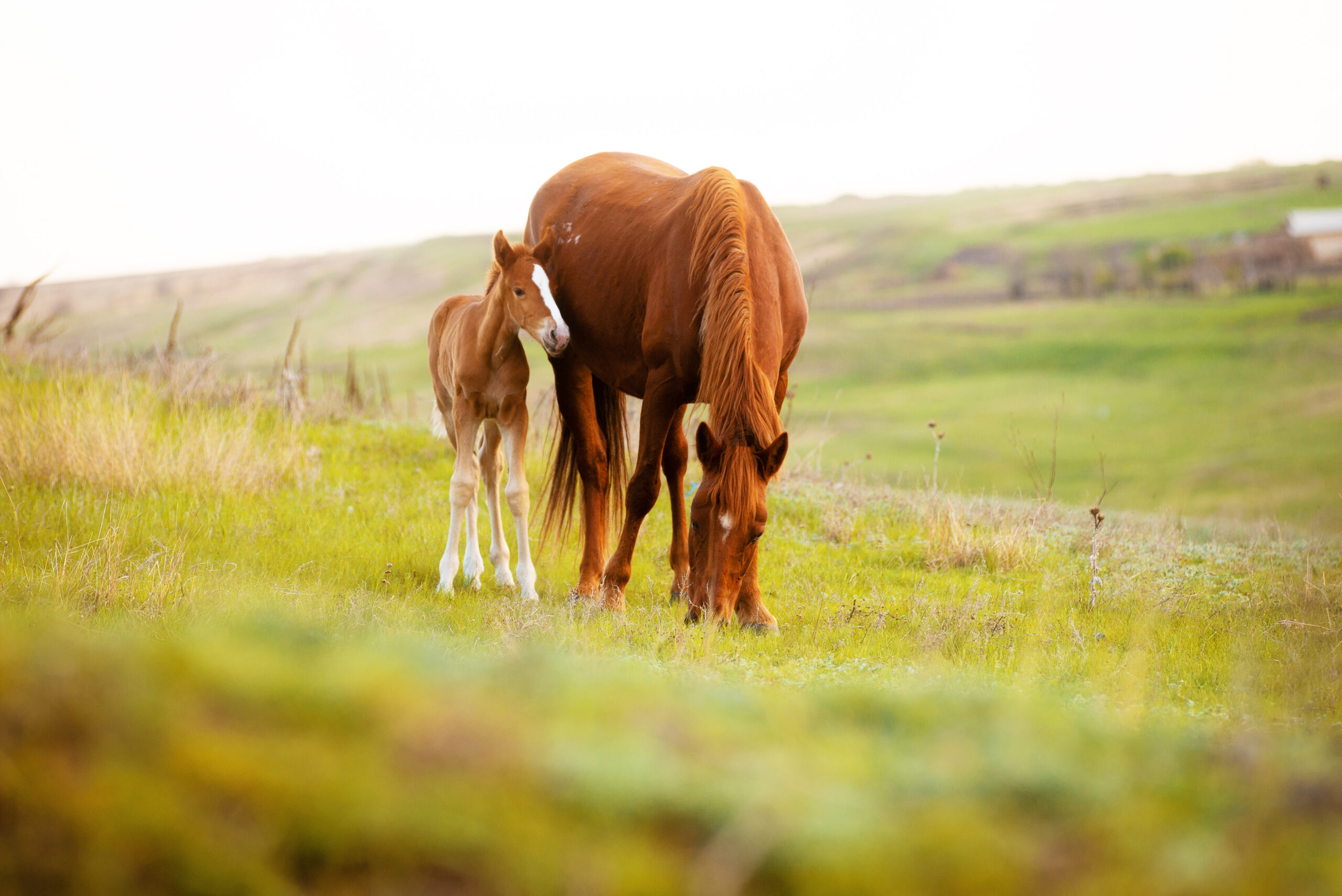
Older mares can still produce foals, but they may need more help than younger mares. Age affects the reproductive system, and those changes can make it harder for a mare to become pregnant, stay pregnant or carry a healthy foal to term. That does not mean every older mare is a poor candidate for breeding. It does mean owners should go into the process with realistic expectations and a good veterinarian involved from the beginning.
A mare’s reproductive age does not always match her number of birthdays. Some mares in their mid-to-late teens settle easily and carry foals without much trouble. Others begin having problems earlier. Past reproductive history matters. A mare that has had regular foals may be different from an older maiden mare that spent most of her life showing, racing, working or sitting open. Health, body condition, uterine health and conformation all play a role.
One of the main challenges with older mares is egg quality. As mares age, their eggs age, too. Older eggs are more likely to have abnormalities that prevent fertilization, stop early embryo development or lead to early pregnancy loss. Even when breeding is timed well and the stallion has good fertility, the mare may not settle because the egg itself is no longer as viable as it once was.
The uterus also changes with age. The lining of the uterus, called the endometrium, can become less healthy and less able to support pregnancy. Over time, some mares develop fibrosis or scarring within the uterus. This can interfere with the placenta’s ability to develop and support a growing fetus. A mare may get pregnant early, but then lose the pregnancy because the uterus cannot maintain it.
Older maiden mares can face an additional problem. When a mare cycles, it is normal for some fluid to be present in the uterus. A healthy reproductive tract clears that fluid through uterine contractions and cervical relaxation. In some older mares, especially those that have never had a foal, the cervix may not relax well enough. Fluid can build up and remain in the uterus after breeding. That fluid can damage sperm, interfere with an embryo and increase the risk of infection or inflammation.
Post-breeding inflammation is another concern. All mares experience some uterine inflammation after breeding, but most clear it within a reasonable amount of time. Older mares may not clear it well. This can leave the uterus in a poor environment for pregnancy. A veterinarian may recommend uterine lavage, medication or other treatment after breeding to help the mare clear fluid and inflammation.
External conformation can also affect fertility. As some mares age, especially taller, thinner mares or mares that have had multiple foals, the reproductive tract may tilt in a way that allows manure or air to contaminate the vulva and vagina. Poor vulvar conformation can increase the risk of uterine infection. In some cases, a veterinarian may recommend a Caslick’s procedure to help protect the reproductive tract.
Because so many factors can be involved, an older mare should have a breeding soundness exam before the next season begins. This may include a physical exam, reproductive ultrasound, uterine culture, cytology and possibly a uterine biopsy. These tools help determine whether the mare has infection, inflammation, fluid retention, poor uterine health or other issues that need to be addressed before breeding.
Timing is also important. With an older mare, it is usually better to start early in the season rather than waiting until late. More cycles give the veterinarian more chances to manage the mare properly. Early planning also allows time to treat infection, improve body condition, schedule semen shipments, evaluate the stallion’s fertility and consider whether cooled semen, frozen semen, live cover or another option makes the most sense.
Owners should also look closely at the mare’s overall health. A mare that is too thin, too heavy, metabolically unstable, lame or dealing with chronic illness may struggle to conceive or carry a foal. Good nutrition, dental care, hoof care and vaccination planning all matter. Breeding may be a reproductive decision, but pregnancy affects the whole horse.
For some mares, advanced reproductive options may be worth discussing. Embryo transfer allows a valuable mare to produce a foal without carrying it herself. This may be helpful for older mares that can produce an embryo but should not carry a pregnancy, or for mares that are still competing. Other assisted reproductive techniques may also be available through specialized equine reproduction centers.
The hard truth is that breeding an older mare can take more time, money and patience. Not every mare will get in foal, even with good care. Some mares should not be bred if the risks are too high. Still, many older mares can produce healthy foals when problems are identified early and managed correctly.
For owners hoping to raise one more foal from a favorite mare, the best plan is to start the conversation before breeding season arrives. Talk with a veterinarian, evaluate the mare honestly and make decisions based on her health, history and reproductive exam. Hope is part of breeding horses, but planning gives that hope a much better chance.





-
 Country Lifestyle2 years ago
July 2017 Profile: J.W. Hart
-
 Attractions9 years ago
48 Hours in Atoka Remembered
-
 Farm & Ranch2 years ago
From Plow to Plentiful: The Most Important Inventions in Agricultural History
-
 Equine9 years ago
Umbilical Hernia
-
 Country Lifestyle5 years ago
The Two Sides of Colten Jesse
-
 Outdoors8 years ago
Grazing Oklahoma: Honey Locust
-
 Farm & Ranch8 years ago
Hackberry (Celtis spp.)
-
 Equine6 years ago
On the Road with Emily Miller-Beisel