Equine
The Unstoppable Kylie Myers

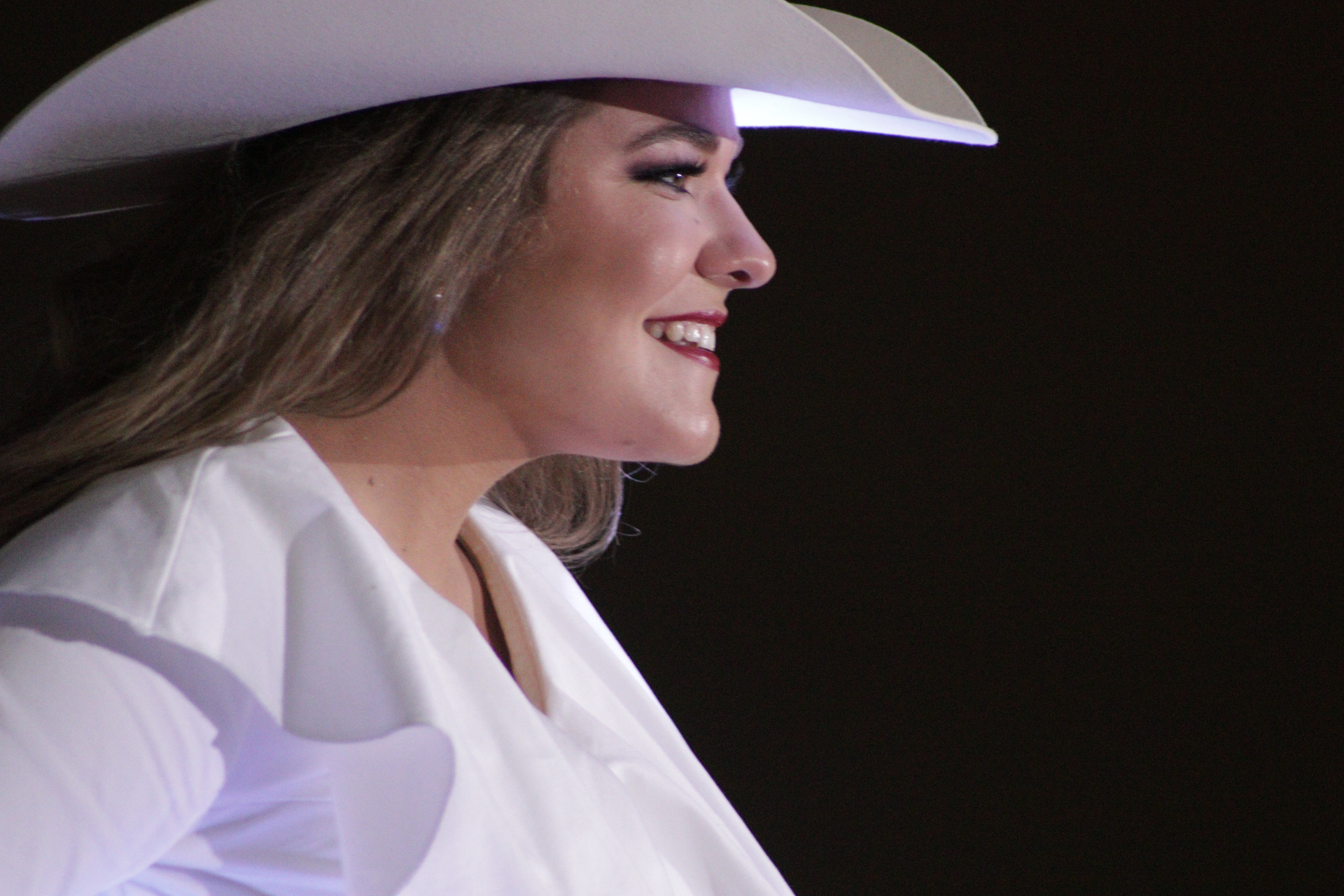
2020 Miss Rodeo Oklahoma Lady in Waiting
It started with the revival of a long ago dream, and culminated with a crown. On June 8, 2019, Kylie Myers was crowned as the 2020 Miss Rodeo Oklahoma Lady in Waiting. That means that, beginning on Jan. 1, 2020, Myers will become Oklahoma’s first lady of rodeo, representing the state, the sport, and the western way of life across the country. Her reign will then culminate in December at the Wrangler National Finals Rodeo, where she’ll compete for the title of Miss Rodeo America.
Myers was born in Moore, Okla., attending Southmoore High School, where she graduated in 2015.
She grew up splitting her time between her mom’s home in Moore, and her father and grandmother’s land just south of Oklahoma City near Newcastle. “My mom has always lived in the city, but my dad and grandma had a place on the river,” Myers explained. “My Granny and dad live on opposite parts of the same property. We ran a small herd of cattle and at one time we had about 150 head of goats.”
Myers’ Granny, Kathy Bogart, grew up on a dairy farm in Arkansas but had never done much with horses. “They’d occasionally go check cattle, but most of the time they just used a four-wheeler or something,” Myers shared. “When she was older, she decided she wanted to join a drill team, so she bought a horse and joined the Canadian Valley Rangerettes. I think that was back in 2001.”
Bogart fostered Kylie’s love of horses. “She got me on a horse before I could actually sit up by myself. I don’t remember learning how to ride, it’s just what I’ve always done. It’s been my safe-haven,” she said.
Along with showing at local horse shows, Myers began riding with the drill team herself, riding for both the Freedom Riders 4H drill team as well as the Canadian Valley Rangerettes.
Myer’s drill team coach for the Freedom Riders 4H Drill Team was a lady named Betty Baker, who fostered not only her riders’ ability with a horse, but also their talent for public speaking. “I remember we would have impromptu speeches in the middle of drill practice. She would say someone’s name and you’d have to give a two minute speech. We would pull topics out of the hat and you’d have to have a speech over that topic for the next drill practice,” she said.
It was while performing with the drill teams at local rodeos that the spark of a new dream ignited. “I decided I really wanted to run barrels because it looked so fun,” she said.
The young cowgirl commandeered her grandmother’s drill team horse, teaching it the pattern. When she was about 10 years old, her father and grandma purchased a pair of horses. “They bought them out of a lot, and they hadn’t been touched in quite some time. The horse my grandma wound up taking was scared of his shadow. You could hardly get a bridle on him, but he was really, really sweet,” she said.
Kathy and Kylie were the only ones who rode “Sam,” and they quickly recognized the horse’s quick feet would be an asset in barrel racing. “He was cow horse bred with Two Eyed Jack, Zan Par Bar and Poco Bueno breeding. I played around at the house here and there. We hated each other for a while, and then one day I was running him in Chickasha at a youth rodeo. We won that day, and ever since then if we had a decent pattern and didn’t hit a barrel, we were going to place,” she said. “Sam is still around, and just living the retired life now.”
She also competed at rodeo royalty competitions and was crowned Miss Rodeo Oklahoma Princess in 2009.
Myers played some sports in junior high, but rodeo took precedence. Unfortunately, some extenuating circumstances caused her to stop rodeoing her sophomore year. Soon, she threw herself into work. “When I graduated, I started riding more here and there, but not competitively. The same week I graduated high school I moved out and got a full time job and went to school part time,” she said. Myers attended Moore Norman Technology Center to be certified as an Advanced Unlicensed Assistant. She completed the program in 2016.
Following completion of the AUA program, Myers began pursuing an Associate’s degree at Oklahoma City Community College for journalism and broadcasting with a focus on public relations. She’s been on the Dean’s honor roll since she started college in 2016. “I wasn’t sure I wanted to wok in health care for 20 years, and I like working with people, not just those who are sick, so I changed to public relations. I am hoping at some point I can use that to facilitate medical mission trips to other countries,” she explained.
Back in 2017, Myers had a lifechanging moment. “That year I really discovered my faith. It was not something that was widely practiced in my family. Although we believed in God, we didn’t go to church every week. It was never something I knew for myself on a deeper level,” she said. “I got baptized in March of this year. For the past year it’s just been me figuring out who I am as a person, and it’s been a really awesome experience.”
Rodeo Royalty
The decision to compete for a title was unexpected. Although she had been actively involved with the Oklahoma Rodeo Pageant Council as a volunteer for several years after holding the Miss Rodeo Oklahoma Princess title, she hadn’t considered running herself. “Volunteering for the Pageants Council was a great experience and a good opportunity for me to do what I love and see the girls go on. I just didn’t think it was for me,” she said.
In 2018, she had a change of heart. “I wanted the platform and I had people that meant a lot to me tell me I had a lot of things other people needed to know about, and that it was something I should think about,” she said. “When I was little, I wanted to be Miss Rodeo Oklahoma and Miss Rodeo America, but then it changed because I just really loved the rodeo atmosphere as a competitor. Once I got older and learned for myself what the pageants really meant, it changed, and that dream came back.”
The decision was made, and within 28 days it was time to compete. “I had to borrow a wardrobe because I had nothing,” she said with a laugh.
Saint Jo, Texas, had opened up their rodeo pageant to Oklahomans, and proudly presents the winner with a $2,500 scholarship each year. “I found out about it right after the Miss Rodeo Oklahoma pageant, so I went ahead and applied. I won that, and so I was able to compete for Miss Rodeo Oklahoma,” she said.
“From the time I was 18 until just this past Friday, which was my last day at the Oklahoma Heart Hospital, I’ve done lots of work. I used to average about 70 hours a week at three different jobs,” she admitted. “Being a rodeo queen has an age limit, and working doesn’t, so when I decided I wanted to be serious about running for a queen title, I decided to slow down on the work and focus on school and the rodeo queen competition. That’s where I am, now.”
With the title of Miss Saint Jo Rodeo Queen earned in August 2018, Myers began to prepare for the Miss Rodeo Oklahoma Pageant which would be held in June of 2019. When the time came, she traveled to Woodward, Okla., for the Miss Rodeo Oklahoma Scholarship Pageant. “I’m 100 percent sure that the rodeo queen pageants create strong women because they teach you so much,” Myers said.
Read more about Kylie and the Miss Rodeo Oklahoma pageant in the August issue of Oklahoma Farm & Ranch magazine.
By Ann Asher
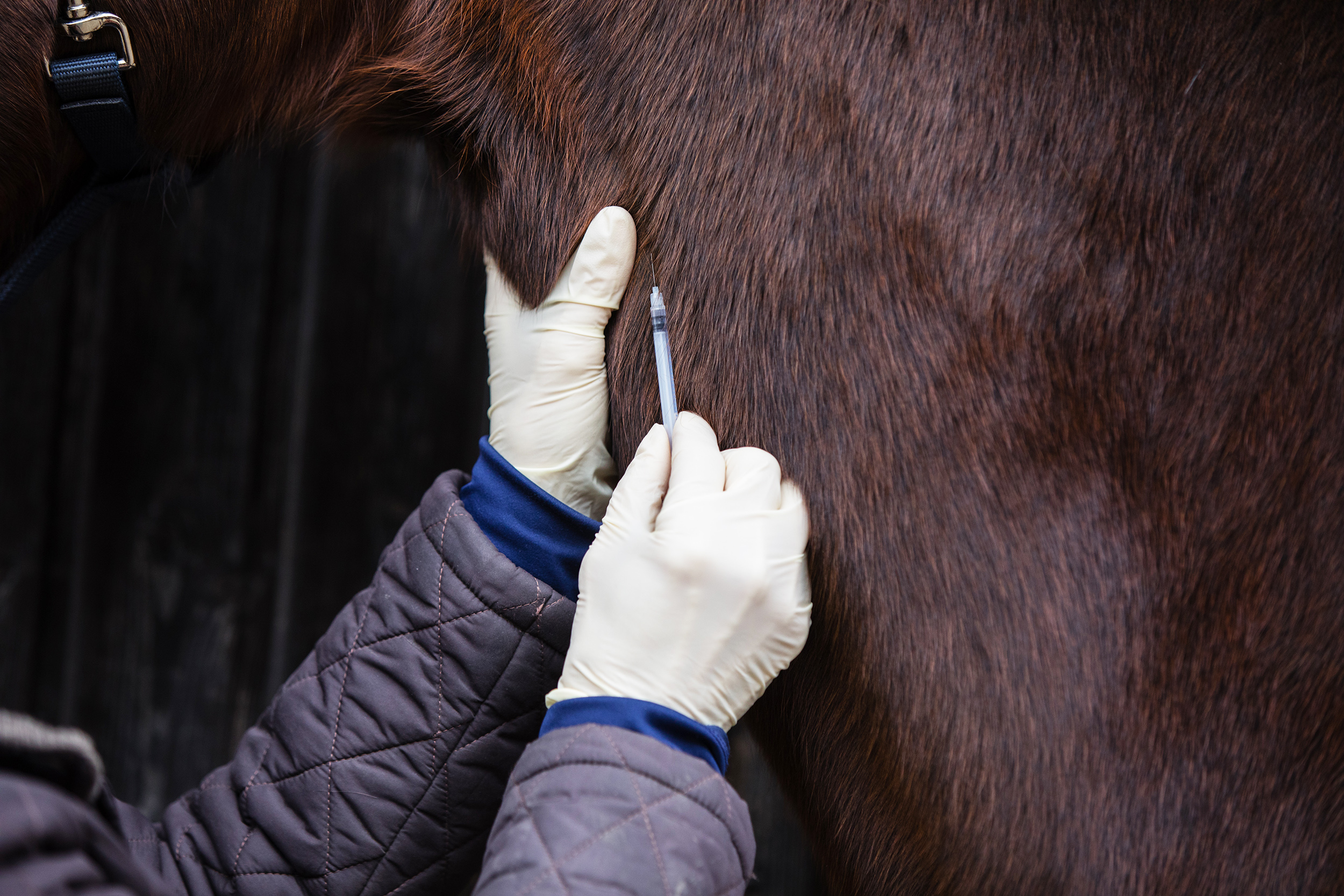
For many horse owners, a Coggins test is part of the routine. If you’re headed to a horse show, rodeo, sale, boarding facility or across state lines, you have likely been asked for a current negative Coggins. The veterinarian draws a tube of blood, fills out the paperwork and, assuming the result comes back negative, the form goes in the file with the rest of the horse’s records.
But what are we testing for?
A Coggins test is a blood test for equine infectious anemia, commonly shortened to EIA. It is not a general test for anemia, and it won’t tell you whether a horse’s red blood cell count is low. The test looks for antibodies the horse’s immune system has produced against equine infectious anemia virus.
EIA is a viral, bloodborne disease that affects horses, ponies, donkeys, mules and other equids. The virus belongs to the lentivirus group, a family of viruses known for persistent infections. Once a horse contracts EIA, it stays infected for life. No approved vaccine prevents the disease, and no treatment eliminates the virus from an infected horse.
That lifelong carrier status is why the Coggins test matters so much.
Some horses with EIA become seriously sick. Clinical signs can include recurring fever, weakness, weight loss, swelling, depression and anemia. In severe cases, the disease can kill. Many infected horses, however, show few signs or none. A horse can look healthy, perform normally and still carry the virus, putting other horses at risk.
EIA spreads through infected blood. Horse flies and deer flies are important natural carriers. A fly can feed on an infected horse, get interrupted and move to another horse while blood remains on its mouthparts. Contaminated needles, syringes, surgical or dental equipment and anything else that moves blood from one horse to another can also spread the virus.
That’s why controlling EIA takes more than keeping flies away. Use a new sterile needle and syringe for every horse, and clean and disinfect any equipment that could become contaminated with blood.
The name “Coggins test” refers to the agar gel immunodiffusion, or AGID, test developed to detect antibodies to EIA. The test identifies antibodies against an antigen associated with the virus. Today, laboratories may also use approved ELISA tests, which return results faster. Because ELISA tests occasionally produce false positives, labs confirm positive screening results with the AGID, or traditional Coggins, test.
Keep in mind that the test looks for the horse’s immune response to infection rather than the virus itself, so timing can matter. A horse infected very recently may not yet have enough antibodies to test positive. Most infected horses eventually develop detectable antibodies, but there can be a window after exposure when the test comes back negative.
For the average horse owner, the larger purpose of routine testing is surveillance. Testing helps find infected horses before they unknowingly expose other animals.
In Oklahoma, horses attending equine exhibitions such as fairs, shows, rodeos and racetracks must have a negative EIA test from within the previous 12 months. Oklahoma also requires testing when horses mingle in common settings such as boarding and training facilities, as well as before most changes of ownership. Horses entering Oklahoma generally must have a negative EIA test from within the previous 12 months as well.
Those requirements can feel like one more piece of paperwork, especially for owners who travel often and have healthy horses that test negative year after year. But the system works because testing is routine.
There is no vaccine to fall back on if EIA starts spreading through a group of horses, and no cure for the infected horse. A confirmed positive animal remains a carrier for life and must be managed under strict regulatory requirements, generally through euthanasia or permanent isolation from other equids.
So when your veterinarian pulls that tube of blood for another Coggins test, the goal is bigger than getting the paper you need at the gate of the next event. We are looking for evidence of a lifelong, contagious disease that can hide in a healthy-looking horse. Finding those horses before the virus spreads makes that routine blood test one of the simplest and most important tools we have for protecting the horse population.
By OKFR Staff
By the time September rolls around in Oklahoma, most of us are more than ready for rain. After weeks or months of dry weather, brown pastures and hard ground, a good soaking rain can seem like the answer to a lot of problems.
For our horses’ feet, the end of a drought can bring a new set of challenges.
During long dry spells, hooves lose moisture and can turn hard and brittle. Dry weather is one of the factors associated with hoof cracks, particularly when combined with long trimming intervals or hoof imbalance. Horses traveling over hard, dry ground also take more concussion, and horses with thin soles or tender feet can grow sore as the ground hardens.
That makes regular farrier care especially important during a drought. You may be tempted to stretch the time between appointments because the feet don’t seem to be growing as fast, but keeping the hoof trimmed and balanced reduces stress on the hoof wall and the structures that support it.
Watch for small cracks and chips before they become big ones. Minor chipping around the bottom of an unshod hoof is fairly routine. A crack that keeps moving upward, gets deeper or causes lameness deserves a closer look from your farrier or veterinarian.
Then comes the rain.
After a long dry spell, hoof moisture can change quickly when horses start standing in wet grass, mud or saturated ground. Going from dry to wet and back again can contribute to brittle hoof walls and cracking.
Wet conditions bring other concerns. Long exposure to moisture can soften the hoof, particularly the sole and frog. Mud and dirty footing favor problems such as thrush and give bacteria more chances to enter through small cracks or separations in the hoof. Hoof abscesses also commonly follow swings between very dry and very wet conditions.
The best defense isn’t complicated. Pick up your horse’s feet regularly and pay attention to what you see and smell. Clean out packed dirt, manure and mud, and watch for cracks, tenderness, a foul odor around the frog or changes in the white line. Give horses a place where they can get out of the mud and stand on clean, dry footing.
Talk with your farrier before trying to change hoof moisture with frequent soaking or a lineup of topical products. More moisture isn’t automatically better. The goal is a healthy, balanced hoof that can adapt to its environment.
Finally, don’t ignore sudden lameness after the weather changes. A hoof abscess can make a horse dramatically lame, sometimes overnight. Many abscesses heal well with proper treatment, but sudden or severe lameness warrants a call to your veterinarian.
We can’t control when Oklahoma’s next rain arrives. Staying consistent with hoof care before, during and after that change gives our horses the best chance of handling it soundly and comfortably.
By Savannah Magoteaux
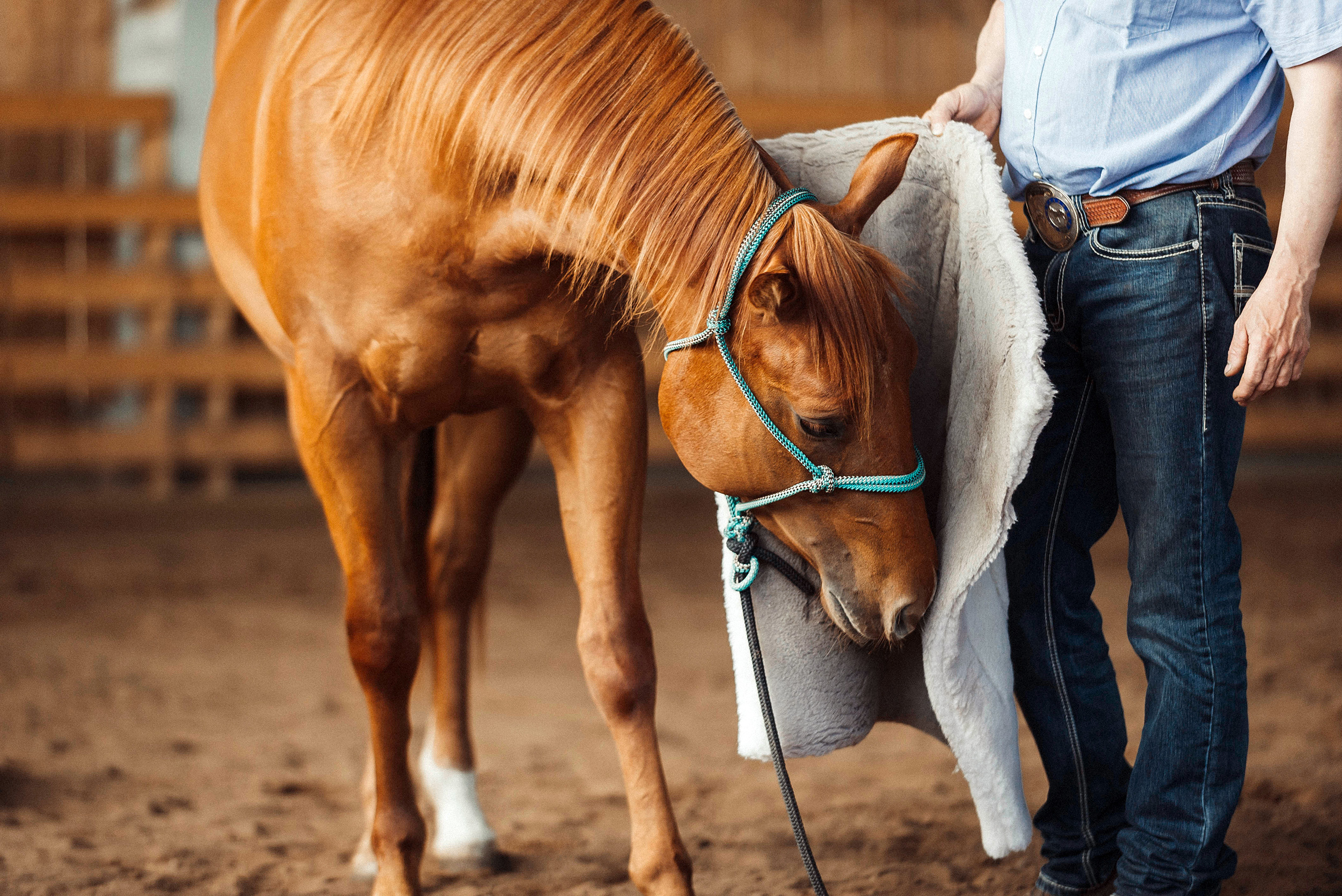
Walk past the horse trailers after a summer jackpot, ranch rodeo or trail ride, and you’ll probably see the same thing: saddle pads draped over gates, fences and trailer doors, drying in the afternoon sun. Some are soaked through with sweat. Others are already stiff with dried salt, caked hair and arena dust.
It’s easy to think of a saddle pad as one more piece of tack, but it has one of the hardest jobs on your horse. On every ride, it cushions the saddle, helps spread pressure across your horse’s back, absorbs sweat and lets heat escape.
A quality saddle pad can last for years if you take care of it.
Built-up sweat, dirt and hair shorten the life of a pad. Over time, they also compress the fibers, reduce the pad’s ability to wick moisture and create stiff spots that can rub your horse’s back. Even the best-made pad can’t do its job once it’s hard as a board.
One of the simplest habits you can develop is cleaning the pad after every ride. Knock off loose dirt, brush away hair and let the pad dry completely before putting it back in the tack room or trailer. Storing a damp pad invites mildew, odors and bacteria and breaks down many materials over time.
Every saddle pad serves the same basic purpose, but the material determines both how it performs and how you should care for it.
For many western riders, wool felt remains the standard. One of its greatest advantages is that it gradually conforms to the horse’s back without losing its structure. To care for a wool felt pad, remove hair with a curry comb or stiff brush after each ride and let it dry thoroughly. When it needs a deeper cleaning, use cool water and a mild wool-safe detergent if the manufacturer recommends one. High-pressure washers, harsh detergents and excessive heat can damage the wool fibers and reduce the pad’s performance.
Traditional woven wool blankets are still popular, particularly beneath ranch saddles or as a top blanket over a felt pad. Shake them out regularly, brush them clean and wash them gently when necessary. Most should air dry, since a dryer can shrink natural fibers.
Neoprene pads have become common because they’re durable, lightweight and easy to clean. Unlike wool, neoprene doesn’t absorb moisture. Many neoprene pads have textured or waffle-patterned surfaces that help move sweat away from the horse while letting air flow beneath the saddle.
You can rinse most neoprene pads with a hose after riding and wash them with mild soap now and then. Let them dry completely before storage, and keep them out of intense heat and direct sunlight, since neoprene can turn brittle over time.
Foam, gel and memory foam inserts show up in many performance pads designed to add shock absorption or relieve pressure points. These materials can cushion well, but many hold more heat than wool. Care varies considerably from one manufacturer to another, so follow the cleaning instructions that came with the pad instead of assuming all synthetic materials wash the same way.
Synthetic fleece pads are another common option, particularly for everyday riding. They are generally easier to clean than natural wool, and many can go through a washing machine on a gentle cycle before air drying. Regular brushing between washings keeps the fleece from matting and packing with hair.
Whatever type of saddle pad you choose, no pad can make up for a saddle that doesn’t fit. Even the thickest pad cannot eliminate pressure points created by a poorly fitting saddle. Think of the pad as a partner to proper saddle fit, helping protect your horse while the saddle does its job.
Before your next ride, flip your saddle pad over and run your hand across the side that rests against your horse. If it feels rough, stiff or crusted with dried sweat and hair, imagine how it feels after an hour in the saddle.
A few minutes spent cleaning and drying your pad after each ride will help it last longer, protect your investment and keep your horse more comfortable every time you swing a leg over.

-
 Country Lifestyle2 years ago
July 2017 Profile: J.W. Hart
-
 Farm & Ranch2 years ago
From Plow to Plentiful: The Most Important Inventions in Agricultural History
-
 Attractions9 years ago
48 Hours in Atoka Remembered
-
 Equine9 years ago
Umbilical Hernia
-
 Country Lifestyle5 years ago
The Two Sides of Colten Jesse
-
 Outdoors9 years ago
Grazing Oklahoma: Honey Locust
-
 Farm & Ranch8 years ago
Hackberry (Celtis spp.)
-
 Attractions3 months ago
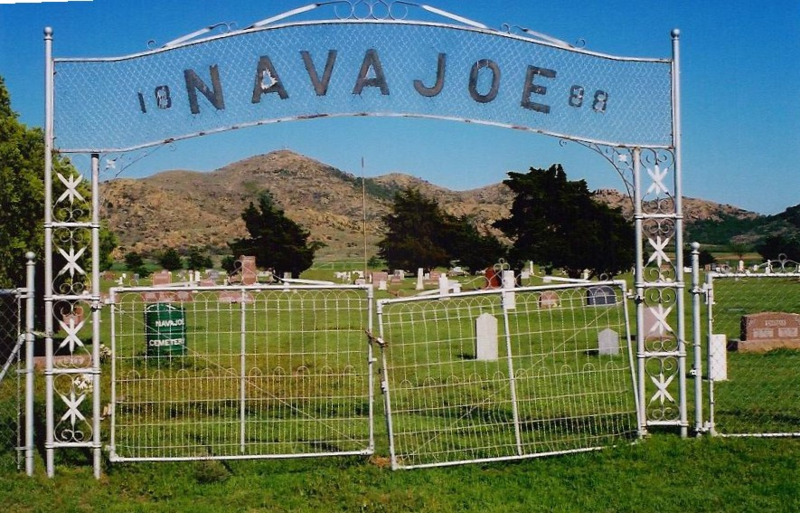
Oklahoma Ghost Towns – Navajoe