Attractions
Express Clydesdales

By Amanda Martin
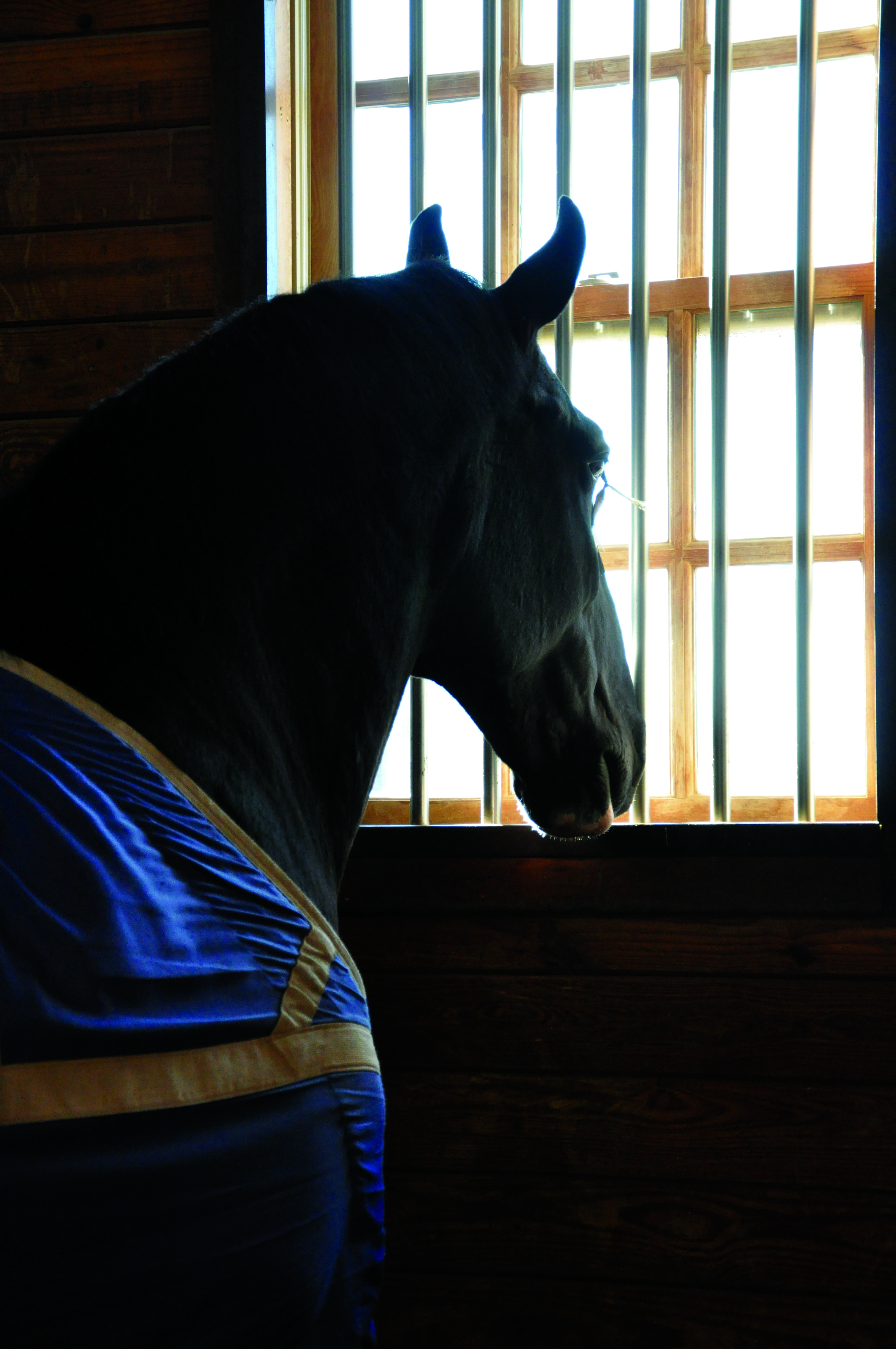
Photo By Amanda Martin
Winston Churchill once said, “There is something about the outside of a horse that is good for the inside of a man.”
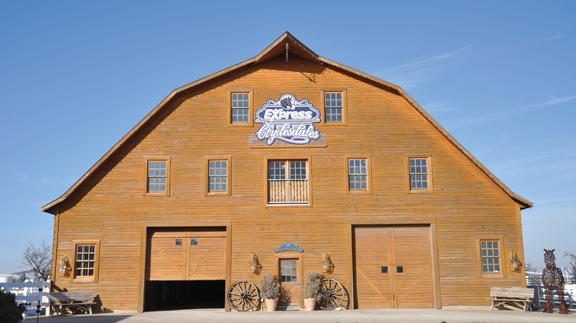
That describes the feeling visitors get when entering the Express Clydesdale Barn in Yukon, Okla.
The barn, originally built in 1936, was restored by Amish carpenters especially for the Express Clydesdales in the late ‘90s. It features gorgeous pine wood walls, walnut trim and brass fixtures. Though beautiful inside and out, the horses inside are what make it worth a visit.
The Express Clydesdales have been a working team since 1998.
“It all began when Bob Funk, founder of Express Employment, was attending a horse show in Canada called Agribition,” said Benjamin Minshull, the Express Clydesdales trainer. “[When he was] introduced to the Clydesdale breed, he immediately fell in love with them and decided he’d like a hitch of his own to represent the company.”
To learn more about the Express Clydesdales, read the OKFR March issue.
By Lindsey Monk
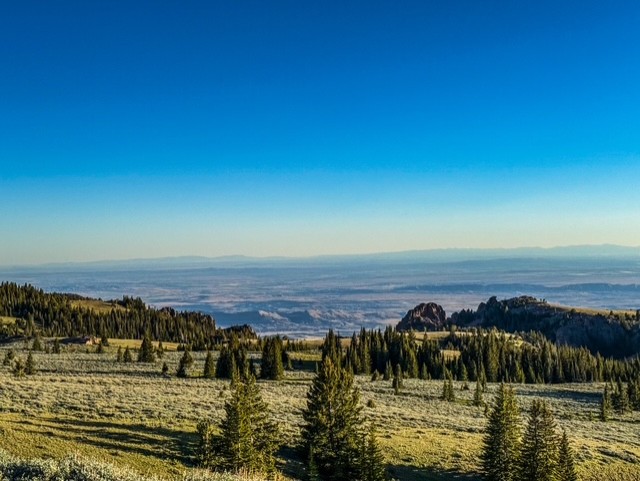
When the summer sun is blazing in the hayfields, a scenic drive into the mountains offers cooler air, stunning views and a welcome break from the heat.
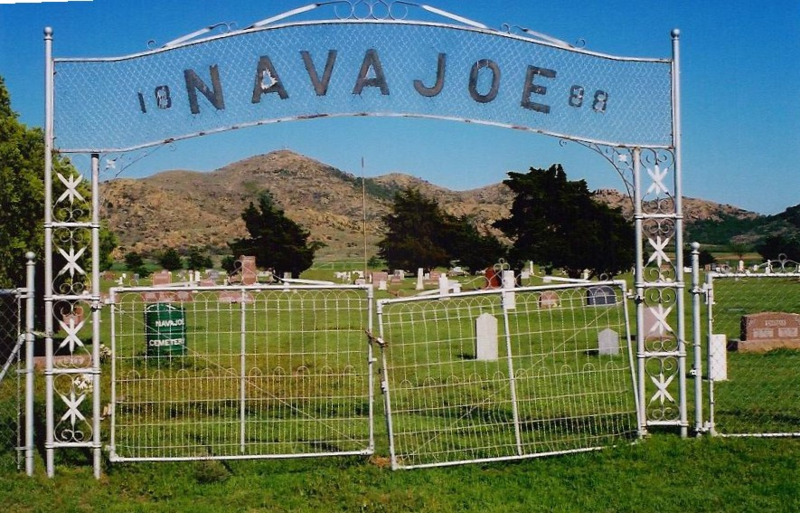
Southwestern Oklahoma is rich with history and has a beautiful, rugged landscape. A lesser known mountain range, the Navajo Mountains sits in eastern Jackson County, just to the north east of Altus.
There, at the base of those mountains, used to be the town of Navajoe. It’s easy to surmise that the town took its name from the nearby mountains. As a side note, from my research, it seems that the Navajo Mountains got their name because of a failed Navajo raid. According to folklore, the Navajos attempted to steal Comanche horses, and were annihilated by the Comanches. Legendary Comanche Chief Quanah Parker gave a detailed account of a similar failed Navajo raid in 1848 or 1849, against his village in Elk Creek just north of the mountains.
Approximately 40 years later, in 1886 when the area was still part of Greer County, Texas, two men named W.H. Acers and H.P. Dale opened a general store in the area. The next year, “Buckskin Joe” Works, a Texas land promoter, attended a Fourth of July picnic in the area. The celebration included settlers, cowboys, and several Comanches led by Quanah Parker.
That same year, the town received a post office designated as “Navajoe” to avoid confusion to Navajo, Ariz. Around the same time the Navajoe school opened, and a couple churches were founded.
Eventually the town was home to more than 200 families, and had a booming trade center, complete with grocery stores, hardware stores, saloons, a blacksmith, a dry goods store, a hotel, and a cotton gin. It was a regular frontier time.
Unfortunately, in 1902, the railroad eventually bypassed Navajoe, ensuring its demise, as most businesses moved – buildings and all. Less than two decades later the Navajoe School was consolidated with Friendship and other school districts. Now, all that remains of the town is a small cemetery at the foot of the mountains. A granite monument, which was fashioned in 1976, pays tribute to the old town.
Eventually, in the mid-1960s, Friendship and Warren schools consolidated. The new school, which graduated its first class in 1964 and is still active in Jackson County, is called Navajo.
Read more in the February 2020 issue of Oklahoma Farm & Ranch.
Sources
Wikipedia.com
RedDirtChronicles.com
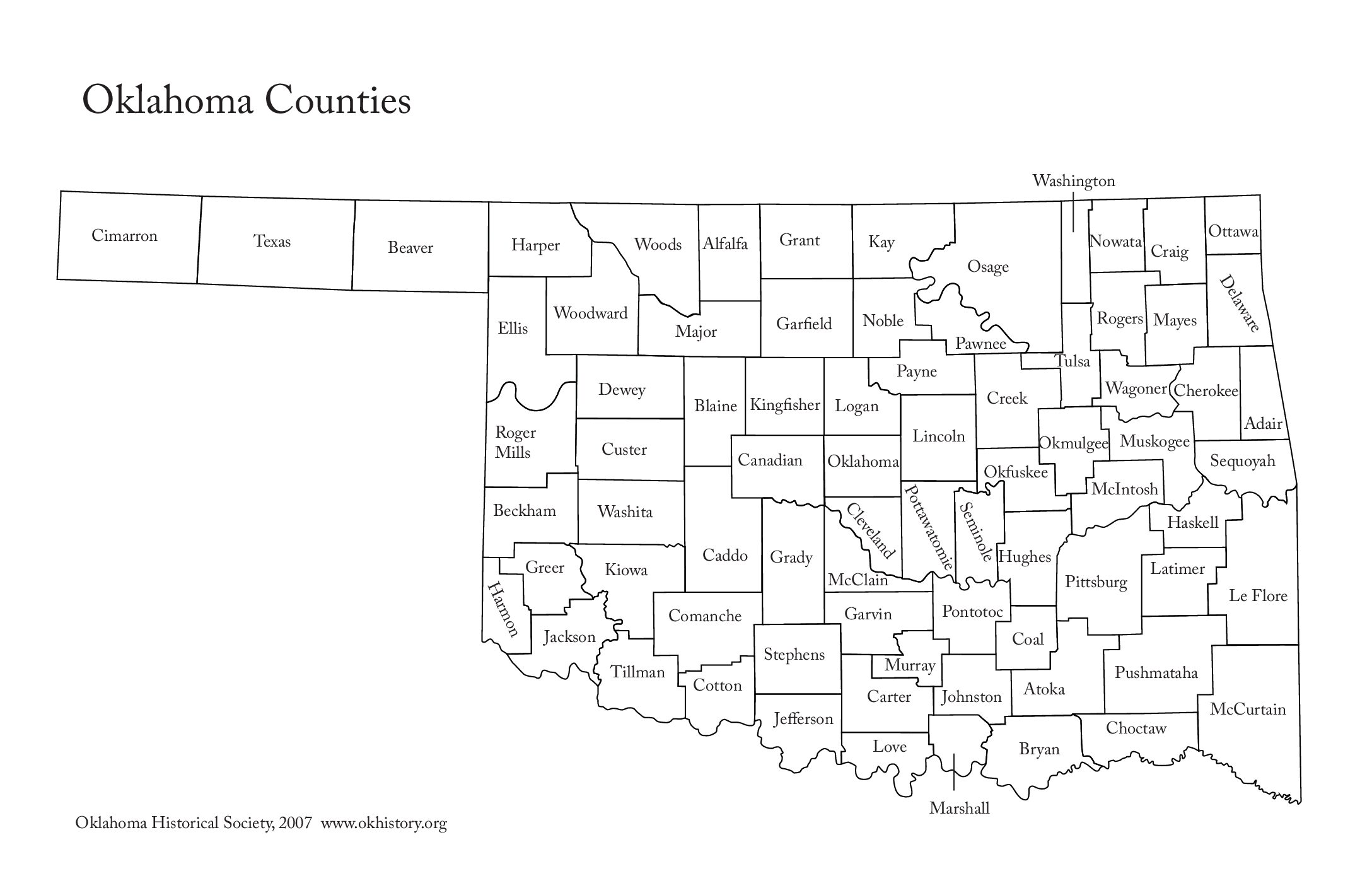
Each spring, Oklahomans can regularly be found listening to the radio or watching the television as weathermen and women report severe weather locations. Counties are typically used to identify storm locations, and while some names are easy to understand, others make us wonder.
While Oklahoma is ranked twentieth in size, it is seventeenth in the number of counties with 77. When it was first organized as the Oklahoma Territory, it had seven, which were designated numerically. When additional counties were added, they were given letters of the alphabet. When Oklahoma became a state in 1907, all the counties were renamed, with only two additional counties being added after statehood.
Oklahoma has 13 counties named for Indian tribes, and well-known Indian families have provided names for eight other counties. Six counties are named for U.S. Presidents, while rivers provided names for four counties. Military officers and Indian leaders are also honored.
Read on to learn what we found out about the etymology of our state’s counties.
Adair County was specifically named for Watt Adair, one of the first Cherokees to settle in the area.
Alfalfa County was formed at statehood as Woods County. The county is named after William H. “Alfalfa Bill” Murray, the president of the Oklahoma Constitutional Convention and ninth governor of Oklahoma.
Atoka County honors a Choctaw Chief named Atoka.
Beaver County was given because of the presence of many beaver dams on the Beaver River, which runs through the area.
Beckham County was named for J. C. W. Beckham, who was Governor of Kentucky and the first elected member of the U.S. Senate.
Blaine County is the birthplace of voice actor Clarence Nash, the voice of Disney’s Donald Duck. It is named for James Blaine, the Secretary of State under President Harrison.
Bryan County was named for Democratic politician William Jennings Bryan.
Caddo County was named for the Caddo tribe who were settled here on a reservation in the 1870s.
Canadian County in the central part of the state is named for the Canadian River.
Carter County was named for Captain Ben W. Carter, a Cherokee who lived among the Chickasaw.
Cherokee County is named for the Cherokee Indian Nation.
Choctaw County’s name is derived from Chahta, the mythical founder of the Choctaw people.
The westernmost county in the state, Cimarron County contains the only community in the state that observes the Mountain Time Zone and is named for the Cimarron River.
Cleveland County was named after U.S. President Grover Cleveland.
Coal County was named for the mineral that was then the major product of the region.
Comanche County was named for the Comanche tribe.
At statehood, the area which is now Cotton County fell within the boundaries of Comanche County. It split off in 1912, becoming the last county created in the state; it was named for the county’s primary crop.
Craig County was named for Granville Craig, a prominent Cherokee farmer who lived in the Bluejacket area.
Creek County got its name from the Creek Nation, whose country following Indian removal included the county.
Custer County was named in honor of General George Armstrong Custer.
Delaware County was named for the Delaware Indians who had established a village in the area prior to the arrival of the Cherokees in Indian Territory in the 1830s.
Originally created in 1891 as “County D,” voters in an 1898 election chose the name Dewey County, honoring Admiral George Dewey.
Ellis County was named for Albert H. Ellis, vice president of the 1906 Constitutional Convention.
Garfield County was named after President James Garfield. Prior to the Land Run of 1893, Garfield County was named O County.
Garvin County was named for Samuel J. Garvin, a local Chickasaw rancher, merchant and banker.
Grady County was named for Henry W. Grady, an editor of the Atlanta Constitution and southern orator.
Grant County was named County L in Oklahoma Territory at the time of its opening to non-Indian settlement. A county election renamed it for U.S. President Ulysses S. Grant.
Greer County is named for Texas stateman and Lieutenant Governor of Texas John Greer.
Harmon County takes is name for Judson Harmon, governor of Ohio and U.S. Secretary of State.
Harper County was created from the northwestern part of Woodward County and named for Oscar Green Harper, who was clerk of the Oklahoma Constitutional Convention.
Haskell County is named in honor of Charles N. Haskell, who was the first governor of Oklahoma.
Hughes County was named for W. C. Hughes, an Oklahoma City lawyer who was a member of the Oklahoma Constitutional Convention.
It’s unknown which Jackson Jackson County was named for: President Andrew Jackson or Confederate General Stonewall Jackson.
Jefferson County was created at statehood and named in honor of President Thomas Jefferson.
Johnston County was named for Douglas H. Johnston, a governor of the Chickasaw Nation.
Kay County was originally designated as county “K.” Kay County is the only county to keep its same name as the Oklahoma area moved from a territory to a state.
Kingfisher County was formed in 1890 and named Kingfisher by a vote of residents.
Kiowa County was named for the Kiowa people.
Latimer County was created at statehood and named for James Latimer, a delegate to the state Constitutional Convention.
Le Flore County honors a Choctaw family of French descent named LeFlore.
Lincoln County was named for Abraham Lincoln, the sixteenth president of the United States.
Logan County was named for John Logan, Federal general in the War Between the States, and a U.S. Senator from Illinois.
Love County was named for Overton Love, a prominent Chickasaw farmer, entrepreneur and politician. His descendants built the nationwide Love’s Travel Stops.
Major County was named for John Major, a member of the Oklahoma Constitutional Convention.
Marshall County was named to honor the maiden name of the mother of George Henshaw, a member of the Oklahoma Constitutional Convention.
Mayes County took its name for Samuel Houston Mayes, a teenage Confederate cavalryman, and mixed-blood Principal Chief of the Cherokee Nation.
McClain County pays homage to Charles M. McClain, an Oklahoma constitutional convention attendee.
McCurtain County was named for an influential Choctaw family that lived in the area.
McIntosh County is named for an influential Muscogee Creek family whose members led the migration of the Lower Towns to Indian Territory and served as leaders for generations.
Murray County was named for William H. Murray, president of the Oklahoma Constitutional Convention and later a Governor of Oklahoma.
Muskogee County was named for the Muscogee (Creek) Nation. The official spelling of the name was later changed to Muskogee.
Originally designated as County P, Noble County was renamed for John Willock Noble, then the United States Secretary of the Interior.
Nowata County’s nameis derived from a Delaware word “no-we-ata,” meaning “come here” or “welcome.”
Okfuskee County is named for a former Muscogee town in Alabama, from which the Creek were removed to Indian Territory, that in turn was named for the Okfuskee, a Muscogee tribe.
Oklahoma County is one of seven counties in the United States to share the same name as the state it is located in (the other six counties are Arkansas County, Hawaii County, Idaho County, Iowa County, New York County, and Utah County), and the only one of the seven to contain the state capital.
Okmulgee County is named after a Creek town of the same name in Alabama, from which the Creek were removed to Indian Territory. The name Okmulgee is derived from the word okimulgi, meaning “boiling waters.
Osage County is the largest county by area in the state and is named for and is home to the federally recognized Osage Nation.
Ottawa County was named for the Ottawa Tribe of Oklahoma.
Pawnee County is named for the Pawnee tribe, which settled in the area following the War Between the States.
Payne County was named for Capt. David L. Payne, a leader of the “Boomers.”
Pittsburg County got its name because county leaders believed that its coal production compared favorably with Pittsburgh, Pennsylvania, at the time of statehood.
Pontotoc County was named for an historic Chickasaw tribal area in Mississippi.
Pottawatomie County got its name for the tribe that lived in the area. It’s name is a Chippewa term that means “people of the place of the fire.”
Pushmataha County was named for Pushmataha, an important Choctaw chief in the American Southeast.
Roger Mills County got its name for Confederate office and U.S. senator from Texas.
The area of Rogers County was named the Cooweescoowee District at the time of statehood, but the residents protested. It was renamed for Clem Vann Rogers, a prominent Cherokee rancher and father of Will Rogers.
Seminole County is named for the Seminole Nation, whose capital is also the county seat of Wewoka.
Sequoyah County was named to honor legendary statesman and creator of the Cherokee syllabary, which brought literacy to the Cherokee Nation.
Stephens County was named for Texas politician John Hall Stephens, who championed for Oklahoma statehood.
Texas County was named for its neighbor to the south.
Tillman County was named for U.S. Senator Benjamin Tillman of South Carolina.
Tulsa County was named after the previously established city of Tulsa and the Creek village of Tulsey Town in Alabama.
Wagoner County is named for the county seat of the same name, which derived from Henry “Big Foot” Parsons.
Named for President George Washington, Washington County is the second smallest county in Oklahoma.
Washita County is named for the almost 300-mile long river that runs through it and empties into Lake Texoma and the Red River.
Woods County was named after Samuel Newitt Wood, a renowned Kansas activist, legislator, and newspaper publisher.
Woodward County was originally known as “N” County and was composed of present-day Woodward County and portions of Harper, Ellis, and Woods County. It is unknown exactly whom the county (and the town) is named after, but the two leading candidates are Brinton W. Woodward, a Santa Fe railway director, or Richard Woodward, a buffalo hunter.


-
 Country Lifestyle2 years ago
July 2017 Profile: J.W. Hart
-
 Farm & Ranch2 years ago
From Plow to Plentiful: The Most Important Inventions in Agricultural History
-
 Attractions9 years ago
48 Hours in Atoka Remembered
-
 Equine9 years ago
Umbilical Hernia
-
 Country Lifestyle5 years ago
The Two Sides of Colten Jesse
-
 Outdoors9 years ago
Grazing Oklahoma: Honey Locust
-
 Farm & Ranch8 years ago
Hackberry (Celtis spp.)
-
Attractions3 months ago
Oklahoma Ghost Towns – Navajoe