
Farm & Ranch
Leading By Example

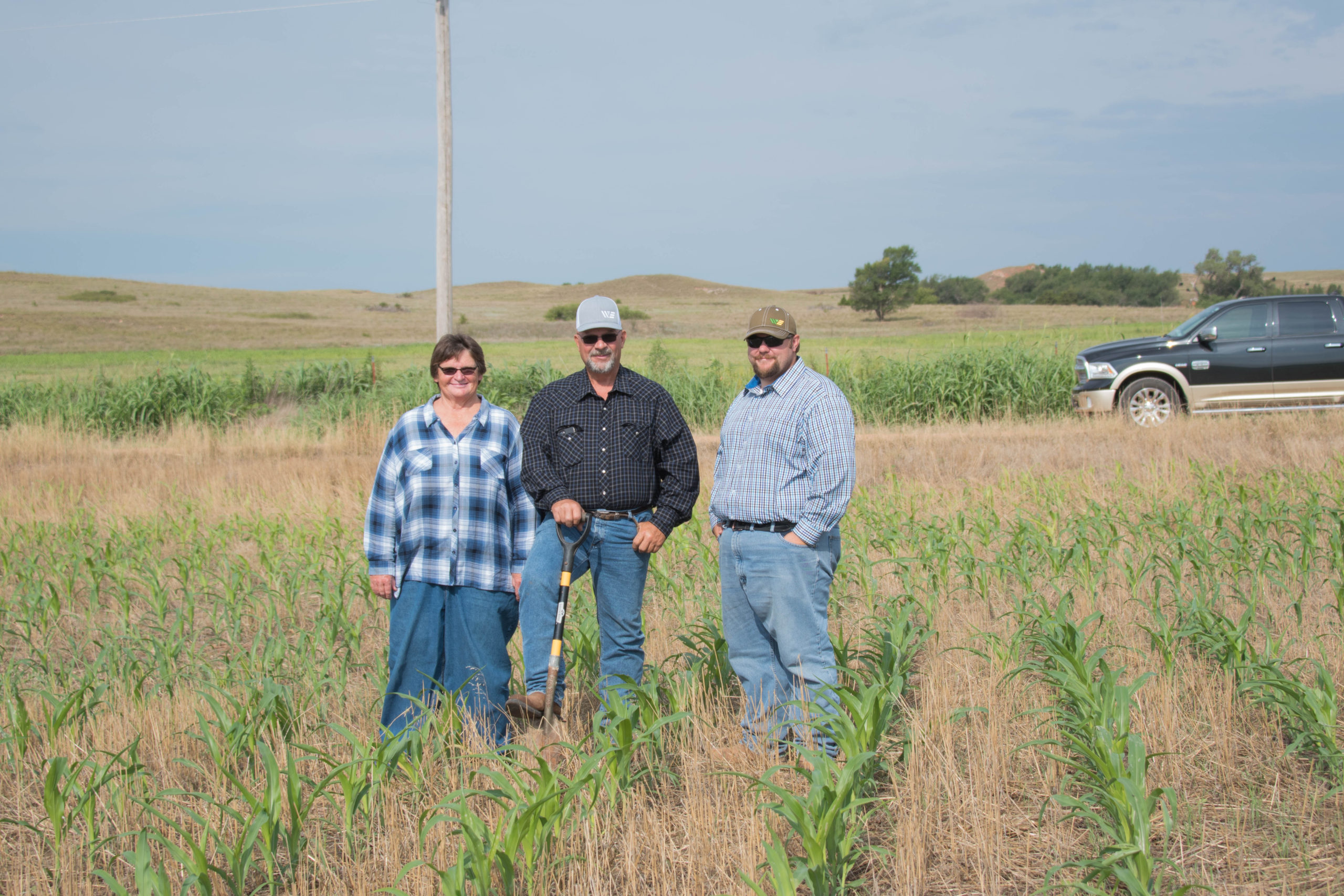
Jimmy Emmons
Jimmy Emmons admits some of his ideas about conservation techniques have been met with a bit of skepticism over the years, and that’s why the Leedey, Okla., farmer, chooses to lead by example. Instead of pushing others to try out his techniques, he shares his findings and results with anyone who wants to learn. His desire to be a steward of the land, and his dedication to teaching, has led Jimmy to hold several major positions in agriculture over the years, from serving as President of the Oklahoma Association of Conservation Districts, to his current title of Southern Plains Coordinator for USDA, FPAC.
Emmons and his wife Ginger, along with longtime employee Karson Liebold, farm and ranch on several thousand acres in Dewey County. The land has been in the Emmons family since 1926, when his grandfather, Marvin Curtis Emmons, moved to the area. A major event just a few years after the Emmons settled in the area that would set the course for generations of conservation efforts.
“My grandparents started farming on the South Canadian River, and in 1934, the Hammon Flood happened. It rained 14 inches in one night, and killed several people,” Jimmy said.
Prior to the torrential rains, Jimmy’s grandfather had started a small ditch across the farm to take water from one area to another. “That night it burst that ditch out to a creek that was 20 feet deep and 30 feet wide,” Jimmy shared. All the topsoil had washed off into the river. “He preached really hard about conservation, and that really instilled in me that everything we do on the land has a consequence. Conservation has been a passion of mine for several years.”
Karson, who has worked for Jimmy and Ginger for more than 12 years, has enjoyed learning about the affects of conservation practices on the soil. “It’s amazing. I’ve gotten to watch the soil change. It’s funny, because at my previous job, it was all about wheat. I remember when I first started here, I was looking at a field and thought to myself, ‘Look at all those weeds!’” He laughed, and added, “It was canola. I had no idea of the things that could be grown out here. We prove every day that you can have a lot of diversity, and obviously having that diversity benefits your soil.”
Maximizing Resources
The Hammon Flood was an outlier; water is a precious commodity because rain is so scarce. Jimmy knew he needed to maximize his natural resources.
As with most farmers, the Emmons originally tilled the soil, but that changed in the mid-1990s. “I can hardly stand to see tilled ground now, because I know the damage it does to the soil. Tillage is just like a wildfire or a tornado to the soil. It’s devastating,” he said. “I grew up with that and thought we were doing what we were supposed to do, but now I know better.”
Over the years, Jimmy has learned more conservation practices that might benefit his land, utilizing crop rotation, cover crops, and planned grazing management. Ginger, whose main focus is the cattle, shared, “Once we got into the cover crops, the grazing has been fantastic for the cattle and the land. We can run our cow/calf pairs or our weaned calves on it.”
One method of grazing the Emmons have implemented is high-density grazing. They divide a field into sections, which are approximately 20-acre plots. Then, with an electric fence, they graze the area hard for a couple days. Once the area has been grazed, they move to the next parcel. “You just keep moving it. If you have had some rain, by the time you’re done with the last parcel you can move back to the first,” she said. “All that manure is contained, so that’s great for the soil. The cows do well with it, and it’s amazing how well it works all the way around.”
Jimmy noted, “We started planting cover crops right after we harvest our cash crops. We started grazing those crops to continue to improve the soil health, and it has grown from there, and greatly improved the function of the soil.”
The idea to use cover crops came when Jimmy heard a producer from Indiana speak about the practice at a national conservation meeting. “He showed photos and figures of his plots. He wasn’t buying any fertilizer for his cash crop, and he not only improved production, he also lowered the cost,” Jimmy said. “I thought to myself, ‘If he can do it there, why can’t I do it here?’”
The use of cover crops in western Oklahoma was somewhat controversial due to the scarcity of water, and Jimmy knew he needed to recruit some help. “The big argument early on, and the reason I asked the NRCS for help, was that we can hardly grow crops out here. How can we grow continuously?” He added, “We quickly started learning that the evaporation rate was a lot greater in the summertime than what a cover crop would use. We figured out we were water ahead every time.”
Jimmy was energized by the early success of the tests. “When you start retaining what rainfall you have, that’s the key. You have to get it in the soil,” he said. “Although I was excited, I was still a bit skeptical at first. I bought my testers and we put moisture probes in the ground so we could track the water that was in the soil and see how fast it left.”
It was only a few years ago that the Emmons put an irrigation system on some of the farmland. At first, the ground could barely hold a half-inch of water before running off. A recent test showed infiltration depths of six inches! “You know, we’re working on a project right now with the Conservation Commission and the NRCS about infiltration rates. We’re seeing how much water we can take in and at what rate, and then we’re seeing how it is going through the profile,” he said. “I think it’s especially important for producers to understand the science of it. I believe it is something we have missed as a farming community; we’ve always been worried about how much it rains, but we haven’t been as concerned with how much we’ve had run off. I think we need to focus on infiltration.”
He admits that it all comes down to the bottom line. “You know, we are really concerned about inputs nowadays, but what we found out is if you have the biology really active in the soil, you don’t need near as much synthetic fertilizer. Every dollar you don’t spend is more dollars you have,” he said. “These days, we’re not so worried about the high yield as we are the profit potential. It’s been very good.”
Giving Back
It was only a few years ago that Jimmy was visiting with Sarah Blaney, Executive Director of the Oklahoma Association of Conservation Districts, and Trey Lam, Executive Director of the Oklahoma Conservation Commission. The three were discussing cover crops. “Trey mentioned putting vegetables out there to see how they would work as cover crops. That started the conversation, and then it grew to, if this is going to work, what if we partnered with the regional food banks and donated the vegetables,” he recalled.
What started as a small idea has grown to include more than 30 gardens across the United States. “We have several across Oklahoma, Kansas, and Nebraska, and now we have some in California, too,” he said.
During good rain years, the yields have been abundant. “During those years, you can pick a half pickup load of vegetables, from squash, peas, okra, and more. One year we could pick close to 1,000 pounds in a day out of only a few acres,” Jimmy shared. “Some days were even more. This year we won’t get much, because we had so little rain, as well as the 100-degree days and the big wind. There are other gardens in the state that are producing well though.”
Produce from the crops go to nearby foodbanks in Woodward, Vici, and Taloga.
Volunteers are always available to help harvest the crops. Along with the foodbank volunteers, church groups, local FFA chapters, and more will come out to help. “It’s a very good project, and one we’re proud of. Not only do we help get fresh vegetables to people who need it, it also helps urban people interact with ag and learn more about where their food comes from.”
Sharing the Knowledge
Over the years Jimmy has become known for his conservation practices and their success. Soon, he began getting tapped for speaking engagements. He shares what he’s learned about soil health at several workshops. “It’s really fascinating to me what we can do with our soil. One of the most rewarding things is when someone you’re sharing with gets excited, and wants to try it, too,” he said.
Along with the lectures he has done all over the country – during one period he visited nearly 30 states in three years – the Emmons have hosted legions of fellow farmers from around the globe at their home in Leedey during field days. “Two years ago, we had a busload of Australians come. We’ve also hosted Canadians and Europeans. We’ve been very blessed with the people who want to come to our place and see what we’re doing,” he said.
Setting an Example
Ginger is incredibly proud of Jimmy’s success, although she admits she was a bit skeptical at first. “I wasn’t very supportive at first. It wasn’t until we started doing the grazing and I saw what that could do, and then I was on board. But now, I’ve learned more about it, seen what it can do, and gone to enough conferences with him. I do get it now and it’s the greatest thing we’ve ever done,” she shared.
Ginger added, “We both just have high school degrees, and he’s just moved up through the ranks and has a really good job now. I’m amazed when I listen to him speak and realize how much he’s learned. I’m very proud of him.”
The Emmons, who were high school sweethearts, have been together more than 38 years. Karson, being so close to the family, is regularly mis-identified as Jimmy and Ginger’s son; but that’s something he’s ok with. He’ll be getting married himself in October, and shared, “I’ve watched how Jimmy and Ginger love each other. I told Jimmy the other day, that if my marriage is the way theirs is, it will be perfect.”
Looking Ahead
Jimmy has a vision for the future; one that sets the farm up for success for the long term. He hopes to leave it for his grandson one day. “My grandfather did the best he could with the tools and knowledge he had to manage our family’s land. I am trying to continue that legacy by using what we now know are the best practices for improving the health of our soils. My goal is that my grandson, Owen, and his children will be able to farm this land for another 100 years, if they choose. That is only possible if Ginger and I do our part to take care of the natural resources,” said Emmons.
He would like to eventually start producing organic crops, and because of the conservation practices he’s implemented, the use of synthetic fertilizers on the Emmons farm has been reduced by 80 percent and chemicals by 75 percent.
Jimmy also has plans for his cattle. “We would like to start our own label for regenerative beef, meaning we have healthy soil which produces healthy plants and that becomes healthy beef that will create healthy bodies,” he shared. “The thing about our beef is they never graze on one plant. We believe in diversity in crops, forage for grazing and native ranges. We all like a buffet where you can select what you like to eat so why not treat your animals the same way.”
This article was originally published in the September 2020 issue of Oklahoma Farm & Ranch.
Barry Whitworth, DVM
Area Food/Animal Quality and Health
Specialist for Eastern Oklahoma
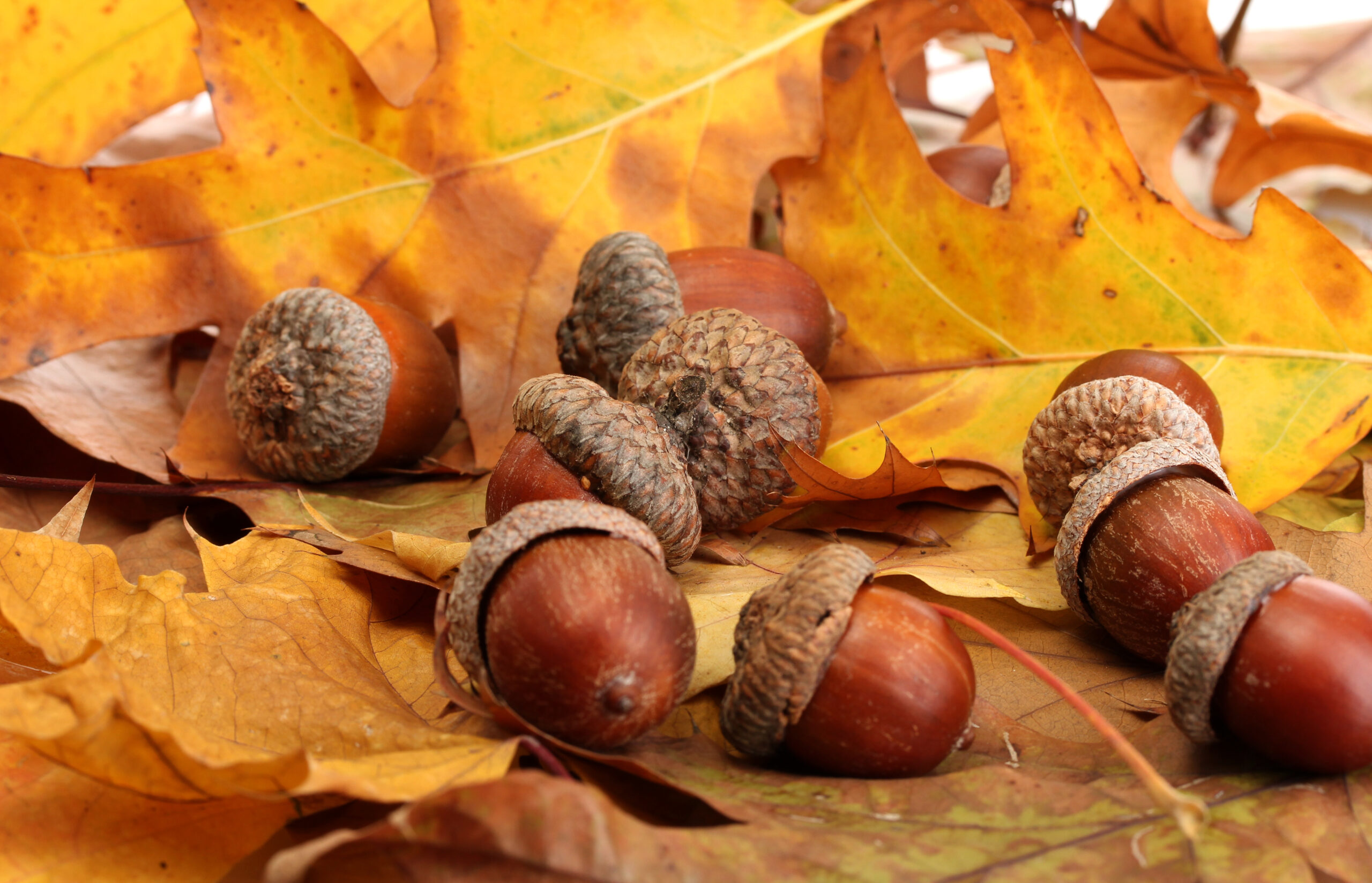
With the prolonged drought, most pastures in Oklahoma are in poor condition. With the lack of available forage, animals may go in search of alternative foods. If oak trees are in the pastures, acorns may be a favorite meal for some livestock this fall. This may result in oak poisoning.
Oak (Quercus species) leaves, twigs, buds, and acorns may be toxic to some animals when consumed. Obviously, acorns can be a problem in the fall and green acorns can be more toxic than mature acorns. When acorns form only a small portion of the diet, there are usually no signs of problems. However, consumption of large quantities may result in toxicity. Tannins in the acorns cause the toxicity. The most common tissue damaged by the tannins are the digestive tract and kidneys. Cattle and sheep appear to be more susceptible to toxicity than goats. Other animals such as horses, rabbits, and chickens have succumbed to the toxicity of oak poisoning as well. Interestingly, some individual animals are more tolerable of the toxins and show no ill effects when consuming acorns.
Clinical signs of oak toxicity usually appear a few days after consumption of acorns. Initially, the animals are weak, listless, emaciated, and anorexic. This is followed by ventral edema (swelling of lower parts of the body such as legs, chest, ventral abdomen), urinating large amounts of urine, abdominal pain, and constipation. The animal may pass hard mucus covered fecal material which may change to black tarry or bloody feces as the disease progresses. If the animal is not treated, kidney failure is likely.
A tentative diagnosis of acorn poisoning may be based on clinical signs and access to acorns. Blood tests that indicate kidney disease is another clue to the condition. A necroscopy with examination of tissues for characteristic lesions of the disease is the standard to confirm a diagnosis of oak toxicity.
Treatment of oak toxicity starts with removing the animals from the area where the acorns are located. Those animals displaying signs of the disease should be given fluids to correct dehydration and electrolyte imbalances. Mineral oil and/or activated charcoal may be given to reduce toxin absorption. If animals survive the initial toxicity, they may recover, but it may take several weeks for kidney function to return to normal.
As always, prevention is better than treatment. Producers should be very careful allowing livestock to graze in areas where acorns are present. Livestock should be fed plenty of hay and feed this fall to avoid over consumption of acorns. For those producers who cannot avoid grazing areas with large numbers of oak trees, feeding a grain mixture with 10% to 20% of calcium hydroxide has been successful in preventing problems with acorn poisoning.
Two thousand twenty-two has not been the best year for livestock producers. The drought has produced poor pasture conditions as well as very little hay. On top of those problems, feed costs continue to increase. The last problem a producer needs is a large number of sick cows. For those that graze an area with a large number of oak trees, prevention may be worth the cost this year. At the very least keep a close watch of your animals this fall. Producers wanting more information about oak toxicity, should consult with their local veterinarian or visit with their Oklahoma State University Cooperative Extension County Agriculture Educator.
Barry Whitworth, DVM | Area Food/Animal Quality and Health Specialist for Eastern Oklahoma
*Article originally printed in the October 2022 issue of Oklahoma Farm & Ranch.
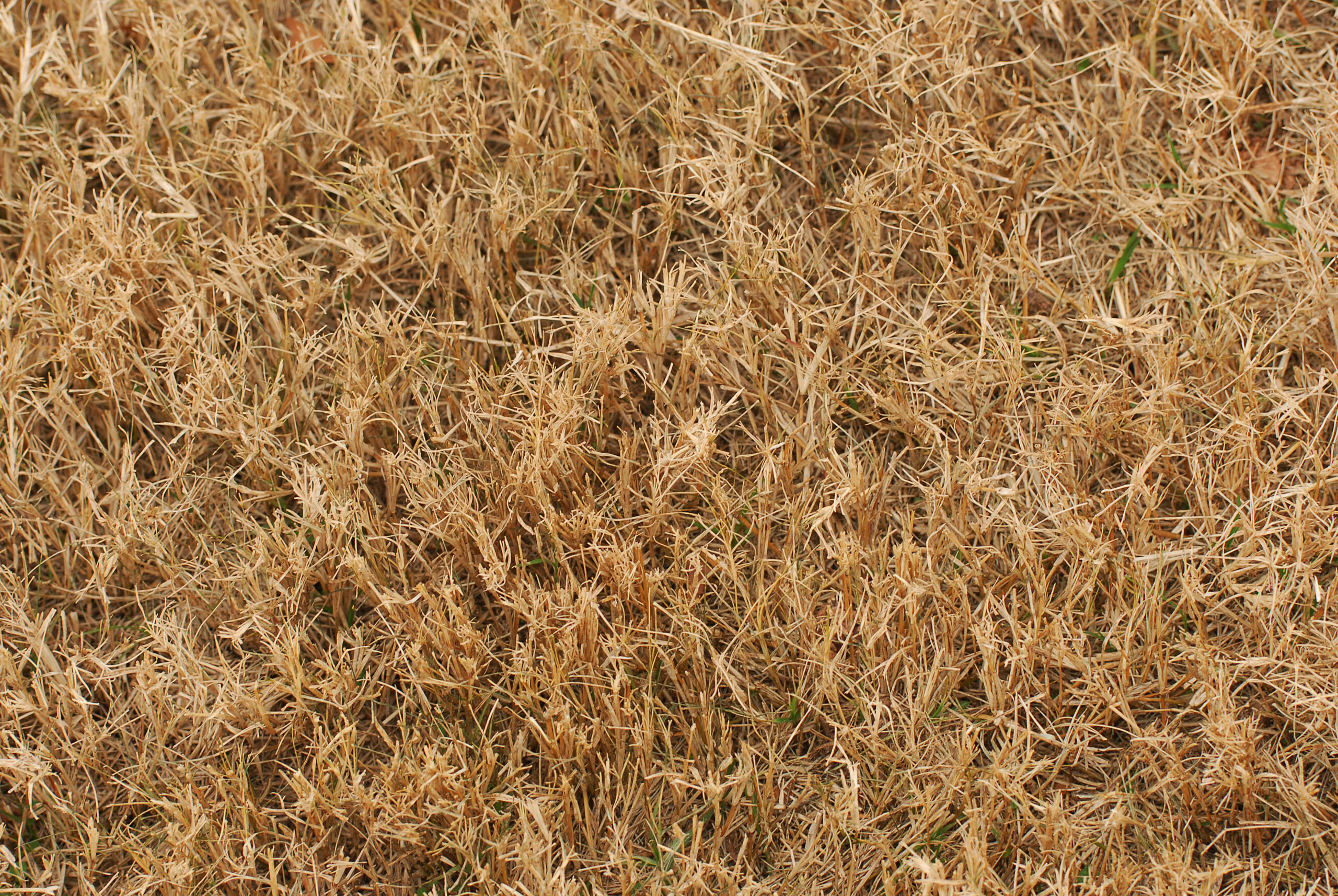
Since most of Oklahoma experienced drought conditions and with fall fast approaching, producers with fescue pastures should closely observe their livestock for any signs of fescue toxicity. According to Mike Trammel, Pottawatomie County Ag Educator and Muti-County Agronomist, fescue toxins (ergot alkaloids) tend to increase in Kentucky-31 tall fescue pastures in the fall. Some reports indicate more problems with fescue toxins following a summer drought and limited fall rains. All of this may put Oklahoma cattle at a greater risk of fescue toxicity.
One issue that cattle experience with fescue toxins is fescue foot. Fescue foot is thought to be caused by ergot alkaloids such as ergovaline. These alkaloids are produced by endophyte fungus (Epichloë coenophiala) which is in tall fescue. Ergovaline has been proven to be a vasoconstrictor which might be responsible for fescue foot and heat intolerance also known as summer slump in cattle. Other issues that may be seen with the ergot fescue toxins are reduced milk production and reproductive issues.
Clinical signs of fescue foot appear within a few days of cattle being turned on to tall fescue pastures or it may take weeks if toxins in the pasture are low. Producers will initially observe cattle with arched back, rough hair coats, and sore feet. These symptoms are more noticeable early in the morning and with cold weather. This is followed by reddening and swelling in the area between the dewclaws and hooves. The lameness usually becomes more severe with time. If no action is taken, gangrene will result in loss of tissues distal to the coronary band and declaws. If the weather remains mild, other signs such as increase respiration rate, increase heart rate, and higher body temperature are more common.
Other causes of lameness in cattle must be differentiated from fescue foot. One simple method that will help differentiate fescue foot from footrot is to check the temperature of the foot. If the foot is cold, this is an indication that the problem is more likely fescue foot.
Since there is not a specific treatment for fescue foot, the condition must be managed. Cattle need to be observed daily for any signs of lameness or stiffness during the first few weeks on fescue pastures. This should be done early in the morning before cattle walk off the stiffness. Producers should pay close attention during cold weather, especially when rain, snow, or ice are present. Any animal showing clinical signs of fescue foot should be removed from the pasture and placed in a clean environment. The animal should be fed a ration with no fescue toxins.
The best but most costly solution to reduce fescue toxicity is to renovate old pastures with new endophyte friendly varieties. If this option is not possible, producers might try interseeding fescue pastures with clovers or other grasses. This should dilute fescue toxins. Nitrogen fertilization may increase ergot alkaloids, so producers should avoid fertilizing fescue pastures with high amounts of nitrogen. Researchers have demonstrated that feeding a supplement while grazing fescue pastures reduces clinical symptoms. Some studies indicate a difference in susceptibility to fescue toxicity in some cattle. Selecting cattle based on genetic tolerance of fescue toxins is an option. (For more information go to www.agbotanica.com/t-snip.aspx)
With large areas in Oklahoma covered with Kentucky-31 fescue pastures, fescue foot as well as other fescue toxicities are not going away any time soon. Livestock producers will need to watch their livestock closely for any signs of fescue toxicity and manage their pastures to keep toxins as low as possible. If producers would like more information on fescue foot, they should consult their veterinarian and/or visit their local Oklahoma State University Cooperative County Extension Agriculture Educator.
By Barry Whitworth, DVM, MPH | Senior Extension Specialist Department of Animal & Food Sciences | Ferguson College of Agriculture | Oklahoma State University
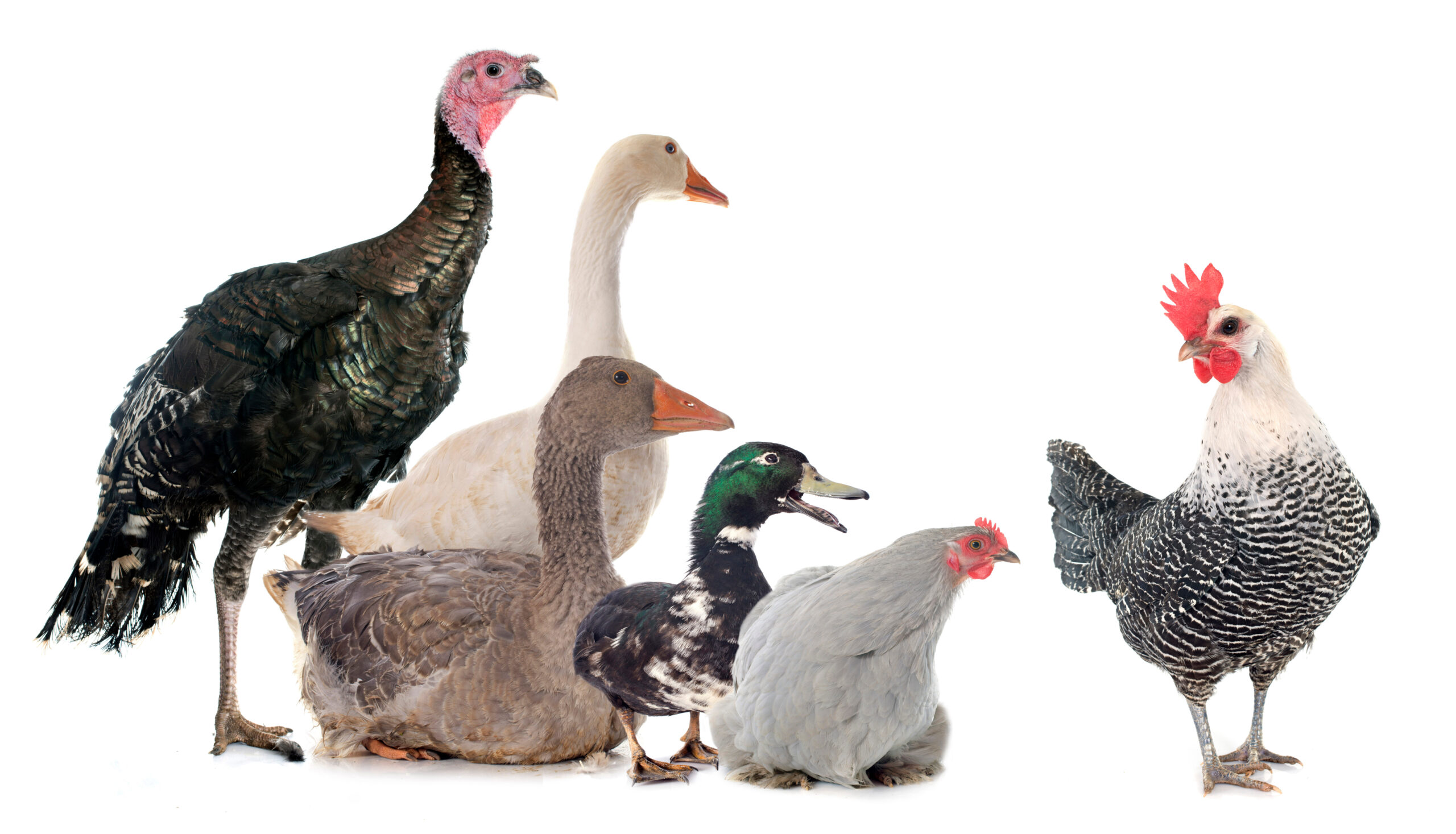
According to the 11th edition of Poultry Diseases, external parasites of poultry are arthropods that live on or in the skin and feathers. Essentially, parasites are freeloaders that live at the expense of the host. Backyard birds are infested with a variety of pests. Ticks, fleas, mites, and lice are some of the most common external parasites found in chickens, turkeys, and ducks. Several of these parasites are bloodsuckers. If not controlled, they can cause weight loss, decreased egg production, unthriftiness, and death in severe cases.
According to a study conducted by Dr. Amy Murillo and associates in California, the most common external parasites in backyard flocks were lice, fleas, and mites. Lice were the most frequently observed parasites, with the chicken body louse (Menacanthus stramineus) found on half of the premises inspected. The fluff louse (Goniocotes gallinae) was found in 35% of operations. The wing louse (Lipeurus caponis) and sticktight flea (Echidnophaga gallinacea) were present in 20% of flocks. Northern fowl mites (Ornithonyssus sylviarum), which are the most common mites found in commercial poultry operations, were detected in only 15% of flocks. However, the survey was conducted in the summer, which may have influenced the low number of northern fowl mites, since they are most active in the winter.
Birds infested with external parasites often become agitated due to skin irritation. They will spend more time preening and scratching. Their feathers may become damaged, and they may appear unhealthy. Birds showing these signs should be examined.
When examining birds for external parasites, producers should focus on the breast, back, head, vent region, and wings. Lice may be found on different parts of the body. They are yellowish in color and lie flat against the skin. Their eggs are typically found attached to the shafts of feathers. The vent area is the primary location to check for mite infestations and may appear “dirty.” Sticktight fleas are usually found embedded in the comb.
Birds should be monitored regularly. When producers are unable to examine all birds, they should focus on the young, the old, and any bird that appears unhealthy. The coop should also be inspected. Producers should examine the bedding, walls, and roosts, with close attention given to crevices and cracks where pests may hide.
Before parasite control can begin, the parasite must be correctly identified. Producers can use books or other publications for this purpose, or they may consult a veterinarian. Contacting the local Oklahoma State University Extension office is also a useful option. An agricultural extension educator may be able to identify the pest or submit samples to the Plant Disease and Insect Diagnostic Laboratory at Oklahoma State University for identification.
Prevention and control of external parasites require an integrated approach. The first line of defense is a strong biosecurity program to prevent parasites from entering the operation. Sanitation is also critical, keeping the coop and surrounding area clean helps prevent infestations.
Maintaining healthy birds is essential in preventing parasite infestations. Producers should focus on proper nutrition and disease prevention as they are key factors in maintaining a healthy flock. A strong immune system can help birds better withstand some external parasites.
Selecting the proper pesticide and using it correctly is essential. Many pests described in this article can be controlled with appropriate pesticides; however, their eggs are not killed, which requires repeated applications to target newly hatched larvae. Producers should read and follow pesticide label directions.
Alternative methods for external parasite control are also available such as providing diatomaceous earth mixed with sand for dust bathing or using sulfur bags to control mites and lice. For more information on these methods, see references below.
Finally, early identification and treatment greatly increase the chances of successful control. If infestations are allowed to become established, control becomes much more difficult.
For more information on external parasites in backyard poultry, producers may visit https://www.veterinaryentomology.org/ or contact their local veterinarian or Oklahoma State University County Agriculture Extension Educator.
References
Arends, J., J. (2003). External parasites and poultry pests. Diseases of Poultry. 11th Edition.
Murillo, A. C., & Mullens, B. A. (2016). Diversity and Prevalence of Ectoparasites on Backyard Chicken Flocks in California. Journal of medical entomology, 53(3), 707–71.
Murillo, A. C., & Mullens, B. A. (2016). Timing Diatomaceous Earth-Filled Dustbox Use for Management of Northern Fowl Mites (Acari: Macronyssidae) in Cage-Free Poultry Systems. Journal of economic entomology, 109(6), 2572–2579.
Murrillo, A.C., Mullens, B.A. (2016). Sulfur Dust Bag: A Novel Technique for Ectoparasite Control in Poultry Systems: Journal of Economic Entomology, 109(5), 2016, 2229-2233.





-
 Country Lifestyle2 years ago
July 2017 Profile: J.W. Hart
-
 Attractions9 years ago
48 Hours in Atoka Remembered
-
 Farm & Ranch2 years ago
From Plow to Plentiful: The Most Important Inventions in Agricultural History
-
 Equine9 years ago
Umbilical Hernia
-
 Country Lifestyle5 years ago
The Two Sides of Colten Jesse
-
 Outdoors8 years ago
Grazing Oklahoma: Honey Locust
-
 Farm & Ranch8 years ago
Hackberry (Celtis spp.)
-
 Equine6 years ago
On the Road with Emily Miller-Beisel