
Farm & Ranch
The Working Dog

By Laci Jones
A dog is commonly referred to as “man’s best friend,” but is the saying still true for a working dog?
Randy Reed, an Oklahoma dog trainer for more than 10 years said having working dogs on the farm and ranch is helpful because of their ability to sort livestock. He said having a good working dog will make the trainer look good.
“These dogs will teach you just as much as you can teach them,” Reed said. “They are intelligent dogs, and all they want is to work and please you.”
Each dog has a different technique to herding livestock, Reed explained.
“Herding dogs were developed to do certain jobs for different types of livestock and for different types of farming,” said Susan Bennett, president of the Oklahoma Stock Dog Association.
Some dogs, known as headers, will herd livestock by putting pressure toward the stock’s head. Other dogs, known as heelers, will nip at the heels of stock to herd them. Bennett said some dogs can be headers and heelers. Each livestock species may require a different approach, Reed said.
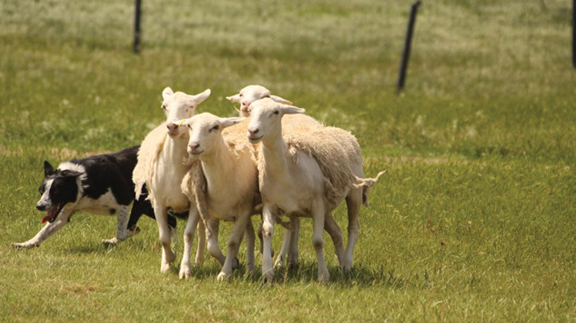
“Working sheep is different than working cattle,” he said. “The dogs can work the sheep with their eyes. You don’t have to be on sheep so tight, but it’s a challenge with cattle.”
For an owner, it may be a challenge to decide which dog breed is appropriate to have. The best working dog breed depends on what livestock species is worked and the owner’s preferences.
Border Collie
Border collies are known for their herding ability, Bennett said. This breed of dog was bred for their intelligence and work ethic.
“The border collies that actually work livestock were never bred for how they looked,” she added.
Border collies typically use their eyes to herd livestock, but they can also be sent into a pasture and gather livestock.
“If you want to pull 300 yearlings off of a wheat pasture, you can pull up to the gate send the border collies out there,” Reed said. “They will bring the cattle right to you and through the gate.”
Bennett said people need to make sure they have jobs for working dogs.
“These dogs have been bred for hundreds of years, and they have to find an outlet for that instinct,” Bennett said.
When the border collies are not working, both Bennett and Reed keep their border collies in pens.
“I can run them loose, but they will overwork the stock,” Reed said. “They are like keeping an eye on kids.”
A downside to having a border collie is some may not have a tough enough bite, Reed said. They may not be as aggressive as other dog breeds.
Kelpie
Kelpies originated from Australia and are typically short, slick-haired dogs. This breed of dog is rangier than most other breeds, Reed said.
“Kelpies’ working style is similar to border collies,” he said.
Like border collies, kelpies are a “fetch” dog, meaning they will bring the livestock back to the owner, he said.
Bennett said the kelpies she has seen are typically more aggressive toward livestock. They have more stamina than most breeds, Reed added.
“When they go to work, they will be in a crouch position,” Reed said. “Their head is going to be down level with their shoulders. The tail is going to be dropped down behind them.”
Good border collies and kelpies have constant control, and they will have a lot of movement with their eyes, he said.
Reed said the American kelpie is close in proximity with the Australian kelpie. However, the American kelpie is weaker than the Australian kelpie.
Australian Cattle Dog
Developed from the native Australian dingo, the Australian cattle dogs was originally bred for driving livestock, Bennett said.
She said most working dogs within this breed are heelers, which is why they are commonly referred to as blue or red heelers, depending on their color.
Australian cattle dogs are typically used in pens and corrals to move livestock, Bennett said. They were not developed to go into open areas and gather livestock.
“We would haul cattle to the sale barn,” Reed said. “There was a blue heeler that would work on the chute and bite the cattle and get them through there.”
However, the Australian cattle dog is not as common in the competition trials as the border collie.
Reed said there is a market for the Australian cattle dog in the state. Australian cattle dogs are in high demand, but their herding ability is still to be determined.
Australian Shepherd
“Back when the United States was being settled, the Australian shepherd was the farm dog to have,” Bennett said.
Bennett said Australian shepherds were bred to be farm dogs, but they have changed in recent years to become show dogs and pets.
“There are very few Australian shepherds that can now go out and do a job,” Bennett said.
The Australian shepherd is not as popular for herding as other breeds today, Reed added.
“They are pretty dogs, but I haven’t seen any stock-oriented,” Reed said.
Reed said Australian shepherds can be trained, but he found them to be easily distracted.
Catahoula
Catahoulas are typically used for hunting. However, these bay-type dogs can be used to work livestock.
Reed said catahoulas and border collies have different styles of working. Unlike the border collie, this breed of dog uses their bark to move livestock, Reed said. Catahoulas will also work the outer perimeter of livestock, he said.
“Catahoulas will hunt livestock because they can use their nose, where the border collie will do everything by the power of their eyes,” Reed said.
Reed said catahoulas would be the better working dog in a situation where the owner needed help finding livestock.
However, working livestock with a catahoula is a team effort. A catahoula dog will not fetch livestock, but they will keep livestock in a “tight wad.” The owner will have to move the cattle themselves.
Cattlemaster
The cattlemaster is a newer breed of working dog. They are a cross between Border collie, pit bull, and kelpie, and they were bred for working cattle, according to Reed. They are more aggressive and have a stronger bite.
However, when cattlemaster was bred to get more bite, they lost their natural herding ability. Reed experienced this firsthand when he trained a cattlemaster.
“There wasn’t the natural ability,” Reed said. “She was just mechanical. I can move her, but she couldn’t read a cow.”
Reed said other breeds of dogs can potentially be used as working dogs including corgis, McNab shepherds and German shepherds. However, before purchasing a new dog, the buyer should research bloodlines and breeders.
“Buy a dog that can be bred to work cattle,” Reed advised. “Go watch the parents work and research who has trained the dogs.”
It is also important to purchase a dog that has been bred to work the specific species of livestock, Bennett added. No matter what dog breed an owner chooses, imported dogs may not always make the best working dogs.
“Just because a dog is imported doesn’t mean it will be better than a dog bred right here in the United States,” Bennett said.
She said there are many more great dogs and trainers in the United States than 20 years ago. It may be helpful to seek advice from a professional to help kick-start a new program, she added.
After purchasing a working dog, it is important to spend extra money to send the dog to a trainer for 30 to 60 days, Reed said. Then, the owner should spend quality time with the dog and the trainer to learn how to work together.
Bennett said each dog may require a different type of training, which may require adjusting. She said incorporating techniques from several different trainers can help the owner and their best friend.
This article was originally published in the January 2016 edition of Oklahoma Farm & Ranch.
By NTFR Staff
For many years, most ranchers heard about New World screwworm only from older generations. It belonged to history books, old stories and warnings from veterinarians who remembered what it could do before the U.S. eradicated it.
That changed this summer. On June 3, 2026, the U.S. Department of Agriculture confirmed New World screwworm in a calf in Zavala County, Texas. Officials have reported additional detections in Texas since that first case, and state and federal agencies have responded with surveillance, movement restrictions in affected areas and sterile fly releases.
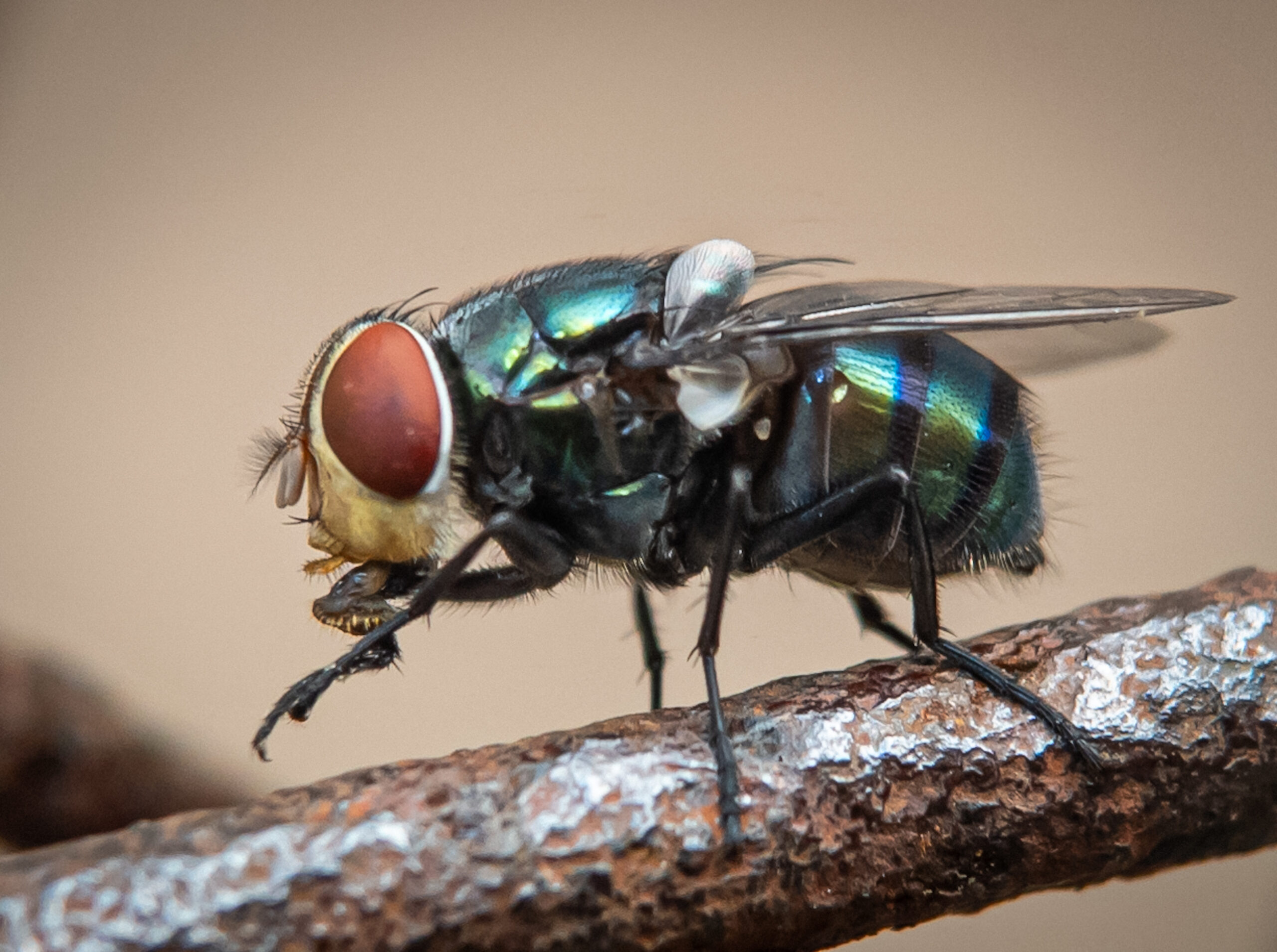
Common maggots feed on dead tissue. Screwworm larvae feed on the living tissue of warm-blooded animals, including cattle, horses, sheep, goats, dogs, wildlife and, rarely, people. The fly is attracted to open wounds and moist body openings. Even a small wound, such as a tick bite, castration site, dehorning wound, branding wound or newborn’s navel, can draw the female fly.
For North Texas producers, awareness is the key right now. You have no reason to panic, but you do have reason to pay close attention.
Check animals regularly for wounds, especially during fly season, and take any wound that seems to be getting worse instead of healing seriously. Warning signs can include a foul odor, visible larvae, bloody or watery discharge, swelling, pain, restlessness, head shaking, licking or animals separating themselves from the herd.
If you suspect screwworm, contact your veterinarian or animal health officials immediately. Early detection matters for the animal and for controlling the spread.
Ranchers and scientists have beaten this pest before. The sterile insect technique, which uses sterile male flies to interrupt reproduction, was the key to eradicating screwworm from the United States decades ago, and officials are using that same method again.
For now, North Texas livestock owners should inspect animals often, treat wounds promptly, follow any animal movement guidance from officials and report anything suspicious.
Screwworm is an old threat, and producers need to learn to recognize it again.
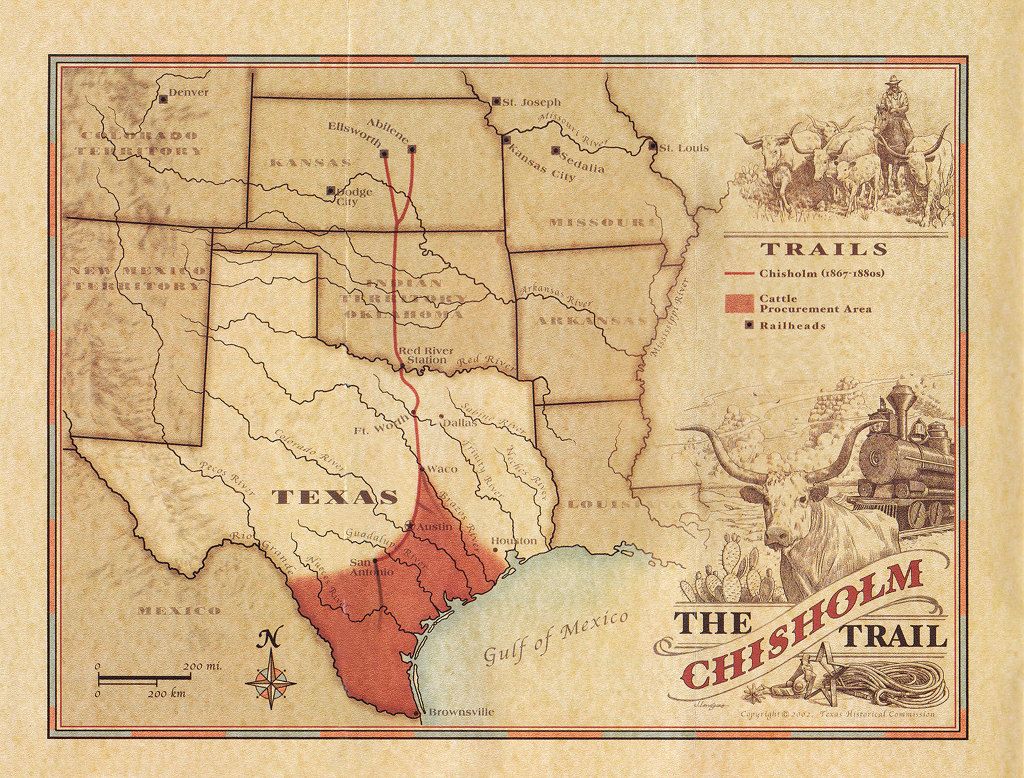
Congress has tried three times in the last five years to make the Chisholm Trail official. Each bill proposed the same idea: fold the old cattle route, along with its neighbor the Western Trail, into the National Trails System as a National Historic Trail, the same federal designation that covers the Appalachian Trail and the route Lewis and Clark walked. Lawmakers introduced the measure in 2020, again in 2021, and again in 2023. All three died in committee.
Oklahoma ranchers are a large part of the reason why.
The National Park Service spent a decade studying the idea. Congress authorized the feasibility study in 2009, and the Park Service delivered its findings to Congress in 2019: both trails qualified. The study never settled who would answer for a designated route that runs through 109 counties in four states and touches about 76.7 million acres, most of it wheat and cattle ground owned by the families who work it, not by Washington, and taxed by the county, not the Park Service. No farm or ranch organization sat at the table when the Park Service held its public scoping meetings, despite agriculture being the dominant land use along most of the corridor. Only 326 people statewide showed up to speak for that much acreage.
The Oklahoma Farm Bureau read the study and objected on paper. In comments signed by then-president Tom Buchanan and regulatory affairs director Marla Peek, the organization laid out the cost: $500,000 to $800,000 to write a management plan, $350,000 to $500,000 a year for Park Service staff, and as much as $4 million just to inventory the route, expenses that tend to land on the landowners a designation is supposed to honor. Farm Bureau argued for what the Park Service calls Alternative A: no action. Do the study, note the history, and leave the fences where they are.
The Chisholm Trail exists today because nobody in Washington drew it on a map in the first place. The current fight over federal designation turns that history upside down.
Texas came out of the Civil War with one asset: cattle, and too many of them. Longhorns that couldn’t fetch five dollars a head in Texas were bringing forty dollars in Kansas and points east, and an Illinois cattle dealer named Joseph McCoy saw the gap before anyone else moved on it. In 1867 he talked the local railroad into laying a spur to Abilene, built pens and loading chutes, and sent word south that a market had opened. Abilene shipped 35,000 head that first year. By 1871 the number had climbed past 600,000.
The trail McCoy’s cattle rode north carried someone else’s name. Jesse Chisholm, a Scottish-Cherokee trader born around 1805 in the hill country of Tennessee, spent his life moving goods between trading posts in Indian Territory. He spoke a dozen languages and worked as a guide and interpreter as often as a merchant, and he died in 1868 of food poisoning near present-day Geary, Oklahoma, a year after the first big herds started following the wagon ruts he and his associates had already worn into the ground. He never trailed a single steer up the route that carries his name.
A braid of smaller trails existed instead, feeder routes out of South Texas that converged near the Red River and ran as a single corridor north through Indian Territory before splitting again on the Kansas side. Tribal governments along the way collected a toll for the right to cross their land, most accounts put it at ten cents a head. Nobody surveyed a right-of-way. Nobody filed an easement. Drovers picked their own path within a corridor that could spread several miles wide, wide enough for two thousand to three thousand head to graze as they walked, moving ten to twelve miles a day and stopping wherever there was water. A trail boss, a cook, a wrangler, and ten or so cowboys could push twenty-five hundred cattle from the Rio Grande to Kansas in about three months. By the U.S. Bureau of Statistics count, somewhere between five and six million cattle made that walk between 1867 and 1884, the largest voluntary migration of livestock in American history, arranged through handshake deals between cattlemen and tribal nations and not one act of Congress.
It didn’t last two decades. Kansas passed a quarantine law in 1885 closing the state to Texas cattle unless they’d wintered north of the 36th parallel with a health certificate, and Colorado, Nebraska, and Wyoming followed with laws of their own. Barbed wire strung across what had been open range closed the gaps between fenced ground faster than any statute did. By the late 1880s the great herds had shifted west to the Western Trail or stopped moving altogether, replaced by railroad spurs that reached closer to the ranches themselves.
That history is why the current fight reads strange from the saddle. A route that took shape because government stayed out of the way is now up for federal protection, and the protection is the thing landowners along it don’t want. The Western Region Property Rights Coalition, which formed to fight the designation, argues that a National Historic Trail functions less like a line on a map and more like a viewshed the Park Service can regulate for miles in any direction from any point along the route, without buying the land or asking the people who farm it. Representative Ron Estes of Kansas, who has sponsored every version of the bill since 2020, points to the trails’ place in the story of how Texas cattle rebuilt a ruined region’s economy after the Civil War and argues federal recognition is overdue. The Department of the Interior has told Congress it supports the idea and would welcome technical fixes to get it passed. Farm Bureau chapters across four states have told Congress the opposite.
Neither side disputes the history. Cattle did walk this ground by the millions, and the route did leave a mark on the land that outlasted the drives themselves. Drive south from Enid on U.S. 81 and you’re tracing close to the line the herds followed through El Reno, Chickasha, and Duncan. Between 1990 and 1997, a rancher named Robert Klemme set about four hundred concrete markers along the Oklahoma route, working pasture by pasture with landowners’ permission, one of them standing today a mile and a half south of U.S. 81 near Bison in Garfield County. No fence surrounds it. No agency maintains it. It sits on private land because a private citizen and the families who worked that ground decided it should, which is close to how the trail itself came to exist in the first place.
Whether Congress ever manages to pass a designation bill matters less than what the argument reveals: a hundred and fifty years after the last big herd crossed the Red River, the same question that shaped the Chisholm Trail from the start, who gets to decide what happens on this ground, is still the one Oklahoma ranchers are answering for themselves.
Few inventions changed the face of American agriculture as much as the steel plow. To settlers moving westward in the 19th century, the fertile black soils of the Midwest and Great Plains looked promising, but farming them proved nearly impossible with the tools of the day. Wooden and cast-iron plows stuck, broke, or clogged in the thick sod. That all changed in 1837 when a Vermont-born blacksmith named John Deere hammered out a new kind of plow with a polished steel blade. His design cut the earth clean, shed the sticky prairie soil, and opened vast new regions – including Oklahoma and Texas – to farming.
Early plows had served farmers in the eastern United States well enough. Wooden moldboards or cast iron blades could turn light, sandy soils. But when settlers reached the tallgrass prairies, they met a stubborn enemy: a dense mat of roots, sometimes several inches thick, holding sod together like a woven carpet. Trying to pull a wooden or iron plow through it was slow, exhausting work. Soil clung to the blade, forcing constant stops to scrape it clean. Even strong teams of oxen could only manage short furrows before the plow failed.
John Deere, working in Grand Detour, Illinois, spotted a solution. Drawing on his blacksmith skills, he repurposed a broken saw blade and shaped it into a curved plowshare. Unlike rough iron, the highly polished steel let the sticky prairie soil slip cleanly off with each pass. His first prototype, built in 1837, was followed by commercial models within a few years. Farmers who tested them quickly spread the word.
By the 1840s, Deere’s “self-scouring” plows were in high demand. They allowed a farmer to cut deep into prairie sod, overturning wide furrows that aerated the soil and prepared it for planting. What had once taken days of backbreaking work could now be done in hours. The barrier of tough sod, which had limited settlement and discouraged cultivation, was broken.
As thousands of families streamed westward after the Civil War, they carried Deere plows – or imitations of them – on wagons and trains. By the time Oklahoma was opened to settlement in the late 1800s, the steel plow was already a fixture on homesteads. In North Texas, it helped transform open prairie into wheat, corn, and cotton fields.
From Tool to Transformation
The steel plow was not just a better blade; it was a turning point in the history of American agriculture. By making prairie soils farmable, it opened millions of acres to cultivation. Wheat and corn production surged, fueling both local economies and national markets.
In Oklahoma and Texas, the plow shaped settlement patterns. Towns sprang up around fertile farmland, and railroads laid lines to carry grain and cotton to distant buyers. Farmers who once raised just enough for their families began producing surpluses. The steel plow helped push the U.S. toward becoming a global agricultural power.
But the story was not without consequences. Breaking the sod meant breaking the natural cover that had held prairie ecosystems together for centuries. Grasslands that had supported bison and protected soils were replaced with monoculture crops. While the plow unlocked prosperity, it also set the stage for soil erosion and, decades later, the Dust Bowl of the 1930s.
Culturally, the steel plow became a symbol of progress. John Deere himself built a company that still bears his name, and the green-and-yellow brand became synonymous with farming. Homesteaders told stories of how the polished blade “sang through the sod,” making it possible to turn dreams into harvests.
Even today, antique Deere plows stand in museums, barns, and pastures as reminders of the first great tool of prairie agriculture. Many families keep them as heirlooms, rusted but intact, a testament to the determination of those who first broke the land.
The steel plow was more than a piece of iron and wood. It was a key that unlocked the Great Plains, shaping the settlement of Oklahoma, Texas, and much of the West. It allowed farming where farming once seemed impossible, bringing prosperity and growth, but also altering landscapes in ways that would echo for generations.
Like barbed wire and windmills, the steel plow is part of the story of how ingenuity and necessity met on the frontier. It reminds us that every invention carries both promise and responsibility, and that the land we farm today still bears the marks of tools first forged nearly two centuries ago.
References
Deere & Company. Company History. https://www.deere.com
Smith, Philip. The Emergence of Agriculture in the Great Plains. University of Oklahoma Press, 1986.
Library of Congress. John Deere and the Invention of the Steel Plow.
National Museum of American History. “Plowing the Plains.” Smithsonian Institution.
Oklahoma Historical Society. Agriculture and Settlement in Oklahoma.





-
 Country Lifestyle2 years ago
July 2017 Profile: J.W. Hart
-
 Farm & Ranch2 years ago
From Plow to Plentiful: The Most Important Inventions in Agricultural History
-
 Attractions9 years ago
48 Hours in Atoka Remembered
-
 Equine9 years ago
Umbilical Hernia
-
 Country Lifestyle5 years ago
The Two Sides of Colten Jesse
-
 Outdoors9 years ago
Grazing Oklahoma: Honey Locust
-
 Farm & Ranch8 years ago
Hackberry (Celtis spp.)
-
 Equine6 years ago
On the Road with Emily Miller-Beisel