
Equine
The Unstoppable Kylie Myers

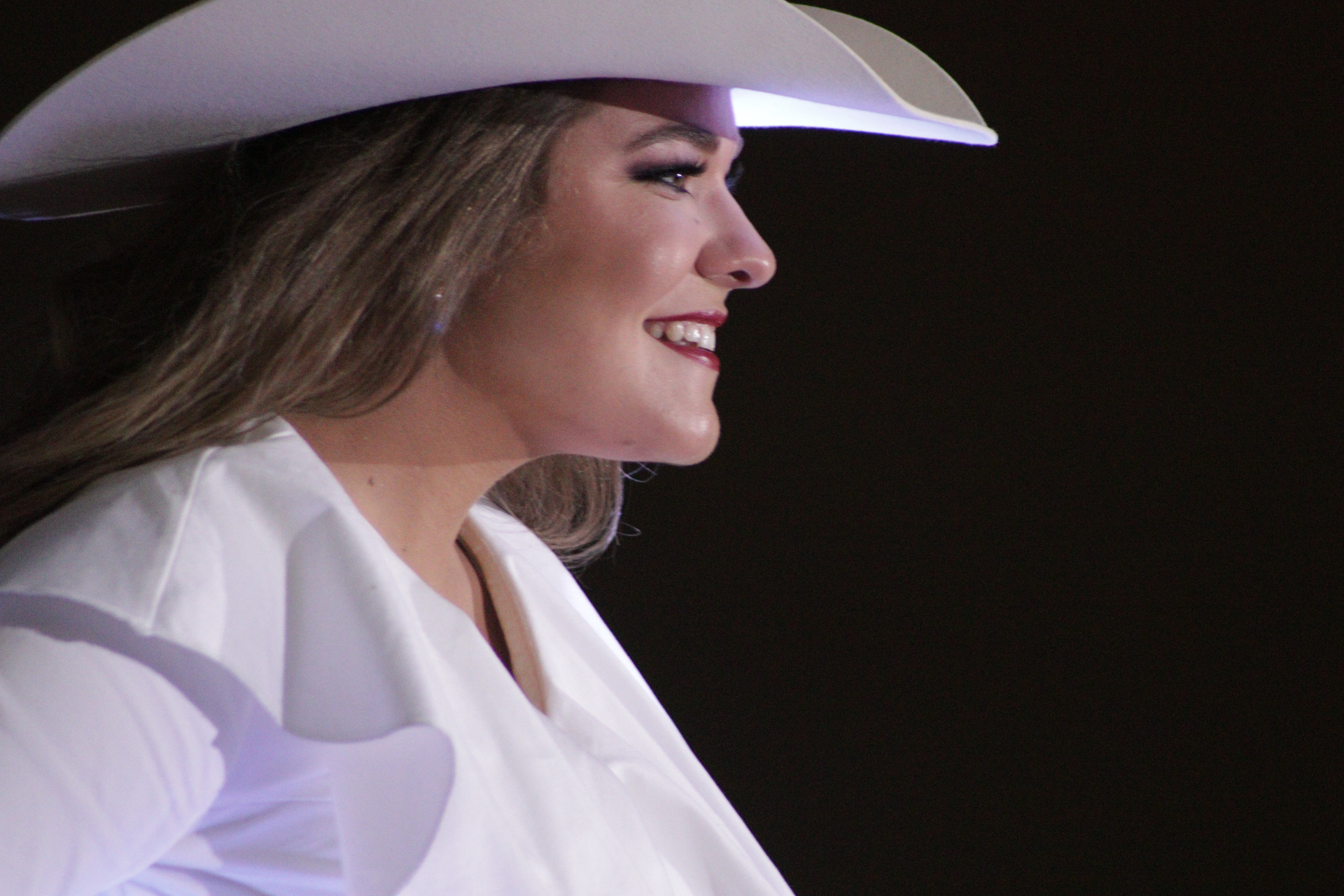
2020 Miss Rodeo Oklahoma Lady in Waiting
It started with the revival of a long ago dream, and culminated with a crown. On June 8, 2019, Kylie Myers was crowned as the 2020 Miss Rodeo Oklahoma Lady in Waiting. That means that, beginning on Jan. 1, 2020, Myers will become Oklahoma’s first lady of rodeo, representing the state, the sport, and the western way of life across the country. Her reign will then culminate in December at the Wrangler National Finals Rodeo, where she’ll compete for the title of Miss Rodeo America.
Myers was born in Moore, Okla., attending Southmoore High School, where she graduated in 2015.
She grew up splitting her time between her mom’s home in Moore, and her father and grandmother’s land just south of Oklahoma City near Newcastle. “My mom has always lived in the city, but my dad and grandma had a place on the river,” Myers explained. “My Granny and dad live on opposite parts of the same property. We ran a small herd of cattle and at one time we had about 150 head of goats.”
Myers’ Granny, Kathy Bogart, grew up on a dairy farm in Arkansas but had never done much with horses. “They’d occasionally go check cattle, but most of the time they just used a four-wheeler or something,” Myers shared. “When she was older, she decided she wanted to join a drill team, so she bought a horse and joined the Canadian Valley Rangerettes. I think that was back in 2001.”
Bogart fostered Kylie’s love of horses. “She got me on a horse before I could actually sit up by myself. I don’t remember learning how to ride, it’s just what I’ve always done. It’s been my safe-haven,” she said.
Along with showing at local horse shows, Myers began riding with the drill team herself, riding for both the Freedom Riders 4H drill team as well as the Canadian Valley Rangerettes.
Myer’s drill team coach for the Freedom Riders 4H Drill Team was a lady named Betty Baker, who fostered not only her riders’ ability with a horse, but also their talent for public speaking. “I remember we would have impromptu speeches in the middle of drill practice. She would say someone’s name and you’d have to give a two minute speech. We would pull topics out of the hat and you’d have to have a speech over that topic for the next drill practice,” she said.
It was while performing with the drill teams at local rodeos that the spark of a new dream ignited. “I decided I really wanted to run barrels because it looked so fun,” she said.
The young cowgirl commandeered her grandmother’s drill team horse, teaching it the pattern. When she was about 10 years old, her father and grandma purchased a pair of horses. “They bought them out of a lot, and they hadn’t been touched in quite some time. The horse my grandma wound up taking was scared of his shadow. You could hardly get a bridle on him, but he was really, really sweet,” she said.
Kathy and Kylie were the only ones who rode “Sam,” and they quickly recognized the horse’s quick feet would be an asset in barrel racing. “He was cow horse bred with Two Eyed Jack, Zan Par Bar and Poco Bueno breeding. I played around at the house here and there. We hated each other for a while, and then one day I was running him in Chickasha at a youth rodeo. We won that day, and ever since then if we had a decent pattern and didn’t hit a barrel, we were going to place,” she said. “Sam is still around, and just living the retired life now.”
She also competed at rodeo royalty competitions and was crowned Miss Rodeo Oklahoma Princess in 2009.
Myers played some sports in junior high, but rodeo took precedence. Unfortunately, some extenuating circumstances caused her to stop rodeoing her sophomore year. Soon, she threw herself into work. “When I graduated, I started riding more here and there, but not competitively. The same week I graduated high school I moved out and got a full time job and went to school part time,” she said. Myers attended Moore Norman Technology Center to be certified as an Advanced Unlicensed Assistant. She completed the program in 2016.
Following completion of the AUA program, Myers began pursuing an Associate’s degree at Oklahoma City Community College for journalism and broadcasting with a focus on public relations. She’s been on the Dean’s honor roll since she started college in 2016. “I wasn’t sure I wanted to wok in health care for 20 years, and I like working with people, not just those who are sick, so I changed to public relations. I am hoping at some point I can use that to facilitate medical mission trips to other countries,” she explained.
Back in 2017, Myers had a lifechanging moment. “That year I really discovered my faith. It was not something that was widely practiced in my family. Although we believed in God, we didn’t go to church every week. It was never something I knew for myself on a deeper level,” she said. “I got baptized in March of this year. For the past year it’s just been me figuring out who I am as a person, and it’s been a really awesome experience.”
Rodeo Royalty
The decision to compete for a title was unexpected. Although she had been actively involved with the Oklahoma Rodeo Pageant Council as a volunteer for several years after holding the Miss Rodeo Oklahoma Princess title, she hadn’t considered running herself. “Volunteering for the Pageants Council was a great experience and a good opportunity for me to do what I love and see the girls go on. I just didn’t think it was for me,” she said.
In 2018, she had a change of heart. “I wanted the platform and I had people that meant a lot to me tell me I had a lot of things other people needed to know about, and that it was something I should think about,” she said. “When I was little, I wanted to be Miss Rodeo Oklahoma and Miss Rodeo America, but then it changed because I just really loved the rodeo atmosphere as a competitor. Once I got older and learned for myself what the pageants really meant, it changed, and that dream came back.”
The decision was made, and within 28 days it was time to compete. “I had to borrow a wardrobe because I had nothing,” she said with a laugh.
Saint Jo, Texas, had opened up their rodeo pageant to Oklahomans, and proudly presents the winner with a $2,500 scholarship each year. “I found out about it right after the Miss Rodeo Oklahoma pageant, so I went ahead and applied. I won that, and so I was able to compete for Miss Rodeo Oklahoma,” she said.
“From the time I was 18 until just this past Friday, which was my last day at the Oklahoma Heart Hospital, I’ve done lots of work. I used to average about 70 hours a week at three different jobs,” she admitted. “Being a rodeo queen has an age limit, and working doesn’t, so when I decided I wanted to be serious about running for a queen title, I decided to slow down on the work and focus on school and the rodeo queen competition. That’s where I am, now.”
With the title of Miss Saint Jo Rodeo Queen earned in August 2018, Myers began to prepare for the Miss Rodeo Oklahoma Pageant which would be held in June of 2019. When the time came, she traveled to Woodward, Okla., for the Miss Rodeo Oklahoma Scholarship Pageant. “I’m 100 percent sure that the rodeo queen pageants create strong women because they teach you so much,” Myers said.
Read more about Kylie and the Miss Rodeo Oklahoma pageant in the August issue of Oklahoma Farm & Ranch magazine.
By Summer McMillen
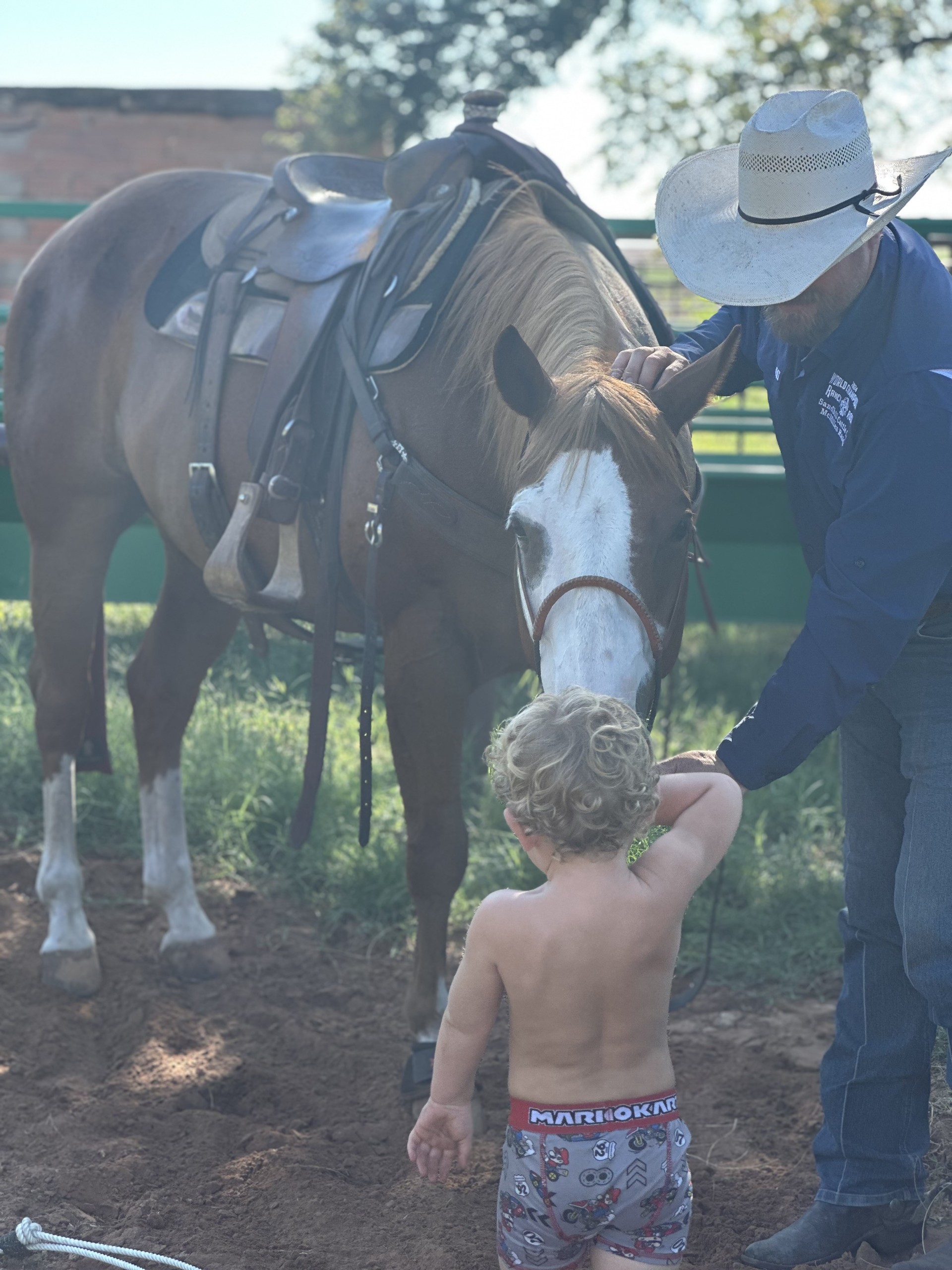
Everyone that knows anything about horses knows that there are bad ones, good ones, and great ones.
The bad ones are good for nothing. You can’t catch them, you can’t saddle them, and you can’t get on them without feeling like you need a helmet, some kind of padded vest and, an instruction manual. Once you do mount up the whole ride is a battle and heaven forbid, you actually have a job to do because they are little to no help in holding the herd. We all find ourselves owning a bad one or two throughout our lives. Best case scenario is they find a more tolerable home to go to through via a horse sale or the classifieds. Worst case scenario all you can do is say “Vaya con Dios,” put a sign on them that reads “Do Not Attempt,” and turn them out to pasture. Hoping they are decent enough to stay within the borders and make a beautiful yard ornament.
Good horses are usually much more tolerable. They’re pretty easy to catch, saddle, and hop up on. Sometimes they might have a bad habit or two like setting back when they’re tied to a fence or, getting cold backed on early mornings that you tolerate because they are so skilled in a specific field. A good horse is usually only good for one thing. They have a niche talent m, if you will. They can be a good heel horse. A good head horse. The horse you want to gather pastures on because you know he won’t knicker or rare up when you get dropped off in the jig line. A good kid horse. Your rodeo horse. The horse you put your wife on when she’s being a little wimpy that day. Good horses usually get sold because they are proficient in their given field and they find good homes making both parties happy. We will all own many good horses in our lives and be happy to do so.
Great horses are a rare and treasured possession. They are simultaneously easy and hard to own. Easy because you can do anything on them. Hard because everyone is always trying to buy them from you. A great horse stands still while your kid pulls their head down all the way to the ground so they can halter them. A great horse is never cold backed and always ready to cinch tight and take off. A great horse can be ridden in the pasture and the rodeo arena on the same day. A great horse doesn’t need practice. A great horse is always willing to do anything you ask of them at any given moment. Great horses find their homes as horse colts and usually live out the rest of their days at the same home because great horses are irreplaceable.
People and horses are not all that different. There are bad, good, and great ones. The more time I spend around horses the more I am convinced of the kind of person I want to be. “Bad” will absolutely not do. “Good“ is much too common and just doesn’t quite cut it more often than not. “Great” is what I aspire to be.
Great can be defined in so many ways when we let human standards get involved but, I want to be great as defined in the qualities of a great horses.
I want to be kind and patient while my children are learning. I want to be ready to help anyone who asks me. I want to go the extra mile. I want to make my home a beautiful place to come to after a full day’s work outside. I want to not be thrown off by life’s twists and turns but, firm in my faith.
So, basically what I’m saying is I want to be a great horse. And honestly there are worse things we could all aspire to be.
Here’s to great horses. May we know them, love them, and if we’re lucky be great just like them.
By Dr. Garrett Metcalf
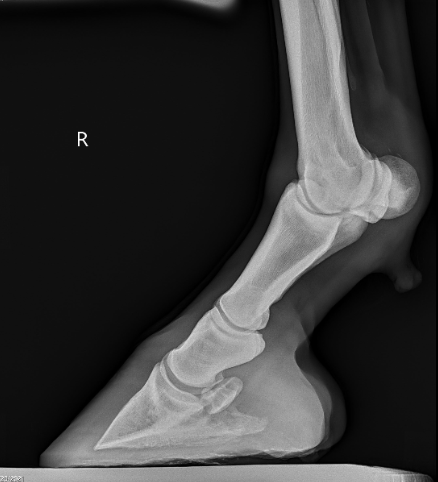
The suspensory ligament is a vital component of the limb of a horse to produce normal locomotion and support. The suspensory ligament is a common area of concern in performance horses of various disciplines and can be single handedly the cause of lameness or performance issues. This article is going to look at a specific degenerative disease of the suspensory ligament and what horses are at risk for this disease.
DSLD or degenerative suspensory ligament desmitis was first discovered in the early 1980’s in Peruvian Paso horses. The name has been changed because the suspensory ligament is not the only organ affected from the disease but the suspensory is ultimately the biggest issue. The newer name, ESPA or equine systemic proteoglycan accumulation, is more correct because other ligaments and tissues are affected by this disease. In this article we will only focus on the suspensory ligament. The most commonly affected breeds are Peruvian Paso, Paso Fino, Morgan, Saddlebred, Warmblood, Paints, American Quarter Horse, and Thoroughbred breeds. The age of onset of the disease is variable among breeds but it is more common to be seen in middle age to older horses. However it has been documented in horses as young as one year of age. The disease generally will have a slow insidious onset that can go undiagnosed for months or years depending on the horses work and discipline.
A horse that begins to show early signs of DSLD may have a vague lameness issue that is difficult to isolate and they most likely will resolve with a period of rest. As the horse returns to moderate level of work the lameness will return. This scenario may go on for several months or more before the discovery of the DSLD is made. The first indication of DSLD is often pain isolated in the suspensory branches or fetlock region when a flexion test is performed. Horses with DSLD will also have a “dropped” fetlock appearance because the suspensory is the main supporting structure of the fetlock joint. DSLD can affect the hind limbs, forelimbs or all limbs at the same time. A unique sign of DSLD is that not just one limb is affected but rather bilaterally affecting the limbs, meaning it will either affect either both forelimbs or hind limbs at the same time. It is my experience that the hind limbs are more commonly affected compared to the forelimbs. Horses will often have enlargement of the fetlock region and increased joint fluid or wind puffs. Horses will often have a straight hock or post legged hind limb appearance. Horses will often shift weight frequently in an effort to get relief from the discomfort and this can be confused with other lameness issues or foot related pain.
Diagnosis of DSLD is often made by clinical signs, breed and ultrasound findings. Ultrasound imaging of the suspensory ligaments will often show diffuse enlargement of the suspensory body and branches. The suspensory ligament will have a poor heterogeneous fiber pattern with periligamentious soft issue thickening from scar tissue deposition and edema or fluid within the tissue. Radiographs of the lower limb may reveal abnormal bone changes in the sesamoid bones behind the fetlock joints and even osteoarthritis of the pastern and or fetlock joints. A definitive diagnosis can be made from a biopsy of a ligament in the neck called the nuchal ligament, but is not often performed because of the invasiveness of the biopsy.
Treatment is very limited and it is mostly geared towards protection of further damage by prolonged rest. Pain management is also important to attempt to keep the horse as comfortable as possible. Different shoeing techniques can be used with marginal success. In early cases of DSLD, a suspensory shoe that helps engage more work from the deep digital flexor tendon can help elevate the fetlock and offer more protection to the suspensory ligament. The devastating thing about this disease is that there is no cure and there are hardly any good options to slow the progression of the disease. DSLD carries a poor prognosis when the diagnosis is made in any breed of horse or any discipline. Although some cases can be managed better than others, it often progresses to the point of debilitating pain and discomfort to the point of humane euthanasia especially in the Peruvian Paso breed.
Read more in the February 2023 issue of Oklahoma Farm & Ranch.
By Dr. Devan England DVM
Does your horse have gastric ulcers? Gastric or stomach ulcers are frequently blamed for a variety of things including poor performance, acting ‘cinchy’, weight loss, not eating, poor coat condition, diarrhea and colic. However, gastric ulcers are not always the culprit and the only way to know for sure if your horse has gastric ulcers is to look at the stomach on camera, using an endoscope. Poor appetite and poor body condition are the mostly widely observed clinical signs with gastric ulcers, however, these are non-specific. If you think your horse might have gastric ulcers, the best place to start is to talk to your veterinarian and consider scheduling a gastroscopy. Gastroscopy requires the horse be held off feed for at least 16-18 hours and held off water for at least 6-8 hours. Fasting off feed and water is necessary to allow the veterinarian to see the whole stomach. If restricting feed or water is difficult in your management situation, many veterinarians will allow you to hospitalize your horse the night before gastroscopy for proper fasting.
Gastric ulcers are split into two types, classified by the location of the ulcer in the stomach. Squamous ulcers are ulcers that occur in the squamous or skin like portion of the stomach. This is the top part of the horse’s stomach, is closest to the esophagus, and has squamous tissue to protect this portion of the stomach from stomach acids. The other ulcer type are glandular ulcers. Glandular ulcers occur in the bottom portion of the stomach, which is closest to the small intestine. This portion of the stomach has glandular mucosa with cells responsible for producing stomach acids for digestion as well as cells that produce mucus and buffers to protect the lining from stomach acid. Gastroscopy is important not only for diagnosing whether ulcers are present but also determining the severity and the type of ulcer, because these two ulcer types require different treatments.
Squamous gastric ulcers are common in racehorses both in and out of training, with higher prevalence in racehorses under training. Prevalence in Thoroughbred racehorses in training has been reported to be up to 100% (Sykes 2015). Squamous ulcers are also prevalent in Western pleasure horses, Thoroughbred stallions on breeding farms, and Italian donkeys (Sykes 2015). Glandular gastric ulcer prevalence has not been as well described as squamous ulcers. Glandular ulcers are reported to be most common in Thoroughbred and Standardbred racehorses, Canadian showjumpers and polo ponies, and American Quarter Horses (Sykes 2015).
Risk factors for ulcers vary by ulcer type. Anti-inflammatories (Bute, Banamine) can increase the risk of glandular ulcers in some horses by affecting normal defense mechanisms but are not a high risk in most horses. Horses that display stereotypic behaviors, such as cribbing, have an increased risk of squamous ulcers. Grain fed before hay in non-exercising horses, feeding larger amounts of grain, and increased time between meals increases the risk of squamous ulcers. Increased time with high intensity exercise and housing in single pens is associated with increased risk of glandular ulcers. A straw only diet, lack of water access and lack of direct contact with other horses increases the general risk of gastric ulcers.
If your horse is diagnosed with ulcers, the mainstay of treatment is a buffered formulation of omeprazole (Gastrogard, Ulcergard). Over the counter Omeprazole and compounded Omeprazole are not effective because without buffering, the acidic stomach quickly breaks down the drug before absorption. Most horses with squamous ulcers will have healing of these ulcers after a 4-week course of Gastrogard or Ulcergard at treatment dose (whole tube for the average horse). Some horses may be healed by 3 weeks of treatment, but all horses should undergo a recheck gastroscopy before stopping treatment. Horses diagnosed with glandular ulcers need combination therapy with Gastrogard/Ulcergard and Sucralfate for 4 weeks. About 2/3 of horses with glandular ulcers will heal in this time, but some horses may require longer treatment times so a recheck is always recommended before discontinuing treatment.
Horses at higher risk of gastric ulcers may benefit from preventative (low) doses of Ulcergard (1/4 tube in average sized horse) given for a few days before and during high stress situations like long distance travel and competitions. Sea buckthorn berry supplement may be protective against formation of glandular ulcers. Dietary management to decrease the risk of ulcers includes providing more frequent small hay meals if pasture access is not available, limiting high sugar grains as much as possible and adding vegetable oil to the feed.
Sykes BW, Hewetson M, Hepburn RJ, Luthersson N, Tamzali Y. European college of equine internal medicine consensus statement – equine gastric ulcer syndrome in adult horses. J Vet Internal Med 2015; 29:1288-1299.



-
 Country Lifestyle2 years ago
July 2017 Profile: J.W. Hart
-
 Attractions9 years ago
48 Hours in Atoka Remembered
-
 Equine9 years ago
Umbilical Hernia
-
 Farm & Ranch1 year ago
From Plow to Plentiful: The Most Important Inventions in Agricultural History
-
 Outdoors8 years ago
Grazing Oklahoma: Honey Locust
-
 Country Lifestyle5 years ago
The Two Sides of Colten Jesse
-
 Farm & Ranch8 years ago
Hackberry (Celtis spp.)
-
 Equine6 years ago
On the Road with Emily Miller-Beisel