
Country Lifestyle
May 2018 Profile: The Youree/Ward Women

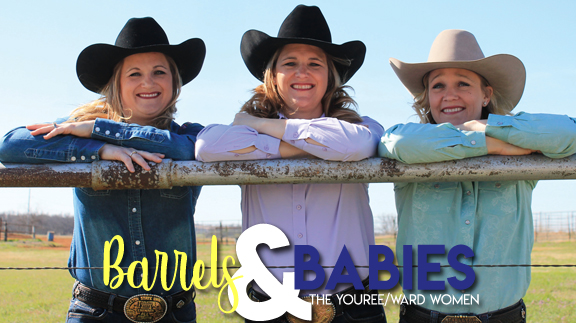
Barrels & Babies
By Laci Jones
As technology advances and society changes, quality family time is difficult to come by. The Youree/Ward family broke that mold among many others. Every morning, the Youree/Ward clan gather at Dale and Florence Youree’s home for breakfast, where they chat about everything from family to horses.
“We still seek advice from one another,” Kylie (Ward) Weast explained. “We might have a different approach to fix a problem. I really think that’s why this business has gone for 60 years now. It’s not just one person’s idea, but we never stop learning.”
The Youree/Ward women managed to balance motherhood and their passion for horses all while making it look effortless. Each generation has made their mark in the barrel racing industry. The Youree/Ward women include the first generation— Florence (Price) Youree; second generation — Renee (Youree) Ward; the third generation—Janae (Ward) Massey, Cassie (Ward) Ambrose and Kylie (Ward) Weast.
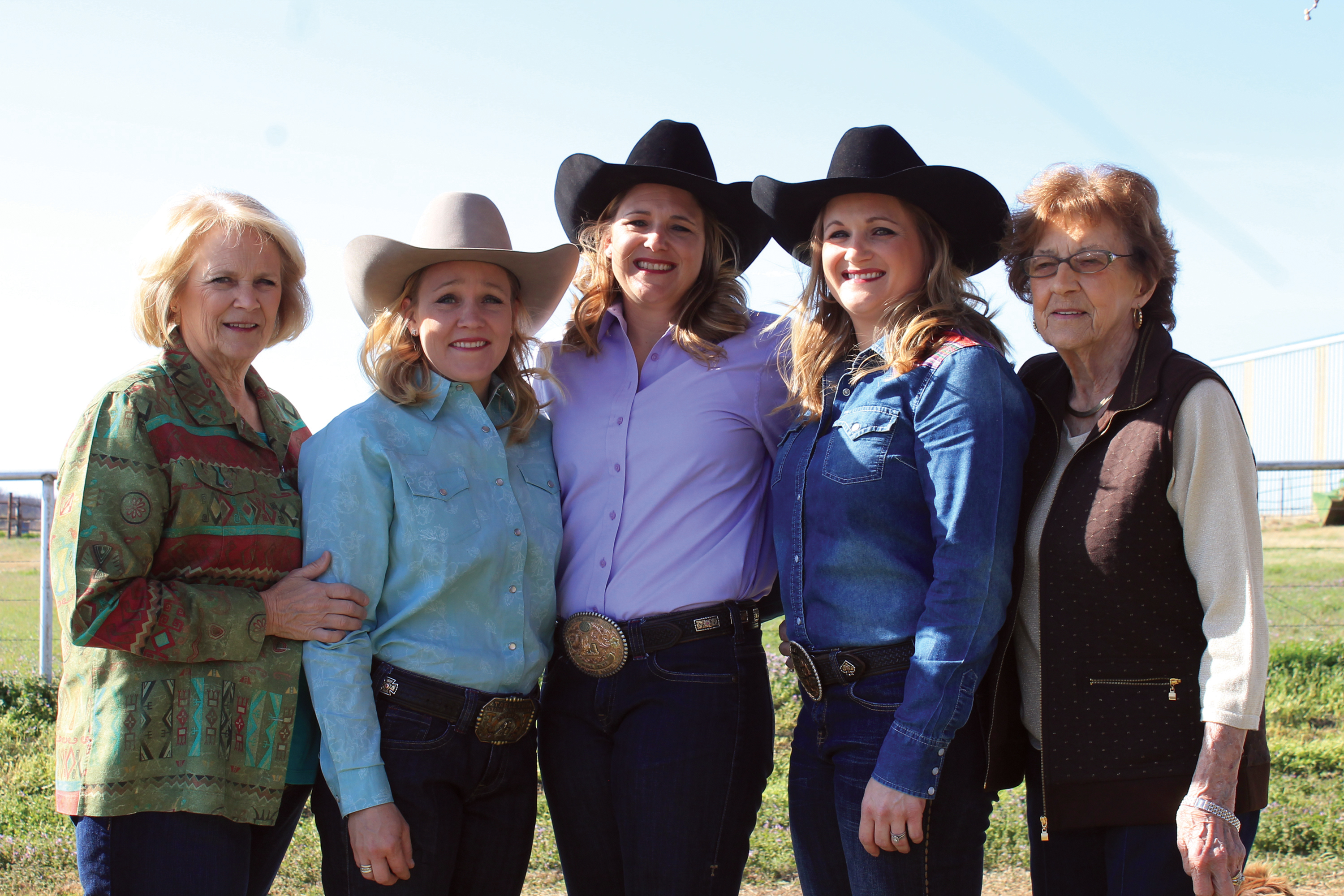
The three generations of Youree/Ward women have each dominated the barrel racing industry — Renee (Youree) Ward, Kylie (Ward) Weast, Janae (Ward) Massey, Cassie (Ward) Ambrose and Florence (Price) Youree. (Photo by Laci Jones)
Florence (Price) Youree
Born in Duncan, Okla., 85-year-old Florence (Price) Youree grew up working on her father John Henry Price’s ranch in Addington, Okla.
“My dad put me on a horse before I was old enough to even remember it,” she added.
Avid rodeo fans, her parents took Florence and her younger sister Sherry to the Fort Worth Stock Show and Rodeo each year, where Florence was fascinated by the interest among women in rodeos. She was later inspired to try barrel racing herself after attending smaller rodeos in Waurika, Okla., and Comanche, Okla.
“I went home and got on one of the ranch horses, ran the barrels and I loved it,” Florence added.
Both Florence and her sister rode a Palomino horse named Chubby at rodeos. When asked if she and her sister were competitive with one another, she said, “Oh, sure, but we were always pulling for the other one.”
“We changed saddles because she was younger,” she explained. “We put her on him, and we won first and second at nearly every place we went back then.”
At 14 years old, she met Dale Youree at a rodeo, where she asked if she could ride his horse in the grand entry.
“He said, ‘You sure can,’” Florence recalled and laughed. “After that, we just continued on.”
They were married two years later on Feb. 18, 1950. After Dale graduated from Oklahoma A&M, now Oklahoma State University, they made their way back to southwestern Oklahoma where Dale worked on Florence’s father’s ranch.
Shortly after, they had a son named John.
“As soon as he was born, I got back on the horse,” she explained.
Their daughter Renee was later born a few years later in 1958. The couple joined the Rodeo Cowboys Association, and the Girls Rodeo Association, now known as the Professional Rodeo Cowboy Association and the Women’s Professional Rodeo Association, respectively.
Florence was later appointed as the GRA barrel racing director in 1954, becoming president in 1958. She resigned five years later to take over the secretary/treasurer position. The barrel racer was a pioneer in the Barrel Futurities of America, where she served as vice president and later president.
The rodeo athlete first qualified for the National Finals Rodeo in 1959 and returned many years. After, the Yourees began training horses for the public two years later in 1961.
“We just kept working,” she said. “Our livelihood became training and selling barrel horses.”
They also started hosting the Youree Horsemanship Camps throughout the summer to teach students rodeo skills as well as other life skills. Florence said she was able to balance motherhood while barrel racing, training horses with Dale and working in the associations with support of her mother and friends.
“I was very blessed to have people who would help take care of my kids,” she added. “Mother and Dad had a hired hand who had been on the ranch for more than 20 years. If I had to go anywhere or do anything, I could call his wife, and she would say, ‘I’ll be right there.’”
The mother of two continued to barrel race through her 50s, but her decision to quit barrel racing was easy after she was injured in a horse accident. For her years in the barrel racing industry, Florence earned the 1966 GRA All-Around Cowgirl title. She was later inducted into the National Cowgirl Hall of Fame in 1996 and the National Rodeo Hall of Fame in 2009.
The matriarch said she had “no earthly idea” what she and Dale were starting when they married 68 years ago, but she said it is a joy to watch the next generations.
“Every now and then, I’ll look out there and see the girls riding, and I’ll think it would be fun to do that again,” Florence added.
Learn about the other Youree/Ward women in the May issue of OKFR!
By Beth Watkins
There’s something about springtime that makes folks want to open windows, clean out closets, and maybe even peek out the front door to see if the neighbors are still alive and ready for a cookout. After a long winter of confusing, seesawing temperatures—where you needed shorts one day and a parka the next—March just rolls in with her own mysterious mood swings. Will she bring warm breezes and wild daffodils, or will she slap us with a late snowstorm and the flu for good measure?
March is the season of new growth. The earth starts greening up, baby calves find their legs, and every hardware store in the county sells out of tomato plants. Folks start making ambitious garden plans, fueled by equal parts hope, memory loss about last year’s weeds, and the siren song of heirloom seed catalogs. You find yourself petting baby chicks at Atwoods, thinking, “How hard can it be?” while conveniently forgetting you once killed a cactus.
But maybe this year, along with our gardens and yards, it’s time we put a little effort into growing something else: personal responsibility. And maybe even—brace yourself—neighborly love.
Now, I’m not talking about the kind of neighborly love where you let someone move in with their three untrained dogs, six boxes of drama, and a Wi-Fi password they never stop using. I mean the kind where we treat folks with basic kindness and decency, without expecting them to carry our groceries, fix our fences, or raise our children.
Somewhere along the way, it seems like society forgot that love and enabling are two different things. The Bible says to love your neighbor as yourself. It does not say to take your neighbor on as a dependent. Yet more and more, we’re seeing an attitude of entitlement blooming like crabgrass in what used to be tight-knit, self-reliant communities.
There was a time when being called “self-sufficient” was a compliment. It meant you could patch a roof with tar and a prayer, make a pot of beans stretch a week, and wrangle your own problems without immediately calling the government, your mama, or Channel 5 News. You didn’t expect handouts—you offered a hand up when someone else truly needed it. But lately, some folks have gotten real comfortable hollering “help me!” before they’ve even tried standing up on their own two feet.
Case in point: a woman on social media said she needed her oil changed and a chicken coop built. She had the supplies but no funds to pay for help. Fair enough—times are tough. But the very next day, she posted photos of her estate sale haul, bragging about how she “only” spent $400. Not even a month later, she’s showing off her custom steel gate entryway. Clearly it’s not a money shortage—it’s a priority misplacement.
That kind of thinking doesn’t just stunt personal growth—it chokes the roots of the community. I know people need help, and we are called to love our neighbors, but let’s get real, folks. Last year’s gold medal for gall goes to the woman hosting her child’s backyard birthday party who posted: “Can anyone bring enough food for about twenty people? The child loves spaghetti with all the trimmings, and a cake. Please deliver it hot, at party time.” You think I’m kidding? I’m not. I’m still in shock.
We weren’t meant to live like hermits, but we weren’t meant to sponge off the folks who are doing the work either. There’s a balance somewhere between “do-it-all-yourself survivalist” and “the world owes me a living.” And that sweet spot is where real growth happens.
Spring is a perfect reminder of that. You can’t just toss seeds in the dirt and expect a harvest. You have to work the soil, pull the weeds, and show up every day—even when it’s hot, dry, or swarming with grasshoppers. Same goes for character. You’ve got to tend it. Cultivate it. And not just when people are watching.
If you want a better world, you’ve got to start in your own backyard. Literally and figuratively. Pick up the trash that blew into your fence line, and since it came from your poly cart, go grab your soda can out of your neighbor’s yard too. Wave at your neighbor, even if he insists on mowing in Crocs and tube socks and blowing his grass trimmings into the street. A little physical kindness can go a long way.
I grew up being taught that if someone was struggling, lost a loved one, or just got over an illness, you found a way to help—even if it was just sending over a casserole. Honestly, our first instinct should be to offer help, not because we want a parade in our honor, but because it’s the right thing to do. If you’re swamped with work or kids or life, send a food gift card. If you’re short on funds, offer to mow a lawn, babysit for an hour, or just check in.
We should teach our kids and grandkids that it’s natural to struggle. That hard work isn’t punishment—it’s how things get built. It’s how we move forward. Asking for help in a crisis is fine, but leaning on others indefinitely is no way to grow tall and strong. A goal shouldn’t be “how do I get the best handouts” but rather, “how do I build a life I’m proud of?”
We all need each other, but we also need to pull our own weight. Otherwise, this whole wagon’s going to tip. There are programs out there to help folks get back on their feet, but they aren’t just hangouts—they’re meant to be springboards. To break the cycle. To build something better.
So maybe this spring, as the world begins to thaw and bloom again, take a quiet moment to reflect on the life you’re growing—both inside and out. Ask yourself what kind of neighbor you are. Are you showing love, or just expecting it? Are you helping things bloom, or draining the rain barrel?
There’s still a lot of good in this world. I see it every day—in farmers helping neighbors fix fence after a storm, in church ladies who deliver meals without a fuss, in kids learning to shake hands and look folks in the eye. But good doesn’t grow on its own. It takes effort. It takes intention. And sometimes it takes a little tough love with a smile.
So here’s to spring: the season of new beginnings, fresh starts, and maybe, just maybe, a collective shift back to kindness, accountability, and old-fashioned neighborly grace.
Let’s roll up our sleeves, open the windows, clean out the cobwebs. Let’s go through our closets and our abundance, and donate to local places that help people get back on their feet—places that believe in a hand up, not just a handout. That’s how we grow something better.

Dealing with a Very Abundant Harvest
When I first decided to start a small garden, it was more of a whimsical experiment than a serious endeavor. I had seen countless posts on social media of people proudly showing off their homegrown vegetables, and I thought, “Why not give it a try?” Armed with enthusiasm and a bit of research, I planted a variety of vegetables, including a few pickling cucumber plants. Little did I know that these cucumbers would thrive beyond my wildest expectations.
As the weeks passed, my garden became a green haven. Every morning, I would step outside with a cup of coffee, marveling at the progress of my plants. The cucumbers, in particular, seemed to have taken on a life of their own. Before I knew it, I was harvesting cucumbers by the basketful. While it was thrilling to see the fruits of my labor, I quickly realized that I needed a plan for this overabundance.
My first thought, naturally, was to make pickles. I had always loved the tangy crunch of a good dill pickle, and now I had the perfect opportunity to create my own. I started with classic dill pickles, using a simple brine of vinegar, water, salt, and fresh dill. The process was surprisingly straightforward, and the result was jars of delicious pickles that I could enjoy for months to come.
But why stop at dill pickles? I soon found myself experimenting with different flavors. Bread and butter pickles, with their sweet and tangy profile, became a household favorite. For a bit of a kick, I added chili flakes to some batches, creating spicy pickles that were perfect for snacking.
Expanding My Culinary Horizons
With so many cucumbers at my disposal, I began exploring other culinary possibilities. I discovered that chopped cucumbers make an excellent base for a pickled relish, which is fantastic on hot dogs and burgers. Another hit was pickled cucumbers and onions—a delightful combination that added a burst of flavor to sandwiches and salads.
Not all my cucumber creations were pickled. I fell in love with cucumber salad, a refreshing dish that quickly became a staple in our summer meals. A simple mix of cucumbers, vinegar, sugar, and dill made for a light and tasty side dish. I also experimented with an Asian-inspired version, using rice vinegar, sesame oil, and soy sauce for a tangy twist.
In my quest to use up every last cucumber, I ventured into making cucumber agua fresca. This refreshing drink, blended with water, lime juice, and a touch of sugar, was a hit with my family and friends. It was the perfect way to stay hydrated on hot summer days.
Sharing the Bounty
With so many cucumber creations, I found joy in sharing my bounty with friends and family. I prepared decorative jars of pickles as gifts. It was heartwarming to see how my small garden project had blossomed into something that could bring happiness to others.
Interestingly, my cucumbers found uses beyond the kitchen as well. I discovered that cucumbers make excellent ingredients for homemade face masks. Their cooling properties were soothing and refreshing, adding a touch of spa luxury to my skincare routine.
Starting my garden was one of the best decisions I ever made. What began as a social media-inspired experiment turned into a journey of growth, both in my garden and in my culinary skills. The abundance of cucumbers challenged me to be creative and resourceful, resulting in a variety of delicious and useful products.
For anyone considering starting a garden, I say go for it. The rewards are plentiful, and you never know—you might just find yourself with an overabundance of something wonderful, just like I did. And when that happens, embrace it. Experiment, share, and most importantly, enjoy every moment of your gardening adventure.
By Savannah Magoteaux
This morning, I walked out into my arena and noticed something that gave me pause. The roping steers had been in there the day before, and even though the ground was wide and level, the dirt carried their story. Hoofprints crossed every direction, but in several spots, the same trail was pressed deeper than the rest. Twelve steers had been turned out, yet more than a few chose the exact same path, wearing it down until it stood out from all the other tracks.
Cattle are creatures of habit. Anyone who has spent time around them knows this. They like routine: the same feed, the same water trough, the same shade tree in the pasture. When they are turned loose, they rarely wander without purpose. More often than not, they move together, following the same course as the steer in front of them. There are reasons for this: efficiency, safety, instinct. Walking a beaten path conserves energy, and following the herd is their natural defense. Even in an arena with no real destination, those instincts come through. By the end of a short turnout, you will see the evidence, lines where they have chosen the easiest way to travel and stuck with it.
Out on the range, those lines last longer. Before fences and highways, cattle drives cut deep paths across the land. The Chisholm Trail, which carried herds north from Texas through Oklahoma into Kansas, was walked by millions of cattle in the late 1800s. More than a century later, faint traces of those trails remain, worn so deep by hooves and wagon wheels that the land still carries the mark. On ranches today, you can see the same effect in pastures where cattle walk the same lines between water and grazing. From the ground, those trails might look like nothing more than dusty ruts, but from the air, they sometimes stand out as sharp lines winding through otherwise open fields. Cattle do not simply pass over the land; they shape it. Every step adds up.
That simple truth extends beyond livestock. We all make tracks. Our habits and routines are our trails, worn in by repetition, sometimes efficient, sometimes limiting. Like the cow paths, they can serve a purpose, keeping us steady and helping us move forward. But when repeated without thought, they risk becoming ruts, keeping us from stepping into new ground. History offers perspective here, too. The old cattle trails built towns and economies, but once railroads and fences changed the landscape, those paths were no longer helpful. Sticking to them would have meant going in circles. Progress required something new.
The Tracks We Leave
Standing in the arena, I thought about the kind of tracks I leave behind. Most of mine are not visible in the dirt. They are pressed into my daily life, how I work, the way I handle challenges, and the example I set. Some are helpful and worth keeping. Others may have outlived their purpose. The difference lies in knowing when to stay on the track and when to step off it.
Tomorrow I will drag the arena and smooth it all clean again. The next time the steers are turned in, they will make the same trails. That is their nature. But unlike them, I have a choice. I can decide which paths are worth walking, which ones to change, and what kind of tracks I want to leave for others who might follow.
Tracks tell a story. Sometimes they are only temporary, fading with the next rain. Other times, they last for generations, reminders of where herds and people once walked. This morning, the cattle showed me again that even the smallest things on the ranch carry meaning. Their tracks in the arena were not just marks in the dirt. They are a lesson showing that every step matters, and the paths we choose shape more than just the ground beneath our feet.
References
Jordan, T. G. Trails to Texas: Southern Roots of Western Cattle Ranching. University of Nebraska Press, 1981.
Frantz, J. B. “The Chisholm Trail.” Handbook of Texas Online, Texas State Historical Association.
Bailey, C. “Animal Behavior and Herd Dynamics in Cattle.” Oklahoma State University Extension, 2019.
National Park Service. “Chisholm Trail: Herding Cattle and History.” https://www.nps.gov


-
 Country Lifestyle2 years ago
July 2017 Profile: J.W. Hart
-
 Attractions9 years ago
48 Hours in Atoka Remembered
-
 Equine9 years ago
Umbilical Hernia
-
 Outdoors8 years ago
Grazing Oklahoma: Honey Locust
-
 Country Lifestyle4 years ago
The Two Sides of Colten Jesse
-
 Farm & Ranch7 years ago
Hackberry (Celtis spp.)
-
 Farm & Ranch1 year ago
From Plow to Plentiful: The Most Important Inventions in Agricultural History
-
 Country Lifestyle10 years ago
The House a Treasure Built