
Country Lifestyle
Keeping You Advised – Gary England

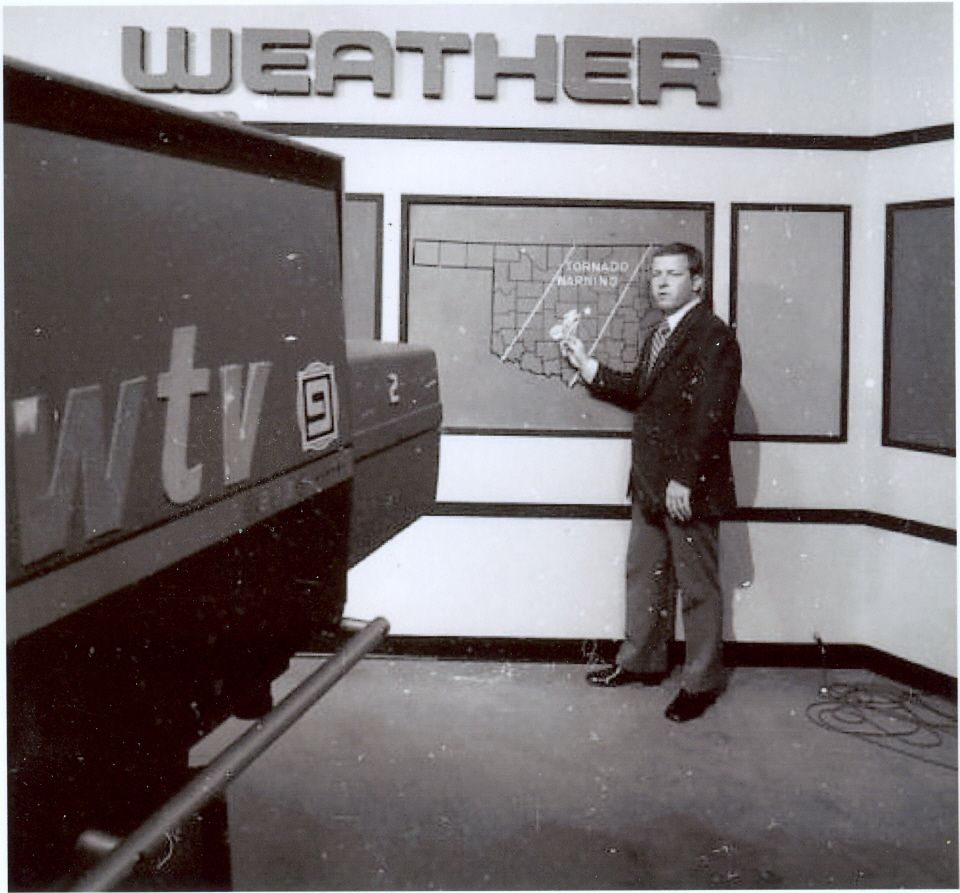
Long before the Thunder rumbled into Oklahoma, there was Gary England.
Whether or not you were born and raised in the Sooner State, there is a great chance you’ve heard of the famed weatherman. His skill and accuracy at predicting severe weather seemed at times omnipotent; more like a shaman than someone simply reading and reporting data.
Gary was, and still is, a household name in the Sooner state. Even if a person was more apt to turn to a different channel than KWTV News 9, the station he worked at for 41 years as the chief meteorologist, for entertainment, when it came to bad weather everyone wanted to hear what Gary had to say. The tagline “Stay with Channel 9 – We’ll keep you advised,” was as familiar to Oklahomans as the BC Clark jingle.
He became known for an off-beat sense of humor and a personality that’s genuinely country, peppering his weather reports with exclamations of “gosh”, “good gracious”, and “great God almighty!”
While people may familiar with his on-air persona, they likely do not know how his upbringing paved the way for his passion for weather or what a jokester he was as a young man, or how long he struggled unsuccessfully to find employment.
They also might not realize the depth of responsibility he felt for his fellow Oklahomans when severe weather struck, or the grief he feels remembering the bad days. “Everyone saw me on the television for all these years. They think I’m just some scientific guy; that I don’t have a past. They don’t realize I’m a normal person,” he shared.
Growing Up
Born in October 1939, Gary grew up in the northwestern Oklahoma town of Seiling. He was raised in a time when a television set was a luxury, so once each week, he and his family went to his grandmother’s house. There, with rapt attention, he’d watch legendary weatherman Harry Volkman.
“He was someone I really liked, and before all the fancy stuff. He had a 15 to 20 minute program on Sundays and I remember I would get right up to the TV, on my knees, to watch. One time when Harry came on, I pointed at him and said, ‘Daddy, I want to be one of those!’ My dad asked, ‘So what is he?’ I said, ‘I don’t know, but I want to be one,’” England recalled.
Winter weather was particularly exciting for the young man. “When Harry would forecast snow, I wouldn’t be able to sleep at night. I’d watch the yard light by the window. We didn’t have too much money, and my breath would freeze on the window on the inside, but I didn’t care. I was waiting for snow,” he said.
The town of Seiling only had one siren, and advance warning only came from deputies and other spotters. “During severe weather season, it seemed like if we went to the movies on a Saturday night, we’d hear the storm noise increase to our southwest, and they’d turn on the lights and talk about a tornado coming that way. Everyone would run out of that place, jump in the cars, go home, and jump in the cellars; all for a tornado that never came.” He added, “We always had those abrupt things. We had a lot of tornado warnings, but very few tornados.”
Once, while cleaning out a chicken house, Gary and his father were caught in a storm. “I got in the middle of the place, which wasn’t too smart, and Lord, it went on a long time. I looked outside and it was ripping the roof off. It looked like there were chicken bullets going by,” he recalled. He remembered that his father wondered if people were ever going to be able to get a warning for the storms.
Many times, Gary and his family took shelter in his grandmother’s cellar. Once it was only the kids and his grandmother at home. “I’ll never forget it. The sirens go off, and we ran down to the cellar. All we had was a little candle, and we piled in there, and there was a damn snake in there! Boy did we jump out. It was like a covey of quail flying out of there,” he said. “I had so many experiences when I was younger that would shape who I became.”
While most of his tales are amusing, including one of his grandfather and uncle refusing to go in the cellar and getting pelted by mud, a few were more sobering.
He recalled the day of the Woodward tornado in 1947. His family was living in Enid at the time, but he and his father walked outside and looked at the clouds. His father predicted, “It’s going to be a bad storm tonight somewhere.”
That storm, the deadliest in Oklahoma’s history, killed more than 100 people. All night long, the sounds of ambulances, fire trucks, and police cars flying towards Woodward kept residents awake. It wasn’t until the next day that the tragedy became public knowledge. “We moved back to Seiling right after that. There were a lot of men in Seiling that had helped Woodward people, and they had so many stories that, to a young boy, were so interesting. That influenced me a lot,” he said.
Also impacting Gary was a documentary television series called Victory at Sea, which detailed how the Navy helped win World War II. He loved the ships and the uniforms, and, one other factor of Navy life. “There would always be a couple sailors walking down the street with a girl in each arm,” he said with a chuckle. “I found out that it didn’t happen like that!” But somehow the combination of watching Harry Volkman and Victory at Sea created his future. “That’s all I could think about.”
That future began quickly. “I got out of school when I was 17. Not because I was overly smart, but because I started really early. Momma signed the papers, and I joined the Navy,” he said.
In the Navy, Gary went into the weather service. He said, “All the things I had been dreaming about all those years happened in the Navy.”
After his stint in the Navy, he spent a year at Southwestern Oklahoma State University in Weatherford, Okla., a choice that would shape the rest of his life. While there, he met “the cutest red-headed girl you’ve ever seen. Her name was Mary.”
At first Mary was less than impressed. Undeterred, he pursued her. He even resorted to throwing rocks at the second story window of her dormitory room to get her attention. Then he tried climbing up on a ladder and tapping on the window, still to no avail. Once, when he was using a friend’s shoulders as a ladder to reach the second floor, the campus police came by. “My friend ran out and left me hanging onto the ledge,” Gary shared. “I left pretty quickly after that.”
Eventually his tenacity paid off, and Mary and Gary were wed a year later. “I don’t know what I’d do if I hadn’t met her. It was the best thing that ever happened to me. She was trying to change me into the person she wanted me to be, and I didn’t even know it was happening,” he said. “She gradually changed my clothes, got my language under control, and I didn’t drink quite as much beer. She morphed me into the person she thought I should be, which was a lot better than I was.”
After Southwestern, Gary went to the University of Oklahoma, where he earned a mathematics/meteorology degree. He graduated in 1965, and because he’d already been in the Navy, he didn’t have to worry about being drafted to go to Vietnam.
Eager to pursue his dream of being a television weatherman, he sent letters to weather stations in Oklahoma and surrounding states. He received responses, but not the ones he wanted. “They’d send me a letter back to say they’d keep my letter ‘on file,’ which is code for, ‘Don’t contact us anymore.’” he shared.
In the meantime, Gary and a friend started a forecasting business for agriculture and aviation, setting up shop at the Wiley Post Airport. Unfortunately, the business did not flourish. “It wasn’t the smartest thing I’d done, but a great part of my life,” he said.
Once again, Gary sent out a round of letters across the country, this time asking for a job forecasting. “Only one person responded. His name was A.H. Glenn, and he was from New Orleans. Thank God he called. By that time Mary was pregnant with Molly, and I needed a job!”
In New Orleans, Gary spent his time forecasting oceanographic and meteorological conditions for Glenn’s private weather service. “It was a learning experience. He was the greatest teacher I’ve ever had in my life. Even though I didn’t’ like him, I learned so darn much from that guy. It was the first time I learned discipline, because he didn’t put up with any crap. If it hadn’t been for him, I would not have succeeded in life,” he shared. “He taught me about science I’d never dreamed of. We did hurricanes, tornados, floods, (ocean rig tows) – a little bit of everything.”
But England still longed for a television career, and for his home state, where tornadoes ravaged the state and people had little warning. So, he, Mary, and their daughter Molly went back to Oklahoma even though he had no employment prospects.
He continued to look for a weather job, but knowing he had to make a living, did a stint selling typewriters; something he was woefully unsuccessful at. That was followed by a job selling advertisements. “I couldn’t sell anything. The only thing I sold was bad debts. Someone would buy a big, beautiful two page full color spread, and then wouldn’t pay for it.”
Luckily Mary got a job with the radio station KTOK. One day he noticed the station was putting in a weather radar, so he tracked down the general manager. “I told him he’d need me when they finished it, but he didn’t believe me,” Gary said.
The young couple was very poor at the time, and Gary, with nothing else to do, would stop by the station regularly to help himself to free coffee. “So, I’m there one morning drinking my coffee after they’d finished the radar, and a storm came up. They had an engineer there to run it, but he didn’t know how to read it, so they hired me on the spot. When you’ve been hanging around a job so much, they don’t have to pay you much, but they gave me a little office upstairs. It was tiny, but I had a microphone and a lightbulb – I thought it was great!” he shared.
While on air, Gary would do segments on the “thunder lizard,” which he described as an 805-pound creature that changed color with the weather. It was completely fictitious, and viewers, in on the joke, called in with tongue-in-cheek reports about run-ins with the beast. “You’d be surprised how many people would call me and tell me they saw it. It was great stuff,” he said. “I was there a year, and they fired me four times. After the storm season they thought they wouldn’t need me, but I reminded them about the people fishing, so they kept me. The same thing happened when they tried to fire me in the fall, when people would be going to football games. I made sure they kept me around.”
Gary grew in popularity, so much that he got a call from the KWTV Channel 9 general manager asking him to come in for an interview. “He said, ‘You sound a little crazy, but I’d like to talk to you.’ I had to do an audition two days later, and I didn’t have a suit. I went out and got myself a pair of powder blue bell bottoms. Oh, they looked good! And a maroon jacket, with a white shirt, and a multi-color tie and boots. I was stylin’, baby. I went to that darn audition and they hired me, and the rest is history.”
On Oct. 16, 1972, Gary England finally became a television weatherman.
Four Decades in The Big Town
A few months after hiring Gary, KWTV introduced a radar system specifically designed for television. On May 24, 1973, he did a live cut-in to warn Channel 9 viewers of a devastating F4 tornado near Union City. It was the first time viewers got to see the radar image of a tornado.
Technology has come a long way since the early days of his career. He shared how his original weather maps were painted on a metal-backed plate. There were four sides and painted on it were maps of the United States and Oklahoma. “We had magnetic numbers and letters and we put current conditions and forecasts on the maps. If you had to change it, you’d rotate it around,” he shared.
According to England, it was a gradual progression of creating better equipment and systems. “We started with basically nothing, and gradually people came up with concepts and it grew. We were always asking how we could do better,” he said.
Gary is credited as initiating the development of the first commercial Doppler radar, along with the firm Enterprise Electronics. Although the National Weather Service is the only entity legally responsible for issuing warnings in the United States, he is credited with issuing the first televised Doppler weather radar bulletin for a tornado, which happened in March, 1982. “That was one of the biggest things that happened in television in many years, having the Doppler radar. We saved some lives, and some very smart people continued to develop great radars and tracking equipment,” he said.
One of the big innovations of Gary’s time was First Warning, the state map that appears in the corner of the TV screen, with counties colored to indicate storm watches and warnings. “The first time we put a map on to show where the tornado was, do you know what we used? It was a piece of red cardboard – a big piece. We’d slap a map of Oklahoma on it, and if there were a tornado warning, we’d take an X-acto knife and cut out that county, and then put a camera on it. It was wild,” he said. “We were lucky we never cut ourselves.”
Similarly, he also helped create Storm Tracker, a computer program that gave the audience the arrival time of severe weather. “When we got our first radar, you’d take a Number 2 pencil, look at that eraser, and that would be 30 miles on the radar, so you’d have to count it out. Desk computers were coming out, so I found a boy from OU. I told him I could tell him where the tornado was, where it was going, and how fast it was moving, and that it would have an umbrella coming out, and I’d like to be able to tell what times it would reach various towns,” h said. “It was really good. We created that, just by asking how we could do better.”
“Better radars and computer programs are the biggest reasons that more lives have been saved. Some very smart people put them together,” he added.
The Final Year
Gary held his post as Chief Meteorologist at Channel 9 in Oklahoma City for nearly 42 years, and while his contract gave him the option to work longer, he decided on retirement in 2013. “Things change. We had the storms in 2013, and all the death, suffering, and destruction had built up over the years,” he said.
The first of the two major tornados came on May 20, when an EF-5 ravaged Moore and killed 42 people. The second major storm was an EF3 just 11 days later. On May 31, the tornado set the record as the widest in history at 2.6 miles wide with the second-highest recorded wind gusts at 301 miles per hour (barely second to the May 3, 1999 tornado). “Four people lost their lives in that storm, but if it had crossed a residential area, it would have been much worse,” he shared. “All three of those storms, the May 3 tornado in 1999, and the two in 2013, were monsters.”
When the storms died down, Gary knew it was time to leave. “I called my wife that night and asked her to come get me. When she got there, I got in the car, and I told her, “Mary, that’s it. No more. It’s over.’”
He announced his intention to retire just days later, and officially retired in August.
“It accumulated over the years. We started getting the live video of what was going on and seeing it up close. I know one or two of the guys I worked with had trouble later. I was tired. I hated to leave the people, but I didn’t want any part of it anymore,” he shared. “Also, no matter how good you might do during a storm, there are always some people after it who have a problem, and they get mean and nasty, and you hear it so much these days. They don’t have an address on that computer and can send anything they want to you.”
Still, he admits he misses the day-to-day job routine. “The thing I miss most is just the regular shows where I could make people laugh. I love practical jokes. I loved those slow days because we’d have time to have fun doing neat stuff or showing crazy pictures. So I’ll check the radar sometimes, but when I hear of storms intensifying in the southwest, I think better them than me,” he said. “I’m thankful to the Griffin family for what I was able to do. If they hadn’t hired me, who knows, I had a great 42 years.”
After his official retirement, he came back as the Vice President of Corporate Relations and Weather Development for Griffin Communications for a couple years. He followed that with a few years serving as the Consulting Meteorologist for the University of Oklahoma. He still does some consulting work for attorneys.
Gary and Mary live in Edmond, while daughter, Molly, married and moved to California. “I love Molly. I wish I could have had more just like her. She and her husband have two children, Cassidy and Chloe. They live too far away, but we spend a lot of time on the phone with them. That’s my family. It’s small, but it’s a good one,” he said.
SIDEBAR: May 3, 1999
A story about Gary England would be incomplete without recounting the storm he will never forget. May 3, 1999 is a date forever etched in his mind and that of most Oklahomans.
On May 2, the weather team was forecasting thunderstorms and a few tornados; typical of a severe weather day in Oklahoma. The morning of May 3, the forecast remained largely unchanged.
Around 1 p.m., Gary got a feeling. “I told Alan Mitchell we better go out and check it out. We went out the back door, and that’s when it hit me. I tell you, I can still smell it. It smelled like the Gulf of Mexico had moved up here. It was very wet, very damp and very warm. The low level winds were just screaming by, and the low level clouds were whipping by,” he recalled. He had only felt that once before, back in 1974 during a tornado outbreak.
He rushed back into the station, which at the time had a priority system of one through three, with priority one being the highest. “I went back, pointed at the director, and told them it was a priority one. When that happens, the weather team takes over the entire station. They gave us all the reporters and the people we needed,” he said. “We sent them out. I can’t tell you how many we sent out. I just knew it would be bad.”
Around 4 p.m., the first storm popped up on the radar. Storm chaser Val Castor was near Lawton, and captured images of the storm, which produced a few tornados before dissipating.
“Then it looked like a nuclear explosion on the radar. They were going up everywhere. There was one that came up in Chickasha. It produced some tornados, and they kept coming. I was watching it live as it went north, and we were part of it. You couldn’t separate yourself from it. It got just north of Chickasha and then it disappeared,” Gary shared.
That reprieve was short lived, and the monster came back with vengeance. “It seemed like in 60 seconds it came back and was a mile wide. It was obvious at that point it was going to keep coming,” he said.
Knowing Okies, Gary got stern with his warnings. “I know us. I said, ‘Look, folks. Don’t go outside and look at this because it will kill you.’ A few minutes later I said something along the lines of, ‘Most structures won’t survive this tornado,’” he recalled.
As the tornado got closer to Moore, he continued his warnings. “I knew it would level whatever it hit. I told people that they needed to be below ground if they possibly could, and that they still had time to get out. I knew this storm would level whatever it hit. We were watching it and knew people were dying. I knew it was happening. I couldn’t talk about it for a long time.”
“One of the things that stuck with me was a dog that apparently had its back broken. I saw it on the video, but there’s nothing anyone could do because they’re trying to get to the storm. There were horses dead and dying all over the place. I had never seen anything like it in my whole life. We had 40 dead and 700 injured. We were lucky it wasn’t worse,” he said. “May 3 was a horrific experience.”
In the days following the storm, messages written on houses and in letters praised Gary for saving lives, but he didn’t mention the praise in this interview. He recalled a girl who lived near Bridge Creek, where several people were killed. “She was doing an interview on another program, and she had a broken back. She said, ‘Gary kept saying, ‘Get below ground or you won’t survive this,’ but we didn’t have any place to go.’” With his voice breaking, he added, “There were so many stories like that. You’re part of it when you’re in the weather.”
The sense of responsibility ingrained while in the military stuck with him throughout his career. “I took it really seriously. I know what can happen to people. It feels like you’re responsible, whether one person dies or 40 die. It’s a high responsibility. I was always in trouble with management for breaking into a program to warn a tornado,” he said.
This article was originally published in the May 2020 issue of Oklahoma Farm & Ranch.
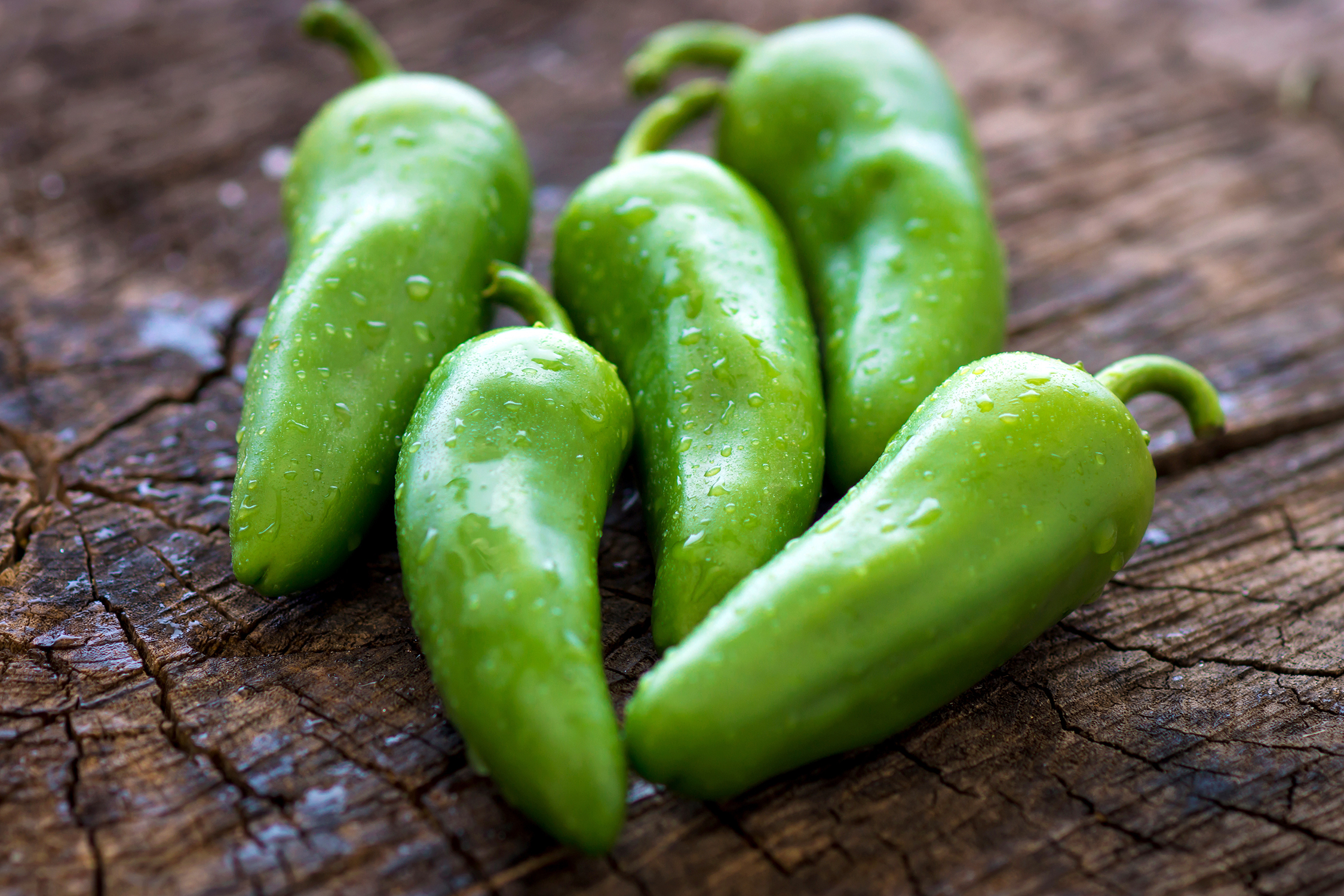
Most of us have been there. You take a bite of something that looks harmless enough, and within seconds, your mouth is on fire. Your eyes water, your nose runs, and suddenly you’re questioning every decision that led you to that moment. Whether it’s a jalapeño that packed more punch than expected or a sauce someone swore “wasn’t that bad,” peppers have a way of keeping people humble.
There is, however, a way to measure that heat before you ever take a bite. It’s called the Scoville scale, and it’s the standard used to rank just how hot a pepper can be. The measurement is expressed in Scoville Heat Units, or SHU. The higher the number, the more heat you can expect. A bell pepper sits at zero, meaning no heat at all. Jalapeños usually land somewhere between 2,500 and 8,000 SHU, while the upper end of the scale climbs into the millions.
The system dates back to 1912, when pharmacist Wilbur Scoville developed a method to test pepper heat. His approach was simple, if not a little impractical by today’s standards. Pepper extract was diluted with sugar water until a panel of tasters could no longer detect the burn. The more dilution required, the hotter the pepper. It worked, but it depended heavily on human perception, which is far from consistent.
Today, the process is far more precise. Instead of relying on taste, scientists measure the concentration of compounds called capsaicinoids using laboratory equipment. Those numbers are then converted into Scoville Heat Units. It takes the guesswork out of the equation and gives growers, processors, and consumers a reliable way to compare peppers.
Capsaicinoids are the group of compounds responsible for heat, with capsaicin being the main contributor. Contrary to what a lot of people believe, the seeds are not where the heat lives. Most of it is concentrated in the white inner ribs of the pepper. The seeds can seem hot because they come into contact with those oils, but removing the inner ribs is the most effective way to dial the heat back while keeping the flavor.
That burning sensation you feel isn’t actually heat in the traditional sense. Capsaicin interacts with receptors in your mouth that are designed to detect pain and temperature. Your brain reads that signal as burning, even though there’s no physical damage being done at typical levels. Depending on how much you’ve had, that sensation can linger anywhere from a few minutes to well over half an hour.
One thing worth keeping in mind is that not all peppers are created equal, even within the same variety. Growing conditions, soil, weather, and maturity all play a role in how much capsaicin a pepper develops. Two jalapeños from different fields, or even different plants in the same field, can vary more than you might expect.
At the far end of the scale are peppers that push the limits of what most people would consider edible. Varieties like the Carolina Reaper have recorded levels exceeding 2 million SHU. That’s well beyond the point of casual consumption and into territory where even a small amount can be overwhelming. While some people seek that level of heat for the challenge, it’s not something to take lightly.
For everyday use, the Scoville scale is less about chasing extremes and more about making informed choices. If you know your comfort level, you can select peppers that add flavor without overpowering a dish. It also helps explain why a recipe that calls for “one pepper” can turn out very differently depending on what you pick up at the store or out of the garden.
In the end, that moment when your mouth feels like it’s on fire isn’t as mysterious as it seems. There’s a system behind it, and a little understanding of the Scoville scale can go a long way in keeping your next bite from turning into a regret.
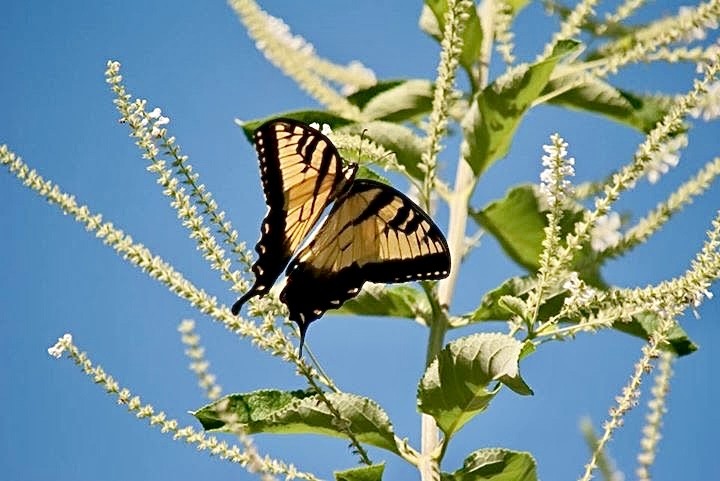
When most people think about wildlife on a ranch, they probably picture deer slipping through the trees, turkeys moving across a pasture or quail flushing from cover. Those species matter, and many landowners manage with them in mind. But some of the most important wildlife on a farm or ranch is much smaller. Bees, butterflies, moths, beetles, flies, wasps, hummingbirds and even bats all play a part in keeping native plants and food systems working.
Pollinators move pollen from one flower to another, which allows many plants to produce seed, fruit and the next generation of growth. That matters in gardens and orchards, but it also matters in pastures, prairies and native rangeland. According to the article provided, the United States Department of Agriculture reports that 75 percent of the world’s flowering plants and about 35 percent of the world’s food crops depend on animal pollinators to reproduce.
For Oklahoma ranchers, pollinators are more than something nice to see on a warm afternoon. They are tied to plant diversity, soil cover, wildlife habitat and the overall health of the land.
A pasture with flowers, seed-producing plants and a mix of grasses and forbs usually supports more life than a pasture with only one or two plant types. That does not mean every acre has to look wild or unmanaged. It means diversity has value. A ranch that supports many kinds of plants can also support many kinds of insects. Those insects feed birds, turkey poults, quail chicks, bats and other wildlife. Some predatory insects also help keep pest insects in check.
Pollinators are a sign that something is working. If butterflies, bees and other beneficial insects are present, the land is likely offering food, cover and seasonal blooms. If they are absent, it may be worth asking why. There may not be enough flowering plants. Grazing pressure may be too heavy at the wrong time. Herbicide use may be reducing the plants pollinators need. The issue may be drought, timing or a lack of plant variety.
The monarch butterfly is one of the best-known examples. Monarchs need milkweed because it is the only food source for their caterpillars. Adult monarchs also need nectar plants, especially during migration. Oklahoma sits in an important part of that migration route. In spring, monarchs moving north need milkweed for reproduction. In fall, monarchs moving south need blooming plants for energy before continuing toward Mexico.
That fall food source can be easy to overlook. A pasture may have plenty of grass and still offer little for a migrating butterfly if there are no flowers in bloom. Late-season plants such as Maximilian sunflower, blazing star, goldenrod, asters and cowpen daisy can make a difference. In the Noble Research Institute article, Will Moseley said their monarch monitoring showed a simple result: butterflies were found where flowering plants were present, and they were not found where flowers were absent.
That is a useful lesson for any landowner. Pollinator habitat does not have to be complicated. It starts with plants.
For ranchers, the goal is not to turn working land into a flower bed. The goal is to manage in a way that leaves room for useful plants to grow, bloom and set seed. Grazing management can help. If the same pasture is grazed hard at the same time every year, the same plants may get set back again and again. Changing grazing timing, leaving rest periods and avoiding overuse can give more plants a chance to bloom. Rotational grazing, when planned well, can benefit both livestock and pollinators.
Prescribed fire can also be useful when used carefully and legally. Fire timing matters. Burning every acre the same way at the same time can favor some plants and reduce others. Varying burn timing across years and pastures can create a more mixed plant community. That variety can help pollinators, ground-nesting birds and grazing animals.
Herbicide use is another consideration. There are times when herbicides are needed, especially for invasive or problem plants. But broad use can also remove the forbs that bees and butterflies depend on. Spot spraying, proper timing and targeted control can help landowners manage weeds while keeping beneficial plants in the pasture. Every place is different, so the best plan depends on the ranch’s goals, plant community and problem species.
Pollinators also need nesting sites. Not all bees live in hives. In fact, many native bees nest in the ground, hollow stems or cavities in wood. Leaving some undisturbed areas, standing stems, brushy edges or bare patches of well-drained soil can support native bees. A perfectly clean landscape is often less useful to wildlife than one with some structure and variety.
Water can help as well. Shallow water sources, damp soil or safe access around ponds and tanks can be useful, especially during dry weather. The key is to avoid drowning hazards. Small stones, floating wood or shallow edges can give insects a place to land.
For landowners interested in beekeeping, honey bees can become another small enterprise. A few hives may provide honey for family, gifts or local sales. Local honey often has a strong market, and bees can fit well on small acreages or larger ranches. Still, honey bees are livestock and need management. New beekeepers should start small, learn from an experienced mentor and understand seasonal care before investing heavily. The Noble article shared advice from Josh and Brook Gaskamp, who recommended getting a mentor, starting small and experimenting until finding what works.
Beekeeping is not the only way to support pollinators, though. A person can help pollinators without owning a single hive. Planting native flowers, protecting milkweed, reducing unnecessary pesticide use and allowing some areas to bloom can all help. Even fence rows, field corners, creek banks and lightly used areas can become valuable habitat when managed with pollinators in mind.
Pollinators also add enjoyment to the land. There is something rewarding about seeing monarchs on fall flowers, bumble bees working a patch of blooms or hummingbirds visiting trumpet-shaped flowers near the house. Those moments remind landowners that a ranch is more than livestock, fences and forage. It is a living system.
For many producers, the practical reason to care about pollinators is simple. What helps pollinators often helps the whole ranch. More plant diversity can mean better soil cover, more wildlife habitat, more insects for birds, more seasonal forage options and a landscape that can better handle stress. Pollinators are part of that bigger picture.
A ranch does not have to be managed only for bees or butterflies to benefit them. In many cases, good land stewardship already points in the right direction. Avoid overgrazing. Encourage plant diversity. Leave some blooms. Be careful with chemicals. Think about timing. Watch what shows up.
The smallest wildlife on the ranch can tell a big story about the health of the land. When the flowers are blooming and the pollinators are working, it is a good sign the pasture is doing more than growing grass. It is supporting life from the ground up.
Total Time: 1 hour and 40 minutes
Servings: 10
2 medium apples (any type), peeled, cored & diced
1/3 cup brown sugar
1 tsp cinnamon
1/2 cup unsalted butter, softened
2/3 cup granulated sugar
2 large eggs
1 1/2 tsp vanilla extract
1 1/2 cups all-purpose flour
1 3/4 tsp baking powder
1/2 cup milk
For the Glaze:
- 1/2 cup (60g) powdered sugar
1–2 tbsp milk
1/4 tsp vanilla extract
Instructions:
Preheat oven to 350°F. Grease and line a 9×5-inch loaf pan with parchment paper.
Peel and chop apples and place in a bowl with brown sugar and cinnamon. Toss and set aside.
In a large mixing bowl, cream together butter and granulated sugar until light and fluffy. Beat in eggs one at a time, then add vanilla. In a separate bowl, whisk together flour and baking powder. Gradually add dry ingredients to the butter mixture, alternating with milk, mixing until just combined.
Next, pour half of the batter into the loaf pan, top with half of the apple mixture, then repeat with remaining batter and apples. Lightly swirl with a knife for a marbled effect.
Bake for 50–55 minutes, or until a toothpick inserted in the center comes out clean.
Cool in pan for 10 minutes, then transfer to a wire rack to cool completely.
In a small bowl, whisk together powdered sugar, milk, and vanilla until smooth. Drizzle over cooled bread.
Slice and enjoy warm or at room temperature.



-
 Country Lifestyle2 years ago
July 2017 Profile: J.W. Hart
-
 Attractions9 years ago
48 Hours in Atoka Remembered
-
 Farm & Ranch2 years ago
From Plow to Plentiful: The Most Important Inventions in Agricultural History
-
 Equine9 years ago
Umbilical Hernia
-
 Country Lifestyle5 years ago
The Two Sides of Colten Jesse
-
 Outdoors8 years ago
Grazing Oklahoma: Honey Locust
-
 Farm & Ranch8 years ago
Hackberry (Celtis spp.)
-
 Equine6 years ago
On the Road with Emily Miller-Beisel