
Outdoors
Gobblers Active at Spring Season Start

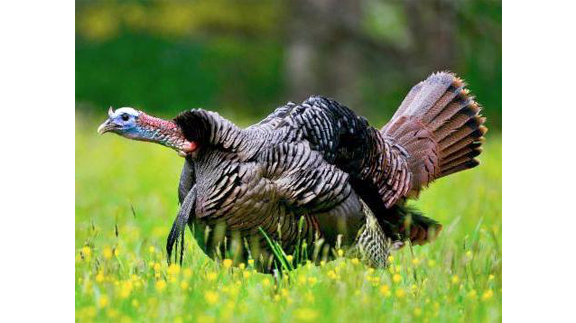
April 5, 2017-Oklahoma’s 2016 spring turkey hunting season will start a half-hour before sunrise April 6 in all areas except the Southeast Region. The general spring turkey hunting season will run through May 6. In the eight-county Southeast Region, youth spring turkey season will be April 15-16, and the general turkey season will be April 17 to May 6.
Based on field reports submitted in the past few days by Oklahoma Department of Wildlife Conservation personnel, habitat conditions are generally good to excellent in all regions, and bird numbers should offer some good hunting opportunities.
Warmer conditions earlier in the year have put turkeys in most areas ahead of normal for spring breeding activity. By region, here are some insights for turkey hunters this spring.
Northwest Region
Reported by Eddie Wilson, Northwest Region Senior Biologist
Current Gobbler Activity: Birds have broken up for the most part throughout the northwest counties. Panhandle birds are still reported to be in groups. Birds are gobbling, strutting and breeding with exception of the Panhandle. Bird activity slowed some last week with the cooler temperatures and rain, but it still seems to be ahead of normal.
Condition of Habitat: Habitat conditions are good. Most of the region experienced from 1 to 3 inches of rain last week, so everything is green. Winter wheat is in good condition, and there is plenty of nesting cover available on the WMAs. Recent wildfires have temporarily removed nesting cover on many acres of private land. Most roost trees did suffer at least some damage during the January ice storm.
Reports From Landowners and Scouting Hunters: Landowners are reporting slightly lower numbers this year, compared with the last couple of years. I did get a chance to talk with some youth hunters this past weekend, and several of them were successful in harvesting a bird.
Hunters struggled with cool, wet conditions but still got birds to respond to calling.
WMAs in the Region: Three of the most popular Northwest Region wildlife management areas for spring turkey hunting are Canton, Fort Supply and Cooper. But most every WMA in the region provides some turkey hunting opportunity. Be sure to check the regulations regarding the WMA you choose to hunt. A number of the wildlife management areas have a one-tom limit, and shooting hours close at 7 p.m. daily.
Best Tips:
1. Call less.
2. Stay in the woods longer than just the early morning hours.
3. Go deeper into the woods, especially on WMAs.
Biggest Mistakes:
1. Avoid being impatient; give the birds time to get to you.
2. Be sure to scout the area prior to the hunt, and know what to expect.
3. Be still; turkeys can pick up on the slightest movement.
Opening Day Expectations: The weather forecast for opening weekend looks to be good in the northwest. Bird numbers are down slightly in some areas, but there are still a good number of birds to hunt, and habitat and food sources are in good shape. Be prepared to encounter other hunters on Wildlife Management Areas throughout the Northwest Region. Based on the number of interested turkey hunter calls I have received this year, it may be busy. Good luck and hunt safe!
Southwest Region
Reported by Ron Smith, Southwest Region Senior Biologist
Current Gobbler Activity: Turkeys began moving away from winter roosting areas around March 10. Since that time, groups have begun to split into smaller units, with mature toms taking hen groups with them. Toms began to strut about March 20. Since that time, regular display and breeding activity has steadily increased.
Condition of Habitat: Overall habitat condition throughout the region is very good to excellent. Winter wheat is further along than it was in 2016. Two years of good moisture has greatly improved native range condition. Nesting cover will be adequate. Moisture to date in 2017 should encourage good brood-rearing habitat.
Reports From Landowners and Scouting Hunters: Landowners and early scouting hunters have reported steadily increasing activity. Many have noted turkeys in new areas and their absence in more historic places. This is likely the result of turkeys shifting around to new roosts following damage to roost trees.
WMAs in the Region: Turkey hunting destinations in the region include Packsaddle, Black Kettle, Sandy Sanders, Fort Cobb and Waurika WMAs.
Best Tips:
1. Spend as much time scouting as possible. Some of the traditional areas may have moved a bit from previous years.
2. Practice all different kinds of calling methods. The best way to learn is spending time in the field watching and listening to the birds’ social activities and understanding how this all fits into the breeding cycle.
3. As always, use great care while approaching the hunt area to maintain good concealment and minimize movement.
Biggest Mistakes:
1. Leaving the hunt area too early can take a hunter out of the game.
2. Turkeys will have patterns throughout the day that hunters may take advantage of.
3. This all goes back to thorough scouting and patience.
Opening Day Expectations: Hunters should expect a great time in the field. Turkey numbers throughout most of the region will provide ample opportunity. Breeding activity will likely be in full swing, so there will be plenty of action.
Central Region
Reported by Jeff Pennington, Central Region Wildlife Supervisor
Current Gobbler Activity: Current activity varies across the region but is about where you would expect it to be during the first part of April. Birds have broken up, and breeding activity has initiated.
Condition of Habitat: The region went through a dry spell this fall and winter, but recent rains have increased new growth in most of the region. Where moisture has been present, the spring green-up is ahead of “schedule.”
Reports From Landowners and Scouting Hunters: Varied reports: Some landowners and sportsmen report the breeding season is well under way, while others report the winter flock breakups have just occurred in their area.
WMAs in the Region: In north-central Oklahoma, Kaw and Deep Fork WMAs are good bets for turkey hunters. In south-central, Washita Arm and Hickory Creek WMAs provide ample opportunity to harvest a tom.
Best Tips:
1. Try for success around burned patches. Turkeys highly use areas that have been recently burned.
2. Hunt the afternoon, too. Often hunters go hard until midmorning, then give up. Toms may be “henned up” at that time, but may be more receptive later in the day.
3. Hunt late season. Much less competition after the first 10 days of the season.
Biggest Mistakes:
1. Be 100 percent certain of your target to avoid potential accidents.
2. Moving too quickly when you know there is a silent tom in the area.
3. Only hunting the early morning period.
Opening Day Expectations: There has been average reproduction the past four years in the region. Local numbers may vary, but on average hunters in the region should expect to see a balanced age structure. Breeding status and habitat is about where it should be for early April. As always in Oklahoma, weather conditions will play a big role on any individual day.
Northeast Region
Reported by Russell Perry, Biologist
Current Gobbler Activity: With the warm, wet weather we have been having, the winter flocks have broken up, and we are beginning to see breeding activity. Overall, activity is as much as two weeks ahead of what we expect to see this time of year.
Condition of Habitat: Early-onset spring this year has left the habitat in good to excellent condition. Everything is greening up quickly, and there are already lots of bugs available.
Reports From Landowners and Scouting Hunters: Birds have been gobbling in some areas since late February or early March, with some hens exhibiting what appears to be nesting behavior.
WMAs in the Region: All of the Northeast Region WMAs are open to turkey hunting and all share similar good to excellent habitat. Turkey numbers vary somewhat from one WMA to another, but all offer good opportunity.
Best Tips:
1. Scout the area and birds you intend to hunt and get to know them well.
2. Look for feeding areas; set up where the birds want to be.
Biggest Mistakes:
1. Don’t call too much! Listen to the birds and try to mimic their call frequency and volume.
2. Stay as still as possible. Turkeys have excellent eyesight, and it doesn’t take much movement to put them on alert or on the run.
Opening Day Expectations: Opening day/weekend is usually high volume for hunter numbers. Habitat conditions run from good to excellent, and bird numbers from fair to good. So barring any bad weather, it should be a good time to go hunting.
Southeast Region
Reported by Jack Waymire, Senior Biologist
Current Gobbler Activity: Mixed reports of observations of some single hens, single gobblers and gobblers with hens strutting. Gobbling activity early in the mornings but less during the day.
Condition of Habitat: The Southeast Region has experienced dry conditions from January through March. Good seed availability from last year with an increase in insects this past week. The weather forecast indicates some rain during the first week of April.
The Southeast Region experienced extreme drought conditions from 2004 through 2012 with poor reproduction. In 2013 we had good reproduction, 2014 fair reproduction, and 2015 and 2016 had poor reproduction due to flash flooding.
Reports From Landowners and Scouting Hunters: Reports of toms with hens strutting the past three weeks.
WMAs in the Region: McGee Creek WMA and Three Rivers WMA.
Best Tips:
1. Start scouting for turkeys where you found them last year.
2. Be patient.
3. Set up in a place that has the topography such that when the turkey comes into view, it is within shotgun range.
Biggest Mistakes:
1. Many hunters try to get too close; the turkey is usually not as far away as you think.
2. Do not set up in a place that will limit range of motion of your shotgun.
3. Turkeys will sometimes come in and then circle you looking for what he thinks is a hen.
Opening Day Expectations: Hunting pressure is always high on public lands but not on private property. If possible, try to get away and hunt during the week on public lands because weekends attract more hunters.
_____________
The statewide season bag limit is three tom turkeys per hunter, but daily and season limits for individual counties and WMAs vary. To find out the bag limits for the area to be hunted along with field tagging, E-Check and other turkey hunting requirements, consult the 2016-17
“Oklahoma Hunting and Fishing Regulations Guide” available online at wildlifedepartment.com, in print where fishing or hunting licenses are sold, or on “The Official OK Fish & Wildlife Guide” app for iPhone and Android.
###

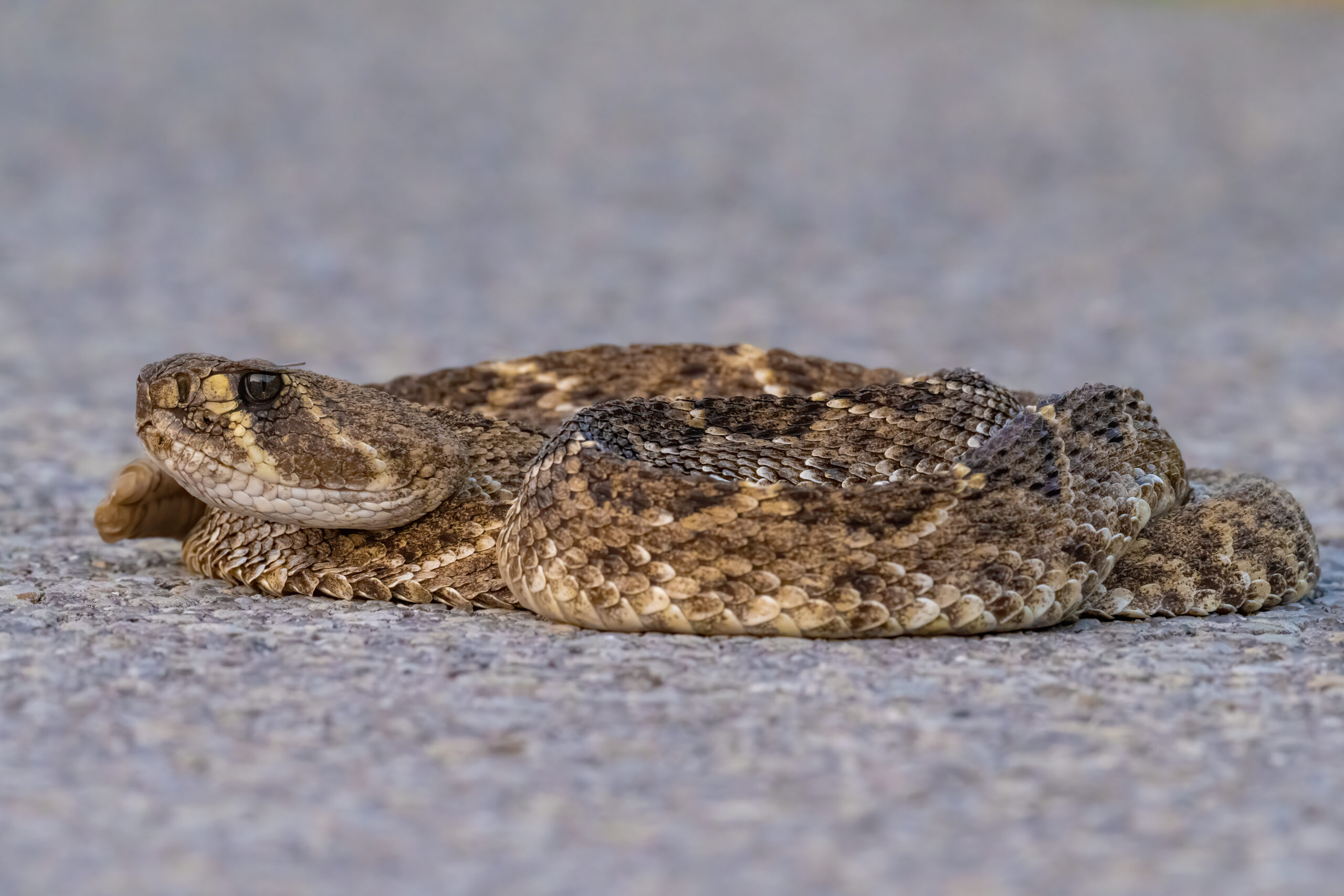
Oklahoma is home to a wide range of wildlife, and snakes are a regular part of life for anyone who spends time outdoors. From ranchers and farmers to hunters, hikers, and rural landowners, most Oklahomans will eventually cross paths with a snake. While the majority of species found in the state are harmless, there are a handful that deserve extra respect.
Many people believe Oklahoma has only three venomous snake species. In reality, the state has seven venomous species, but they fall into three main groups that are helpful to understand: rattlesnakes, copperheads, and cottonmouths. All of Oklahoma’s venomous snakes belong to the pit viper family, meaning they share similar physical traits and hunting behaviors.
Knowing what these snakes look like, where they live, and how they behave goes a long way toward reducing the risk of an unpleasant encounter.
Rattlesnakes
Rattlesnakes are the most recognizable venomous snakes in Oklahoma, largely thanks to the rattle at the end of their tails. That rattle is designed as a warning system, alerting large animals — including people — that they are too close for comfort.
Oklahoma has several species of rattlesnakes, ranging from large, heavy-bodied snakes found in western parts of the state to smaller species that prefer grasslands and rocky areas. They are commonly encountered in open rangeland, rocky outcrops, brushy pastures, and along fence lines. Rattlesnakes are also known to seek shelter under equipment, boards, or debris, especially during extreme heat or cooler months.
Despite their reputation, rattlesnakes are not aggressive. They typically remain still and rely on camouflage until a threat gets too close. While the rattle is often used as a warning, it’s important to understand that a rattlesnake may not always rattle before striking. Some rattles are damaged or broken, and a snake that feels suddenly threatened may strike defensively without warning.
Rattlesnake venom is hemotoxic, meaning it damages tissue and affects blood clotting. Any bite should be treated as a medical emergency, even if symptoms initially seem mild.
Copperheads
Copperheads are among the most frequently encountered venomous snakes in Oklahoma, particularly in the eastern half of the state. They are masters of camouflage, blending easily into leaf litter, brush piles, wooded creek bottoms, and rocky terrain.
Most copperheads are relatively modest in size, typically measuring between one and three feet long. Their most recognizable feature is the pattern of darker bands along their bodies, often described as hourglass-shaped. This pattern helps them disappear into the forest floor, which is why copperheads are often stepped on accidentally.
Copperheads rely heavily on remaining still rather than fleeing, which increases the chance of a close encounter. Many bites occur when someone unknowingly steps near or directly on a snake that never attempted to move away.
Although copperhead venom is generally considered less potent than that of some rattlesnakes, bites are still serious and require immediate medical attention. Pain, swelling, and tissue damage are common, and prompt treatment can prevent complications.
Cottonmouths
Cottonmouths, also known as water moccasins, are Oklahoma’s primary semi-aquatic venomous snake. They are most often found near water sources such as slow-moving streams, ponds, swamps, and marshy areas, particularly in southeastern Oklahoma.
Cottonmouths are thick-bodied snakes that can grow several feet long. Their coloration is often dark, sometimes making them difficult to distinguish from nonvenomous water snakes. One defining behavior gives them their name: when threatened, a cottonmouth may open its mouth wide, displaying a bright white interior as a warning.
While cottonmouths are commonly associated with water, they do travel over land and may be encountered on trails, levees, or near livestock ponds. Like other pit vipers, they prefer to avoid confrontation and rely on defensive displays rather than aggression.
Cottonmouth venom is hemotoxic and can cause significant pain, swelling, and tissue damage. As with any venomous snakebite, immediate medical care is critical.
All of Oklahoma’s venomous snakes share several general characteristics. They have broad, triangular-shaped heads, heat-sensing pits between the eyes and nostrils, and vertical pupils. While these traits can help with identification, it’s safest to avoid attempting close inspection altogether.
Most snake bites happen when people try to kill, handle, or move snakes. Others occur when visibility is poor and a snake is accidentally surprised. Simple precautions can significantly reduce risk: watching where you step or reach, wearing boots in tall grass or rocky areas, and giving snakes plenty of space when they are spotted.
Venomous snakes play an important role in Oklahoma’s ecosystems by controlling rodent populations and maintaining balance among prey species. While it’s natural to feel uneasy around them, understanding their behavior helps replace fear with awareness.
Venomous snakes are a fact of life in rural Oklahoma, but encounters rarely end in injury when people remain alert and respectful. Recognizing that Oklahoma’s venomous snakes fall into three main groups — rattlesnakes, copperheads, and cottonmouths — makes identification simpler and helps people make safer decisions outdoors.
With a little knowledge and caution, Oklahomans can continue to work the land, enjoy the outdoors, and coexist with these often-misunderstood animals that have been part of the landscape long before fences, barns, or back roads ever existed.
With These New Cupheas
By Norman Winter | Horticulturist, Author and Speaker
There will be a lot of temptation for gardeners this year, so many new plants are showing up at the garden center. Being the astute gardener you are, you probably can guess I am yanking your chain a little as I introduce you to the Totally Tempted cuphea series.
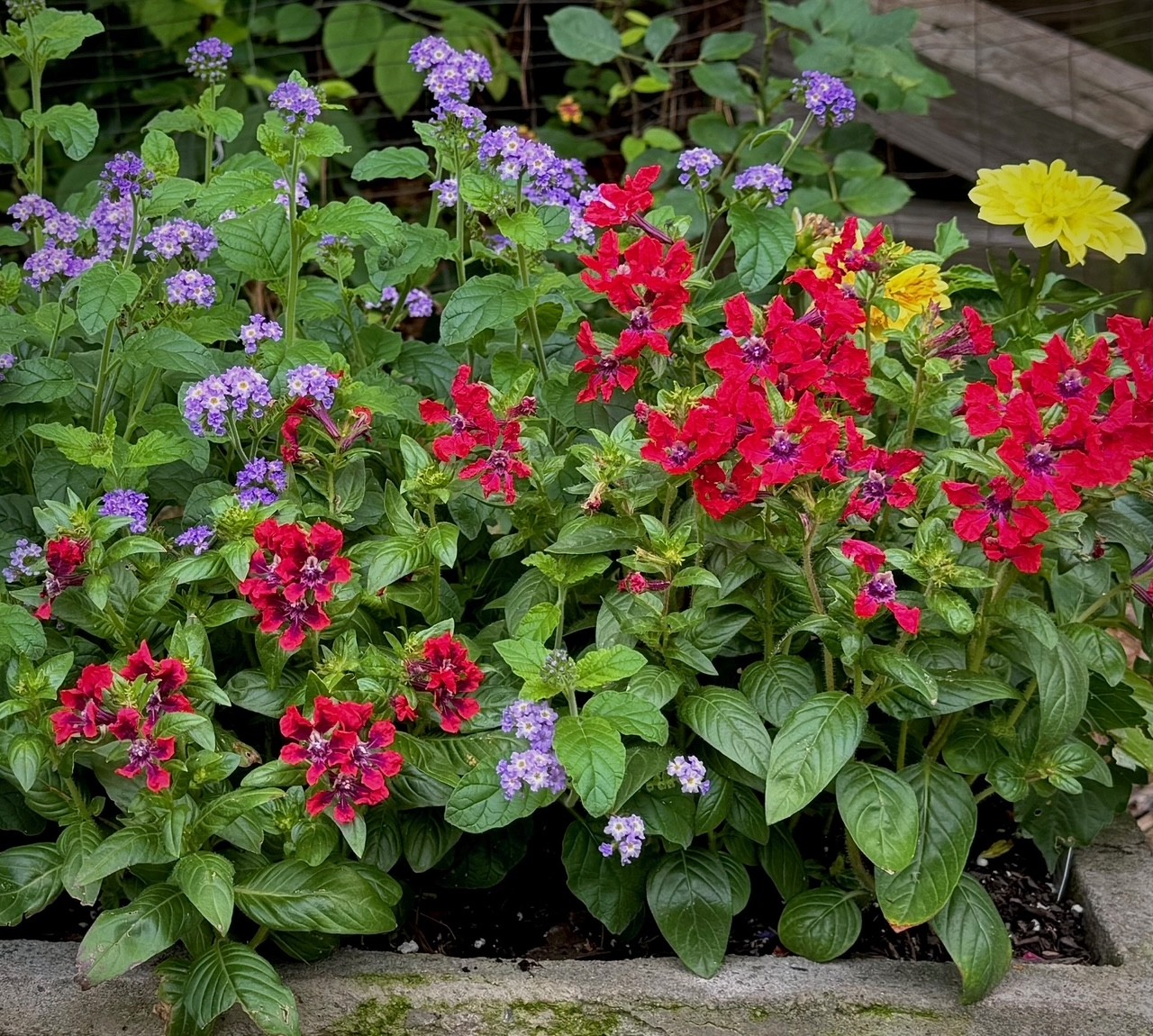
If you are a hummingbird lover you already know some cupheas. The Totally Tempted cupheas come in 4 color or varieties, Richly Red, Watermelon Wine, Frosted Violets and Vivid Violet. They have the potential of reaching 16-inches tall with an 18-inch spread.eas
They are known botanically as Cuphea procumbens with a common name creeping waxweed. Don’t let that name cause any concern. They are native to Southern Mexico and perennial in zones 9 and warmer. They are rock solid, tough and worth every penny as annuals in containers, whether you choose to design a mix or go solo. Your beds will also sizzle with a new artistic touch.
These caught the eye of my good friend, Dr. Allen Owings while at the Young’s Plant Farm Annual Garden Tour in Auburn AL. Allen, formerly a Horticulture Professor at LSU AgCenter is now Horticulturist for Clegg’s Nursery and Bracy’s Nursery. So when he posted the photos on Facebook they caught my attention.
Kim Smith Owner of Smiths Country Gardens in Taylorsville Indiana also went to Facebook. With her trials. She said the violet purple, blush rimmed blooms make it easy to fall in love with Totally Tempted Frosted Violets. Her antique looking urn was filled to overflowing with just Frosted Violets.
She says they are self-cleaning with a continuous blooming habit. She says her zone 5 climate dictates growing as an annual. She recommends plenty of sunlight to keep it from stretching. She went on to say trimming off a little in late July or August can help promote new growth if needed. Kim, feeds weekly with water soluble fertilizer.
Neighbor Dave and his bride Cynthia created a stunning combination in a rectangular concrete planter. They used both Totally Tempted Richly Red and Watermelon Wine with Augusta Lavender heliotrope and Virtuoso Dayglo Yellow dahlia. It is easy for The Garden Guy to peek over the fence and admire.
Son James and the Eden Estate Management team used Totally Tempted Vivid Violet in a window box with Virtuoso Vibrant Violet dahlias. And Supertunia Mini Vista Yellow petunias for a dash of contrasting color.
The Garden Guy went with the Totally Tempted red selections. In the front flower bed at the entrance I used Sunshine Blue II caryopteris with the chartreuse colored foliage. In the backyard I used both Richly Red and Watermelon Wine with the new ColorBlaze Mini Me Chartreuse coleus. In all plantings the flash of red and chartreuse dazzled with color.
Both son James and I found that cutting back kept the plants with a bushier habit. Like Kim Smith recommended, sunlight and frequent fertilization is mandatory. You will find that the Totally Tempted cupheas like others will bring in an assortment of bees, butterflies and hummingbirds. If you will check out Proven Winners Totally Tempted cupheas online you will find recipes for each color, further leading to ……you guessed it, the temptation for the 2025 new plants coming your way. Follow me on Facebook @NormanWinterTheGardenGuy for more photos and garden inspiration.

By Norman Winter | The Garden Guy
When it comes to the backyard wildlife habitat, the cup plant has it all. To me, it is the flag bearer perennial for bees, butterflies, and birds. It is a stalwart native in 34 states from Louisiana north to Canada crossing every border east. Alas however its size is quite imposing. It is big, bold and wonderful, and this is the time of the year it shines the most.
If you are getting interested but are not familiar with the cup plant, it is known botanically as Silphium perfoliatum and as I alluded above cold hardy from zones 3-9. It can grow tall, 4 to 10 feet, and colonize, so it is a plant for the back of the border. Here at the Coastal Georgia Botanical Gardens ours are around 7 feet.
Though it may be hard to imagine, they can dwarf a brown-eyed Susan, Rudbeckia triloba, or a Brazilan sage, Salvia guaranitica, both also considered large plants and terrific partners for the cup plant. Close by, we have the pagoda flower Clerodendrum paniculatum, Java glory bower, Clerodendrum speciosissimum, as well as Baby Lace, Hydrangea paniculata, all of which do their part to bring in hummingbirds, bees, and butterflies.
You may be asking, why it’s called a cup plant. This is one of the magical attributes of the plant. As the plant grows, it develops large square stems that give the impression of piercing the center of the large leaves. It has two leaves without petioles that are attached to the stem, forming a perfect cup to collect rainwater. Small birds like finches take advantage of this natural reservoir of water. These same birds also feed on the seeds as they mature and get ready to disperse.
You’ll find the blooms to be covered in what may best be described as a pollinating frenzy. Every kind of bee, including honey bees by the hundreds, bumble bees, and wasps are there doing their thing. A quick glance on a recent morning visit showed eastern tiger swallowtails, long-tailed skippers, fiery skippers and yellow sulphur butterflies. It was like a Serengeti for pollinators. Though I didn’t see any, everyone reports hummingbirds on the plants as well.
The nature lover will find this to be one of the most thrilling plants to incorporate in the landscape. Get a chair, a pair of binoculars and a camera, and you are ready for a day of journaling. It will take some attitude adjustment for most gardeners before planting.
First, are you ready to incorporate such a tall, aster-family member into the back of the border? Second, can you accept a colonizing racehorse of a plant so to speak? Not only will you have rhizome spread but you will have reseeding. So, in other words, there will be some maintenance to confine to space allotted.
Native plant nurseries sell the plants, but they are also easy to start from seeds. Sow non-stratified seeds in the fall or stratified seeds in the spring. If you want to stratify, moisten coarse sand and seeds in a plastic bag and store in the refrigerator for three months.
Since this plant will be the backbone of your wildlife habitat or pollinator garden choose companions that are not only beautiful but will bring them in too. I’ve mentioned salvias and brown-eyed Susan’s, but Joe Pye weeds, milkweeds, and ironweeds native to your region would partner well.
Other favorites would be anise hyssops like Blue Fortune, Blue Boa, and Black Adder. They would give that complementary sizzle of opposite colors. Lastly, use the cup plant to create mystery in the garden by blocking a view and forming an area of transition.
The cup plant amazingly does it all for both wildlife and pollinators, all the while showing out with dazzling 3½-inch yellow blossoms. You have to agree that is pretty doggone special.





-
 Country Lifestyle2 years ago
July 2017 Profile: J.W. Hart
-
 Attractions9 years ago
48 Hours in Atoka Remembered
-
 Equine9 years ago
Umbilical Hernia
-
 Outdoors8 years ago
Grazing Oklahoma: Honey Locust
-
 Country Lifestyle4 years ago
The Two Sides of Colten Jesse
-
 Farm & Ranch8 years ago
Hackberry (Celtis spp.)
-
 Farm & Ranch1 year ago
From Plow to Plentiful: The Most Important Inventions in Agricultural History
-
 Equine5 years ago
On the Road with Emily Miller-Beisel