
Equine
The Importance of Equine Vaccinations

By Lauren Lamb, DVM, MS
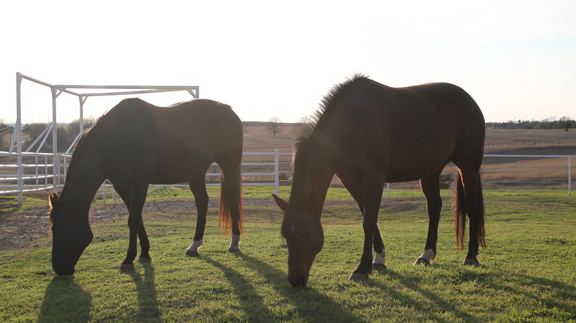
Vaccinating horses is crucial to overall health maintenance and essential to responsible ownership. It is important to protect the horses against diseases they could be exposed to whether they travel or stay at the stable or farm.
The number of diseases a horse is exposed to is directly proportional to the number of vaccinations necessary to ensure adequate protection. Horses that live a more isolated lifestyle will be exposed to a lower number of diseases and will need to only receive the core vaccinations. On the other hand, a horse that is showing and traveling is exposed to a greater number of diseases. These horses need to receive the core vaccinations plus additional vaccinations due to increased risk.
Another consideration when deciding which vaccines to administer to a horse is treatment costs versus vaccination costs and following boosters.
A good example of this scenario would be the rabies vaccination, which is relatively cheap. A rabies vaccinated horse is not 100 percent protected from the disease. However, the risk of the horse developing the disease if exposed is significantly decreased. The flip side of the coin would be if you did not vaccinate your horse for rabies, which leaves them at significant risk of developing the disease if exposed. This is compounded by the fact that there is no treatment for a horse with rabies.
Vaccines can be divided in to four large groups based on how they are made and how they work when administered: live vaccine, modified live vaccine, recombinant vaccine and killed vaccine. They all contain antigens, parts of the disease-causing organism, that will train the immune system, but they will not cause a clinical disease in a horse.
Live and modified live vaccines are capable of inciting an immune response most like the natural occurring disease without causing the horse to develop the disease. Because they cause such a strong immune response, a booster vaccine does not need to be administered as frequently as the recombinant and killed vaccine. It is very important to administer live and modified live vaccines as directed on the label. Failure to follow labeled directions can result in significant complications or decreased efficacy of the vaccine.
Recombinant and killed vaccines incite an immune response that is sufficient to protect the horse from disease, but less like the natural disease compared to the live and modified live vaccine. Recombinant and killed vaccines require more frequent booster vaccinations, due to the less natural response to these vaccines. Deciding which vaccines to use depends on what vaccines are available and a local veterinarian’s recommendation.
All vaccines are given to a horse with the goal of the horse mounting an immune response to the vaccine. This immune response trains the horse’s immune system to recognize certain characteristics of the disease-causing organism, which in most cases is a bacteria or virus. The horse’s immune system can then react in a timely and aggressive manner that will rid the body of the disease. Without the prior vaccination, the horse’s immune system may not react to the inciting organism in a timely manner, allowing the disease to be established in the horse.
The American Association of Equine Practitioners established guidelines and recommendations for vaccinating horses depending on the level of exposure to diseases, age and pregnancy status.
Eastern and Western Equine Encephalitis, West Nile Virus, Rabies and Tetanus are the core vaccines that each horse living in North America should receive. The core vaccines are based on the high risk of any horse living in North America being exposed to one of these disease. These vaccines provide a very high level of protection but not 100 percent.
Eastern Equine Encephalitis, Western Equine Encephalitis and West Nile Virus are all viruses that affect the horse’s central nervous system. They cause clinical signs of dullness, depression, muscle fasciculation or ataxia. They are all spread by mosquitoes and are seen more commonly in the summer months when the mosquitoes are more prevalent.
Eastern Equine Encephalitis is more commonly seen in the eastern portions of North America and WEE is seen in the western portion of North America. West Nile Virus can be seen in all regions of North America and is the leading cause of encephalitis cases in horses. Horses that have WNV, EEE or WEE have a fair to poor prognosis.
Rabies is a virus that a horse contracts by being bit by another rabid animal. The virus migrates from the bite wound up the peripheral nerves and attacks the horse’s central nervous system. As stated before, no treatment currently exists for rabies.
Tetanus is a disease caused by a neurotoxin that is produced by Clostridium Tetani bacteria. This bacterium is found everywhere in the environment. Once the bacteria gains access to a wound, it will replicate and release the neurotoxin into the horse’s body. If a horse contracts tetanus, there is a guarded prognosis for recovery.
Risk-based vaccines are vaccines that are administered based on the horse’s level of exposure to a disease. Three commonly used vaccines in our practice are Strangles, Equine Influenza, and Equine Herpes.
Strangles vaccine works against the Streptococcus equi subspecies equi bacteria and helps prevent or limit the strangles disease in a horse. It is usually administered to young horses in environments known to have the strangles bacteria present.
Equine Influenza and Equine Herpes are both respiratory viruses that can be spread by aerosolized respiratory droplets. They are extremely contagious and are seen in locations with a high number of horses from many different locations including large horse shows. Consulting a local veterinarian about which vaccines would be prudent given its level of exposure is recommended.
The frequency that a horse should be vaccinated depends on several factors including age, vaccination history and pregnancy status. In general, EEE, WEE and WNV vaccines should be administered in the spring before the mosquito season starts. Most veterinarians will administer the remainder of the core vaccines at this time. Risk-based vaccines may need to be given more frequently depending on the level of risk that the horse is exposed to.
The bottom line is, consult with your veterinarian and develop a vaccination program that works for you and your horse.
For more information on equine vaccination, visit www.aaep.org. The AAEP website provides horse owners with detailed information about core and risk-based vaccines.
This article originally appeared in the January 2016 issue of Oklahoma Farm & Ranch.
By Dr. Garrett Metcalf
The suspensory ligament is a vital component of the limb of a horse to produce normal locomotion and support. The suspensory ligament is a common area of concern in performance horses of various disciplines and can be single handedly the cause of lameness or performance issues. This article is going to look at a specific degenerative disease of the suspensory ligament and what horses are at risk for this disease.
DSLD or degenerative suspensory ligament desmitis was first discovered in the early 1980’s in Peruvian Paso horses. The name has been changed because the suspensory ligament is not the only organ affected from the disease but the suspensory is ultimately the biggest issue. The newer name, ESPA or equine systemic proteoglycan accumulation, is more correct because other ligaments and tissues are affected by this disease. In this article we will only focus on the suspensory ligament. The most commonly affected breeds are Peruvian Paso, Paso Fino, Morgan, Saddlebred, Warmblood, Paints, American Quarter Horse, and Thoroughbred breeds. The age of onset of the disease is variable among breeds but it is more common to be seen in middle age to older horses. However it has been documented in horses as young as one year of age. The disease generally will have a slow insidious onset that can go undiagnosed for months or years depending on the horses work and discipline.
A horse that begins to show early signs of DSLD may have a vague lameness issue that is difficult to isolate and they most likely will resolve with a period of rest. As the horse returns to moderate level of work the lameness will return. This scenario may go on for several months or more before the discovery of the DSLD is made. The first indication of DSLD is often pain isolated in the suspensory branches or fetlock region when a flexion test is performed. Horses with DSLD will also have a “dropped” fetlock appearance because the suspensory is the main supporting structure of the fetlock joint. DSLD can affect the hind limbs, forelimbs or all limbs at the same time. A unique sign of DSLD is that not just one limb is affected but rather bilaterally affecting the limbs, meaning it will either affect either both forelimbs or hind limbs at the same time. It is my experience that the hind limbs are more commonly affected compared to the forelimbs. Horses will often have enlargement of the fetlock region and increased joint fluid or wind puffs. Horses will often have a straight hock or post legged hind limb appearance. Horses will often shift weight frequently in an effort to get relief from the discomfort and this can be confused with other lameness issues or foot related pain.
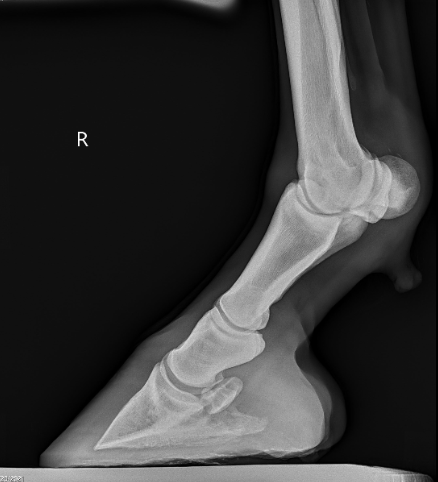
Diagnosis of DSLD is often made by clinical signs, breed and ultrasound findings. Ultrasound imaging of the suspensory ligaments will often show diffuse enlargement of the suspensory body and branches. The suspensory ligament will have a poor heterogeneous fiber pattern with periligamentious soft issue thickening from scar tissue deposition and edema or fluid within the tissue. Radiographs of the lower limb may reveal abnormal bone changes in the sesamoid bones behind the fetlock joints and even osteoarthritis of the pastern and or fetlock joints. A definitive diagnosis can be made from a biopsy of a ligament in the neck called the nuchal ligament, but is not often performed because of the invasiveness of the biopsy.
Treatment is very limited and it is mostly geared towards protection of further damage by prolonged rest. Pain management is also important to attempt to keep the horse as comfortable as possible. Different shoeing techniques can be used with marginal success. In early cases of DSLD, a suspensory shoe that helps engage more work from the deep digital flexor tendon can help elevate the fetlock and offer more protection to the suspensory ligament. The devastating thing about this disease is that there is no cure and there are hardly any good options to slow the progression of the disease. DSLD carries a poor prognosis when the diagnosis is made in any breed of horse or any discipline. Although some cases can be managed better than others, it often progresses to the point of debilitating pain and discomfort to the point of humane euthanasia especially in the Peruvian Paso breed.
Read more in the February 2023 issue of Oklahoma Farm & Ranch.
By Dr. Devan England DVM
Does your horse have gastric ulcers? Gastric or stomach ulcers are frequently blamed for a variety of things including poor performance, acting ‘cinchy’, weight loss, not eating, poor coat condition, diarrhea and colic. However, gastric ulcers are not always the culprit and the only way to know for sure if your horse has gastric ulcers is to look at the stomach on camera, using an endoscope. Poor appetite and poor body condition are the mostly widely observed clinical signs with gastric ulcers, however, these are non-specific. If you think your horse might have gastric ulcers, the best place to start is to talk to your veterinarian and consider scheduling a gastroscopy. Gastroscopy requires the horse be held off feed for at least 16-18 hours and held off water for at least 6-8 hours. Fasting off feed and water is necessary to allow the veterinarian to see the whole stomach. If restricting feed or water is difficult in your management situation, many veterinarians will allow you to hospitalize your horse the night before gastroscopy for proper fasting.
Gastric ulcers are split into two types, classified by the location of the ulcer in the stomach. Squamous ulcers are ulcers that occur in the squamous or skin like portion of the stomach. This is the top part of the horse’s stomach, is closest to the esophagus, and has squamous tissue to protect this portion of the stomach from stomach acids. The other ulcer type are glandular ulcers. Glandular ulcers occur in the bottom portion of the stomach, which is closest to the small intestine. This portion of the stomach has glandular mucosa with cells responsible for producing stomach acids for digestion as well as cells that produce mucus and buffers to protect the lining from stomach acid. Gastroscopy is important not only for diagnosing whether ulcers are present but also determining the severity and the type of ulcer, because these two ulcer types require different treatments.
Squamous gastric ulcers are common in racehorses both in and out of training, with higher prevalence in racehorses under training. Prevalence in Thoroughbred racehorses in training has been reported to be up to 100% (Sykes 2015). Squamous ulcers are also prevalent in Western pleasure horses, Thoroughbred stallions on breeding farms, and Italian donkeys (Sykes 2015). Glandular gastric ulcer prevalence has not been as well described as squamous ulcers. Glandular ulcers are reported to be most common in Thoroughbred and Standardbred racehorses, Canadian showjumpers and polo ponies, and American Quarter Horses (Sykes 2015).
Risk factors for ulcers vary by ulcer type. Anti-inflammatories (Bute, Banamine) can increase the risk of glandular ulcers in some horses by affecting normal defense mechanisms but are not a high risk in most horses. Horses that display stereotypic behaviors, such as cribbing, have an increased risk of squamous ulcers. Grain fed before hay in non-exercising horses, feeding larger amounts of grain, and increased time between meals increases the risk of squamous ulcers. Increased time with high intensity exercise and housing in single pens is associated with increased risk of glandular ulcers. A straw only diet, lack of water access and lack of direct contact with other horses increases the general risk of gastric ulcers.
If your horse is diagnosed with ulcers, the mainstay of treatment is a buffered formulation of omeprazole (Gastrogard, Ulcergard). Over the counter Omeprazole and compounded Omeprazole are not effective because without buffering, the acidic stomach quickly breaks down the drug before absorption. Most horses with squamous ulcers will have healing of these ulcers after a 4-week course of Gastrogard or Ulcergard at treatment dose (whole tube for the average horse). Some horses may be healed by 3 weeks of treatment, but all horses should undergo a recheck gastroscopy before stopping treatment. Horses diagnosed with glandular ulcers need combination therapy with Gastrogard/Ulcergard and Sucralfate for 4 weeks. About 2/3 of horses with glandular ulcers will heal in this time, but some horses may require longer treatment times so a recheck is always recommended before discontinuing treatment.
Horses at higher risk of gastric ulcers may benefit from preventative (low) doses of Ulcergard (1/4 tube in average sized horse) given for a few days before and during high stress situations like long distance travel and competitions. Sea buckthorn berry supplement may be protective against formation of glandular ulcers. Dietary management to decrease the risk of ulcers includes providing more frequent small hay meals if pasture access is not available, limiting high sugar grains as much as possible and adding vegetable oil to the feed.
Sykes BW, Hewetson M, Hepburn RJ, Luthersson N, Tamzali Y. European college of equine internal medicine consensus statement – equine gastric ulcer syndrome in adult horses. J Vet Internal Med 2015; 29:1288-1299.
By Janis Blackwell
As the season arrives to gear up for participation in your equine event of choice, one thing remains a constant for all horse owners. That constant is our responsibility to insure the safety of our horses by being diligent to maintain the integrity of the trailers in which we haul them. There are a number of things that can be dangerous both inside and outside of your trailer. Whether you traveled all winter long or whether your trailer sat unused or was used very little through the cold weather months, at least once a year your trailer is due a thorough going over. So here we go with a checklist that will help you insure a happy and safe trip for you and your equine partner.
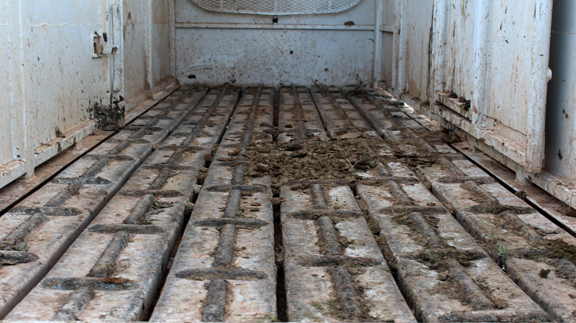
- A sound floor is absolutely imperative. Whether your floor is aluminum, steel or wood, it should be cleaned regularly after use to preserve it. Urine and manure will erode and weaken all types of floors. Even rubber mats will not prevent erosion of your floor. (Maintenance tip: remove mats and wash aluminum floors often to prevent erosion.)
- Especially check wooden floors for rotten boards. Immediately replace questionable flooring before hauling. (Maintenance tip: For wood, remove mats and wash out manure and debris. Coat wooden floor in a cheap motor oil. Allow to sit in hot summer weather until the oil soaks in. Be careful—floor will be slippery until oil cures into the wood. This treatment yearly will preserve a wooden floor for much longer than normal as it repels urine and protects the wood).
- Keep the interior and exterior washed to enable you to check for rusted out places, leaks, etc.
- Have a professional check your brakes at least once yearly to be sure they are operating properly.
- Be sure tires are inflated to the proper air pressure, and check the inside of each tire for hidden unusual wear that could cause a blowout. Replace worn tires before leaving home.
- Wheel bearings must be checked and packed at least once a year. This should be done even if the trailer has been rarely used since the last time the wheel bearings were packed. In fact, trailer maintenance professionals say that sitting stationary and unused is even worse for the bearings. Improper care and maintenance of wheel bearings can cause a wheel to seize up and actually twist off while in use. Use a horse trailer professional for this maintenance task.
- Axles should be checked for bowing. A bent or bowed axle can cause excessive tire wear and damage wheel bearings.
- There should be no more than two inches in height difference from the front of the trailer to the back. More difference than that causes the bulk of weight of the trailer and its contents to ride mostly on the rear axle causing it to bow and wear on both tires and wheel bearings.
- Another critical part of the trailer to keep an eye on are the butt chain or bar and the back door. The butt chain or bar should be firmly attached to the wall and its keeper and should always be latched. The door should have a strong secure latch with a pin to insure it stays latched while in motion.
- Finally, but certainly not of least importance is a thorough check of the trailer hitch including ball and coupling. Keep the ball well greased. Periodically, check to see that the ball is still securely tightened and the latch on the coupling is working properly.
These few critical safety check points can save you money, stress and the wellbeing of your horse. Until next time, happy trails and safe traveling.
This article was originally published in the April 2016 issue of Oklahoma Farm & Ranch.


-
 Country Lifestyle2 years ago
July 2017 Profile: J.W. Hart
-
 Attractions9 years ago
48 Hours in Atoka Remembered
-
 Equine9 years ago
Umbilical Hernia
-
 Outdoors8 years ago
Grazing Oklahoma: Honey Locust
-
 Country Lifestyle4 years ago
The Two Sides of Colten Jesse
-
 Farm & Ranch1 year ago
From Plow to Plentiful: The Most Important Inventions in Agricultural History
-
 Farm & Ranch8 years ago
Hackberry (Celtis spp.)
-
 Equine6 years ago
On the Road with Emily Miller-Beisel