Country Lifestyle
August 2017 Profile: Fred Rule

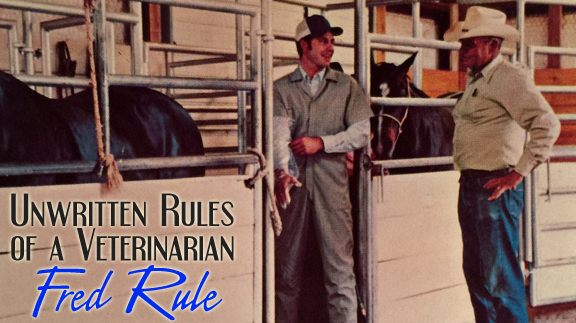
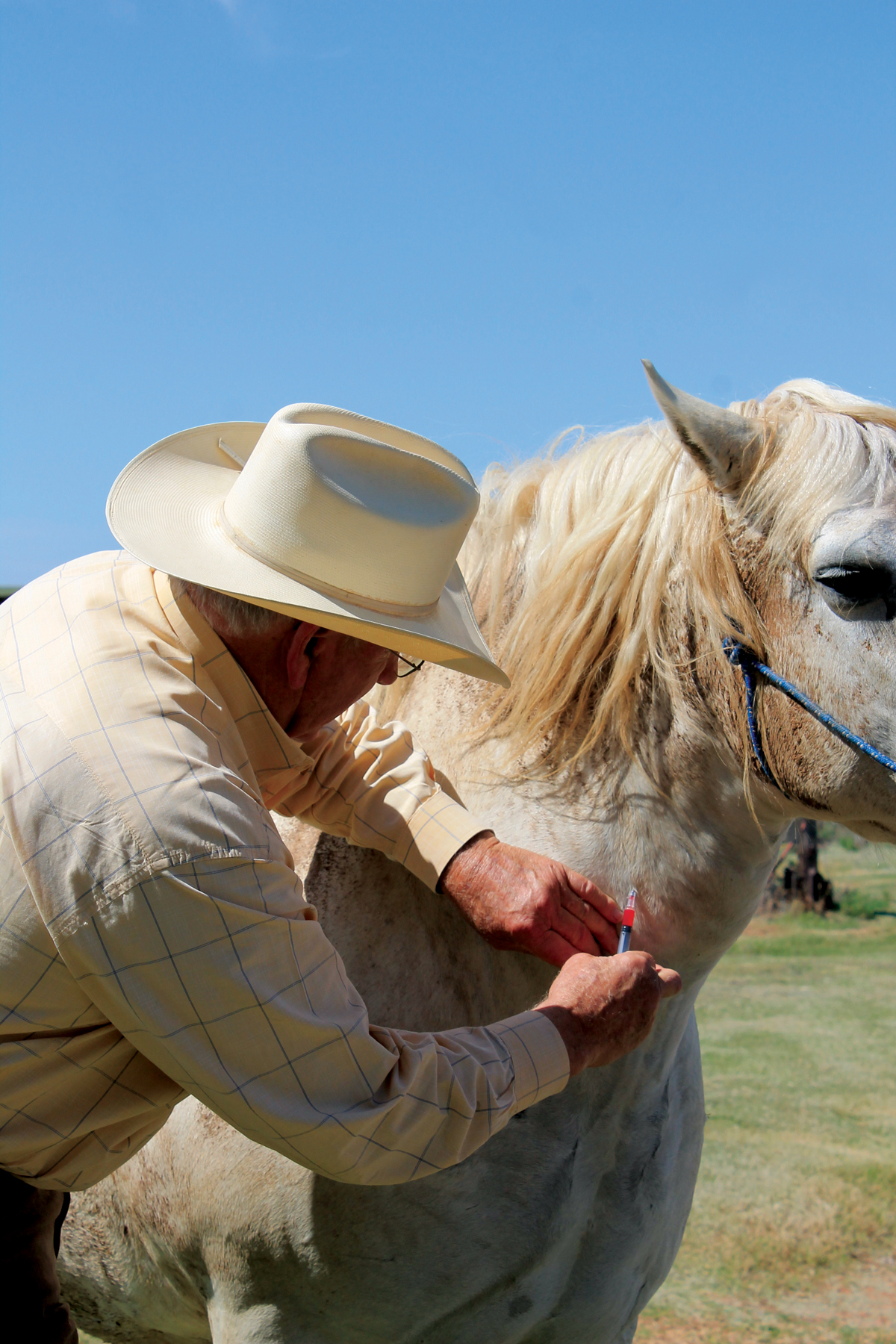
Fred Rule, DVM from Elk City, Okla., treating a horse with colic.
Unwritten Rules of a Veterinarian
By Laci Jones
The phone rings. When Fred Rule, DVM, of Elk City, Okla., answered, the veterinarian of more than 50 years sprung into work-mode. The rancher on the opposite end of the phone had a horse with colic. They began talking about symptoms and scheduling future visits. The veterinarian joked, “I don’t even buy green bananas. I don’t plan that far ahead.”
The spontaneous veterinarian was born in Kansas on Dec. 29, 1939. When he was five years old, the Rule family moved 100 miles west to Ramona, Kan., with a population of 400 people. His father worked in the “implement business” for a John Deere Dealership while his mother stayed home to take care of their five children—Judy, Fred, Janet, Jim and Kim.
An ornery boy, Rule said he always carried a knife and matches. He got a “whooping” on the first day of school in Ramona because he carved his name in the desk and started a fire in the boy’s bathroom, he laughed.
Shortly after, they moved 14 miles to a larger town called Herington, Kan. It was an agricultural- and railroad-based community of 3,000 people, he added. Rule was a smart child, but he never took notes. He was also a gifted athlete particularly in football. After graduating high school, the young athlete enrolled in Kansas State University on a football scholarship. There, the tight end had a “few rude awakenings.”
“When I got up there, I found out that there were a lot of guys who were very fast and very big,” the former football player recalled.
An injury to his left knee sidelined the young athlete, and he focused on earning a bachelor’s degree. The KSU alumnus said “for some reason” he decided to become a veterinarian when he was in eighth grade. Although Rule was raised in town, he was surrounded by farming. It is not that he disliked farming, but he said he always wanted to be a cowboy and work with livestock.
“I always said being a veterinarian was my vocation, but a cowboy is my avocation,” Rule said. “Fortunately, the two have mixed well over the years.”
Rule went to KSU with a former high school classmate named Jack Webb. Webb’s father raised quality rodeo horses, which peaked Rule’s interest saying, “That’s how we got in the rodeo business.”
However, his rodeo days were put on hold while he was in veterinary school at KSU. Kansas State University’s Veterinary School was among the elite in the United States at the time. During his six years in veterinary school, the student was exposed to hands-on learning.
“Kansas State was a very unusual school,” Rule began. “At that time, there was not a veterinarian in town in private practice. It was an unwritten law that they didn’t do that.”
The college provided veterinary service to all the surrounding farms and ranches. This allowed Rule and other veterinary students to practice before entering the field.
“When we got out of vet school, we could go to a private practice and make them money because we knew how to do it,” he added. “We didn’t need [established veterinarians] to show us how to do a lot of things. We didn’t know how to do everything by a long way, but we could do ordinary stuff.”
After receiving his DVM in 1964, the graduate moved to Holdenville, Okla. Rule said Oklahoma was known for their high-quality horses at the time, which is what he wanted to specialize in. He worked under established veterinarian Lewis Styles at his mixed-practice.
After he received his veterinary degree, Rule decided to get back in the rodeo business. He purchased his Pro Rodeo Cowboy Association card in 1966, where he tried his hand as a team roper and steer wrestler. The rodeo cowboy said he mostly “contributed to the pot.”
“I’d win something every now and then,” he laughed. “I truly enjoyed it though.”
Meanwhile, he continued to work under Styles, but there wasn’t enough work in eastern Oklahoma to satisfy the young veterinarian. Rule moved to Frederick, Okla., a few months later to work with Joe Flanigan, DVM, where he found himself in a similar situation.
At the same time, one of his former KSU classmates, Garland Hinkle, was working in Elk City, Okla., in a large practice owned by Bill Lockridge. When Lockridge decided to move to the bluegrass state, Hinkle and another veterinarian took over the practice.
They needed another veterinarian, and Rule moved to western Oklahoma by the fall of 1965. A few years later, another former KSU classmate Gail Anspaugh joined the practice. They eventually bought the other veterinarian’s share of the practice and sold a third of the practice to the third KSU alumni, Anspaugh.
“We probably have been the only three-man practice in the United States who are all classmates who have been together 50 plus years,” the distinguished veterinarian added.
The former classmates later opened a second hospital in Sayre, Okla. Anspaugh specialized in cattle, sheep and pigs, Hinkle focused on both large and small animals and Rule worked with horses 90 percent of the time. They later hired another veterinarian, Jimmy Fochs, DVM, for several years.
The veterinarian said moving to Elk City, Okla., was one of the best decisions he made. He wanted to work with good horses and his practice in western Oklahoma opened many doors for the veterinarian including the Beutlers from Elk City, Okla.
“When I came here, Beutler Brothers Lynn, Elra and Jake were a big rodeo outfit,” he added. “If you count [Rhett Beutler’s son] Jake, I’m on the fifth generation of Beutlers producing veterinary service. The whole Beutler family is pretty good friends of ours.”
Lynn Beutler was a business man who did not refer to him by name, the veterinarian recalled. Rule recalled an incident in the late ‘60s where Beutler had a bronc that was colicing. When he arrived at the Beutler’s, the business man told the veterinarian, “I’ve got a lot of money spent on this horse.”
The veterinarian oiled the bronc, sent him through the stripping chute and tried different methods. The next day, he could see the horse was not improving, which led Rule to believe the horse had “something shutting him off” where he could not pass anything. Beutler asked the veterinarian what his options were, and Rule said there’s nothing he could do except opening him up to see if he could fix it.
“At that time, our general anesthetic wasn’t worth a flip to tell you the truth,” he added. “I run him through a stripping cute, and I knocked a board over on the left side down near his flank. I gave him tranquilizer, cleaned him up, blocked him and cut a hole in his flank right up high.”
The Elk City, Okla., veterinarian found a fecolith, a large, hard fecal material, in his intestine. Rule extracted the fecolith and closed the wound. The horse never missed a meal after that, he added.
“From then on till the day [Beutler] died, I was Dr. Rule,” the veterinarian laughed.
He went to Beutler Brother Rodeos nearly every weekend, where he competed as a steer roper then go back to work. The Elk City, Okla., resident has served as the official veterinarian for the Elk City Rodeo of Champions for more than 40 years.
At the same time, Walter Merrick American Quarter Horse Association Hall of Fame member and horse owner was “in his prime,” Rule explained. Merrick had a ranch at Crawford, Okla., later adding on in Sayre, Okla.
“Of course [Walter Merrick] produced Easy Jet, Jet Smooth and all those horses,” he said. “I had the good fortune to do all the breeding work as well as furnish veterinary service to them. It’s another family that I made pretty good friends with.”
Rule said he had good luck as an equine veterinarian in western Oklahoma. Having Merrick as a client for about 40 years as well as other clients including thoroughbred owner Pete Maxwell allowed him the opportunity to work with the best horses.
“When I came here, this country was full of good horses and good horseman,” Rule added. “I learned more the first couple of years I was here than I did them good.”
Rule said he has always been involved in the community from school boards to state equine organizations. In the early ‘70s, the Oklahoma Horseman Association were instrumental in starting the organization, Prairie Mutual Racing in Oklahoma.
“I remained active in that for years. In fact, I was the president of that for several terms,” he explained. “We were involved in writing the rules of racing and putting together our excellent state-bred program.”
The goal of the organization was to represent all equine breeds. Ultimately, these breeds split off into their own organizations including the American Quarter Horse Association and the Thoroughbred Racing Association of Oklahoma, which Rule was on the board for.
After the divorce from his first wife, the Kansas native thought he would not marry again. In the late ‘80s, World Champion steer wrestler, C.R. Boucher invited Rule and fellow friend Joe Phillips to visit in remote Montana.
“Up in that country there were big ranches where they drag calves,” he said. “It was kind of a fun deal.”
Rule said they made the trip in the fall where it was -40 degrees Fahrenheit one morning. When he got down to the pen, a person who was bundled-up except for their eyes approached the cowboys.
“I couldn’t tell whether it was a male or female,” he explained. “They were just so bundled up and wanted to know if we wanted some coffee and yeah, we sure would take some. It was the first time I drank coffee with peppermint schnapps in it at 9 o’clock in the morning.”
That bundled-up person happened to be Marlene Newman, who was raised on a large, remote ranch in east-central Montana. She later moved south to the Sooner State in 1990 and married the veterinarian the following year. They have five kids from previous marriages—Justin, Toby, Jeff, Julie and Jacquae.
In 2014, the PRCA Gold Card carrying member was named the Zoetis PRCA Veterinarian of the Year. He was nominated for this prestigious award by former NFR qualifier Larry Dawson and stock contractor Bennie Beutler. With more than 50 years spent as a veterinarian, Rule has seen many changes in the veterinary field including technology and the male to female ratio.
“I didn’t get to see the best of it, technology-wise, because now the equine world has access to the same things that the human world has,” Rule said.
The male to female veterinarian ratio has changed since Rule first started practicing. In an industry that was once dominated by males, today female veterinarians outnumber male veterinarians three to one, he explained.
Rule also said the environment in which veterinarians practice has changed as far as the law. The distinguished veterinarian said they did not worry about liability, but he said that is changing.
“We just recently, a little over a year ago, because of health issues amongst my partners and myself, shut our hospitals down,” he explained.
Rule still does cool semen breeding with partner Jose Acosta, who worked for Merrick for 22 years. The honored veterinarian said he still enjoys practicing veterinary medicine. He was going to quit practicing, but his clients and friends “won’t let me.” Rule said the area needs an equine veterinarian, and he will continue to fill that role.
This article originally appeared in the August 2017 issue of Oklahoma Farm & Ranch.
By Savannah Magoteaux
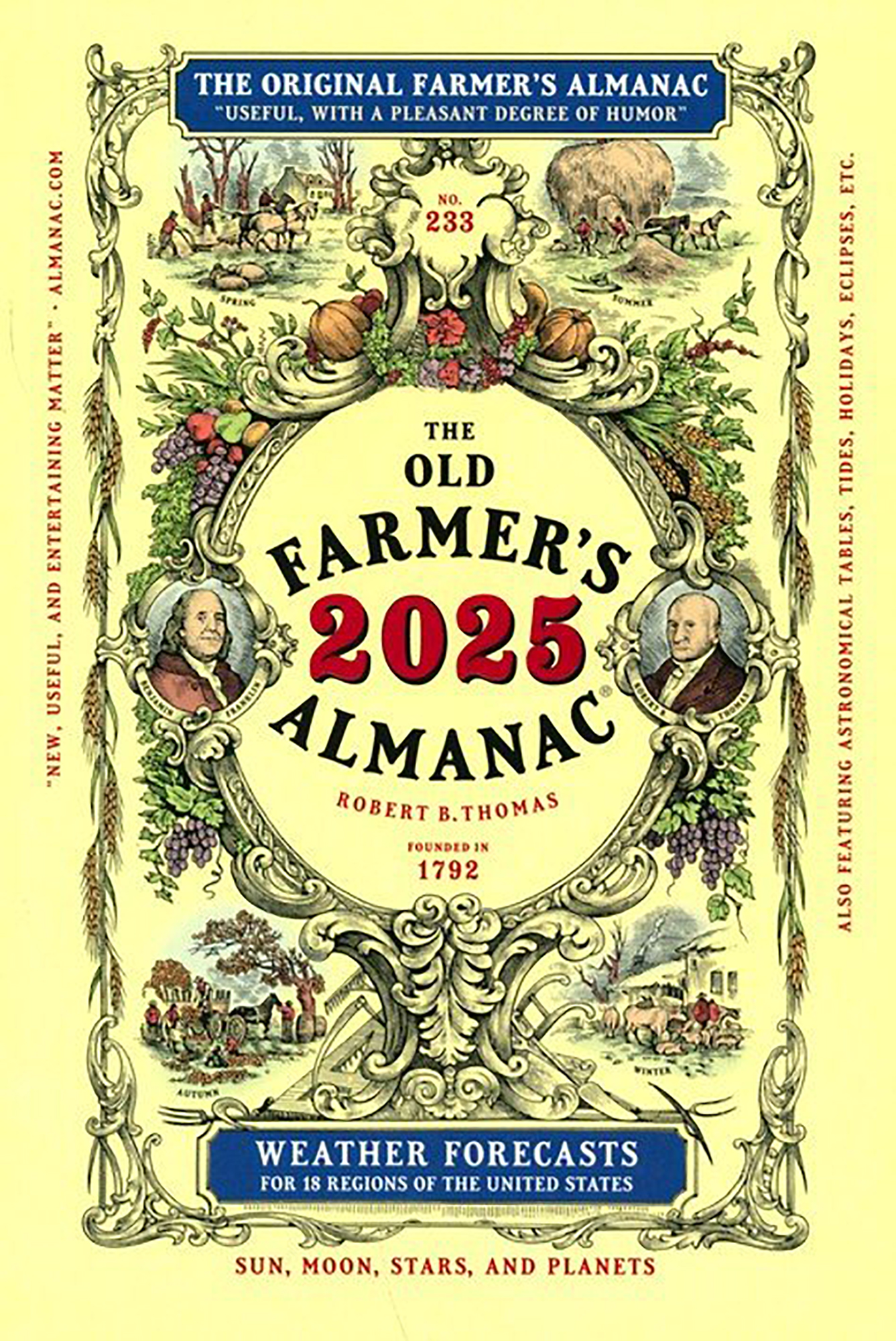
It may seem old-fashioned in today’s world of instant weather apps and precision farming tools, but for generations, farmers and ranchers have kept something tucked alongside their feed store receipts and fencing pliers: the almanac.
If you’ve ever wondered what makes an almanac different from a regular calendar—or how you can actually use one on the farm today—you’re not alone. The truth is, there’s a reason the almanac has stuck around for more than two centuries. It’s part tradition, part practical guide, and part good old country common sense.
What Exactly Is an Almanac?
At its simplest, an almanac is an annual publication that contains a wide variety of information:
- Weather forecasts (both short-term and long-range)
- Moon phases and sunrise/sunset times
- Best days for planting, harvesting, and other chores
- Tide tables
- Astronomical data (eclipses, meteor showers)
- Farming advice
- Home and garden tips
- Folk wisdom and humor
The Old Farmer’s Almanac, founded in 1792, is probably the most famous, but there are many versions today—including regional editions designed for specific areas of the country.
What sets an almanac apart is that it doesn’t just tell you what is happening; it often tells you when and how to do things based on seasonal rhythms, tradition, and long-standing patterns of nature.
How Are Almanac Predictions Made?
One of the most famous parts of the almanac is its weather forecast section.
While the exact methods are often kept secret, most almanacs combine:
- Historical weather patterns
- Solar cycles (like sunspots)
- Lunar phases
- Meteorological data
They aren’t as precise as modern radar forecasts, but they’re designed to give a general idea of what to expect for an upcoming season. Many readers use them more for planning and tradition than strict prediction.
Interestingly, some almanacs claim accuracy rates of around 80%, though independent studies suggest they’re closer to 50–60%. Still, for long-range planning—like when to schedule planting, hay cutting, or even branding days—many farmers find them helpful.
How to Use an Almanac Today
If you flip open an almanac today, you’ll find it offers much more than weather. Here are a few practical ways to use one on your farm or ranch:
- Planting by the Moon: Many people still plant certain crops according to the waxing and waning of the moon, believing that different phases influence root growth, fruit production, or hardiness.
- Scheduling Hay or Harvest: Long-range dry or wet forecasts can help you pick safer windows for cutting and baling hay.
- Livestock Planning: Some ranchers time breeding, calving, or vaccinations according to signs in the almanac (or at least avoid unlucky dates!).
- Gardening Tips: Almanacs are packed with advice on companion planting, pest control, and organic practices.
- Household Projects: Need to set fence posts or pour concrete? Some almanacs recommend the best days for setting things in the ground to “set stronger.”
Even if you don’t follow it to the letter, it can still offer a broader way of thinking seasonally—something that technology sometimes encourages us to forget.
Tradition Meets Technology
Many almanacs now have companion websites and apps, offering digital versions of their classic wisdom.
Still, there’s something satisfying about flipping through a paperback almanac, circling dates, and marking notes in the margins just like the generations before us.
It’s a reminder that even in a high-tech world, farming and ranching are still closely tied to the rhythms of nature—and a little old-school wisdom never hurts.
References:
- The Old Farmer’s Almanac – https://www.almanac.com
- Farmers’ Almanac – https://www.farmersalmanac.com
- University of Illinois Extension – Understanding the Farmer’s Almanac Weather Predictions
- National Weather Service – Historical Weather Patterns
SIDEBAR_
5 Fun Facts About the Almanac
1. It’s Older Than the U.S. Constitution.
The Old Farmer’s Almanac was first published in 1792—one year after George Washington was elected President.
2. There’s a “Secret Formula” for Weather Predictions.
The Old Farmer’s Almanac claims it uses a top-secret mathematical formula, created by its founder Robert B. Thomas, that factors in sunspots, tidal action, and planetary positions.
3. It’s Not Just One Almanac.
There are actually several famous almanacs, including the Old Farmer’s Almanac and the Farmers’ Almanac, and they’re produced by different companies with slightly different forecasting methods.
4. Moon Phases Matter.
Many planting and farming guides in the almanac are based on the waxing and waning of the moon. According to tradition, above-ground crops do better when planted during a waxing moon, and root crops thrive during a waning moon.
5. It Once Had a Hole in the Corner.
Early editions of the almanac were printed with a hole punched through the corner. Why? So farmers could hang them on a nail in the barn or outhouse for easy reading (and sometimes, as a backup to toilet paper)!
Daylight in the country is busy. There are engines, gates, dogs, birds, wind, and people moving with purpose. Even when it feels quiet, there is usually something making noise. It is familiar noise, the kind you stop noticing because it belongs there.
Night is different.
When the sun drops and the work winds down, the sounds change. Some disappear entirely. Others step forward like they were waiting their turn. It is only then that you realize how much the land talks after dark.
The first thing most people notice is how far sound carries at night. Voices travel farther. A truck door slams a half mile away and still feels close. Coyotes sound like they are just beyond the fence, even when they are scattered across an entire section.
There are reasons for that. Cooler nighttime air is denser, allowing sound waves to move more efficiently. During the day, sunlight heats the ground unevenly, creating air layers that bend and scatter sound. At night, temperatures even out, and sound travels straighter and farther. The land does not get louder. You just hear more of it.
Coyotes are often the headliners. Their howls, yips, and barks are not random noise. They are communication. A single howl can be a location check. Group yipping can signal territory or reunite scattered pack members. What sounds like chaos is often a coordinated conversation that carries for miles.
Owls tend to follow. Great horned owls announce themselves with deep, rhythmic calls that sound older than fences and roads. Barred owls ask their unmistakable questions from creek bottoms and timber. These calls serve the same basic purpose as the coyotes’. Territory, presence, and pair bonding, all broadcast into the dark.
Insects fill the gaps. Crickets and katydids create a steady background hum that changes with temperature and season. In late summer, their calls are loud enough to drown out distant traffic. In early fall, the rhythm slows. By winter, silence settles in where that sound once lived.
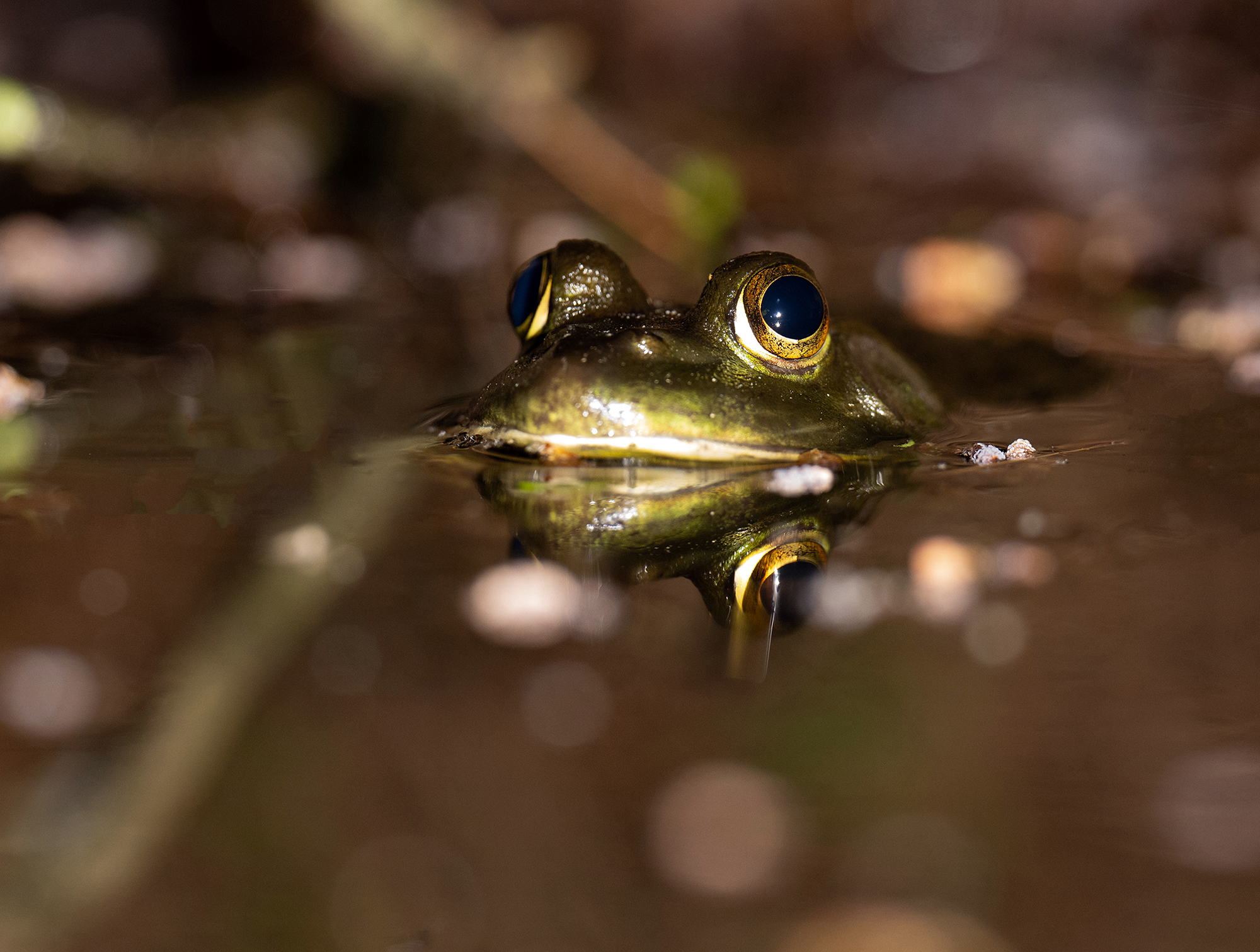
Frogs take over after rain. Stock tanks, ditches, and low spots become stages. Each species has its own call, its own timing, its own volume. To someone unfamiliar with rural nights, it can sound overwhelming. To those who live with it, it becomes reassurance that water is present and life is moving.
Livestock contribute their own nighttime sounds. A cow bawling for a calf. Horses shifting and blowing softly in the dark. The occasional thump of hooves when something unseen moves through the pasture. These noises are usually brief, but they catch your attention because they break the expected rhythm.
Some sounds are seasonal. In the fall, migrating birds pass overhead, calling to one another in the dark as they navigate by stars and landmarks. In spring, night birds return, filling the air with calls that have been absent for months. The land sounds different when life is arriving versus when it is leaving.
What surprises many people is how much quieter the country can be without human interference. With fewer buildings, less traffic, and minimal artificial lighting, natural sounds are not masked the way they are in towns and cities. Even distant highways fade into the background, leaving space for subtler noises to emerge.
That quiet can feel uncomfortable at first. Silence magnifies small sounds. A branch snapping or leaves shifting can sound larger than it is. Over time, you learn what belongs and what does not. The land teaches you what is normal.
Nighttime sounds also slow you down. There is less pressure to move, to fix, to finish. Sitting on a porch or leaning against a fence, you start to listen instead of scanning. The dark removes visual distractions, leaving only sound to tell the story.
Those sounds carry information. Weather is changing. Animals are moving. Seasons are turning. Without realizing it, you begin to recognize patterns. You notice when the coyotes are quieter than usual, or when frogs call earlier than expected. The land speaks in small signals long before anything obvious happens.
Most of these sounds go unnoticed unless you stop and listen. They are not dramatic on their own. They do not demand attention. But together, they form the soundtrack of rural life after dark.
In a world that rarely slows down, nighttime in the country offers something increasingly rare. A chance to listen without interruption. To notice what has always been there. To understand that even when the lights are off and the work is done, the land never really rests.
By Beth Watkins
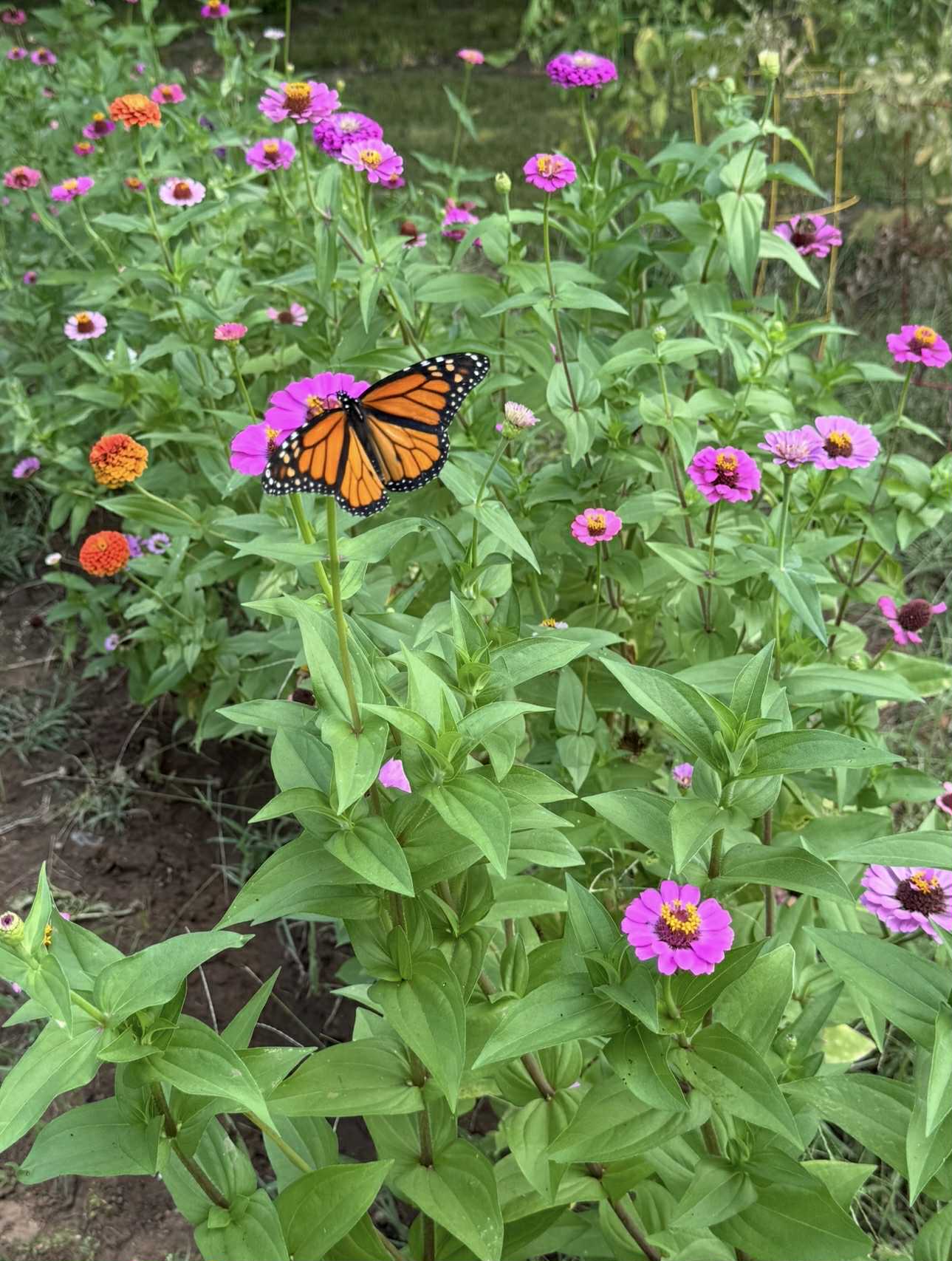
There’s something about springtime that makes folks want to open windows, clean out closets, and maybe even peek out the front door to see if the neighbors are still alive and ready for a cookout. After a long winter of confusing, seesawing temperatures—where you needed shorts one day and a parka the next—March just rolls in with her own mysterious mood swings. Will she bring warm breezes and wild daffodils, or will she slap us with a late snowstorm and the flu for good measure?
March is the season of new growth. The earth starts greening up, baby calves find their legs, and every hardware store in the county sells out of tomato plants. Folks start making ambitious garden plans, fueled by equal parts hope, memory loss about last year’s weeds, and the siren song of heirloom seed catalogs. You find yourself petting baby chicks at Atwoods, thinking, “How hard can it be?” while conveniently forgetting you once killed a cactus.
But maybe this year, along with our gardens and yards, it’s time we put a little effort into growing something else: personal responsibility. And maybe even—brace yourself—neighborly love.
Now, I’m not talking about the kind of neighborly love where you let someone move in with their three untrained dogs, six boxes of drama, and a Wi-Fi password they never stop using. I mean the kind where we treat folks with basic kindness and decency, without expecting them to carry our groceries, fix our fences, or raise our children.
Somewhere along the way, it seems like society forgot that love and enabling are two different things. The Bible says to love your neighbor as yourself. It does not say to take your neighbor on as a dependent. Yet more and more, we’re seeing an attitude of entitlement blooming like crabgrass in what used to be tight-knit, self-reliant communities.
There was a time when being called “self-sufficient” was a compliment. It meant you could patch a roof with tar and a prayer, make a pot of beans stretch a week, and wrangle your own problems without immediately calling the government, your mama, or Channel 5 News. You didn’t expect handouts—you offered a hand up when someone else truly needed it. But lately, some folks have gotten real comfortable hollering “help me!” before they’ve even tried standing up on their own two feet.
Case in point: a woman on social media said she needed her oil changed and a chicken coop built. She had the supplies but no funds to pay for help. Fair enough—times are tough. But the very next day, she posted photos of her estate sale haul, bragging about how she “only” spent $400. Not even a month later, she’s showing off her custom steel gate entryway. Clearly it’s not a money shortage—it’s a priority misplacement.
That kind of thinking doesn’t just stunt personal growth—it chokes the roots of the community. I know people need help, and we are called to love our neighbors, but let’s get real, folks. Last year’s gold medal for gall goes to the woman hosting her child’s backyard birthday party who posted: “Can anyone bring enough food for about twenty people? The child loves spaghetti with all the trimmings, and a cake. Please deliver it hot, at party time.” You think I’m kidding? I’m not. I’m still in shock.
We weren’t meant to live like hermits, but we weren’t meant to sponge off the folks who are doing the work either. There’s a balance somewhere between “do-it-all-yourself survivalist” and “the world owes me a living.” And that sweet spot is where real growth happens.
Spring is a perfect reminder of that. You can’t just toss seeds in the dirt and expect a harvest. You have to work the soil, pull the weeds, and show up every day—even when it’s hot, dry, or swarming with grasshoppers. Same goes for character. You’ve got to tend it. Cultivate it. And not just when people are watching.
If you want a better world, you’ve got to start in your own backyard. Literally and figuratively. Pick up the trash that blew into your fence line, and since it came from your poly cart, go grab your soda can out of your neighbor’s yard too. Wave at your neighbor, even if he insists on mowing in Crocs and tube socks and blowing his grass trimmings into the street. A little physical kindness can go a long way.
I grew up being taught that if someone was struggling, lost a loved one, or just got over an illness, you found a way to help—even if it was just sending over a casserole. Honestly, our first instinct should be to offer help, not because we want a parade in our honor, but because it’s the right thing to do. If you’re swamped with work or kids or life, send a food gift card. If you’re short on funds, offer to mow a lawn, babysit for an hour, or just check in.
We should teach our kids and grandkids that it’s natural to struggle. That hard work isn’t punishment—it’s how things get built. It’s how we move forward. Asking for help in a crisis is fine, but leaning on others indefinitely is no way to grow tall and strong. A goal shouldn’t be “how do I get the best handouts” but rather, “how do I build a life I’m proud of?”
We all need each other, but we also need to pull our own weight. Otherwise, this whole wagon’s going to tip. There are programs out there to help folks get back on their feet, but they aren’t just hangouts—they’re meant to be springboards. To break the cycle. To build something better.
So maybe this spring, as the world begins to thaw and bloom again, take a quiet moment to reflect on the life you’re growing—both inside and out. Ask yourself what kind of neighbor you are. Are you showing love, or just expecting it? Are you helping things bloom, or draining the rain barrel?
There’s still a lot of good in this world. I see it every day—in farmers helping neighbors fix fence after a storm, in church ladies who deliver meals without a fuss, in kids learning to shake hands and look folks in the eye. But good doesn’t grow on its own. It takes effort. It takes intention. And sometimes it takes a little tough love with a smile.
So here’s to spring: the season of new beginnings, fresh starts, and maybe, just maybe, a collective shift back to kindness, accountability, and old-fashioned neighborly grace.
Let’s roll up our sleeves, open the windows, clean out the cobwebs. Let’s go through our closets and our abundance, and donate to local places that help people get back on their feet—places that believe in a hand up, not just a handout. That’s how we grow something better.


-
 Country Lifestyle2 years ago
July 2017 Profile: J.W. Hart
-
 Attractions9 years ago
48 Hours in Atoka Remembered
-
 Equine9 years ago
Umbilical Hernia
-
 Outdoors8 years ago
Grazing Oklahoma: Honey Locust
-
 Country Lifestyle4 years ago
The Two Sides of Colten Jesse
-
 Farm & Ranch8 years ago
Hackberry (Celtis spp.)
-
 Farm & Ranch1 year ago
From Plow to Plentiful: The Most Important Inventions in Agricultural History
-
 Equine5 years ago
On the Road with Emily Miller-Beisel